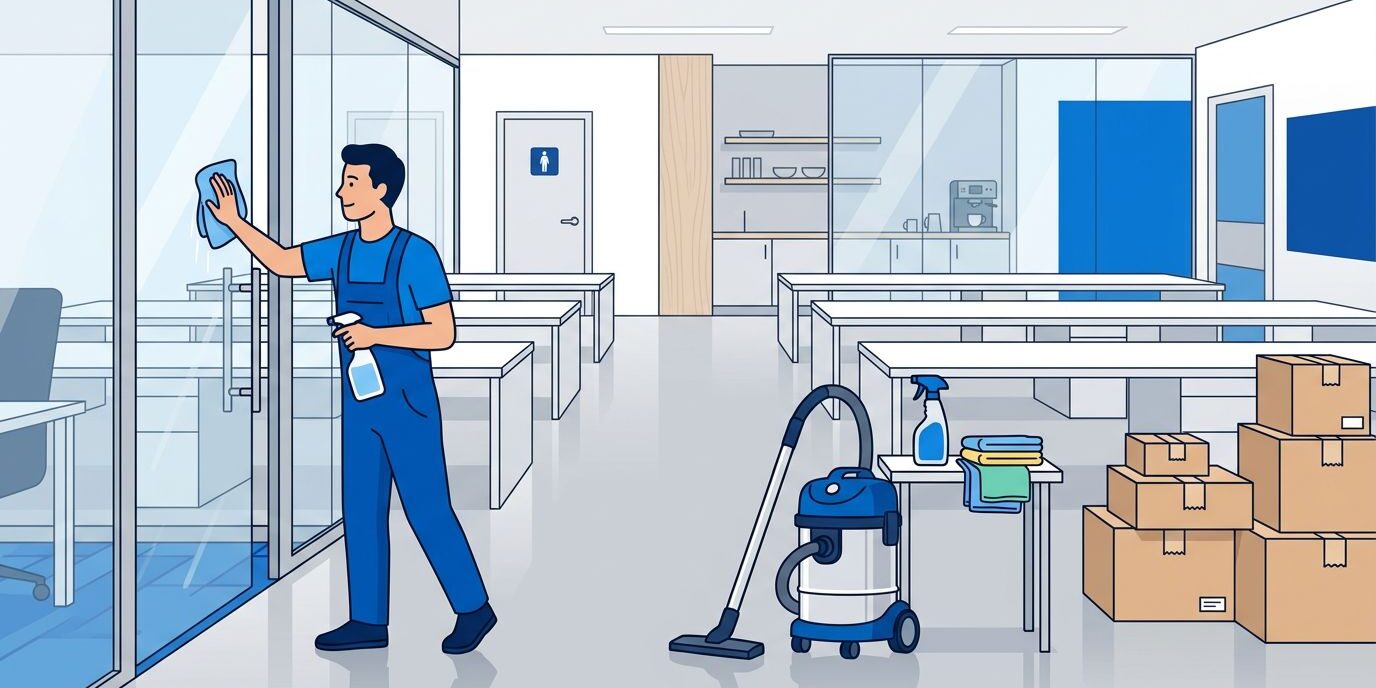
A new office can look ready before it is truly clean. Visible dust, fingerprints, odors, and residue may remain after previous occupants leave. Thorough office move-in cleaning creates a clean, healthy starting point before employees, clients, and equipment arrive.
The right plan covers more than floors and empty trash cans. Include restrooms, break rooms, interior glass, high-touch surfaces, and overlooked areas. Use this cleaning checklist to organize the moving process and compare professional cleaning services before move-in.
Key Takeaways
- Schedule office move-in cleaning before furniture, equipment, and boxes arrive so cleaners can reach floors, corners, baseboards, and other overlooked areas.
- Use a written scope that covers every area, including offices, restrooms, break rooms, entrances, shared spaces, floors, interior glass, and high-touch surfaces.
- Separate routine cleaning from specialized services such as carpet extraction, floor restoration, high dusting, interior appliance cleaning, and post-construction cleanup.
- Compare professional cleaning companies based on licensing, insurance, training, access procedures, quality checks, corrective-service policies, and clear pricing.
- Confirm the cleaning cost, service frequency, supplies, equipment, extra-work charges, drying time, and final inspection requirements before signing.
Plan Move-In Cleaning Before Moving Day
Cleaning should happen before desks, filing cabinets, equipment, and boxes fill the space. Once furniture arrives, cleaners lose access to corners, baseboards, walls, and flooring underneath heavy items.
A practical cleaning schedule begins two or three weeks before occupancy:
- Complete a site walk-through. Measure the cleanable square footage and identify offices, conference rooms, storage areas, restrooms, kitchens, corridors, entrances, and shared spaces. Locked rooms and unused storage areas shouldn’t be included if they won’t receive service.
- Confirm the cleaning scope. Decide whether the work includes interior cabinets, appliances, carpet extraction, high dusting, interior glass, floor machine work, wall washing, or exterior entryways. A standard clean and post-construction cleanup are different services. Property managers may also coordinate move-out cleaning, which follows a different scope.
- Schedule the main move-in cleaning before furniture delivery. Build the cleaning schedule around carpet and floor drying time. Arrange a final inspection before the moving crew arrives.
- Provide access instructions. Share keys, alarm procedures, parking details, loading areas, utility information, and rooms that require special permission. Businesses with private records should also define which areas cleaners can enter.
A written scope keeps the tenant, property management team, movers, and cleaning services provider aligned. This commercial office cleaning checklist shows why operational readiness requires more than a quick visual touch-up during the moving process.
Office Move-In Cleaning for Every Area
The cleaning team should work from the top down, removing dust and cobwebs before systematic vacuuming and mopping. Inspect baseboards and floors after each area is finished to catch missed debris.
Entrance, Lobby, and Common Areas
The entrance creates the first impression for employees, clients, and visitors. Check these areas carefully:
- Remove dust, cobwebs, leaves, and debris from the entrance and surrounding approach.
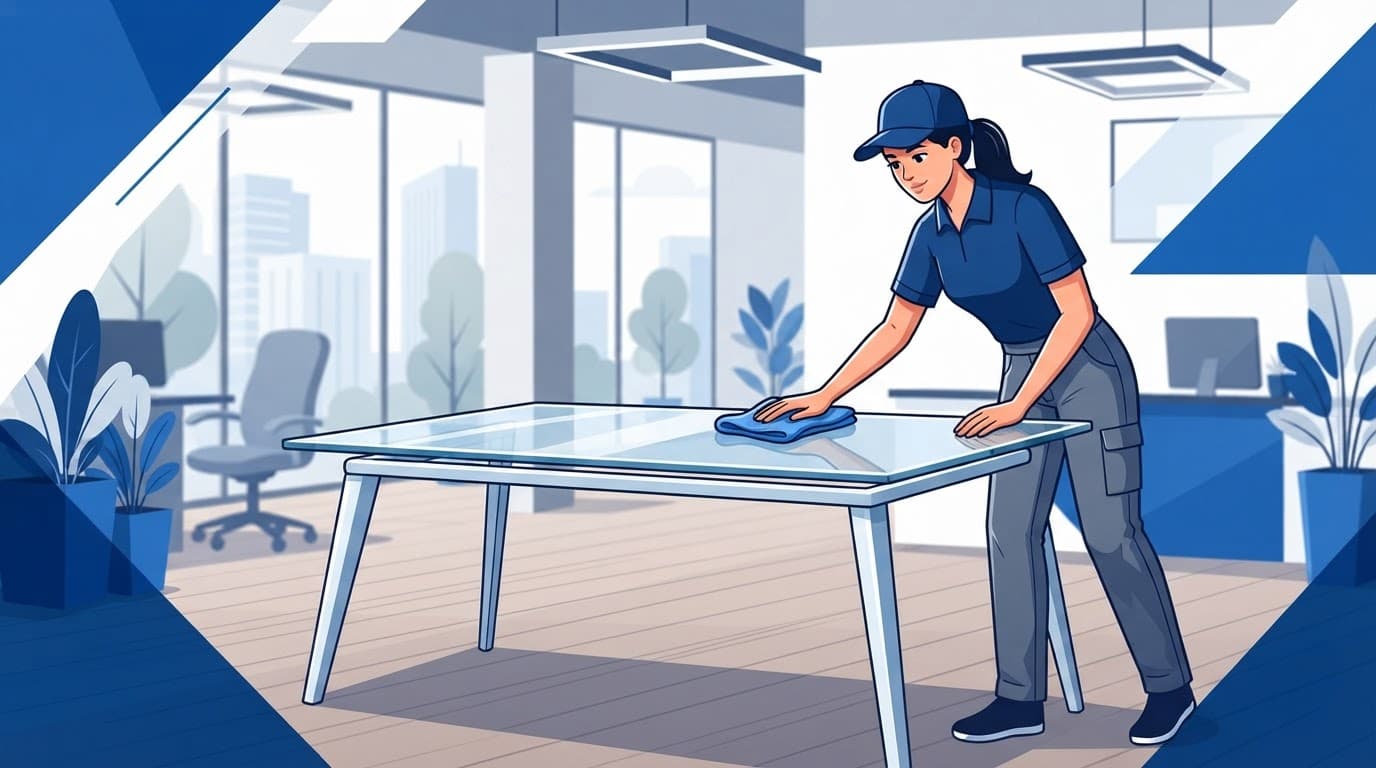
- Clean both sides of entrance glass, door frames, handles, push plates, and sidelights.
- Wipe reception counters, seating, tables, ledges, planters, and reachable fixtures.
- Dust baseboards, vents, light fixtures, corners, and high ledges.
- Vacuum carpet edges and corners, or sweep and mop hard floors with an approved product.
- Clean entry mats and check that they are positioned safely.
- Wipe elevator buttons, railings, switches, and other high-touch points.
- Empty trash and recycling containers, then replace liners where needed.
During rainy periods in Southwest Florida, entrance floors may need extra attention because tracked-in moisture, sand, and landscaping debris spread quickly.
Offices, Conference Rooms, and Work Areas
Each room should be cleaned while it is still empty. Surfaces should be free of dust, residue, fingerprints, and visible soil at normal viewing distance.
Cleaners should vacuum carpet slowly, including along walls and beneath movable furniture. Hard floors need the correct method for the surface, whether the office has luxury vinyl, tile, wood, stone, or polished concrete.
Wipe desks, counters, cabinets, shelves, tables, chairs, door handles, light switches, and conference room equipment carefully. Spot-clean walls and doors where marks are visible. Clean baseboards, corners, vents, and areas behind doors that often collect dust.
Restrooms and Break Rooms
Bathroom cleaning should leave restrooms sanitary, dry, odor-controlled, and ready for daily use. Clean toilets, urinals, countertops and sinks, mirrors, partitions, dispensers, door handles, floors, vents, and waste containers. Confirm that soap, paper products, and other supplies are stocked if they are part of the agreement.
Break rooms also deserve detailed attention. Clean and disinfect countertops and sinks, backsplash areas, and cabinet fronts, then sanitize countertops before wiping tables, chairs, trash containers, and floors. Ask for the inside and outside of refrigerators, microwaves, dishwashers, and other kitchen appliances to be included. Previous occupants may have left food residue or odors that aren’t visible from the outside.
For a broader room-by-room reference, this commercial move-in cleaning guide covers common office areas, restrooms, floors, break rooms, and shared spaces.
Floors, Carpet, and Special Cleaning Services
Floor condition affects the entire office during move-in cleaning. A clean desk cannot compensate for dull hard floors, stained carpet, or dirty entryways.
Carpet should be vacuumed before furniture is installed. A deep cleaning may be appropriate when routine vacuuming is not enough. If the carpet has embedded soil, visible traffic lanes, stains, or a musty smell, schedule professional carpet cleaning with hot water extraction or another suitable method before move-in. Ask whether pre-spray, agitation, extraction, spot treatment, furniture movement, and drying time are included.
Furniture shouldn’t return to carpet until the surface and backing are adequately dry. The cleaning company should explain access restrictions and reopening instructions before work begins.
Hard floors may need more than routine mopping. If the finish is cloudy, scratched, or heavily worn, ask about machine scrubbing, burnishing, scrub and recoat work, or stripping and refinishing. These services usually require separate pricing because they involve different equipment, products, safety controls, drying time, and labor.
Other requested services may include:
- High dusting above normal reach
- Interior windows, partitions, and display glass
- Upholstery cleaning
- Wall washing and detailed spot cleaning
- Post-construction dust removal
- Exterior entryway and stairwell cleaning
- Post-event or emergency cleanup
- Duct cleaning when HVAC contamination, renovation dust, or persistent odors justify it, priced separately from surface cleaning
A new office with dust and debris, adhesive residue, or paint spots needs a post-construction scope rather than a basic move-in package.
DIY Cleaning or Professional Cleaners?
Small business owners may consider handling move-in cleaning with employees before moving in. Unlike residential cleaning for a new home, an office’s moving process may involve multiple restrooms, carpeted areas, shared spaces, and customer-facing deadlines. DIY work can suit light dusting in a small, empty suite, but becomes less practical as conditions grow more demanding.
Employees may not have commercial vacuums, carpet extractors, floor machines, approved products, or the training to complete every task. Professional cleaners provide suitable equipment and training for detailed commercial work. Asking staff to clean also takes them away from setup, customer service, training, and normal business responsibilities.
A professional service can complete detailed work before furniture arrives and provide a clear service scope. Consider it for heavy dust, large floor areas, medical or customer-facing spaces, strict access requirements, or a short deadline.
The best choice depends on the building’s condition, office size, risk, and required results. A quick in-house cleanup may reduce the initial cost, but missed areas can create extra work after employees arrive.
Move-In Cleaning Cost and Extra Work
Commercial cleaning services are priced by cleanable square footage, soil level, flooring, access, schedule, and requested tasks. For planning, a basic empty-office clean may cost around $0.20 to $0.40 per square foot. A deep cleaning with significant dust, interior glass, carpet extraction, or floor restoration may range from $0.40 to $0.75 per square foot.
These are budgeting ranges, not promises or guaranteed quotes. A 2,500-square-foot office could therefore require roughly $500 to $1,000 for a standard clean, or about $1,000 to $1,875 for more detailed work. The actual estimate should reflect the building and written scope.
| Service level | Possible planning range | Common inclusions |
|---|---|---|
| Standard empty-office clean | $0.20-$0.40 per sq. ft. | Dusting, floors, restrooms, break room, trash |
| Detailed clean | $0.40-$0.75 per sq. ft. | Heavy dust, appliances, interior glass, detailed surfaces |
| Specialized add-ons | Priced separately | Carpet extraction, floor restoration, high dusting, post-construction cleaning |
A useful annual budget formula is:
Cleanable square footage x service rate x number of service periods + planned periodic work
Ask whether the estimate is based on square footage, frequency, labor hours, or a fixed project price. Hours alone don’t show that every required task was completed.
Before signing, confirm billing frequency, cancellation terms, renewal language, price changes, supplies, equipment, and extra-work charges. Carpet extraction, floor restoration, high dusting, emergency cleanup, and post-event service should have defined prices and approval rules.
How to Choose a Reliable Cleaning Company
A professional service begins with a reliable process and clear accountability. For move-in cleaning, look for a company that is licensed, insured, bonded, experienced in commercial spaces, and ready to provide trained backup staff when an assigned cleaner is unavailable.
When comparing commercial cleaning services, ask how the company handles:
- Employee screening, background checks, and training
- The cleaning team’s process for keys, alarms, private records, and after-hours access
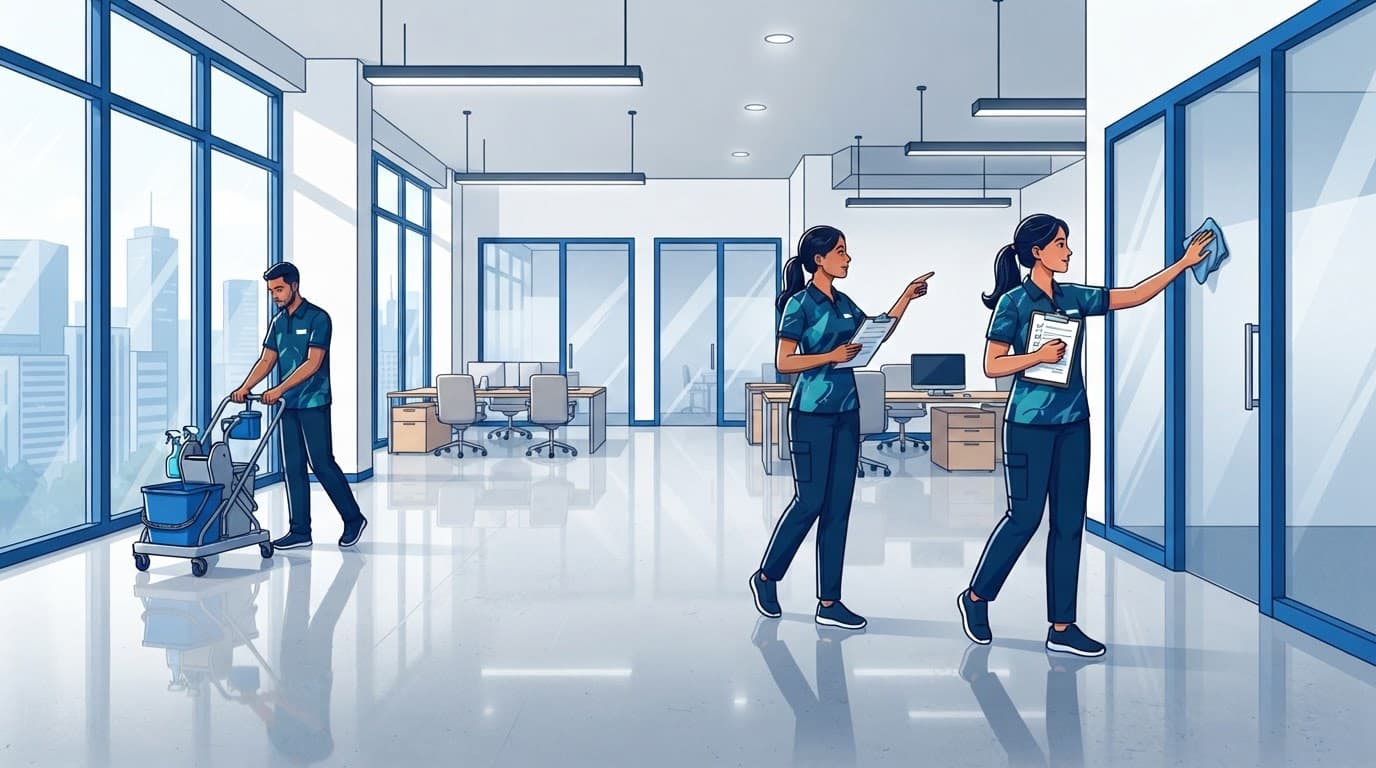
- Supervisor inspections, quality checks, and documentation of recurring visits and final touch-ups in the cleaning schedule
- Missed tasks, complaints, and corrective service
- Cleaning products, equipment, and safety procedures
- Continuity when cleaners are sick, transferred, or replaced
A strong provider doesn’t promise that no task will ever be missed. Instead, it explains how issues are reported, corrected, and documented. Useful quality measures include inspection scores, task completion rates, response times, and the first-time fix rate for reported problems.
For businesses and property management teams in Fort Myers, Cape Coral, Bonita Springs, Naples, Lehigh Acres, and nearby communities, weather should also be part of the plan. Heavy rain, humidity, sand, and outdoor debris can increase entrance and floor maintenance needs.
We provide customized cleaning plans for professional offices, medical facilities, schools, retail spaces, restaurants, churches, banks, and other workplaces. Need a clear scope and accurate pricing? Request a free estimate through Get a FREE Quote Today, based on your actual space and schedule.
Frequently Asked Questions
When should office move-in cleaning be scheduled?
Schedule the main cleaning before desks, equipment, boxes, and other furniture are delivered. This gives cleaners access to areas that become difficult to reach after the move.
What does office move-in cleaning usually include?
A typical service may include dusting, vacuuming, mopping, restroom and break room cleaning, trash removal, high-touch surface disinfection, and cleaning entrances and shared spaces. Interior glass, appliances, carpet extraction, floor restoration, and post-construction work may require separate pricing.
How much does office move-in cleaning cost?
A basic empty-office clean may cost about $0.20 to $0.40 per square foot, while detailed cleaning may range from $0.40 to $0.75 per square foot. Actual pricing depends on the office size, soil level, flooring, access, schedule, and requested services.
Is professional cleaning better than DIY cleaning for a new office?
DIY cleaning may work for light dusting in a small, empty suite, but larger offices and more demanding conditions often require commercial equipment and trained cleaners. Professional cleaning can also reduce the time employees spend away from setup and normal business responsibilities.
What should be checked before hiring a cleaning company?
Confirm that the company is licensed, insured, bonded, experienced with commercial spaces, and able to provide trained backup staff. Ask about employee screening, access procedures, inspections, missed-task corrections, supplies, equipment, and extra-work charges.
Conclusion
A successful move-in cleaning removes dust, residue, odors, and hidden buildup that quick surface cleaning can leave behind. Schedule it before furniture arrives, document every room in the written scope, and separate routine work from carpet, floor, glass, and post-construction services.
With a detailed checklist and clear pricing, your team can enter a sparkling clean, safe, and professional workplace and complete a stress-free transition.