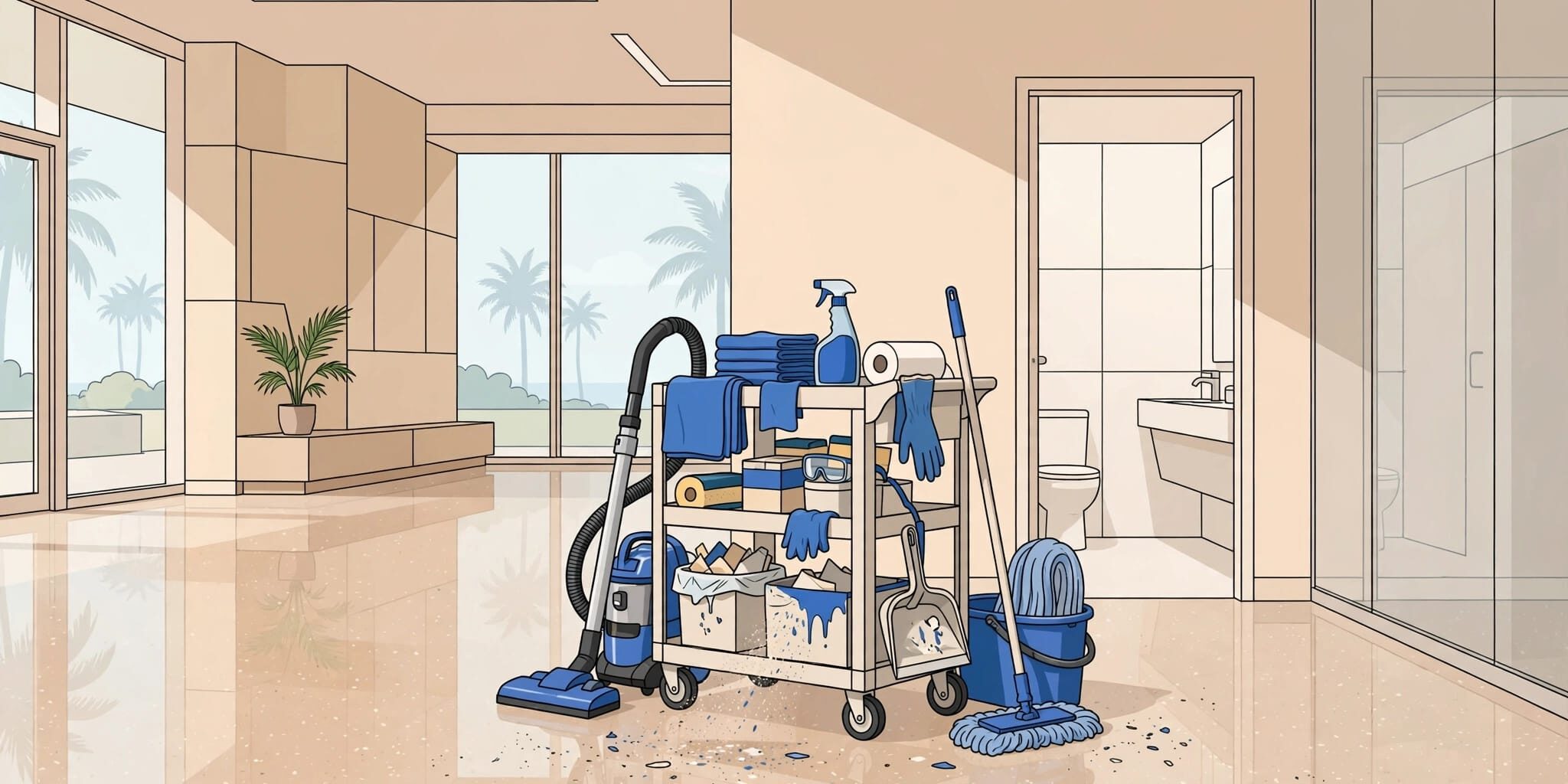
A new or renovated commercial property can look finished while still holding construction dust, paint overspray, adhesive residue, and debris from the project. Before employees, tenants, or customers enter the building, a detailed post-construction cleaning checklist helps protect the property and create a clean, professional first impression.
Commercial post-construction cleaning isn’t routine janitorial work. Offices, medical facilities, retail spaces, restaurants, and multi-tenant buildings need a planned scope addressing fine particles, moisture risks, salt-air residue near coastal properties, new flooring, interior glass, restrooms, break rooms, and HVAC concerns after a building renovation.
In Southwest Florida, humidity makes mold prevention important, while hurricane and storm readiness includes protecting entrances from wind-driven rain. Professional cleaners use coordinated cleaning services to help the property safely transition to occupancy.
Key Takeaways
- Divide commercial post-construction cleaning into rough, light, and final cleaning phases, scheduling the final clean after construction trades leave and remaining dust settles.
- Use HEPA vacuums, high-to-low cleaning methods, appropriate PPE, and safe silica-dust controls to protect indoor air quality and finished surfaces.
- Review every room and surface, including entrances, glass, floors, restrooms, break rooms, HVAC grilles, ledges, baseboards, and areas vulnerable to moisture or salt-air residue.
- Confirm product compatibility before removing adhesive, paint, grout haze, or other residue, and handle construction debris, hazardous materials, and regulated waste separately.
- Complete a documented final inspection with supervisor signoff, photos, filter records, damage reports, and unresolved items before the building reopens.
Begin With a Building-Wide Site Review
Every commercial construction project has different surfaces, access needs, and safety concerns. Before scheduling service, walk the property with the contractor or facility contact. Review the contractor’s punch list, confirm active trades, and identify areas ready for cleaning.
A building-wide clean shouldn’t begin while drywall sanding, tile cutting, or painting is still active. New dust will settle on cleaned surfaces and create unnecessary repeat work.
Confirm the cleaning scope before crews arrive
A written scope keeps the project organized. It should identify suites, common areas, restrooms, break rooms, storage areas, entryways, glass, floors, and exterior walkways included in the service.
The scope should also identify exclusions. Construction cleaning may not include debris hauling, hazardous waste, duct cleaning, carpet extraction, floor restoration, or exterior glass work unless those services are listed.
We recommend documenting fragile finishes and surface protection needs before work starts. New stone, LVT, stainless steel, glass, and specialty fixtures can be damaged by the wrong product or tool. If other trades still need access, protective film can temporarily safeguard finished floors, elevators, or entry surfaces.
Look for access and safety concerns
Commercial buildings often have locked suites, alarm systems, loading docks, elevators, shared corridors, emergency exits, and occupied neighboring tenants. Confirm access restrictions and loading routes before scheduling, since these details affect the crew’s workflow.
Review access instructions, parking, water and power availability, and after-hours requirements. In Southwest Florida, check for rain intrusion, damp materials, condensation, early mold risk, and salt residue near coastal entrances. Keep public walkways dry and free of cords, bags, and equipment, and confirm secure access after a storm.
A building can look clean at eye level while fine dust remains on vents, ledges, door frames, and upper surfaces. A proper inspection must look up as well as down.
The Three Phases of Commercial Post-Construction Cleaning
A successful commercial construction cleaning checklist usually separates the work into three phases. Unlike routine janitorial service, construction closeout may require repeated passes for construction dust and construction debris, so janitorial staff don’t automatically perform it.
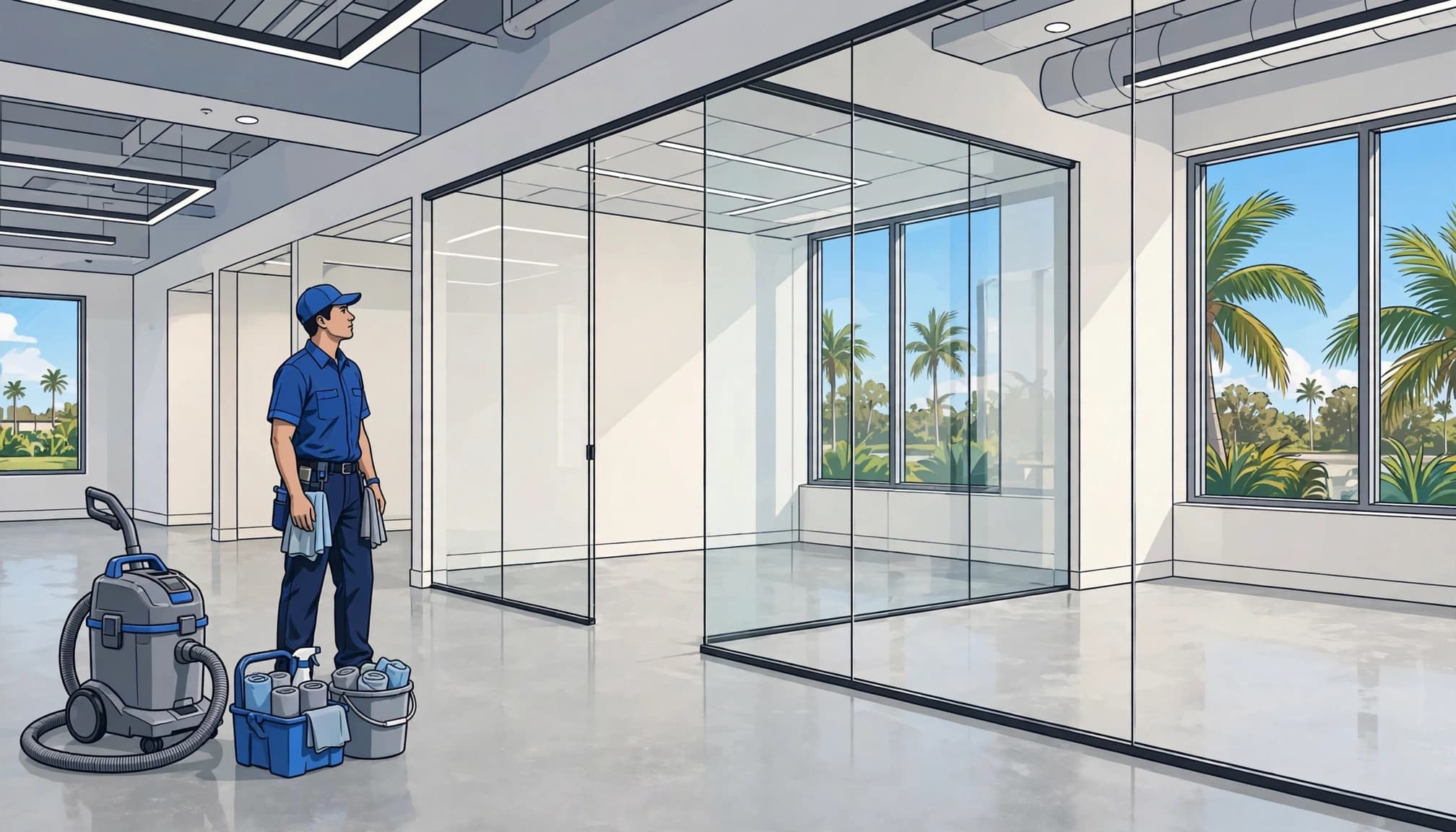
Rough clean removes major debris
The rough clean begins after major construction work is complete. This rough clean focuses on removing large items that prevent detailed cleaning.
This phase includes collecting packaging, scrap materials, tape, protective coverings, cardboard, plastic, and loose construction debris. Crews also sweep or vacuum accessible floor areas and clear pathways for later work.
Large debris shouldn’t be left in restrooms, stairwells, electrical rooms, or exits. These areas need to remain clear for safety and inspection access.
Light clean prepares finished surfaces
The light clean takes place when fixtures, trim, cabinets, flooring, and other finishes are installed. It protects and prepares newly installed surfaces while removing dust and residue before final detailing.
During this phase, crews wipe horizontal surfaces, clean cabinet interiors, remove labels where permitted, and dust light fixtures. HEPA vacuums help remove fine dust from floors and other appropriate surfaces. Interior glass, sills, frames, and door hardware also need attention.
Final clean creates a move-in-ready space
The last phase follows the departure of all trades. It provides deep cleaning, sanitizing, spot removal, glass cleaning, floor care, and a full quality inspection, leaving the space move-in ready.
We often schedule the final clean after the site has had time for remaining dust to settle. HVAC operation and air movement can redistribute dust, while humidity and remaining moisture can cause it to settle again, especially in Southwest Florida.
Inspect damp areas, and coordinate mold prevention or remediation separately if moisture is found.
Control Construction Dust and Protect Indoor Air
Construction dust differs from everyday office dust. Drywall, concrete, grout, tile, and masonry work create fine particles that settle into flooring, vents, window tracks, and equipment.
Fine silica dust needs special care. OSHA’s construction silica standard applies when silica dust is present and restricts dry sweeping. It also restricts uncontrolled compressed air when safer dust-control methods are available.
Use appropriate safety gear and respiratory protection. Assign trained personnel when work or site conditions require them.
Use HEPA vacuums instead of consumer vacuums
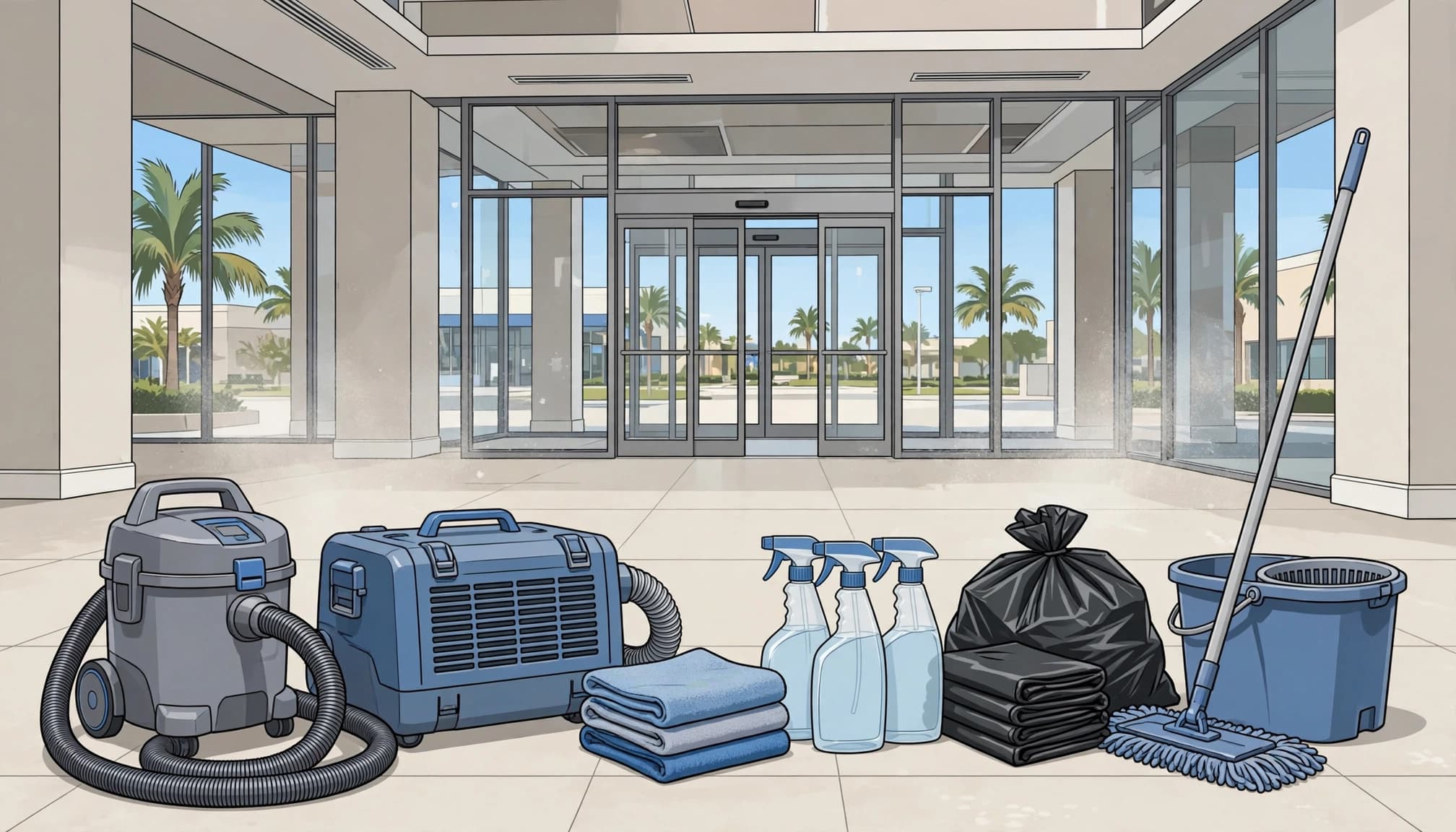
A standard consumer vacuum may collect visible dirt while pushing smaller particles back into the air. HEPA vacuums capture fine dust more effectively and help limit recirculation.
OSHA defines a HEPA filter as at least 99.97% efficient at removing 0.3-micrometer particles in its respirable crystalline silica requirements. This makes HEPA equipment a better fit for fine dust.
Start high and work down. Vacuum ceiling ledges, vents, frames, walls, baseboards, furniture surfaces, and floors in that order. Use microfiber cloths to collect dust without spreading it across finished surfaces.
Check HVAC systems before occupancy
Dust can travel through return grilles, supply vents, and duct openings during renovation work. Covering vents during dust-producing work helps, but it doesn’t replace a final inspection. Check return grilles, supply vents, filters, exposed ductwork, and nearby ceiling surfaces.
If ductwork was exposed or affected by heavy dust, discuss ventilation cleaning with a qualified HVAC provider. Duct cleaning may require a separate HVAC scope, so don’t assume it’s included in routine cleaning. The Pacific Northwest National Laboratory recommends running the air handler with a filter installed after duct cleaning, then replacing that filter before occupancy in its guidance on removing construction debris from ducts.
In humid Southwest Florida buildings, check for condensation, damp insulation, and conditions that could encourage mold growth before occupancy. Near the coast, salt-air residue may collect on grilles and nearby surfaces.
Air scrubbers can supplement dust control during heavy removal. Air scrubbers don’t replace source removal or proper ventilation. Before occupancy, remember that silica dust control means avoiding dry sweeping or uncontrolled compressed air when safer methods are available.
Room-by-Room Post-Construction Cleaning Checklist
A strong post-construction cleaning checklist should follow the way people use the building. Post-construction detailing goes beyond routine janitorial wiping, especially in shared spaces that clients, employees, and tenants see first.
Entrances, lobbies, offices, and common areas
Clean entry doors, glass, frames, handles, thresholds, and nearby walls. At storm-exposed entrances, check for salt, moisture, or other residue. Remove labels, stickers, fingerprints, tape, adhesive residue, and paint splatter with products approved for each surface.
Start high by dusting ledges, blinds, vents, baseboards, cabinets, shelving, and light fixtures. Wipe desks, counters, millwork, and accessible furniture surfaces if they are part of the project scope.
Finish by vacuuming carpets or dust-mopping hard floors. Inspect corners, floor edges, closets, and window tracks where debris often collects.
Restrooms, break rooms, and kitchens
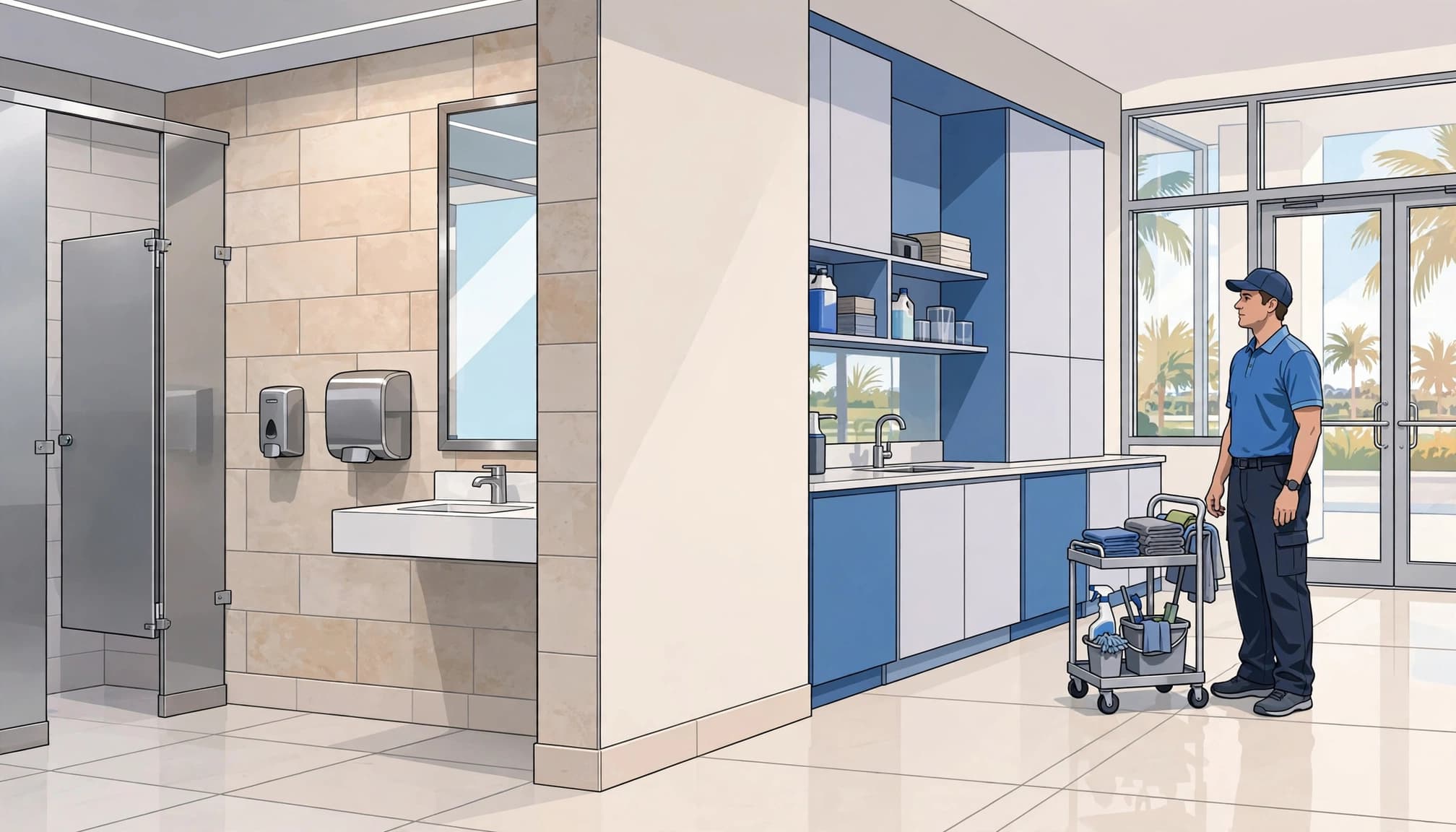
Restrooms require deep cleaning beyond visible dust. Clean and sanitize toilets, urinals, sinks, counters, partitions, dispensers, mirrors, fixtures, and door hardware. Keep floors clean, dry, and free of grout haze or residue.
In commercial kitchens and break rooms, clean cabinets inside and out, countertops, sinks, appliances, backsplashes, and baseboards. Check under sinks, behind appliances, in restrooms, and in areas affected by rain or HVAC condensation for packaging, sawdust, caulk tubes, loose hardware, or trapped moisture. Dry wet areas promptly to help prevent mold, but suspected mold remediation requires separate handling by qualified professionals.
Don’t use harsh acidic products on new natural stone, polished concrete, or surfaces with manufacturer-specific care requirements. Prioritize surface protection by testing a small hidden area when the material or residue is uncertain, and avoid aggressive scraping.
Floors, windows, and final detail work
Floor cleaning should match the surface. Haze removal may be needed for tile and grout. Luxury vinyl flooring needs a compatible neutral cleaner. Carpet may need vacuuming, spot treatment, or extraction if it was installed before construction ended.
Interior window cleaning should leave interior glass streak-free, with clean frames, sills, tracks, and nearby floors. Check coastal glass for salt-air film. Report scratched glass, damaged seals, or paint that cannot be safely removed before further attempts.
Handle Chemicals and Debris With Care
New finishes can be attractive and delicate at the same time. The wrong chemical can dull natural stone, damage polished concrete or resilient flooring, discolor grout, or mark new fixtures permanently.
Use products that match the surface
Read product labels and Safety Data Sheets before using cleaners, solvents, degreasers, or adhesive removers. Follow dilution instructions and keep products in their original labeled containers whenever possible.
Never mix chemicals unless the label gives clear instructions. Bleach, ammonia, acids, and disinfectants can create unsafe fumes when combined incorrectly.
Keep spill-response materials nearby, and wear PPE appropriate to the product and task. Ventilate enclosed areas when using products with strong odors or volatile organic compounds.
Humidity and poor ventilation in Southwest Florida can intensify odors and slow drying. Leave cleaned areas dry before occupancy, since strong chemical smells aren’t proof that a building is cleaner.
Separate debris before disposal
Construction debris requires more planning than regular office trash during commercial closeout. Separate cardboard, metal, clean wood, concrete, and other recoverable materials when the project allows.
The Florida Department of Environmental Protection’s C&D recycling guidance explains that construction and demolition debris recycling is tracked by county of origin. Confirm county rules, hauler requirements, and Florida waste disposal requirements with the contractor, property owner, and local solid waste provider before final removal.
Hazardous materials, silica-contaminated waste, paint, solvents, and batteries require separate handling, not ordinary trash removal.
Use durable contractor bags for ordinary loose debris. Don’t use contractor bags for sharp items, chemicals, paint, batteries, silica-contaminated waste, or other regulated materials.
Set Clear Quality Standards Before Reopening
The final walk-through should measure completed tasks, not only the time spent on-site. After the final clean, the inspection should be visual and operational, not just a time check.
Use a written cleaning checklist to compare completed work with the approved scope. This gives the project manager and cleaning team a clear way to identify corrections before the building opens.
A quality inspection should confirm:
- Glass is free of visible streaks, fingerprints, tape, and loose debris at normal viewing distance.
- Floors are clean, dry, and free of dust, paint spots, adhesive marks, and construction traffic marks.
- Restrooms are sanitized, odor-free, and ready for supplies and daily use.
- Entryways and corridors are clear. Emergency exits are dry, unobstructed, and safe.
- Cabinets, counters, fixtures, ledges, vents, and baseboards have no visible dust buildup.
- High ledges, vents, and HVAC grilles are free of visible dust and loose material.
- HVAC grilles and filters are secure, clean, and documented when changed.
- There is no visible moisture, condensation, or early mold indicator. Suspected mold or hazardous conditions require qualified review, not ordinary cleaning.
- Coastal doors and openings have no visible salt-air residue or moisture damage.
- Elevators and loading docks have clear travel paths, safe thresholds, and no remaining hazards.
- The property has no visible water entry or materials left vulnerable to wind before severe weather.
- Missed items, damage, unfinished work, or owner corrections are documented and reported to the building contact.
Digital checklists, supervisor signoff, time-stamped photos, and completed checklists document the handoff. Include scope exclusions, damage reports, filter-change records, unresolved items from the punch list, product-care instructions, and confirmation that keys or access devices were returned. These records make follow-up simple and separate post-construction closeout from recurring janitorial service.
Plan the Scope, Schedule, and Cleaning Budget
For commercial construction projects, post-construction cleaning prices usually reflect square footage, dust level, project phase, floor type, interior glass, access, floor cleaning, and detail items. A small empty office and a multi-suite medical facility will not require the same labor, equipment, or schedule.
Ask whether the proposal separates rough cleaning, final detailing, debris hauling, HVAC or duct coordination, exterior work, and recurring janitorial service that begins after occupancy. Also confirm that cleaning services cover high dusting, carpet care, floor machine work, interior glass, and exterior glass, with extra work defined before service starts.
Choose a team that can support the closeout
A dependable cleaning provider should have professional cleaners, trained staff, commercial insurance, safety procedures, and commercial-grade, HEPA-capable equipment. Supervisors should understand the written scope, manage access and safety concerns, complete documented inspections, and coordinate corrections for missed items.
For Southwest Florida properties, humidity, rain, wind-driven moisture, tracked-in sand, coastal salt-air residue, storm cleanup, and drying time can affect the work. A local crew should list any authorized pressure wash for exterior walkways or loading areas separately. Pressure washing and storm-related restoration are scope-dependent, and neither is assumed in an interior post-construction service.
We provide detailed commercial cleaning support for businesses in Fort Myers, Cape Coral, Bonita Springs, Naples, Lehigh Acres, and nearby communities. If you need a clear scope and reliable completion service, Get a FREE Quote Today.
Frequently Asked Questions
What is included in post-construction cleaning for a commercial building?
Post-construction cleaning may include debris removal, dust control, interior glass, floors, restrooms, break rooms, fixtures, ledges, baseboards, and final detailing. The exact scope should identify included areas and any exclusions, such as debris hauling, duct cleaning, exterior glass, or floor restoration.
When should the final post-construction clean be scheduled?
The final clean should take place after all trades have left and major construction work is complete. Allowing remaining dust to settle and checking HVAC operation can reduce repeat cleaning before occupancy.
Why are HEPA vacuums important after construction?
Construction materials such as drywall, concrete, grout, tile, and masonry can create fine particles that settle on surfaces and circulate through the air. HEPA vacuums capture fine dust more effectively than standard consumer vacuums and help limit recirculation.
Does post-construction cleaning include HVAC or duct cleaning?
Not always. HVAC grille and filter inspections are commonly part of the closeout checklist, but duct cleaning should be coordinated with a qualified HVAC provider when ductwork was exposed or heavily affected by dust.
How can a building prepare for post-construction cleaning in Southwest Florida?
Review access, moisture, condensation, rain intrusion, mold risk, and salt-air residue before cleaning begins. Plan for drying time, storm-related access concerns, and separate exterior or pressure-washing services when those tasks are needed.
A Clean Start for Your Commercial Property
A detailed post-construction cleaning checklist guides a phased closeout for a clean, safe, welcoming business environment. It should cover job-site dust, HVAC and ventilation reviews, moisture and mold prevention, coastal salt air, and storm readiness.
Surface-safe products, final inspections, and a documented handoff help confirm the property is move-in ready. One-time cleaning services complete the construction closeout, while ongoing janitorial maintenance supports the property afterward.