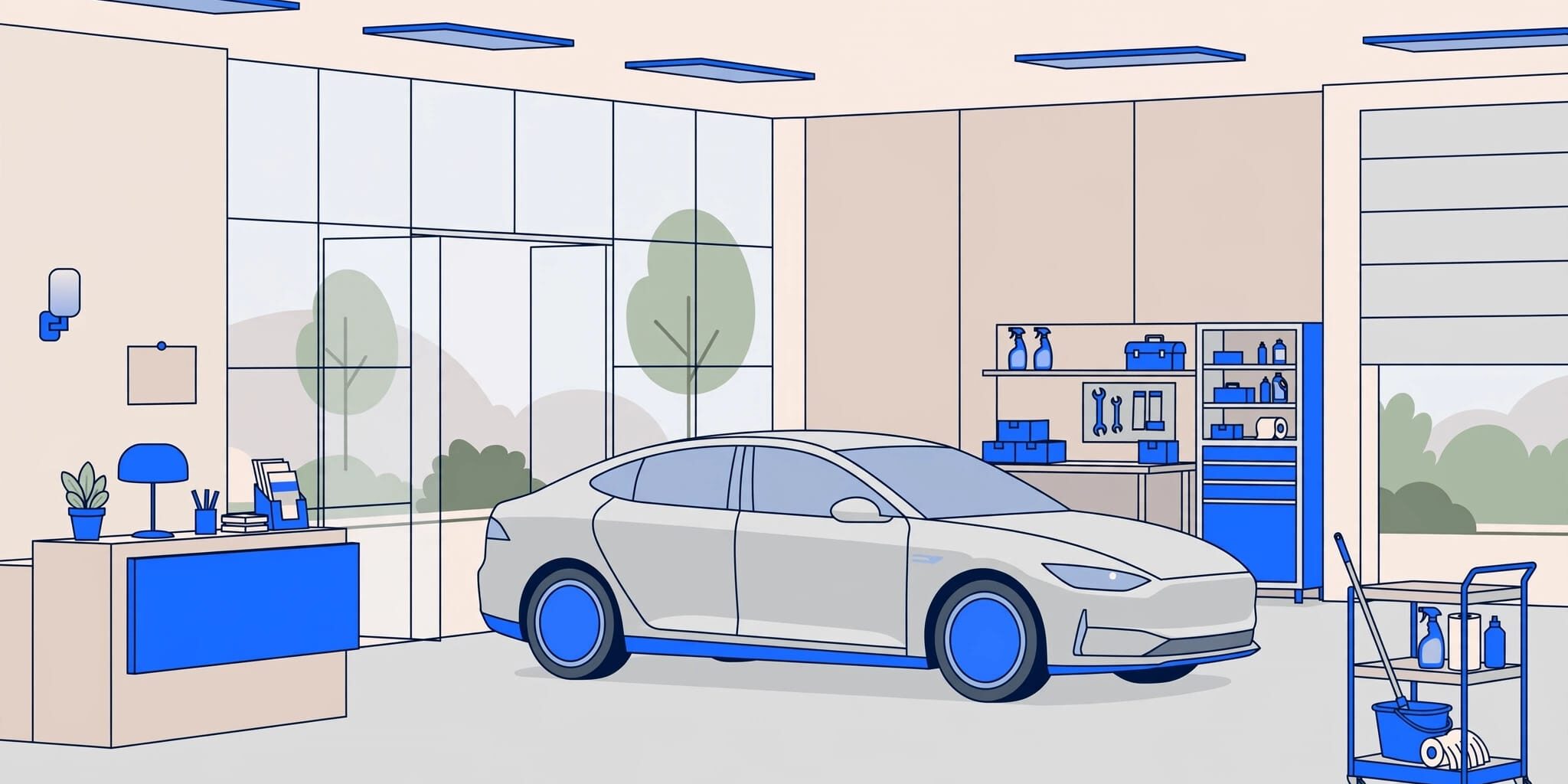
A dependable dealership cleaning checklist keeps your showroom welcoming, customer areas stocked, and service bays ready for work. It should connect every cleaning task with a frequency, an owner, and a clear ready-for-use standard.
Your customers see the showroom, but they also notice waiting-room upholstery, restroom supplies, and fingerprints on reception counters. For car dealership cleaning, organize tasks by zone, with daytime inspections supporting the work completed after closing.
Start with a practical schedule, then define what each area needs before customers and employees use it.
Key Takeaways
- Organize the dealership cleaning checklist by zone, frequency, responsible person, and a clear ready-for-use standard.
- Clean showrooms, customer areas, restrooms, display vehicles, service bays, and waste areas on daily routes, with weekly and periodic tasks for buildup and detailed care.
- Inspect busy customer areas during the day, and keep wet floors, spills, and other hazards closed off until they are safe to use.
- Record completion and inspection results separately, assign corrections, and keep maintenance issues and vehicle detailing within their own scopes.
Dealership Cleaning Schedule: Daily, Weekly, and Periodic
Daily cleaning handles fresh dirt and frequent contact. Weekly detailing and periodic deep cleaning address buildup that routine visits can miss.
Use this car dealership cleaning checklist as a starting point for your dealership.
| Zone | Daily tasks | Weekly tasks | Periodic tasks (monthly or as needed) |
|---|---|---|---|
| Showroom | Sweep or vacuum; mop compatible hard floors; wipe desks, chairs, counters, and handles | Detail glass, edges, and baseboards | Schedule deep cleaning for tile and grout; assess floor condition |
| Customer lounge | Vacuum upholstery and carpet; wipe tables; clean beverage stations | Clean beneath seating and detail furniture | Assess upholstery and carpet extraction needs |
| Restrooms | Clean fixtures and floors; disinfect as required; replenish supplies | Detail partitions, fixture bases, and grout | Inspect persistent stains, odors, and maintenance issues |
| Display vehicles | Remove dust; clean dashboards and windows; vacuum as needed | Review interior cleanliness and presentation | Review detailing needs |
| Service bays | Check wet or oily floors in service bays; restrict access until safe; remove debris and address oil or grease | Detail corners and accessible floor edges | Assess machine cleaning and recurring contamination |
| Waste areas | Empty and clean trash and recycling bins | Clean surrounding storage areas | Power-wash dumpsters, or sooner when needed |
Assign each row to a named employee or cleaning team. Add completion time and supervisor initials to your printed copy.
These frequencies don’t replace immediate attention to spills, full bins, or empty dispensers. Busy weekends and rainy days require additional inspections.
Showroom Floors, Glass, and Shared Surfaces
Clean floors without leaving residue
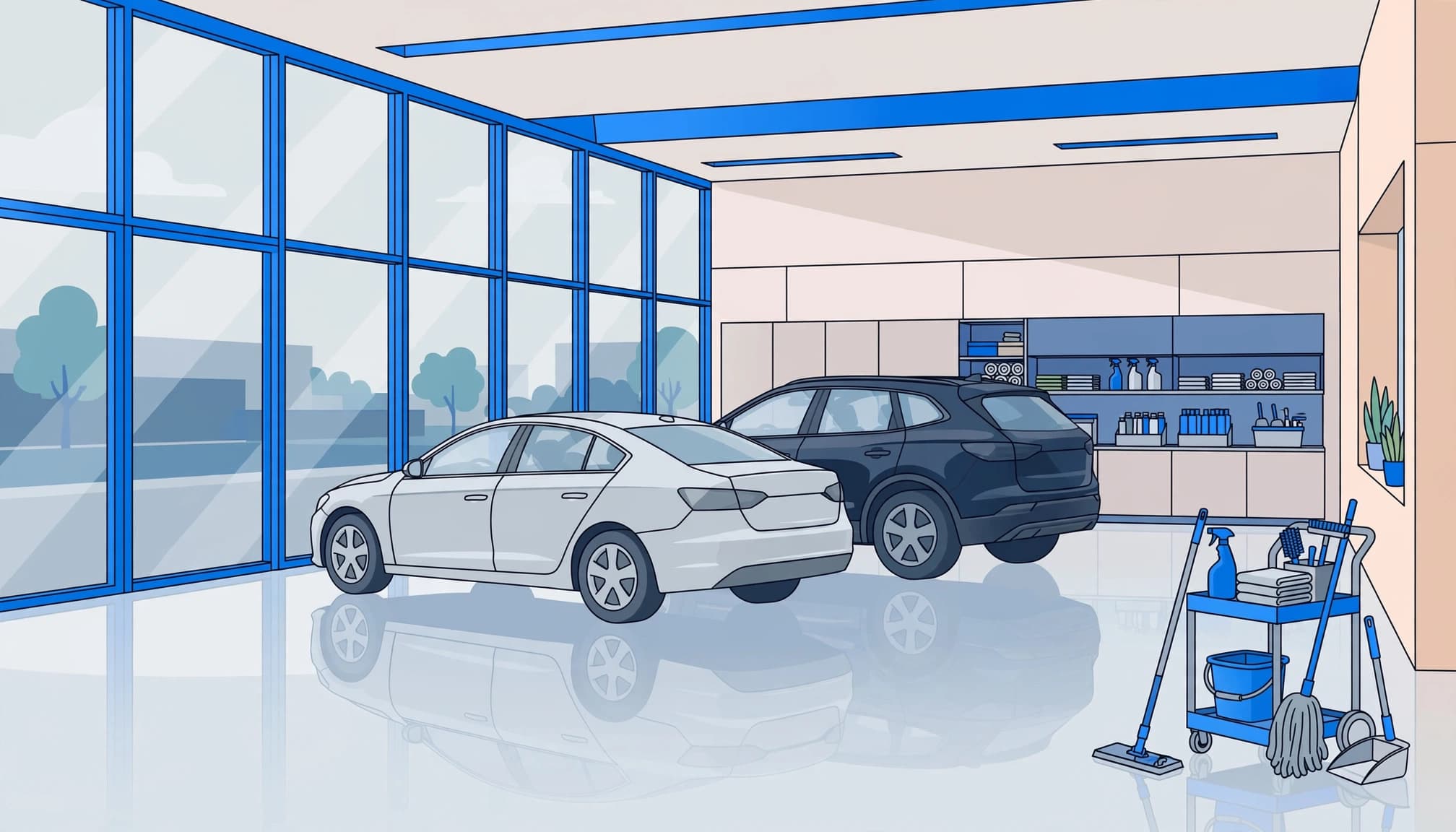
For showroom cleaning, sweep or vacuum showroom floors daily, then mop suitable hard surfaces. Remove tracked-in sand and check entrance mats for moisture, curled edges, and heavy soil.
Choose a cleaner that suits the showroom finish. Excess detergent can leave residue that attracts dirt or makes floors slippery.
Keep wet-floor signs or barriers in place while mopping. Reopen the area only when the floor is dry and residue-free.
Schedule monthly tile and grout deep cleaning for stubborn soil. Treat tire marks with a surface-compatible method, not aggressive chemicals. For floor-finish restoration, see our commercial floor stripping and waxing guidance.
Keep glass and customer touchpoints clean
Remove fingerprints from entrance doors, showroom glass, reception counters, and desks daily. Include chair arms, push plates, shared pens, phones, and service write-up counters.
The CDC’s facility cleaning guidance recommends regular cleaning of high-touch surfaces. Sanitize shared surfaces or use disinfection when illness or increased risk calls for it.
Keep confidential paperwork and customer information outside the cleaning scope. Staff should clear approved work surfaces before scheduled cleaning.
Display Vehicles and Test-Drive Preparation
Maintain clean display vehicles
Dust and wipe display-vehicle dashboards and windows, then vacuum carpets, floor mats, and upholstery as needed. Inspect door surfaces and interior presentation before opening.
Keep vehicle detailing separate from general building cleaning. Vehicle interiors, paint, trim, and glass need compatible care products, not whatever cleaner is available on the janitorial cart.
We recommend assigning vehicle presentation to a designated employee or detailing team. That responsibility should remain clear when cleaners work around showroom inventory.
Prepare test-drive vehicles before release
Test-drive vehicles should be clean and welcoming before customers receive the keys. Include a presentation review in the vehicle handoff, covering visible debris, interior cleanliness, window clarity, and lingering odors.
Vacuum when needed and return used vehicles to the preparation process before their next appointment. A clean showroom doesn’t make a neglected test-drive interior acceptable.
Record when each vehicle becomes ready. This helps sales staff distinguish vehicles awaiting cleaning from those available for customers.
Customer Lounges, Beverage Stations, and Restrooms
Keep customer waiting areas clean throughout the day
Vacuum upholstery and carpets in customer lounges daily, wipe tables and chair arms, and remove used cups promptly. Clean and sanitize customer-facing touchpoints, including coffee-machine controls, refrigerator handles, drip trays, and condiment areas.
Include shared reading materials in the hygiene plan. Clean reusable holders and wipeable covers; remove visibly soiled paper items rather than applying unsuitable chemicals.
Schedule upholstery cleaning according to fabric condition and care requirements. Persistent traffic lanes or recurring carpet stains may require commercial carpet cleaning, beyond daily vacuuming.
Service restrooms and apply disinfection correctly
Clean toilets, urinals, sinks, countertops, mirrors, and floors regularly. Inspect stall latches, faucet handles, flush controls, and dispenser exteriors during service.
Restock hand soap, paper towels, and toilet paper before supplies run out. Busy dealerships need checks multiple times daily, especially around weekend sales peaks.
Cleaning removes soil; sanitizing and disinfection are separate treatments when required. Use dedicated restroom supplies to reduce cross-contamination.
The EPA’s registered disinfectant guidance explains that treated surfaces must remain visibly wet for the label’s full contact time. A quick wipe doesn’t necessarily meet that requirement.
Electrostatic spraying or fogging belongs only in a treatment plan using products labeled for that application. Neither method removes the need to clean away dirt.
Service Bays, Spill Response, and Waste Removal
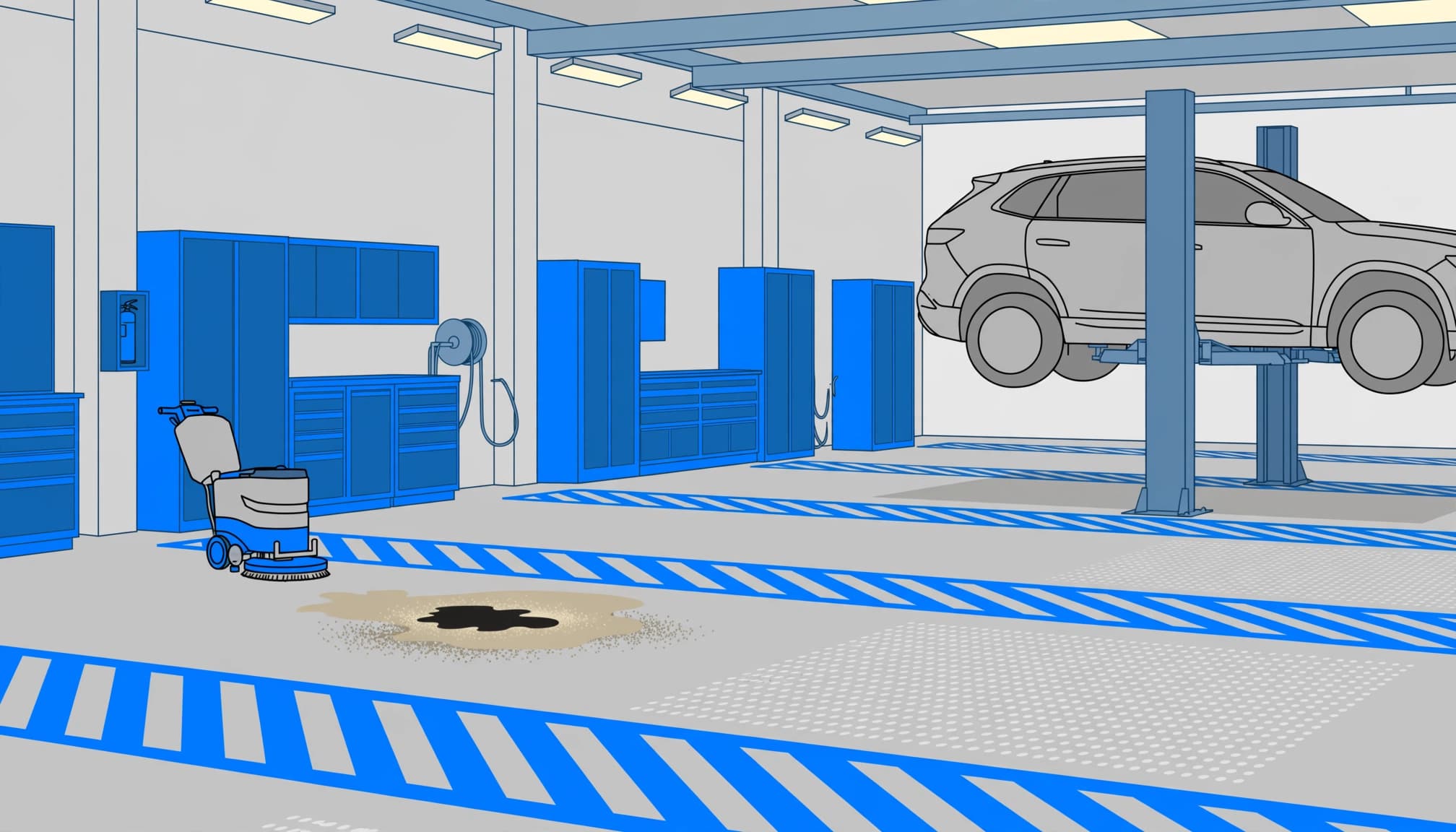
Remove debris, oil, and grease safely
Dry-pick suitable debris before wet floor cleaning. Assign sharp objects, hazardous materials, and automotive-fluid spills to employees trained to handle them.
Use an approved process that’s compatible with the floor to remove oil and grease. Follow product labels and safety data sheets, and wear task-appropriate PPE. Don’t mix chemicals or use stronger concentrations than directed.
Place barriers or signs around the affected area and keep the bay closed until contamination and cleaning residue are removed. Reopen it only when the floor is dry and has safe traction.
OSHA’s walking-working-surface standard requires hazards to be corrected before employees use the surface again, or access guarded until correction. Arrange a maintenance handoff when a continuing leak causes repeat contamination.
Keep waste streams separate
Empty and clean ordinary garbage and recycling bins daily, replacing liners and removing residue. Clear waste before it overflows during busy periods.
Keep automotive fluids, batteries, contaminated absorbents, and other regulated waste separate from routine janitorial trash.
Schedule dumpster power-washing monthly or as needed. Capture contaminated wash water and route it for approved treatment or disposal under local requirements. Keep oily wastewater and chemical solutions out of storm drains and other drains.
Inspect the surrounding enclosure for loose debris and persistent odors. Pest activity or damaged containers requires attention beyond simply replacing a liner.
Overlooked Areas and Cleaning Quality Control
Inspect details that routine routes miss
Include air vents, duct grilles, baseboards, ceiling light diffusers, furniture undersides, and window edges in periodic inspections. Surface cleaning doesn’t replace HVAC servicing.
Add high-touch surfaces, charging cables, touchscreen displays, shared printers, and sign-in equipment to the inspection inventory. Assign responsibility for their care.
Report damaged fixtures, burned-out bulbs, loose floor transitions, and leaks as maintenance issues. Cleaning staff shouldn’t mark repairs as completed cleaning tasks.
Define results, owners, and corrections
Each checklist entry should record the zone, task, frequency, responsible person, acceptable result, completion time, and inspection outcome.
Use direct standards: glass free of visible fingerprints, floors dry and clear, fixtures without residue, and dispensers stocked. Record missed work, a correction deadline, and final sign-off.
Completion initials confirm that someone performed a task. Inspection sign-off confirms that the area met its ready-for-use standard.
Written procedures should cover approved products, equipment, protective equipment, access restrictions, security, and supply locations. Keep routine service separate from carpet extraction, floor restoration, and approved extra work.
We recommend walking the customer route during inspections. Start at the entrance, continue through reception and the lounge, then finish with restrooms and vehicle presentation.
Cleaning Around Sales Hours and Launch Events
Plan noisy equipment, extensive wet cleaning, and detailed floor work outside customer hours. Our after-hours cleaning planning guidance helps organize access, supplies, and handoffs.
For a launch event, divide the work into practical stages. If the written disinfection plan calls for electrostatic spraying, schedule it after cleaning and before setup, following the product label. It doesn’t replace cleaning.
- Complete the deep clean before event setup, including floors, glass, restrooms, seating, and overlooked ledges.
- Schedule final polishing and suitable floor care with enough drying time before opening.
- Perform opening touch-ups, restroom supply checks, and bin inspections.
- Assign an on-site cleaner to washrooms, waste, and spills during the event.
- Complete a post-event reset before normal operations resume.
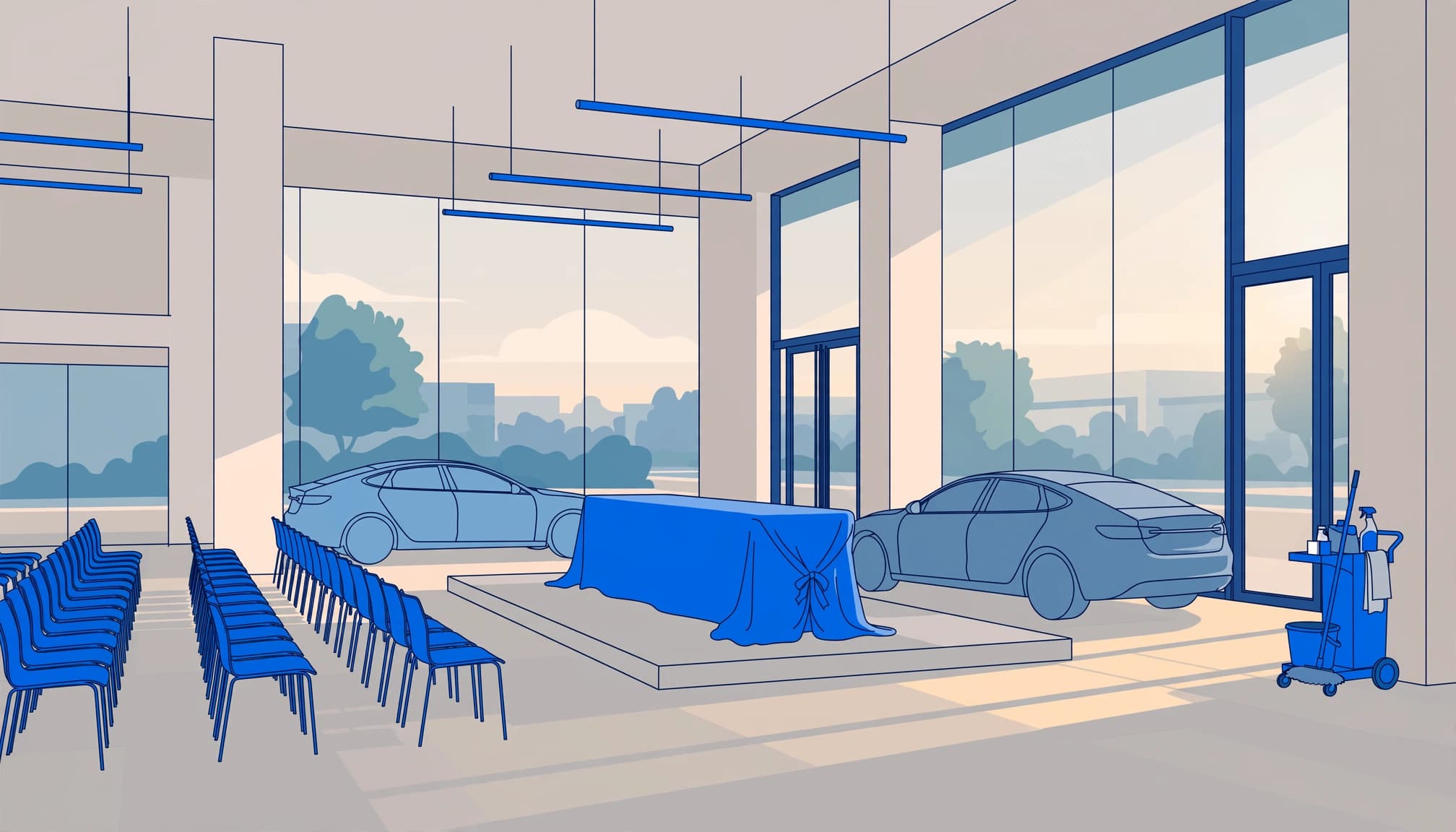
During trading hours, explain temporary closures clearly and keep customers away from wet floors. Preserve access to exits and occupied areas.
Professional Cleaning and the True Cost Per Area
In-house staff can inspect touchpoints, report spills, and manage simple presentation tasks. Professional cleaning is useful when restroom demand, floor care, or daytime upkeep regularly interrupts sales and service work.
Our commercial janitorial cleaning services support scheduled cleaning and common-area care. Vehicle detailing and automotive hazards should have their own assigned scope.
Compare costs using completed, accepted work rather than square footage alone. Track labor time, product use, water, equipment costs, and rework for each service lane, showroom section, and vehicle-preparation task.
Divide those costs by the accepted areas or vehicles completed. Compare similar tasks separately, since a showroom section and an oily service lane require different resources.
For your dealership’s offices and shared business areas, contact us by phone or email to Get a FREE Quote Today.
Frequently Asked Questions
How often should a dealership be cleaned?
Clean high-use areas such as showroom floors, restrooms, customer lounges, and service bays daily. Schedule detailed work weekly or periodically, and inspect busy areas more often when sales peaks, rain, spills, or full bins require it.
What should a dealership cleaning checklist include?
List each zone, task, frequency, responsible person, acceptable result, completion time, and inspection outcome. Record missed work, its correction deadline, and the final sign-off.
When can a cleaned floor or service bay reopen?
Keep the area closed while it is wet or has cleaning residue or contamination. Reopen it only when the floor is dry, clear, and has safe traction.
What should a restroom disinfection process include?
Use products according to their labels, including the full contact time required for treated surfaces to remain visibly wet. Cleaning removes soil, while sanitizing and disinfection are separate treatments when required.
Keep Every Dealership Zone Ready for Use
A strong auto dealership cleaning checklist combines daily care, periodic deep cleaning, and clear inspection standards. The most useful measure is readiness, not the number of tasks marked complete.
Assign owners, address missed work, and keep maintenance concerns separate from cleaning. Consistent follow-through helps your dealership maintain a clean, professional environment throughout the business day.