A carpet can look acceptable at a glance while holding months of dirt, moisture, and odors beneath the surface. When these problems become visible, commercial carpet cleaning is no longer an optional upgrade for your office. It is part of protecting your workplace, your flooring investment, and the impression visitors receive.
Business owners often notice the warning signs in busy areas first. The lobby looks dull, walkways appear darker, and the office develops a smell that air freshener cannot cover. Knowing what to look for helps you schedule professional carpet cleaning before the carpet becomes permanently damaged.
Key Takeaways
- Dark traffic lanes, recurring stains, and persistent odors often point to soil trapped below the carpet surface.
- Vacuuming performs basic dry soil extraction for loose debris, but it cannot replace scheduled hot water extraction for deep cleaning.
- Damp carpet, visible mold, or rapid re-soiling requires prompt attention.
- A written cleaning scope should identify carpeted areas, extraction frequency, products, drying expectations, and extra-work charges.
- Professional service supports a cleaner appearance, healthier indoor environment, and longer carpet life.
Why Commercial Carpet Cleaning Matters for Business Properties
Office carpet receives constant use, especially on commercial glue down installations throughout the building. Employees walk across it throughout the day, visitors track in outdoor soil, and rolling chairs press dirt into the fibers. In Southwest Florida, rain, humidity, sand, and landscaping debris can make this buildup happen even faster.
Routine vacuuming is important, but it only handles loose particles near the surface. It cannot remove all the soil, oils, spills, and moisture that settle deeper in the carpet, which is why regular deep cleaning is necessary. Professional extraction reaches below the visible layer and removes buildup that daily cleaning leaves behind.
Carpet also affects how the entire office looks. A clean reception area feels organized and welcoming with professional carpet cleaning in place. A worn, stained lobby can make customers question how carefully the business manages other details. This matters in professional offices, medical facilities, retail spaces, hotels, schools, restaurants, and churches.
Regular care can also reduce premature replacement. One facilities source reports that scheduled carpet cleaning may extend carpet life by as much as 40 percent, although results depend on the carpet type, traffic, maintenance routine, and condition. You can review the importance of office carpet care for additional information about appearance, air quality, and how advanced carpet cleaning equipment protects your flooring.
Dark Traffic Lanes Are Becoming Impossible to Miss
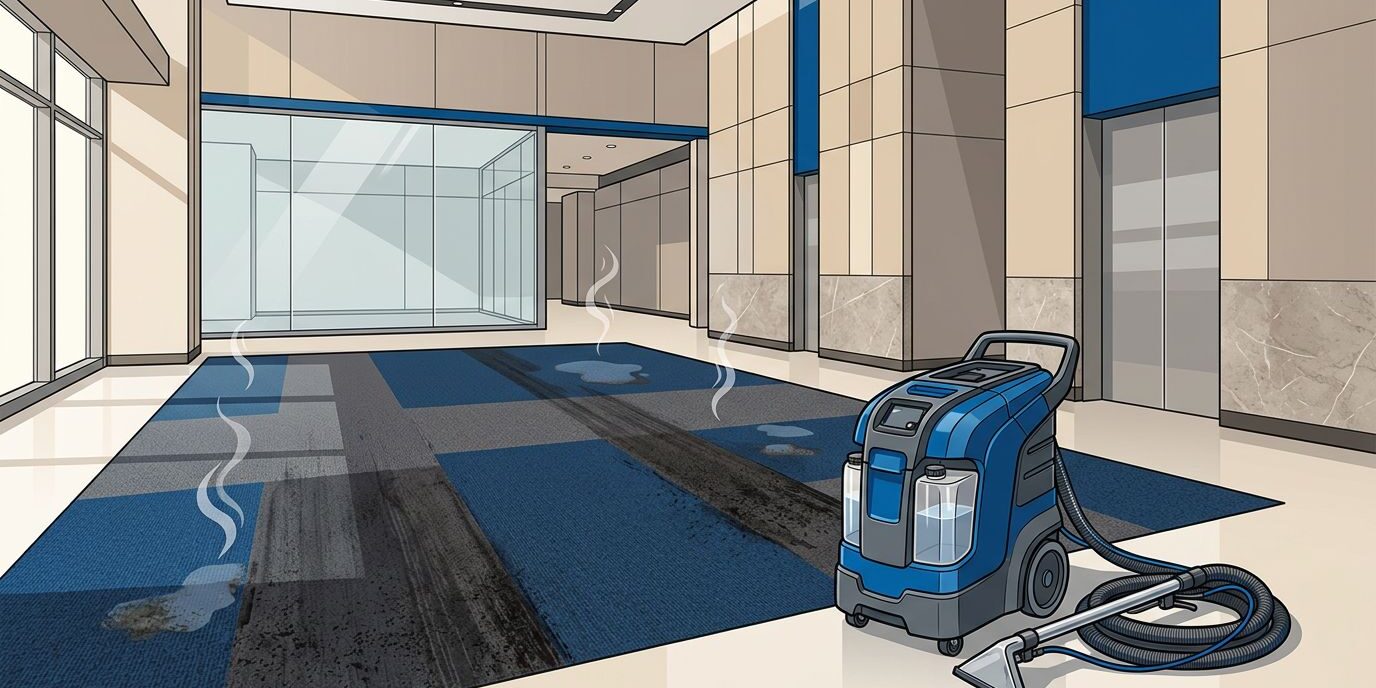
Dark lines along hallways, entrances, and high-traffic areas are among the clearest signs your office needs professional carpet care. These lanes form where people walk most often. Dirt, sand, body oils, and outdoor moisture are pressed into the carpet with every step.
At first, the change may look minor. Over time, the carpet develops gray or brown strips that remain visible even after vacuuming. The difference between heavily used areas and protected spaces becomes especially noticeable near desks, elevators, conference rooms, and reception counters.
A quick vacuum may improve the surface for a short time. It will not remove compacted soil that has bonded to the fibers, so technicians often apply a traffic lane cleaner or chemical pre-spray agitated by a counter-rotating brush before rinsing. Repeated foot traffic can also grind abrasive particles deeper into the carpet, which may wear down the fibers and affect their texture.
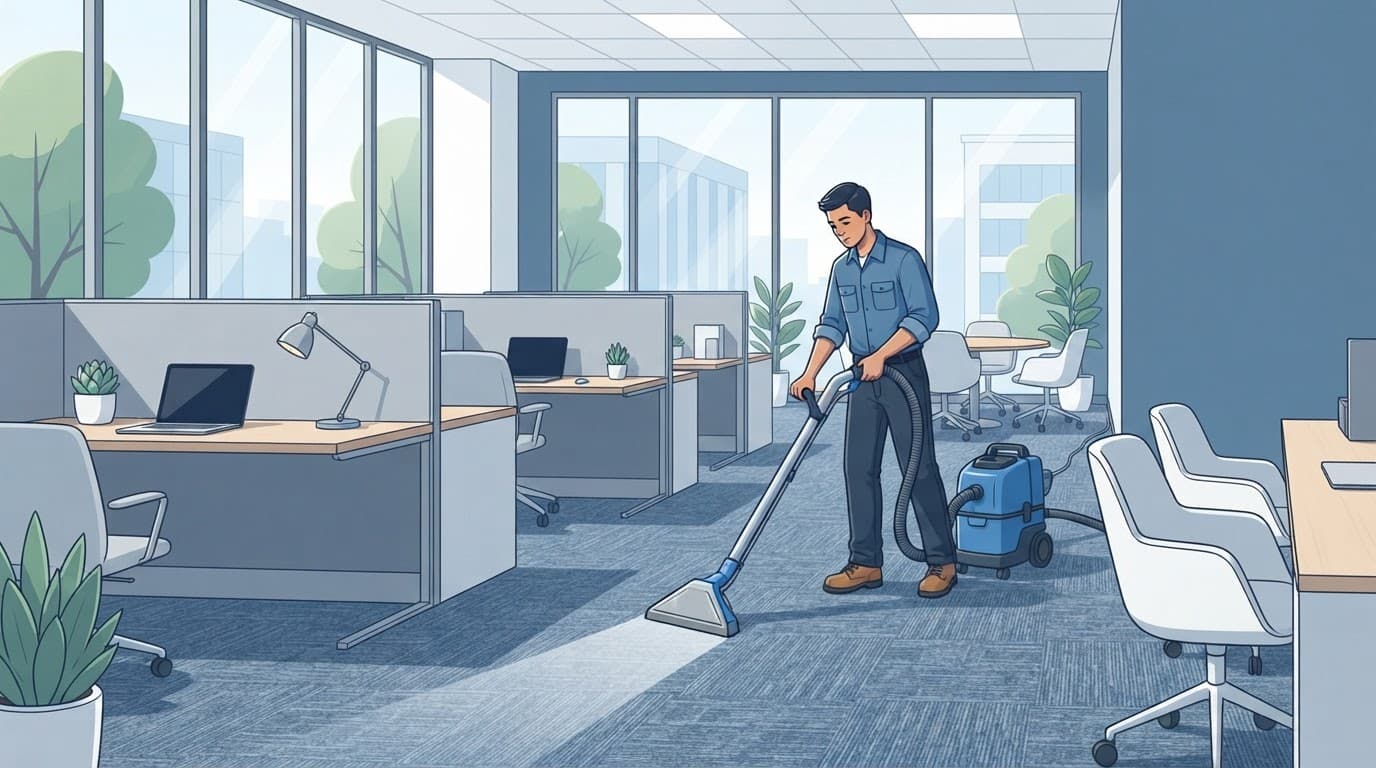
The longer these lanes remain untreated, the harder they may be to restore. A scheduled hot water extraction service helps remove embedded soil before it causes permanent discoloration or fiber damage. High-traffic routes may need more frequent attention than lightly used private offices.
Stains Keep Returning After They Are Cleaned
A stain that returns after cleaning is not always a new spill. It may be residue or moisture rising from beneath the carpet surface. This process is common when a spill reaches the backing or padding and later moves back into the fibers.
Coffee, juice, soda, grease, and an improper spot and stain remover can all leave residue behind. If a poor-quality carpet cleaner concentrate is used, the spot may attract more dirt than the surrounding carpet. The area then becomes darker again within days.
Recurring stains deserve attention because repeated spot treatment can spread the problem. Scrubbing too aggressively may damage the fibers, while a tough organic spot might need a specialized urine stain remover instead of generic soapy water. A professional cleaner can assess the material, identify the likely source, and choose a method that fits the carpet.
Do not wait until every stain becomes a permanent mark. Record the location of recurring spots and tell the cleaning provider what caused them when that information is available. This helps the crew select suitable cleaning solutions and avoid treatments that may damage dyes, adhesives, or carpet backing.
Persistent Odors Remain After Regular Cleaning
A stale, musty, or sour smell is another sign your office carpet needs more than routine vacuuming. Odors can come from spilled drinks, food, moisture, pet exposure in some workplaces, or biological spills that call for a specialized urine stain remover to eliminate the root cause.
Covering the odor with fragrance does not remove the source. It only combines two smells and may make the office less comfortable for employees or visitors, which is why professional carpet cleaning is essential for targeting trapped pollutants directly. This is especially concerning in smaller rooms, waiting areas, and offices with limited ventilation.
Moisture deserves prompt attention. Carpet that stays damp can develop unpleasant odors and may contribute to mold growth in the padding or subfloor. A spill, plumbing issue, air-conditioning leak, or storm-related moisture should be addressed quickly, and our office water damage cleanup checklist walks managers through the response.
A professional provider should explain drying expectations before work begins. The office may need controlled airflow, limited foot traffic, or temporary access restrictions after a thorough hot water extraction, and technicians will often place an air mover in the space to accelerate the drying process. Furniture should not return to the carpet until the surface and backing are adequately dry.
For additional information, commercial carpet cleaning and indoor air quality are often discussed together because carpet can hold pollutants and allergens when maintenance is inconsistent.
Employees Report More Dust, Allergies, or Discomfort
Carpet fibers can collect dust, pollen, and other particles that enter through doors, windows, clothing, and ventilation systems, and that buildup is a common driver of [office indoor air quality problems](https://www.proshinecleaningservices.com/indoor-air-quality/). Routine vacuuming provides basic surface dry soil extraction, but neglected carpet may continue holding contaminants below the surface.
If employees mention increased dust, musty smells, or irritation in carpeted areas, inspect the flooring as part of the response. Carpet may not be the only cause, but it should not be overlooked. Check for damp spots, dirty entry mats, clogged filters, checking vacuum hose suction and filter integrity, and areas where soil is visibly accumulating.
This does not mean carpet cleaning can prevent every health complaint. It does mean that a clean, dry, well-maintained floor supports a more comfortable workplace. Cleaning products should also be selected carefully, especially in medical offices, schools, and facilities serving people with sensitivities.
A written maintenance plan should identify routine vacuuming, spot treatment, and periodic extraction. It should also explain which products are used and whether low-moisture options like encapsulation technology and non-toxic cleaning solutions are available. Clear information helps facility managers make better choices for the people using the building.
The Carpet Re-Soils Quickly After Vacuuming
Some offices notice that carpet looks clean immediately after vacuuming but becomes dull again within a day or two. Rapid re-soiling can indicate that dirt remains embedded in the carpet or that a sticky pre-spray solution is attracting new soil.
Heavy residue may come from previous spot treatments, incorrect detergent use, or incomplete rinsing. High-traffic entrances can also bring in sand and oily outdoor debris that spreads quickly through the building.
Review the cleaning method if the carpet never stays clean. A strong plan usually includes:
- Slow, thorough vacuuming around edges, corners, and furniture, as well as agitating heavy soils using a counter-rotating brush.
- Prompt treatment of spills before they spread.
- Regular entrance mat cleaning and repositioning.
- Periodic extraction based on traffic and carpet condition, utilizing an acidic extraction rinse during the extraction rinse cycle to leave fibers residue free.
- Drying procedures that prevent moisture from remaining in the padding.
Carpet maintenance should match the building. A small private office and a busy medical lobby should not automatically receive the same schedule. Traffic, flooring type, weather, food service, and operating hours all affect the right frequency.
Visible Wear, Matting, or Fiber Damage Is Spreading
Flattened carpet is common in high-traffic areas where people stand or walk repeatedly. You may see matted fibers near reception desks, copy rooms, break rooms, corridors, and entrances. Worn carpet often looks darker because the fibers no longer reflect light evenly.
Cleaning cannot reverse every type of damage, and mechanical agitation from a rotary machine cannot restore missing pile once fibers are worn away. If the backing is separating, seams are opening, or fibers are missing, repair or replacement may be necessary. However, proper maintenance can help prevent manageable wear from becoming a larger problem.
Use entrance mats at exterior doors and keep them in place. Inspect them after heavy rain and remove tracked-in moisture quickly. Chairs and carts should also be moved carefully because dragging can stretch or tear carpet.
A professional cleaning assessment can help separate soil from physical wear. That distinction matters when budgeting. Restoring a dirty floor often involves commercial carpet extractors, such as a high-heat truckmount system or a versatile portable extractor, to flush out heavy embedded soil, while permanently damaged carpet may require repair or partial replacement.
The Cleaning Contract Does Not Define Carpet Care
Many office cleaning agreements list vacuuming but leave extraction work unclear, which creates confusion when the carpet requires proper deep cleaning. A complete scope should identify every carpeted area, routine tasks, scheduled extraction, spot treatment, furniture movement, products, and drying requirements.
Ask whether carpet extraction is included in the regular price or billed separately. High dusting, hiring a professional upholstery cleaner, interior glass, post-event cleanup, and floor machine work may also be outside the monthly fee.
The contract should also explain the service schedule and quality standards, including expectations for the application of a safe pre-spray solution. A practical standard may include clean walkways, no visible soil at normal viewing distance, dry floors, acceptable odor control, and prompt attention to spills. These details give both sides an objective way to review results.
Before signing, confirm the initial term, cancellation notice, renewal language, price changes, billing schedule, and extra-work charges, as well as the specific carpet cleaning equipment the provider relies on. If something is missed, ask how the provider reports the issue, sends follow-up service, and documents the correction. Reliable service does not require a promise that nothing will ever be missed. It requires a clear response when something needs attention.
Choosing the Right Commercial Carpet Cleaning Schedule
There is no single schedule for every business. A low-traffic office may need periodic deep cleaning, while a busy lobby, school, hotel, or medical facility requiring commercial carpet cleaning may need more frequent care, especially for a commercial glue down installation.
Start by measuring the carpeted space and identifying the areas with the most traffic. Then consider seasonal conditions, especially rainy periods in Fort Myers, Cape Coral, Bonita Springs, Naples, and nearby communities. Entrance areas often need additional inspection during wet weather.
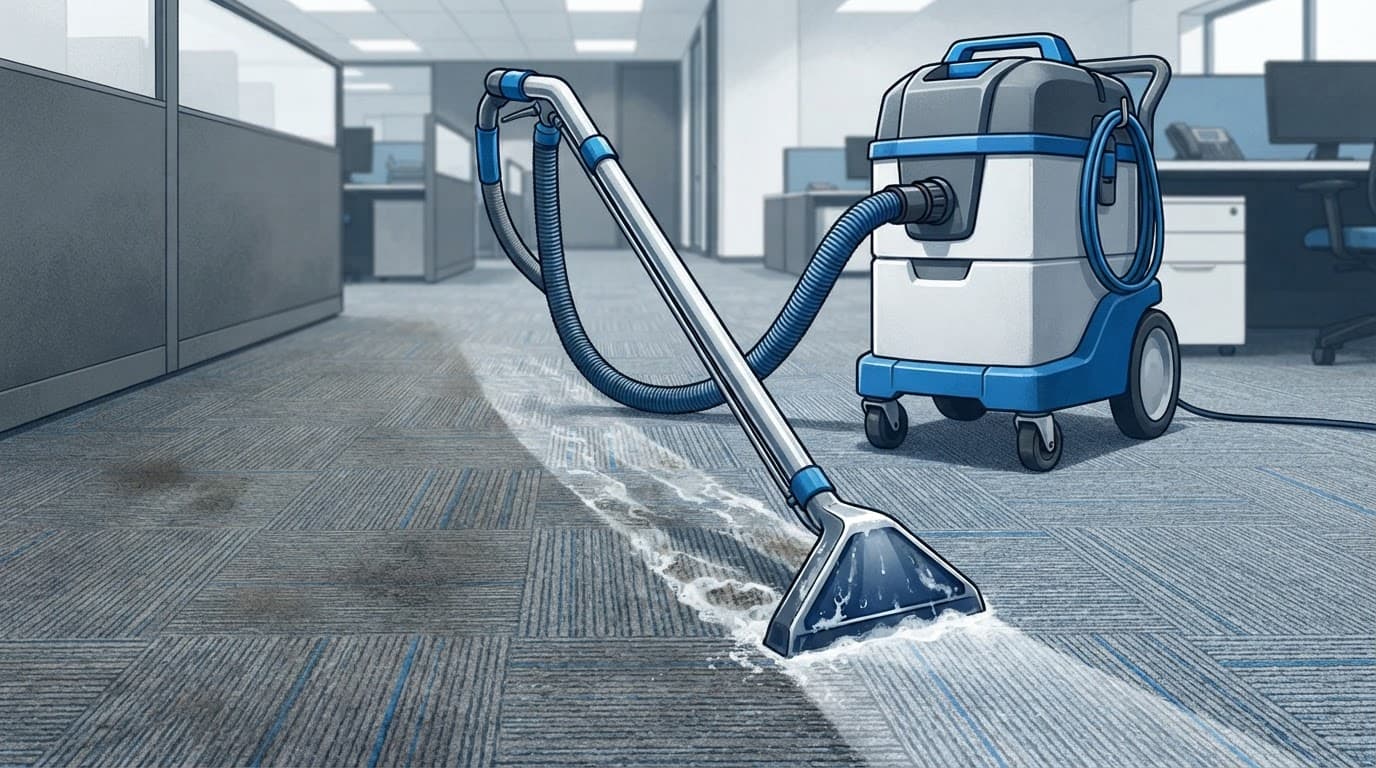
A professional carpet cleaning plan should utilize advanced carpet cleaning equipment, including a chemical pre-spray or pre-spray solution to break down oils, agitation via a counter-rotating brush or rotary machine, and thorough hot water extraction with a truckmount system or portable extractor.
Robust carpet extractors connected to a flexible vacuum hose flush embedded soil out effectively, followed by a neutralizing extraction rinse and rapid drying with an air mover. Facilities can also benefit from low-moisture encapsulation technology, targeted spot and stain remover applications, and a specialized upholstery cleaner for office furniture.
Our team at Pro Shine Cleaning Services provides professional carpet cleaning and customized maintenance plans for offices and professional facilities throughout Southwest Florida. We use supervised, trained crews and focus on dependable service, clear communication, and consistent results. To discuss your building and request pricing, Get a FREE Quote Today.
Frequently Asked Questions
How often should commercial office carpets be professionally cleaned?
Most commercial carpets benefit from professional hot water extraction every six to twelve months. However, high-traffic areas like lobbies, hallways, and break rooms may require quarterly or even monthly attention depending on foot traffic and local weather conditions.
Can professional carpet cleaning remove stubborn stains completely?
While professional extraction and specialized spot treatments successfully remove the vast majority of spots, results depend on the type of stain and how long it has set. Prompt attention to spills prevents permanent discoloration and fiber damage.
Why do some stains reappear shortly after cleaning?
Recurring stains usually happen when spilled liquid has soaked into the carpet backing or padding and slowly wicks back to the surface as it dries. Improper cleaning residue can also attract new dirt quickly, making the spot look dark again within days.
Conclusion
Dark traffic lanes, returning stains, persistent odors, employee complaints, rapid re-soiling, and visible wear are clear signs your office carpet needs professional attention. Waiting can allow soil, moisture, and fiber damage to become harder and more expensive to correct.
Regular commercial carpet cleaning supports a healthier, more professional, and better-maintained workplace. With a clear scope, suitable schedule, and reliable follow-up process, your carpet can remain cleaner and useful for longer.