Water in an office is never only a wet floor. Burst pipes, roof leaks, HVAC failures, or sewage backups can affect electrical systems, equipment, records, walls, flooring, and daily operations. In a commercial building, commercial water damage can quickly affect operations, so Office water damage cleanup needs to begin quickly, with safety and documentation handled before routine cleaning.
A facilities manager must protect employees, notify the right parties, and stop small moisture problems from becoming mold or structural damage. This checklist covers the professional water damage restoration process, including the first response, drying, insurance records, and the return to a clean workplace.
Office water damage cleanup starts with safety
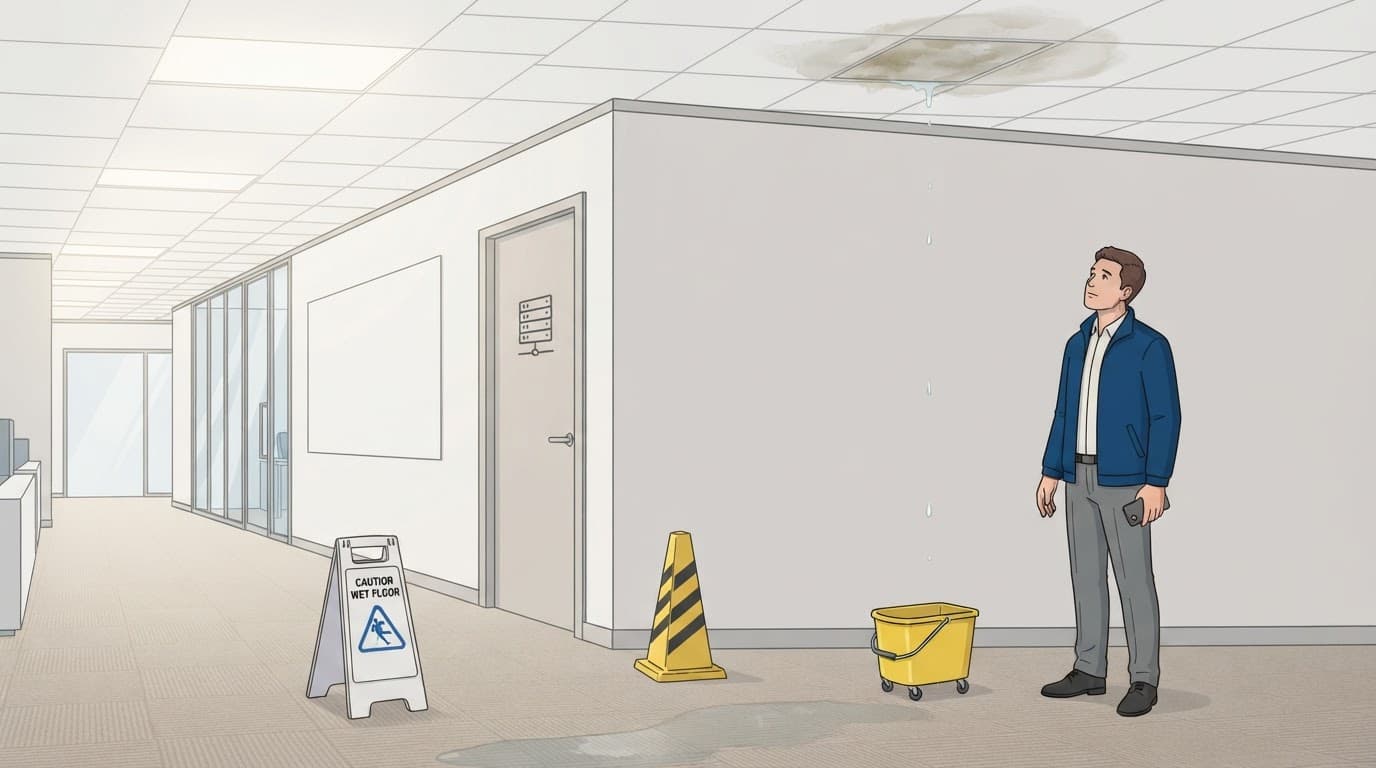
A facilities manager should keep employees, tenants, visitors, and cleaning staff away from standing water until the area has been inspected. Water may be hidden under flooring, inside walls, above ceiling tiles, or beneath a raised floor.
Shut down hazards before entering
If water is near outlets, power strips, electrical panels, server racks, elevators, or underfloor wiring, treat the area as unsafe. Shut off the affected circuit only if the panel is in a dry, accessible location. Never step through water to reach a breaker.
If the shutoff point is wet or unclear, contact a qualified electrician or building engineer. OSHA’s flood response guidance also advises turning off power when water has reached electrical circuits or equipment.
Managers should also:
- Stop the water source if it can be done safely.
- Place signs and barriers around wet floors.
- Keep people away from sagging ceilings or damaged walls.
- Avoid elevators in areas affected by water.
- Call an emergency restoration provider to coordinate water mitigation for standing water or contaminated materials.
Select qualified responders and document safe assessment and containment practices. IICRC standards provide an industry reference, not a legal requirement.
Identify the water category
The source affects the cleanup process. Clean water from a supply line, burst pipes, or rain leak may be handled differently from water that has passed through a drain or sewage system.
Gray water can contain chemicals or microorganisms. Black water may include sewage, toilet contamination, or floodwater with harmful contaminants. This contaminated water requires specialized handling. Porous materials exposed to it may require removal or specialized remediation.
Do not ask regular office staff to perform sewage cleanup, handle contaminated carpet, or remove heavily damaged materials. The wrong response can spread contamination and expose people to avoidable health risks.
The first 24 hours require organized action
A facilities manager handling office water damage cleanup should write down the first response and assign tasks. They should not depend on memory while handling tenants, vendors, employees, equipment, and insurance questions at the same time.
Use this immediate checklist:
- Record the time the damage was discovered and the likely source.
- Notify the building owner, property manager, tenants, and emergency contacts.
- Restrict access to affected rooms and shared areas.
- Contact a water damage restoration provider that can coordinate water mitigation and water extraction, plus the building’s preferred electrician.
- Ask IT to assess equipment, network rooms, and data backups.
- Photograph conditions before items are moved, when it is safe to do so, and preserve inventory records to help establish the pre-loss condition.
Protect servers and electronic equipment
Wet electronics should not be switched on. Do not plug in a computer, move a wet power strip, or restart a server rack to see whether it works.
Contact the IT provider, electrician, and restoration company before working inside a server room. Qualified personnel should use moisture meters and thermal imaging when appropriate, while office staff should not enter unsafe rooms or operate equipment.
Water can affect UPS units, rack power distribution units, cabling, cooling systems, and air pathways under raised floors, even when the visible damage looks limited.
Create an equipment record with the room location, item description, serial number, visible condition, and owner. Keep damaged equipment in place until qualified personnel inspect it, unless it creates an immediate safety hazard.
Save records and document the loss
Wet paper records need quick attention because ink can bleed and pages can stick together. Separate affected files carefully, avoid stacking wet documents, and contact a document restoration specialist when the materials are important or heavily saturated.
Keep a dated file containing:
- Photos and videos of each affected room.
- Moisture readings and daily drying logs.
- Water removal invoices and vendor scopes.
- Electrician, plumber, and building engineer reports.
- Employee relocation costs, closure dates, and business interruption losses.
- Emails, lease notices, insurance messages, and vendor updates.
Good documentation supports insurance claims and helps managers track whether the cleanup is moving forward.
Professional water removal and structural drying
Standing water is only the visible part of commercial water damage. Professional office water damage cleanup combines water damage restoration with moisture mapping to locate hidden water. That information guides structural drying across drywall, insulation, carpet backing, baseboards, ceilings, concrete, and vertical wall systems.
Extraction comes before drying
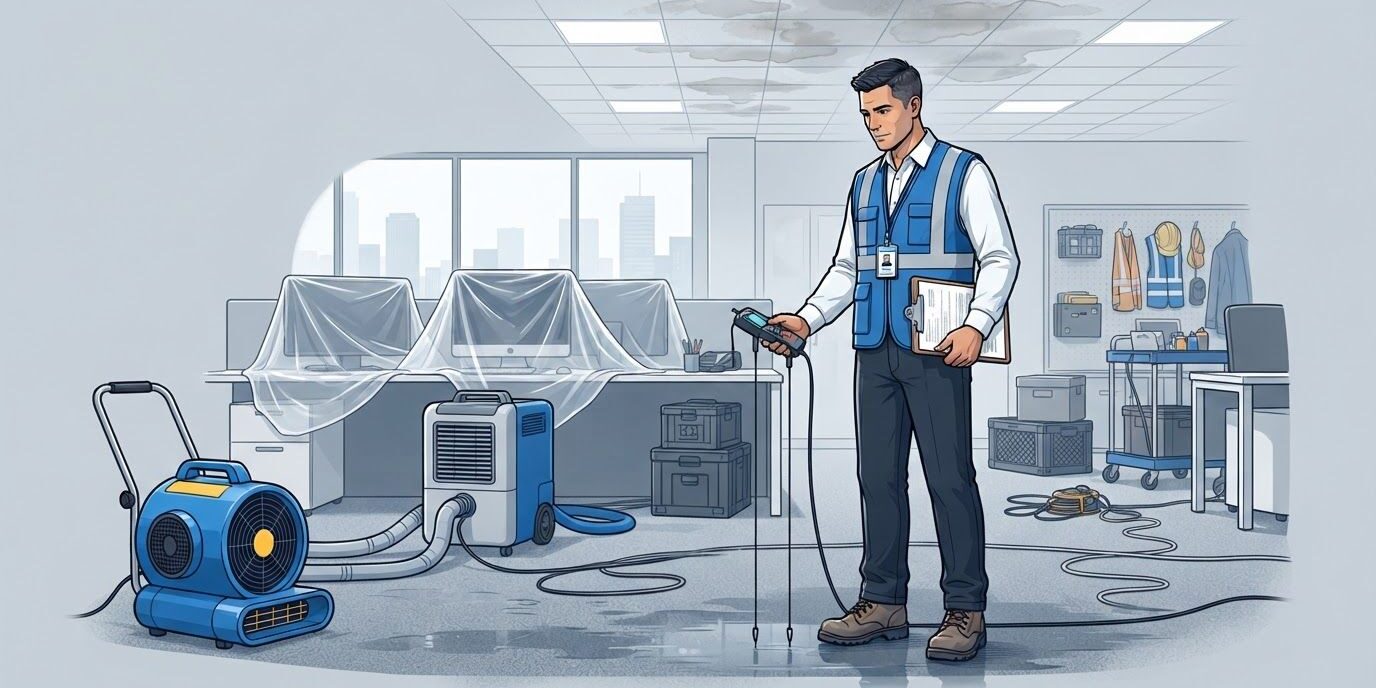
Restoration technicians generally begin with water extraction, removal of unsalvageable materials, and a detailed, documented moisture inspection that may follow IICRC standards when appropriate. Qualified technicians may use moisture meters or thermal imaging when appropriate. They may check nearby suites, shared corridors, riser walls, mechanical rooms, and spaces below the affected floor.
The source must also be repaired. Drying a ceiling beneath an active roof leak or a wall beside a leaking pipe will not solve the problem. Managers should ask for a written scope identifying removals, drying needs, and property restoration work, including drywall repair.
A proper moisture map should be updated during the project. A room can feel dry while moisture remains behind a wall or under carpet padding.
Air movers and dehumidifiers do the heavy work
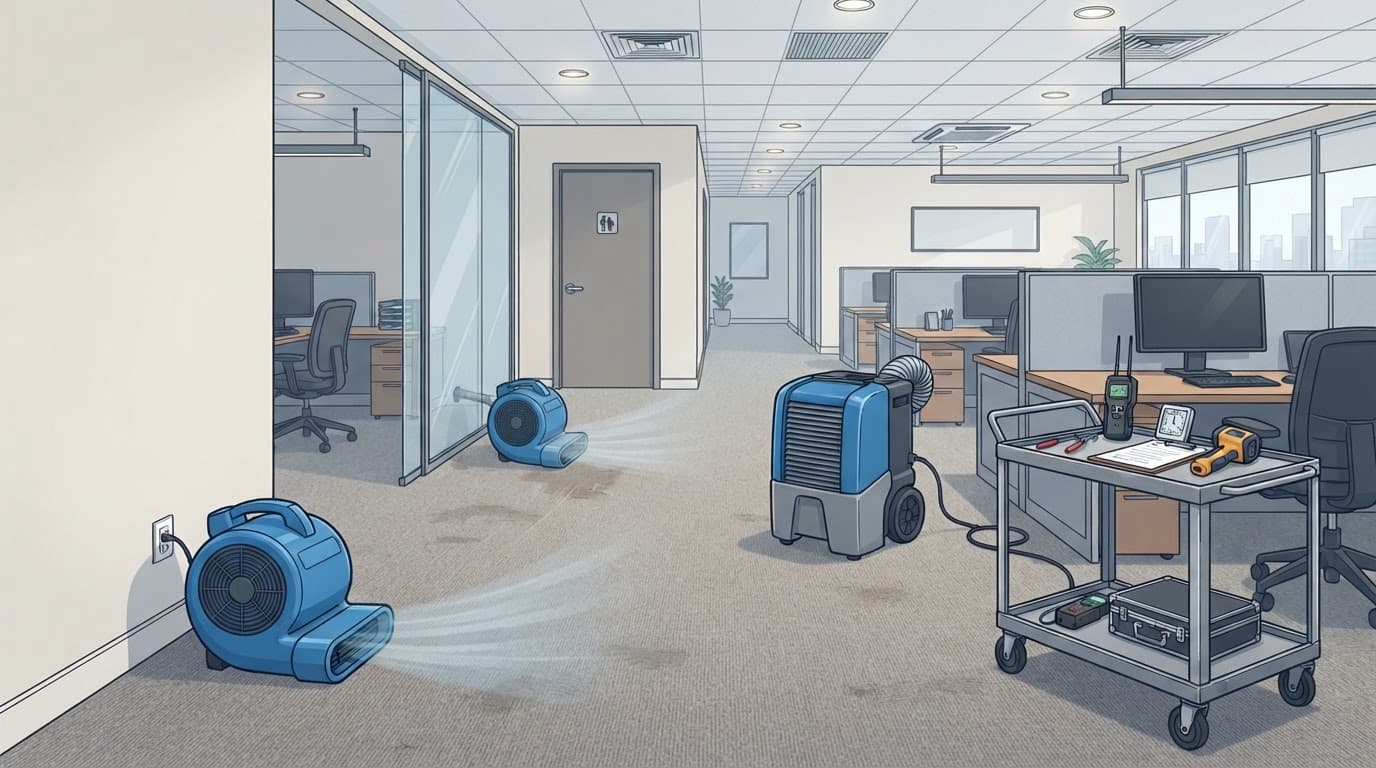
Air movers increase evaporation from wet surfaces. Dehumidifiers remove moisture from the indoor air so materials can continue drying. Commercial projects may require drying equipment such as high-velocity units, LGR systems, or desiccant equipment, based on building conditions.
This equipment should be placed according to moisture readings and airflow needs, not randomly in the middle of a room. Technicians should monitor the building daily, update moisture mapping, and record readings until materials reach an appropriate dry condition.
Surface dryness isn’t proof that a wall or carpet assembly is dry. Moisture readings and documented drying progress provide a more reliable answer.
Mold prevention must begin quickly
Office water damage cleanup must address mold risk early because wet materials can support mold growth in warm, humid conditions. That risk is higher in offices with carpet, drywall, ceiling tiles, upholstered furniture, and limited airflow, so use dehumidifiers when appropriate.
Use the 24-to-48-hour window
The EPA’s commercial-building water damage table recommends responding to clean water damage within 24 to 48 hours, making this window an important part of mold prevention.
That timeframe is a guideline, not a guarantee, and mold may already be present before materials appear dry. Carpet and backing need particular attention because moisture can remain below the visible surface, sometimes requiring carpet extraction.
Managers shouldn’t wait for a musty smell. If mold is visible, moisture continues, HVAC systems are affected, or contaminated water is present, involve a qualified remediation professional for water damage restoration and sewage cleanup.
Separate cleaning from remediation
Routine cleaning can remove surface soil after the area is safe and dry. It cannot replace water removal or structural drying, complete drywall repair, remove damaged insulation, or address contaminated carpet and mold growing inside building materials.
Remove or isolate items according to the restoration plan. Once the source is corrected, involve property restoration professionals for repairs and the final reset. Do not cover odors with air fresheners or strong chemicals; after the space is cleared, use appropriate low-odor products and ventilation during post-restoration cleaning.
After office water damage cleanup, a professional cleaning crew can help remove dust, residue, and construction debris after repairs. Pro Shine Cleaning Services can also support the final office reset with dependable commercial cleaning. Businesses in Fort Myers, Cape Coral, Bonita Springs, Naples, Lehigh Acres, and nearby communities can Get a FREE Quote Today for ongoing office cleaning services.
Insurance responsibilities in a multi-tenant building
Office water damage cleanup in a multi-tenant commercial building becomes harder when suites share walls, plumbing, ceilings, risers, or mechanical systems. The lease and insurance policies control final responsibility, so managers should review both before assigning costs.
Landlord and tenant coverage often differ
The landlord’s building policy commonly covers the building shell, roof, common areas, and landlord-owned systems. The tenant’s commercial property policy commonly covers furniture, computers, equipment, inventory, trade fixtures, and tenant improvements.
Tenant improvements may include partitions, built-in cabinets, specialty lighting, flooring, and interior finishes paid for by the tenant. The lease may assign some items differently, so don’t rely on assumptions.
Business income or business interruption coverage may help replace lost income and continuing expenses during a covered shutdown. Some commercial leases require 12 months of coverage and an extended recovery period. Each policy and lease is different.
Track damage by ownership
Create separate inventories for:
- Building structure and common systems.
- Tenant improvements and betterments.
- Tenant-owned contents and equipment.
- Shared areas and landlord-owned furnishings.
- Cleanup, repairs, relocation, and lost business costs.
Use inventories, photographs, and ownership records to document the pre-loss condition of affected property and support valuation.
Check coverage for flood, sewer backup, storm water, and water entering through foundations or walls. Include these risks when planning flood recovery. Flood is often excluded from standard property policies. FEMA’s flood insurance information explains that businesses may need separate flood protection.
Notify insurers promptly, preserve damaged items when safe, and ask before disposing of property. Keep the lease, certificates of insurance, deductible details, contractor estimates, moisture logs, water mitigation invoices, and insurance claims records together.
Cleanup costs and business continuity planning
Commercial water damage costs for office water damage cleanup depend on the affected area’s size, water category, access, materials, drying time, reconstruction, and tenant count. Larger facilities and multi-suite losses often cost more in a commercial building.
For planning purposes, a small clean-water incident in one office area may cost about $1,500 to $5,000. Multi-room or multi-suite losses often reach $6,000 to $20,000 or more. Large losses involving sewage, major reconstruction, or an entire facility can exceed $25,000.
These are budgeting ranges, not guaranteed quotes. Ask whether the water damage restoration estimate includes water removal, extraction, drying equipment, demolition, dehumidifiers, moisture monitoring, antimicrobial treatment, reconstruction, contents handling, and final cleaning.
Business interruption planning should begin alongside cleanup. The facilities manager should move essential staff to an unaffected area and use remote work where possible. Protect tenant access records and provide regular updates about closed rooms, restroom access, equipment status, and the expected next inspection.
A clean, dry workspace is not ready for full occupancy until the source is repaired, electrical and structural hazards are cleared, moisture readings are acceptable, and damaged materials have been handled properly.
A documented response protects the workplace
Office water damage cleanup requires more than removing visible water. Managers need to protect people, isolate electrical and contamination hazards, coordinate IT and restoration vendors, and monitor drying progress. They should also preserve accurate insurance records, including water damage restoration milestones.
The fastest response is usually the most organized one. Qualified professionals can document moisture checks with moisture mapping, moisture meters, and thermal imaging, then complete a closeout review against IICRC standards. Written safety steps, vendor responsibilities, and follow-up cleaning help the building return to a professional, healthier condition with fewer surprises.
Frequently Asked Questions
What should a manager do first after office water damage?
Keep employees and visitors away from affected areas, identify immediate electrical or structural hazards, and stop the water source if it is safe to do so. Notify the building owner, tenants, insurers, and qualified restoration professionals while documenting the initial conditions.
Can office staff clean up standing water or contaminated materials?
Office staff should not handle sewage, contaminated carpet, or heavily damaged materials. Qualified restoration professionals should manage water extraction, contamination control, and structural drying with appropriate equipment and safety procedures.
How quickly should office water damage cleanup begin?
Cleanup should begin as soon as possible because hidden moisture can damage building materials and increase mold risk. The EPA recommends responding to clean water damage within 24 to 48 hours, although this timeframe is a guideline rather than a guarantee.
How can managers document water damage for insurance purposes?
Take photos and videos when it is safe, record moisture readings and drying progress, and preserve damaged items until they are inspected. Keep vendor scopes, invoices, repair reports, ownership records, lease documents, and insurance communications together.
When is an office ready for full occupancy after water damage?
The source should be repaired, electrical and structural hazards cleared, affected materials handled properly, and moisture readings brought to an appropriate dry condition. Managers should also complete a final inspection before reopening affected rooms or returning employees and tenants.
Conclusion
Office water damage cleanup responds to emergencies that can disrupt an office within minutes, but the damage doesn’t have to control the entire business. Keep people safe, stop the source, protect electronics, begin water extraction quickly, and document every stage of the response.
The strongest checklist is simple: safety first, active drying, clear responsibility, and complete records. Once water damage restoration is finished, professional office cleaning helps remove dust and residue so employees and visitors return to a clean, welcoming workplace.