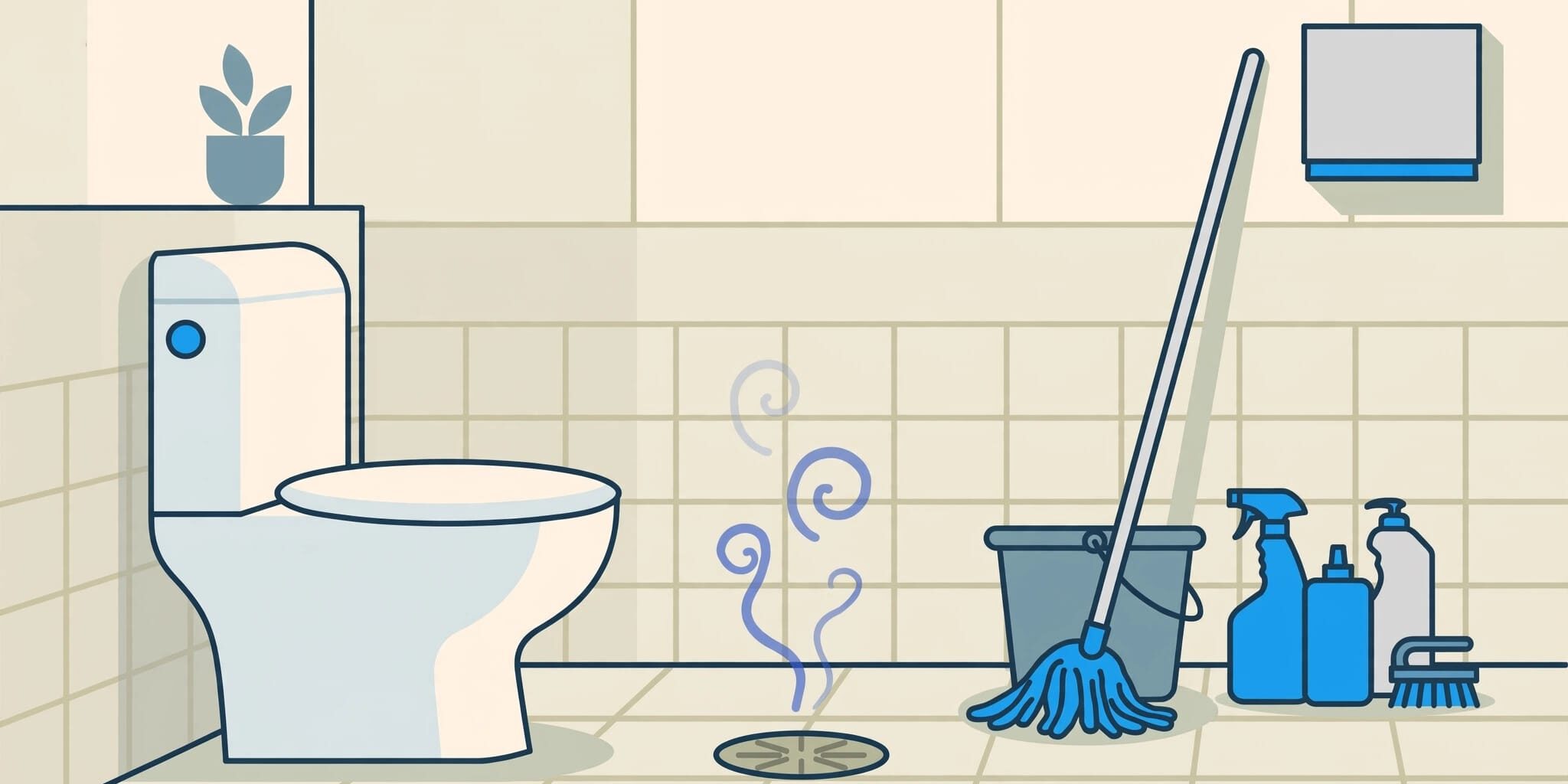
A recurring bathroom odor usually means the original odor source remains: urine deposits, contaminated grout, dry drain traps, damp materials, or weak exhaust. A restroom can look spotless while hidden residue continues producing unpleasant smells.
We recommend treating recurring odor as a source-control problem, rather than adding stronger fragrance. Surface cleaning matters, but lasting results may also require detailed cleaning or building maintenance.
Start by locating where the smell returns and when it becomes noticeable.
Key Takeaways
- Recurring smells often come from areas that routine wiping and mopping don’t reach.
- Cleaning, enzyme treatment, and disinfection perform different jobs. Choose products for the residue, surface, and required treatment.
- A dependable plan combines daily cleaning with drain maintenance, deeper detail work, and ventilation checks.
Five Sources Behind Office Restroom Odors
1. Urine Deposits Around and Behind Fixtures
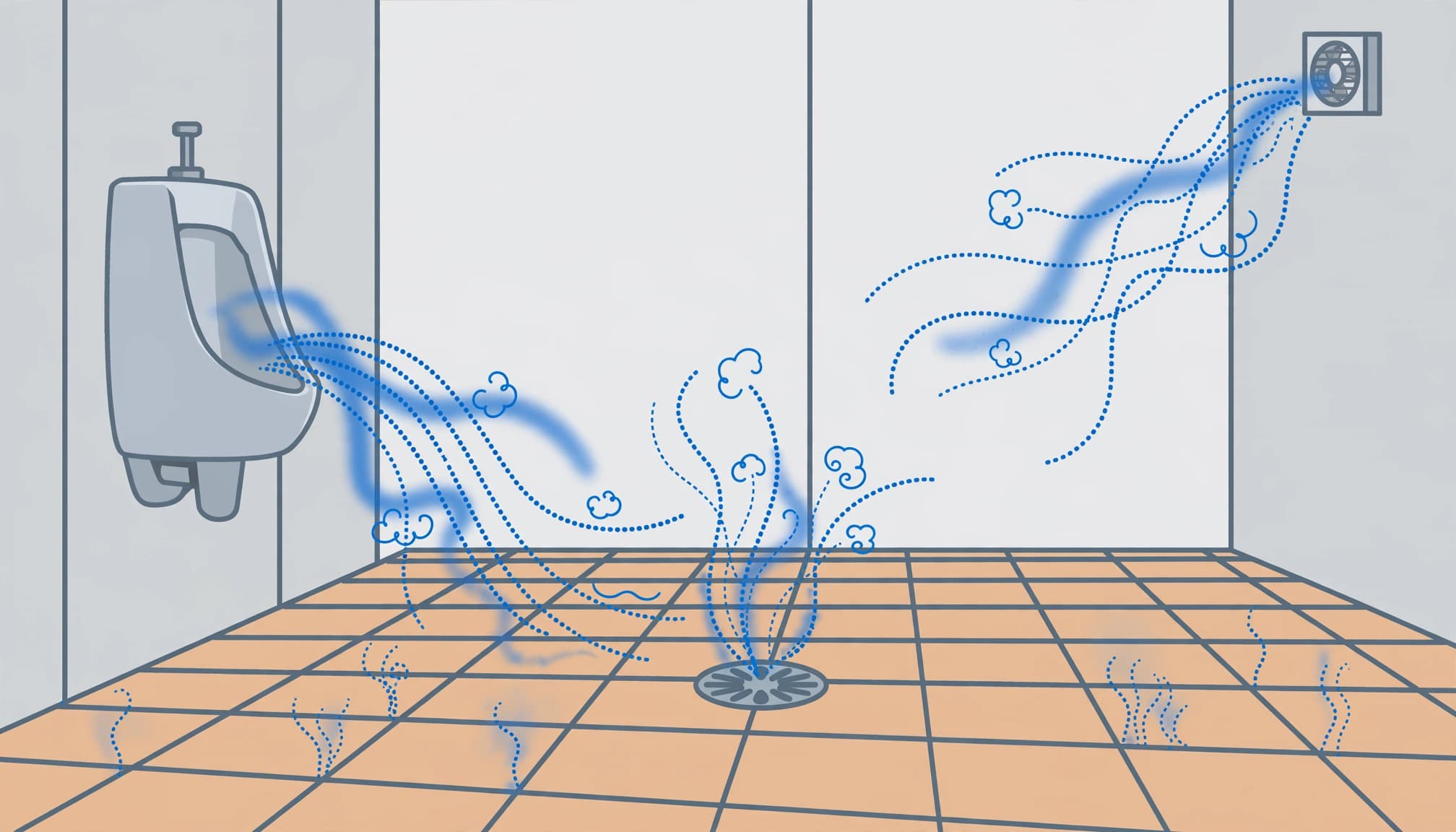
Urine contains uric acid, which contributes to hard deposits inside urinal traps and connected piping. Routine bowl cleaning may leave that buildup untouched.
Meanwhile, splash-back reaches fixture bases, wall joints, and nearby drywall. Cleaning only the visible porcelain leaves these odor sources in place.
2. Porous Grout and Dirty Mop Water
Grout between floor tiles is porous. Urine, soil, and dirty mop water can enter it and leave a bacteria-rich reservoir.
Mopping with contaminated solution can redistribute residue and bacteria instead of removing them. As the porous fill becomes wet again, the smell may become more noticeable.
3. Dry Floor-Drain Traps
A floor drain’s P-trap holds a water seal that blocks sewer gas. In low-use restrooms, evaporation can break that barrier.
Sewer gas may have a rotten-egg smell, although smell alone doesn’t establish the cause. The CDC’s plumbing reference illustrations show how trap-seal loss affects plumbing protection.
4. Weak Exhaust and Lingering Moisture
An exhaust fan can sound active while moving little air. Dust, mechanical problems, or poor airflow can leave odors and moisture behind.
The fan should operate whenever the restroom is occupied. EPA explains that bathroom exhaust removes indoor contaminants when it discharges outdoors.
5. Waste and Hidden Dampness
Wet paper towels, food waste, and sanitary disposal bins can smell between cleaning visits. Inspect every receptacle.
Check for moisture around grout, wall bases, ceilings, sink undersides, and door edges if you notice a musty smell. Mold and mildew need moisture correction; aromatherapy won’t remove them.
Locate the Pattern Before Adding Fragrance
We recommend recording the location and timing of each complaint. Note the last cleaning, products used, visible moisture, and whether the room had heavy use.
These patterns help separate cleaning tasks from maintenance concerns.
| Observed pattern | Priority inspection | First response |
|---|---|---|
| Smell concentrates near urinals | Fixture bases, wall joints, accessible plumbing | Remove deposits and report inaccessible buildup |
| Odor returns near an infrequently used drain | Drain trap and surrounding floor | Restore the water seal |
| Smell strengthens after mopping | Mop head, solution, grout | Replace dirty supplies and remove embedded soil |
| Mustiness accompanies recurring dampness | Leaks, condensation, affected materials | Correct moisture and assess damaged surfaces |
| Sharp scent begins immediately after service | Products, dilution, residue, airflow | Remove residue and improve ventilation |
The pattern identifies where to investigate, but it doesn’t prove a diagnosis.
An air freshener provides temporary masking fragrance, but it doesn’t remove odor molecules or identify the cause. When bacteria and residue remain, odor can return within hours after the fragrance fades. Avoid scented products during troubleshooting because they make comparisons harder.
An air purifier with an appropriate odor-control filter may help reduce some airborne compounds, but it can’t remove residue or fix plumbing or moisture problems.
If the complaint follows cleaning rather than restroom use, our guidance on reducing cleaning-product odors addresses that separate issue.
For a strong gas smell or symptoms such as dizziness or breathing difficulty, leave the affected area and follow the building’s emergency procedure.
Choose Products for Residue and Disinfection
Product choice should follow the task, not the strongest scent. We separate soil removal, odor-residue treatment, and disinfection because each has a different purpose.
Enzyme Cleaners Target Organic Residue
Enzyme-based cleaners help break down certain organic materials that support recurring odors. They can help with urine contamination when the product suits the surface and application.
However, an enzyme cleaner isn’t automatically a disinfectant, and it won’t necessarily remove hardened mineral scale. Urinal deposits may require a compatible descaling treatment or plumbing service.
Follow the product’s dilution, application, and rinsing directions. There isn’t one reliable mixing ratio for every enzyme cleaner, grout surface, or fixture. More concentrated solution can leave residue or damage finishes.
Disinfectants Need Correct Application
An antibacterial cleaner isn’t automatically an EPA-registered disinfectant. Its label determines its intended use. Calling ordinary cleaners ineffective overlooks their role in cleaning.
When disinfection is required, use an appropriate EPA-registered disinfectant on an approved surface. EPA’s guidance on cleaning, sanitizing, and disinfecting explains that the surface must remain wet for the full contact time.
Remove visible soil first unless the label permits a different procedure. Then apply enough solution to maintain that wet period.
Keep bottles clearly labeled and use label-required protective equipment. Never mix bleach with acidic cleaners, ammonia, or other cleaning products.
Follow a Source-First Cleaning Sequence
We recommend this order when routine service no longer controls office restroom odors.
- Inspect before cleaning. Locate the strongest affected area without leaning over drains. Record dampness, slow drainage, damaged grout, leaking connections, and buildup behind accessible fixtures. Assign plumbing and ventilation concerns to maintenance.
- Remove waste and exposed residue. Empty every trash can and sanitary-disposal bin. Clean dirty bin interiors and replace liners. Remove saturated rags, close chemical containers, and clear soil around toilet and urinal bases to remove organic residue that can feed bacteria and recurring odors.
- Detail the hidden cleaning zones. Detail the porous fill between tiles, partition edges, sink undersides, wall splash zones, and accessible areas behind fixtures. Use compatible brushes and products. Escalate inaccessible pipe deposits rather than repeatedly treating the visible bowl.
- Clean and disinfect in the correct order. Work high to low, leaving floors until last. Use dedicated restroom cloths and fresh supplies between tasks. Apply the selected disinfectant according to its label, including the full wet contact time.
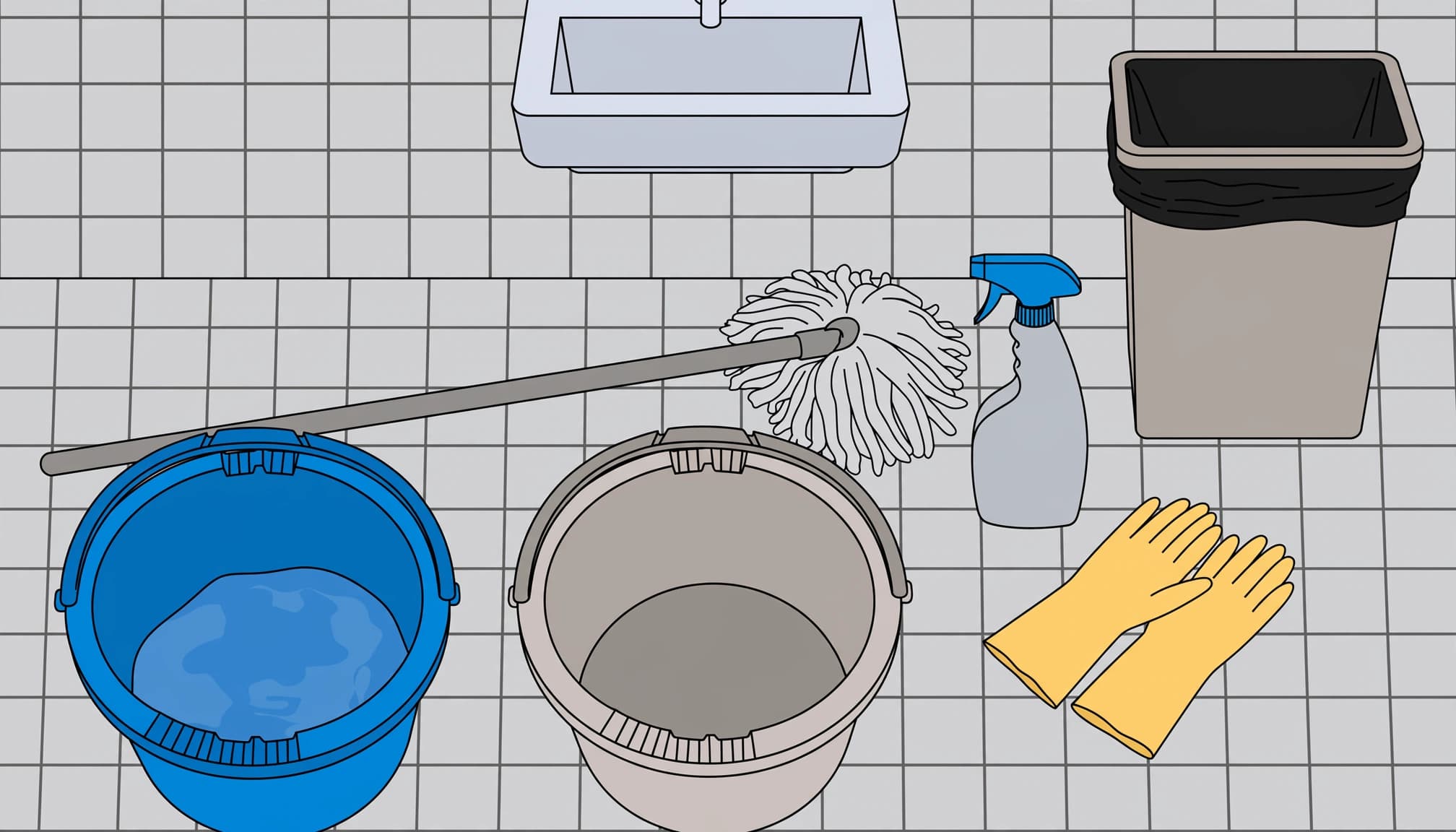
- Finish with clean floor equipment and drying. Use a two-bucket system: one bucket holds fresh, correctly diluted solution, while the other rinses the dirty mop. Replace contaminated solution promptly. Keep wet-floor signs in place until the floor is dry.
Afterward, compare conditions during the next normal-use period. A smell that returns at the same fixture deserves targeted follow-up rather than another full-room fragrance treatment.
Repeated odor at one location is useful evidence. Record that location so the next service addresses the same source instead of restarting the investigation.
Set a Daily, Weekly, and Monthly Routine
A schedule should reflect foot traffic, ventilation, the identified source, and how quickly soil returns. General office-cleaning visits don’t replace daily restroom care.
Daily Cleaning and Traffic-Based Checks
For most office restrooms serving fewer than 50 occupants, we recommend full daily restroom cleaning as a starting point. Empty every waste receptacle, clean fixtures and floors, address touchpoints, and replenish soap, towels, and tissue.
Even 30 daily visits create repeated odor loads. That count alone doesn’t establish whether a small vent has enough capacity, so consider actual conditions.
A commercial restroom with high traffic may need inspections every one to two hours, especially after peak use. Spot-clean spills and contamination immediately. Record recurring problems rather than waiting for the next scheduled visit.
Weekly Detail Work and Drain Care
Pour about a half-gallon of plain water down each conventional trapped floor drain once a week to replenish the water seal. Waterless fixtures require their own maintenance procedure.
Also detail grout, baseboards, partition edges, and accessible areas behind fixtures. Clean and dry reusable equipment before storage.
A drain that quickly smells again, gurgles, or drains slowly needs maintenance attention. Repeatedly adding deodorizer won’t correct a plumbing defect.
Monthly Review and Condition-Based Adjustments
Review urinal screens around every 30 days and replace them according to their service life. Fading fragrance can prompt replacement, but a screen doesn’t substitute for fixture cleaning.
Review ventilation and inspect accessible exhaust covers for dust. Assign weak airflow, leaks, damaged caulk, and persistent dampness to building maintenance.
EPA’s mold and moisture guidance reinforces the need to address moisture when mold returns. Add these assignments to your office cleaning checklist so responsibility stays clear.
Frequently Asked Questions
Does a Urine Smell Prove the Restroom Wasn’t Cleaned?
No. Hidden deposits, the porous fill between tiles, splashed wall materials, or inaccessible plumbing can retain contamination after visible surfaces receive cleaning.
However, repeated complaints deserve a review of cleaning coverage, equipment condition, product use, and maintenance needs. A completed task log doesn’t establish that the source was removed.
How Should Toilet-Drain Odor Be Handled?
Start with the bowl, rim area, exterior base, and surrounding floor. If cleaning doesn’t resolve the problem, report slow drainage, leaks, movement at the toilet base, or recurring odor to maintenance.
A failed toilet seal or plumbing defect needs repair. Avoid repeatedly pouring stronger chemicals into the fixture.
Can Better Ventilation Solve the Entire Problem?
Ventilation helps remove airborne contaminants and supports drying, but it doesn’t remove urine scale, dirty grout, waste, or wet building materials.
We recommend correcting the source and airflow together. If moisture appears behind a wall, maintenance should investigate the leak and affected materials rather than covering the smell with fresh paint.
Keep Restroom Odors From Becoming a Repeat Complaint
Lasting odor control depends on removing the source and assigning the right follow-up. Daily cleaning works better when drain care, detailed cleaning, and maintenance support it.
At Pro Shine Cleaning Services, we customize office cleaning plans to your building’s needs and budget. Contact us by phone or email to discuss recurring restroom concerns and Get a FREE Quote Today.