A clean office should smell fresh, not like a chemical storage room. When a sharp fragrance or solvent smell lingers, employees and visitors may wonder if the space is safe. That concern can remain even when desks and floors look spotless.
The best way to reduce chemical odors is to identify what is releasing them, then bring in cleaner air. In our experience, spraying another fragrance only layers one odor over another. A practical plan starts with the cleaning product, the room’s airflow, and surfaces that may be holding residue.
Key Takeaways
- Identify and remove the source of the chemical odor before adding any fragrance or deodorizer.
- Ventilate the office with approved windows, exhaust fans, or HVAC outdoor-air cycles before employees return.
- Use the correct product, dilution, contact time, and storage practices to reduce residue and unnecessary VOCs.
- Choose an air purifier with substantial activated carbon for gases and odors; HEPA filters help with particles but do not remove chemical vapors on their own.
- Inspect carpet, upholstery, floor finishes, and hidden materials when odors return, and escalate recurring complaints or concerning symptoms to a qualified professional.
How to Prevent Chemical Odors Without Covering Them Up
Chemical odors can come from disinfectants, degreasers, restroom products, carpet pre-sprays, floor finishes, and air fresheners. Many of these products release volatile organic compounds, also called VOCs, as they dry or evaporate.
The EPA’s overview of VOCs and indoor air quality explains that indoor concentrations of many VOCs can be higher than outdoor levels. This is one reason an enclosed office can smell much stronger after cleaning than during the service.
Tell a temporary scent from a continuing problem
A mild odor that fades after proper ventilation may be normal. A smell that grows stronger, returns each morning, or causes eye, throat, or breathing irritation needs closer attention.
Check where the odor is most noticeable. It may be limited to a restroom, break room, carpeted conference room, supply closet, or recently waxed floor. A clear location often points to the actual source.
Remove the source before adding anything else
Collect empty containers, close product lids, remove saturated rags, and empty trash promptly. Wipe visible cleaner residue from counters, sinks, floors, or equipment.
Avoid plug-in fragrances, scented sprays, odor-masking gels, and essential oils after cleaning. They may make the room smell stronger while leaving the original chemical vapors in place.
A pleasant fragrance does not remove the chemicals or residue that caused the complaint.
Ventilate the Office Before Employees Return
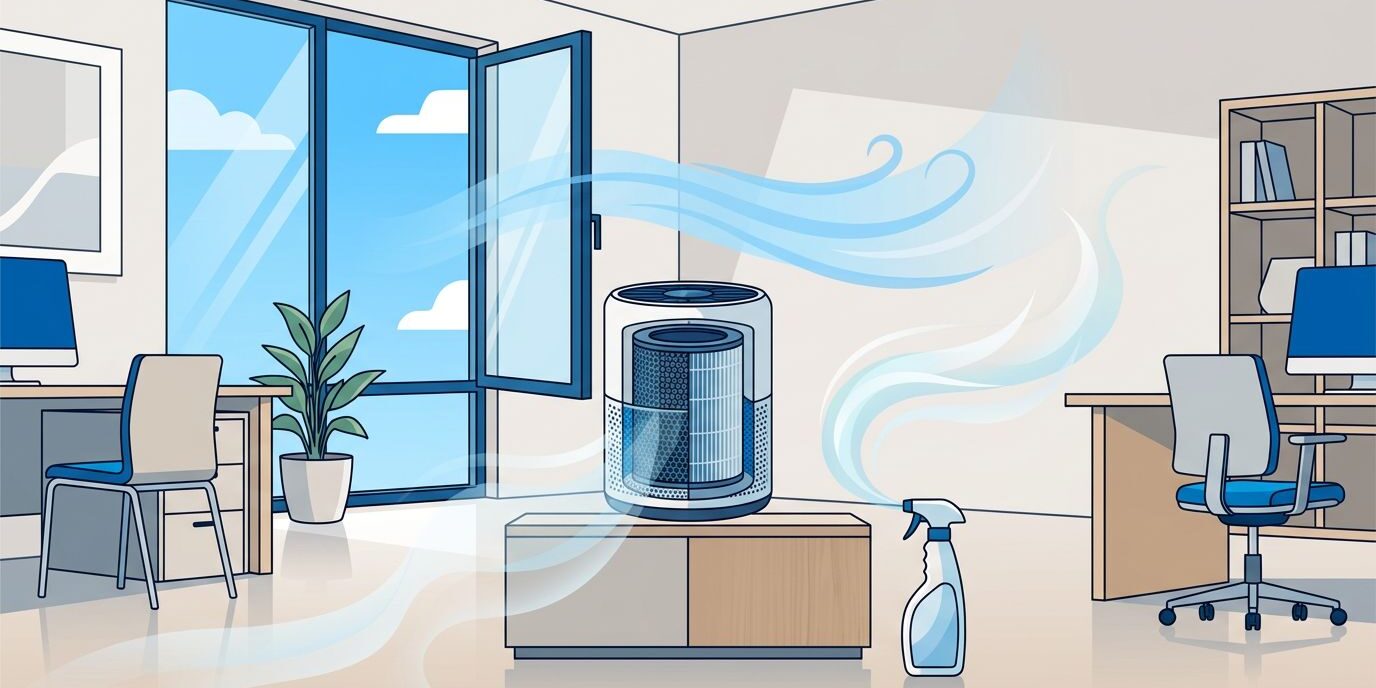
Fresh outdoor air is usually the first and most effective response after cleaning. Ventilation dilutes airborne chemicals, while an air purifier provides supplemental support during the process.
The EPA’s guidance on controlling indoor pollutants puts source control first, followed by ventilation, with appropriate filtration as supplemental support. This order makes sense for offices of every size.
Create a safe path for fresh air
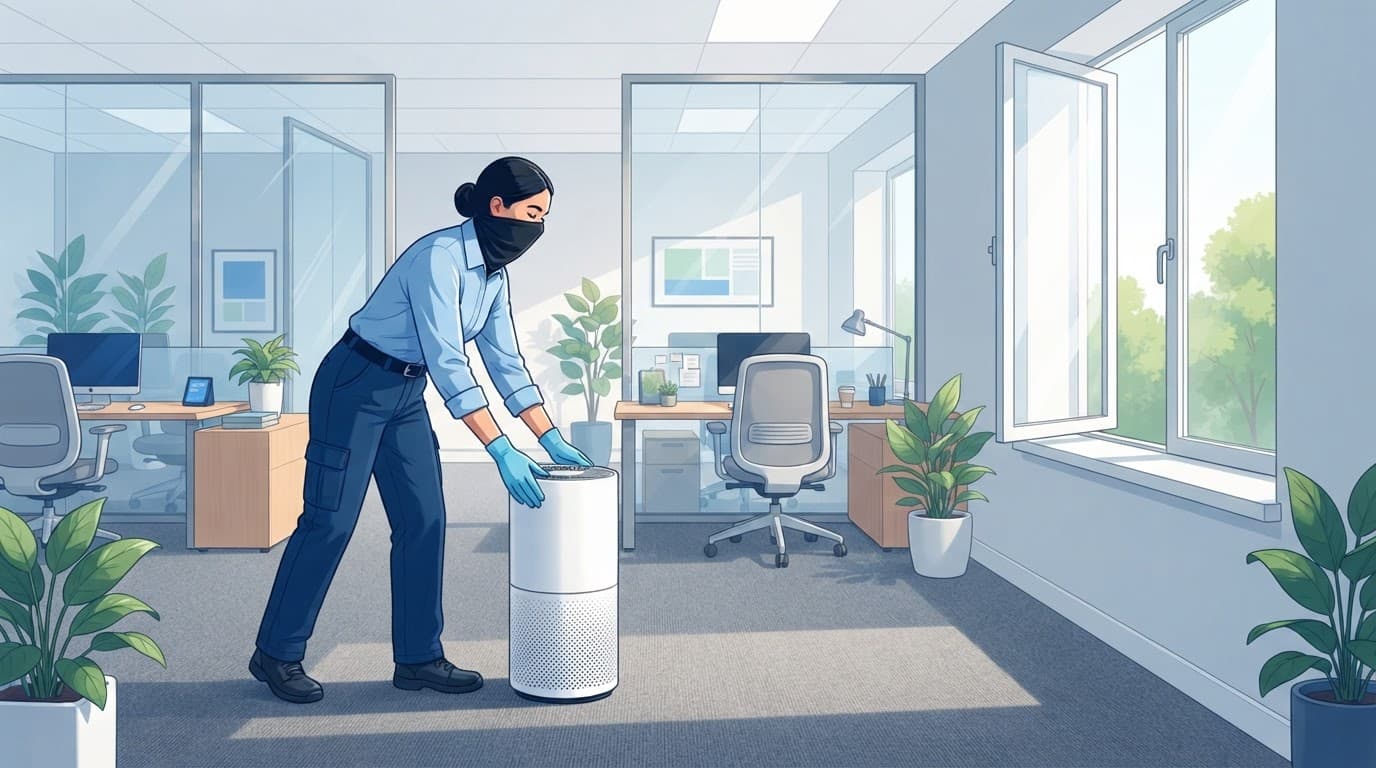
Open approved windows and interior doors when weather and building security allow. Run restroom and break-room exhaust fans, especially after using disinfectants or degreasers in small rooms.
In Southwest Florida, humidity and rain can affect this decision. A building may need mechanical ventilation instead of open windows during wet or extremely humid conditions. The goal is to replace stale indoor air without creating moisture problems.
Match cleaning time with airflow
Whenever possible, schedule detailed cleaning with enough time for the office to air out before the next shift. Ask the building manager whether the HVAC system can run an outdoor-air cycle after service.
Do not prop open secured exterior doors or bypass building access rules. A reliable cleaning plan supports air quality, security, and employee safety at the same time.
Choose Cleaning Products That Leave Less Behind
Strong-smelling products aren’t automatically stronger cleaners. The right cleaning agents match the soil, surface, and sanitation requirement without leaving unnecessary fragrance or chemical residue.
The EPA’s guide to indoor air sources lists cleaning, disinfecting, degreasing, paint, varnish, and wax products among common sources of indoor organic solvents.
Look beyond a “fresh scent”
Fragrance-free or low-VOC options can help reduce avoidable odors in office areas. Certifications such as EPA Safer Choice, Green Seal, and UL ECOLOGO can also help when comparing products.
Don’t add essential oils to a cleaning product just to create fragrance unless the product instructions specifically permit it. This does not mean every disinfectant should be replaced. Medical offices, restrooms, and high-touch areas may require an EPA-registered disinfectant. The product must still be used according to its label, including the correct contact time and dilution.
Follow dilution and storage instructions
More solution doesn’t create a cleaner result. Overusing concentrate can leave sticky residue on floors, carpet fibers, desks, and restroom fixtures. It can also make the odor last longer.
We recommend keeping a written product list that includes dilution instructions, approved surfaces, safety data sheets, and storage locations. Never mix cleaning chemicals. Bleach and ammonia, for example, can create hazardous gases.
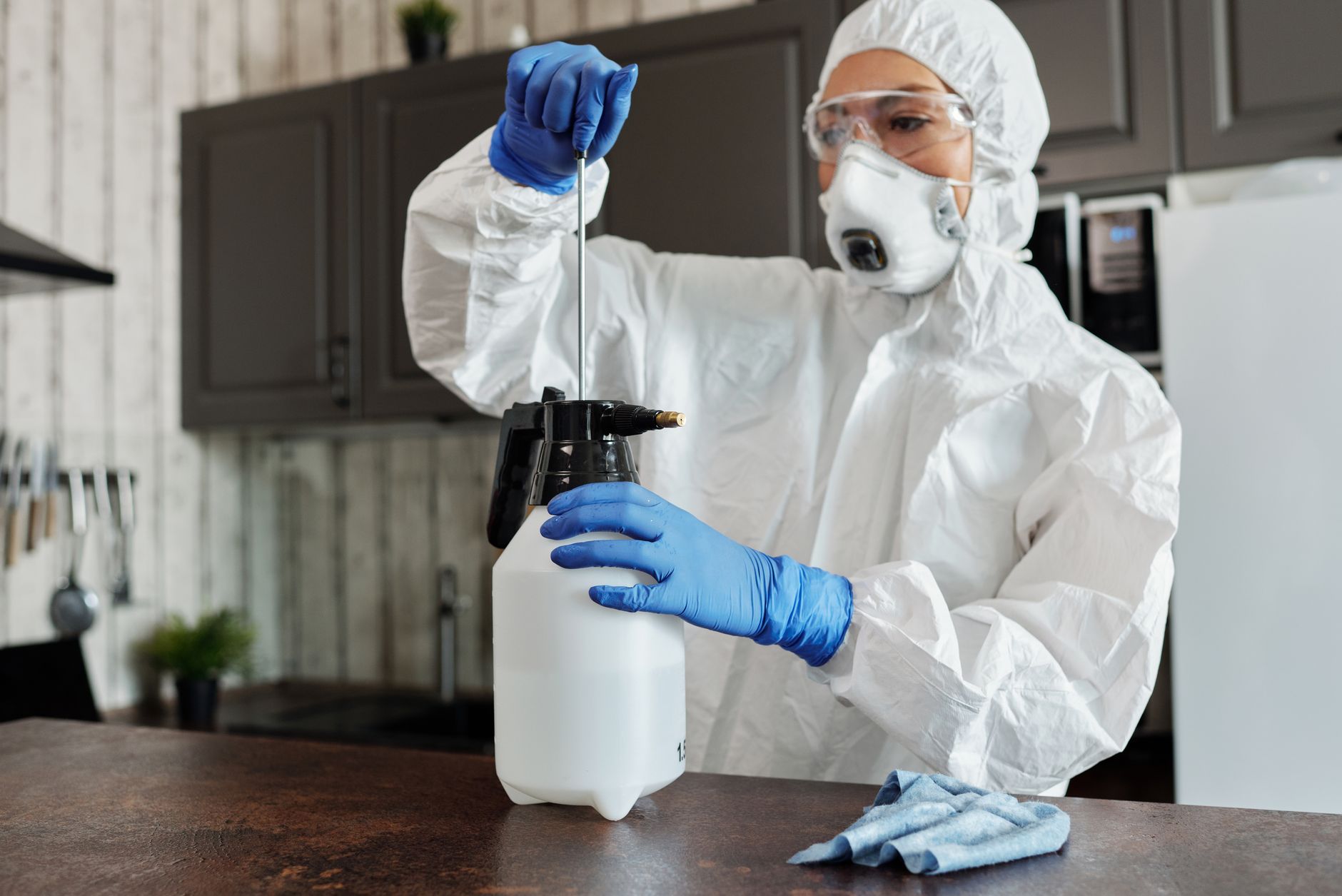
Photo by Matilda Wormwood
Use an Air Purifier With the Right Filters
An air purifier can support odor control, but the filter type matters. A basic unit may collect dust well while doing little for cleaning-product vapors.
For chemical odors that remain after ventilation, look for an air purifier with a substantial activated carbon filter. Carbon’s porous structure provides more surface area for adsorption and captures many gaseous pollutants, including odor molecules.
Activated carbon targets gases and odors
This filtration media is important for VOCs and chemical smells. A thicker carbon filter generally holds more contaminant than a thin carbon sheet attached to a standard filter.
Where space allows, choose a deeper carbon filter. Capacity depends on the amount and condition of the media.
Check the manufacturer’s replacement schedule and replace the carbon filter as directed. Once the media becomes saturated, it has less capacity to capture odors.
HEPA filters have a different job
A true HEPA filter is useful for particles such as dust, pollen, and fine debris. It is not designed to remove gases on its own.
A combined filtration unit with HEPA filtration and activated carbon can be practical when an office has both dust and odor concerns. Avoid ozone generators in occupied workplaces. Ozone can irritate the lungs and doesn’t correct the source of a chemical smell.
Remove Residue From Carpet and Floor Surfaces
Airborne odors can settle into carpet, upholstery, floor finish, and cleaning equipment. If the odor returns after ventilation, inspect recently treated surfaces.
Baking soda, white vinegar, coffee grounds, and essential oils are often promoted as a natural deodorizer for limited household odors. These home remedies are marketed for small household problems, not office-wide chemical vapors. They may help with a small, isolated organic odor, but a natural deodorizer isn’t a substitute for source-based treatment.
Reliable odor removal requires identifying the source, then extracting or removing contaminated material when needed. Spreading more baking soda or coffee grounds across a large office can leave residue instead of solving a widespread odor. Adding essential oils may mask an odor without treating the source.
A vinegar solution may suit only compatible washable surfaces. Never combine a vinegar solution with bleach or use it on incompatible finishes.
Treat carpet and upholstery with proper extraction
A strong smell after carpet cleaning can point to excess pre-spray, incomplete rinsing, or slow drying. Carpet fibers can hold old soil, spills, and moisture, creating musty smells separate from chemical residue. Pet urine follows a different treatment path, and an enzymatic cleaner may suit compatible materials, but not chemical vapors from cleaning products.
Professional extraction should remove soil and cleaning solution, then allow enough drying time before furniture returns. Air movers and controlled airflow can help. For a confirmed organic odor, a labeled odor neutralizer may be suitable only after proper extraction, but it won’t treat chemical residue.
Wet carpet padding should never be ignored because moisture can lead to mold and mildew. Complete odor elimination may require addressing the padding or other hidden material. If musty smells remain after extraction and drying, inspect the padding and nearby materials.
Give floor care enough time to dry and cure
Floor stripping and waxing require careful product selection, thorough rinsing, and proper drying time. If stripper or wax residue remains, the floor finish can become cloudy and hold an unpleasant chemical smell.
Thin coats usually perform better than heavy applications. The floor should remain closed until the finish has hardened according to product instructions. Rolling carts, furniture, and early foot traffic can mark the surface before it is ready.
Track Odor Complaints and Escalate When Needed
A recurring odor complaint should have a clear correction process. Relying on memory makes it harder to identify the product, room, or cleaning step involved.
Record what happened after each report
A simple odor log can help property managers and cleaning teams find patterns. Include:
- Record the date, time, room, and cleaning task completed before the odor appeared.
- Note the product name, dilution ratio, and whether the area was ventilated.
- Document employee comments, visible residue, damp carpet, or reported symptoms.
- Confirm when follow-up cleaning, ventilation, or product changes were completed.
An air quality monitor can reveal patterns in VOC readings, humidity, carbon dioxide, and particulate matter over time. However, it cannot identify the source of a chemical odor by itself. This indoor air monitor buying guide can help you compare the questions that matter before purchasing one.
Know when the problem needs professional attention
Remove employees from the affected area if they experience coughing, dizziness, eye irritation, breathing problems, or other concerning symptoms. Follow the product safety data sheet and seek medical care for serious symptoms or emergencies.
Contact a building engineer or indoor air quality professional if odors continue after source removal, correct product use, ventilation, and surface cleaning. A bad smell that continues after these steps may indicate an HVAC issue, moisture problem, stored chemicals, or a hidden spill.
For offices in Fort Myers, Cape Coral, Naples, Bonita Springs, Lehigh Acres, and nearby communities, we can review your cleaning needs and create a lower-odor service plan. Get a FREE Quote Today.
Frequently Asked Questions
How long should chemical odors last after office cleaning?
A mild odor may fade after proper ventilation and drying. If the smell grows stronger, returns each morning, or causes irritation, identify the source and review the products, airflow, and treated surfaces.
Do air purifiers remove chemical odors?
Air purifiers can provide supplemental support when they contain a substantial activated carbon filter. HEPA filters capture particles such as dust and pollen, but they do not remove chemical gases on their own.
Should I use air fresheners or essential oils to cover a chemical smell?
No. Fragrances and essential oils may make the room smell stronger while leaving the original vapors or residue in place.
What should I do if the odor returns after ventilation?
Inspect carpet, upholstery, floor finishes, cleaning equipment, stored chemicals, and hidden materials for residue or moisture. If the odor continues after source removal, correct product use, ventilation, and surface cleaning, contact a building engineer or indoor air quality professional.
When should employees leave an area because of a chemical odor?
Move employees away from the affected area if they experience coughing, dizziness, eye irritation, breathing problems, or other concerning symptoms. Follow the product safety data sheet and seek medical care for serious symptoms or emergencies.
A Cleaner Office Should Also Feel Comfortable
A spotless workplace should support employee comfort, client confidence, and a healthier indoor environment. The strongest odor-control plan starts with proper products, correct dilution, thorough rinsing, complete drying, and enough ventilation time.
When you address chemical smells at the source, filtration devices and natural deodorizing methods, including essential oils, provide helpful support rather than temporary cover-ups. A clean office should look professional, smell clean, and feel ready for the people who use it every day.