
Commercial tile floors usually look cloudy after mopping because excess cleaner, dirty water, or leftover soil dries on the surface. However, cloudy tile floors can also point to installation residue, sealant problems, chemical damage, or a lighting effect.
We recommend starting with residue removal, rather than adding stronger chemicals. A controlled rinse can improve removable film, but it won’t repair damaged glaze or correct a manufacturing-related haze.
The right solution starts with identifying the tile and understanding when the cloudiness appears.
Key takeaways for business owners
- Excess detergent and dirty equipment can leave a film that becomes visible as the floor dries.
- Identify the tile surface before using acids, stripping products, or aggressive equipment.
- Persistent haze may require sealant removal or surface restoration rather than repeated mopping.
Why do cloudy tile floors appear after mopping?
When a floor looks clear while damp but develops streaks after drying, start with the cleaning process. Water temporarily changes the appearance of residue, so a wet floor can hide an incomplete cleaning result.
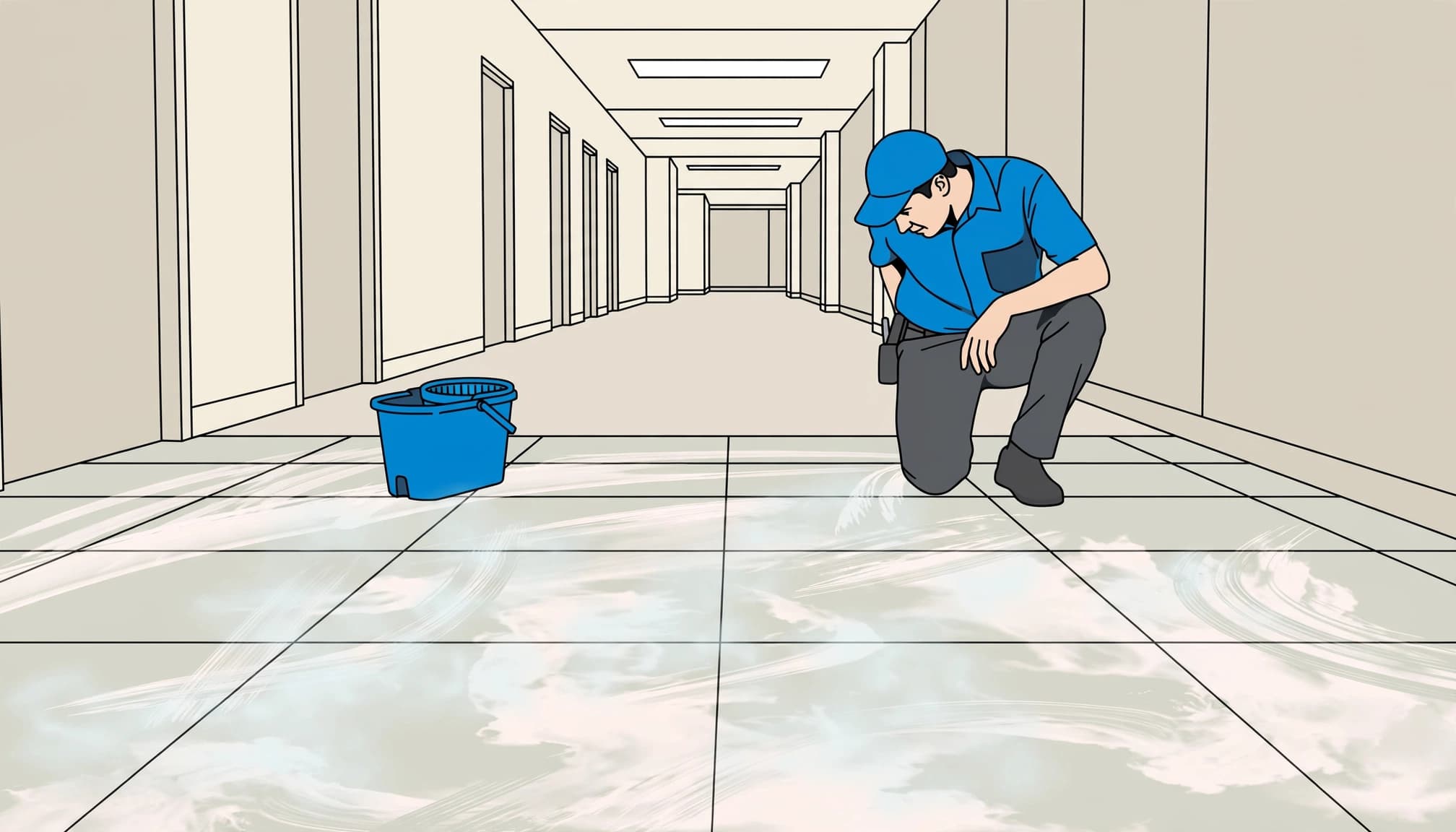
Excess cleaner leaves a surface film
Using more cleaning detergent doesn’t automatically produce a cleaner floor. When the solution is too concentrated, residue can dry into a dull or tacky layer with a cloudy look.
Dish soap creates another problem because its foam makes complete removal difficult. Shine sprays and acrylic polishes can also build up if the tile manufacturer hasn’t approved them.
Hard water can leave pale mineral marks after mopping. Check tile compatibility and test a suitable treatment in an inconspicuous area instead of reaching for stronger chemicals.
We recommend a compatible floor cleaner at its labeled dilution. Our guidance on sticky floors after mopping explains how product residue can also attract dirt.
Dirty water spreads soil back across the floor
A mop bucket gradually collects grease, dissolved soil, and detergent. Continuing with that water redistributes contamination instead of removing it.
A dirty mop head can cause the same problem even when the bucket contains fresh water. Textured tile and grout joints also hold soil below the reach of a lightly dampened flat mop.
As a result, the floor may need controlled agitation and dirty-water recovery rather than another quick pass.
Identify the tile before choosing a treatment
Tile appearance alone doesn’t tell you which chemicals are appropriate. Identify both the tile surface and the tile body before treating persistent haze.
Glazed, unglazed, and polished describe surface characteristics. Porcelain and vitreous describe the tile body and its water-absorption classification. These terms can overlap, so “porcelain” alone doesn’t establish whether a surface is glazed or polished.
Also distinguish ceramic tile from natural stone or tile-look resilient flooring. Products intended for a different material or floor finish may leave residue or damage the surface, so verify compatibility before use.
For routine care, Maline’s tile maintenance guidance supports clear water or a pH-neutral liquid cleaner on glazed tile, ceramic, and porcelain.
We recommend recording the floor material, finish, luster, and any applied sealer in your maintenance plan. That information helps your cleaning team select a suitable method without experimenting across an entire lobby or showroom.
Remove everyday film with a controlled rinse
For sound tile that permits damp cleaning, we recommend a rinse-first approach to suspected detergent residue. Start by testing a small, inconspicuous area of the tile surface before treating the full floor.
- Remove loose debris with suitable vacuuming or sweeping. Otherwise, tracked-in sand and dust become muddy residue during wet cleaning.
- Prepare a clean microfiber pad or mop head and fresh warm water. Keep clean water separate from the water used to rinse the dirty mop.
- Damp-mop a manageable section without flooding it. Replace water and pads as soon as they become dirty.
- Recover the dirty solution promptly. A suitable wet vacuum or automatic scrubber can help on larger areas.
- Dry the section and inspect it under normal operating lights before reopening the area.
The Tile Council of North America’s grout cleaning guidance emphasizes removing dirty cleaning solution and then applying rinse water.
If the section improves, removable contamination contributes to the haze. However, that result doesn’t identify every substance present. Stop repeated rinsing when it produces no improvement.
Keep barriers in place until the floor is dry and free of slippery film. Preserve a clear walking route without blocking exits.
Separate installation haze from acid damage
A newly installed floor needs a different diagnosis from an established floor that became cloudy after a cleaning change. Review whether the problem began after tile installation, grouting, an acid wash, or other construction work.
Cement film can remain after installation
A thin cement film can leave new tile looking dull despite ordinary mopping. Sulfamic acid, also spelled sulphamic acid, can dissolve this leftover installation haze.
CTASC’s tile haze diagnostic guidance describes sulfamic acid as a mild, generally safe acid compared with muriatic acid. That doesn’t make it suitable for every surface.
Use only a product approved for the installed tile and grout, with the specified protective equipment and rinsing procedure. Our post-construction cleaning checklist addresses surface protection during final cleaning.
Acid etching requires a different response
Strong muriatic acid or unsuitable acid cleaners can etch the glaze on glazed tile or dull polished surfaces. The resulting dullness comes from surface damage rather than material sitting on top.
Etched glaze is permanent damage. Cleaning can’t rebuild the glazed surface, and additional acid can worsen the condition.
A restoration specialist can remediate etching on suitable polished tile through repolishing. Unglazed tiles normally don’t etch from acid exposure, although grout, sealers, and special surface treatments can still be vulnerable.
If acid damaged the glaze, a stronger haze remover won’t restore it. Continued chemical treatment can increase the damage.
Look for cloudy or tacky sealer
Sealer can create two different problems. First, an applied sealant can trap moisture in the tile and make it look cloudy. Second, excess product left on dense tile can become tacky if the installer doesn’t buff it dry.
That tacky layer collects dirt, so routine mopping may spread soil across the uneven coating.
The correction involves a compatible sealer stripper sold by tile and stone cleaner or sealer manufacturers. The method must match the existing sealer, tile, and grout.
We don’t recommend covering a cloudy coating with another coat. The underlying problem remains, and extra coating can make removal more involved.
A gummy surface, uneven glossy patches, or coating material transferring during cleaning calls for professional assessment. Repeated daily cleaning won’t correct every coating problem.
Recognize optical haze under changing light
Optical haze is a cloudy, mottled appearance that becomes visible only under particular illumination or viewing angles. It can result from how the factory polished or glazed the tile, which affects its luster.
For example, low sunlight through storefront windows may reveal haze that disappears under overhead fixtures. Certain fixtures can also make the pattern more noticeable.
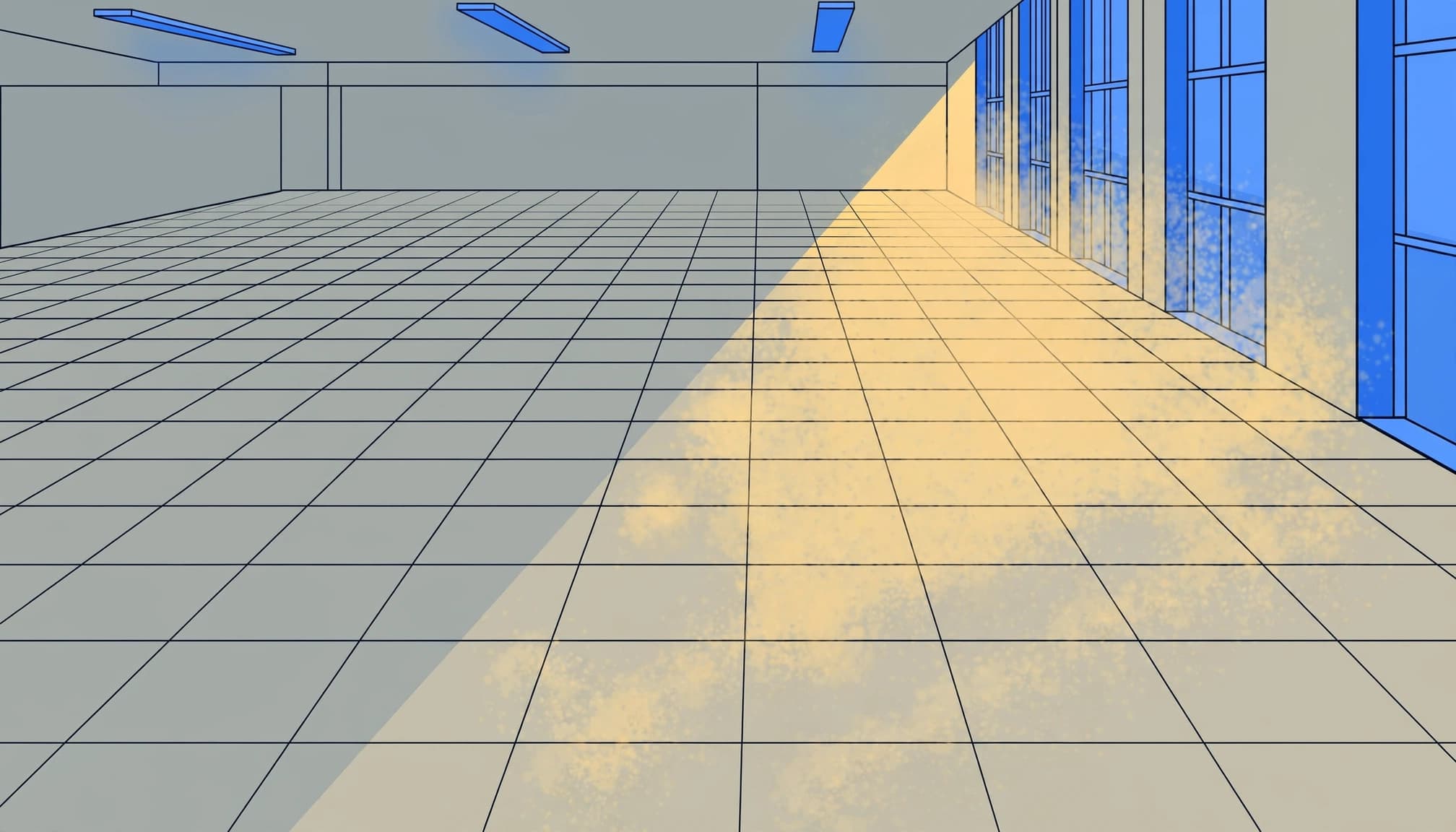
This appearance doesn’t necessarily indicate soil left by the cleaning crew. If the haze follows the lighting rather than the mopping pattern, more detergent is unlikely to help.
Closing curtains or blinds, adjusting window coverings, or repositioning fixtures can reduce its visibility. We recommend considering this explanation before scheduling repeated chemical treatments that leave the appearance unchanged.
Prevent recurring film during daily cleaning
Once you identify the cause, make the correction part of the cleaning plan. Consistent instructions help prevent different shifts from recreating the same problem.
Measure products and match the cleaning method
Use marked measuring tools or a maintained dispensing system instead of estimating concentrate by eye. Record the product name and dilution so staff can repeat the correct process.
For greasy areas, use a compatible degreaser and remove the dirty solution as directed. Water-only passes won’t remove every oily deposit.
Also separate routine maintenance from restoration. Acid treatment, sealant stripping, and repolishing shouldn’t become substitutes for proper daily cleaning. Each addresses a different condition and requires appropriate surface protection.
Maintain tools and inspect the dry result
Launder reusable pads and keep enough replacements available for the building. Change cloudy mop water promptly rather than waiting until the room is finished.
For automatic scrubbers, maintain recovery tanks and squeegees. A machine that leaves dirty solution behind can recreate the same haze as a contaminated mop.
Keep entrance mats clean and remove tracked-in sand before wet cleaning. Our rainy-season floor care guidance connects these routines with safer commercial walking surfaces.
Inspect the floor after it dries, because dampness can temporarily hide streaks and film.
Frequently asked questions
Why does new tile look duller than spare tiles?
An installed floor that looks duller than spare tiles from the same box may have an etched surface, an applied sealer, or optical haze. Leftover installation material is another possibility.
Compare the appearance under similar lighting. We recommend identifying the finish and reviewing installation cleaning before selecting a corrective treatment.
What does white powder on tile mean?
White powder can be efflorescence. The Ceramic Tile Foundation describes this appearance in its explanation of white powder on tile.
A powdery deposit deserves separate diagnosis rather than an assumption that ordinary mopping failed. Don’t automatically treat powdery buildup and smooth detergent film as the same condition.
Can repolishing fix every cloudy tile floor?
No. Etching on suitable polished tile can be remediated with repolishing, but it can’t restore acid-damaged glaze.
It also doesn’t address the cause of detergent film or trapped moisture beneath a sealant. We recommend matching restoration work to the diagnosed surface problem rather than choosing polishing based only on dullness.
Restore clarity with the right diagnosis
Cloudy tile floors often improve when excess product and dirty water are removed correctly. However, persistent haze needs a cause-specific treatment, particularly when sealant, etching, or optical effects are involved.
We provide commercial cleaning and hard-floor care throughout Southwest Florida. Our approach matches the cleaning method to your building’s surfaces and maintenance needs.
Contact us by phone or email to discuss office cleaning services and Get a FREE Quote Today.