
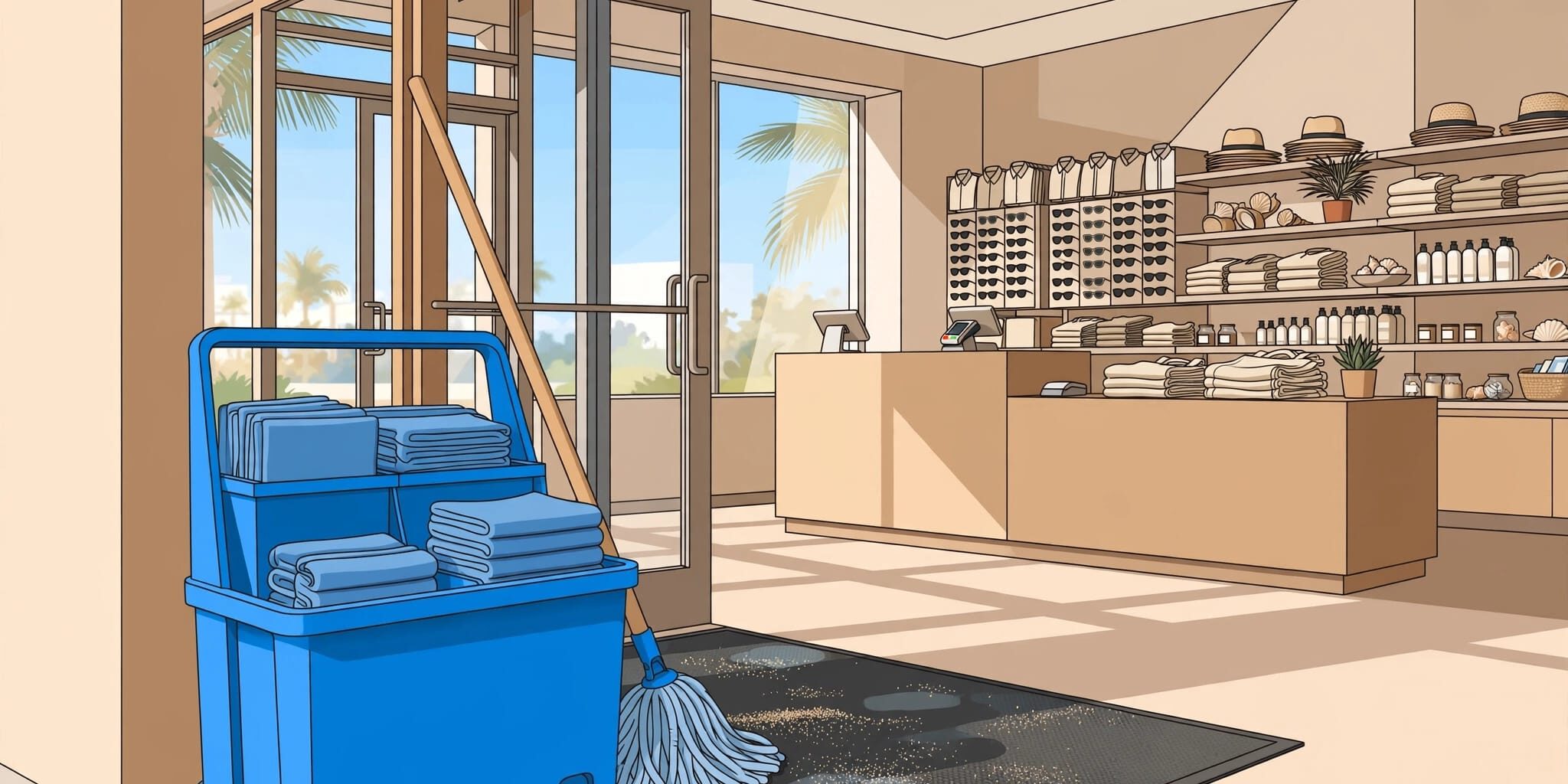
A store can look tidy at opening and still have sticky checkout counters, full trash cans, or a wet entrance by noon. A clean shopping experience supports customer satisfaction, but it takes more than a closing shift with a broom. A retail store cleaning checklist should cover visible dirt, shared surfaces, restrooms, and behind-the-scenes tasks.
In Southwest Florida, rain and tracked-in sand can quickly change the day’s priorities. We recommend a plan your team can use during business hours, not one that only looks complete after closing.
Build a Retail Store Cleaning Checklist Around Your Store
A dependable checklist lists each area, its cleaning tasks, frequency, and owner. Cover the entrance, sales floor, checkout, changing areas, restrooms, stockroom, break rooms, and staff spaces. Include outdoor walkways if they fall within your cleaning scope.
Set separate appearance and hygiene standards
“Looks clean” is too vague to inspect without clear hygiene standards. Entrance glass should be free of obvious fingerprints. Floors should be dry and clear of debris. Checkout counters should be free of sticky residue, and restrooms should have clean fixtures, empty waste bins, and stocked dispensers.
Keep hygiene tasks separate from display upkeep. Straightened shelves won’t make a dirty sink ready for customers or employees. This distinction helps managers spot missed work before it becomes a complaint.
Assign each task to a shift
Give daytime staff quick inspection and spill-reporting duties. Assign trained cleaners restroom service, chemical use, detailed floor care, and end-of-day cleaning as appropriate. A closing employee shouldn’t have to guess whether a wet entrance is their responsibility or the cleaning crew’s.
We also recommend naming a manager to check completed work and resolve exceptions. That simple handoff makes the checklist useful across shifts.
Daily Retail Store Cleaning Checklist
Daily retail cleaning should follow the way customers move through the store. Pay closest attention to the entrance, sales floor, checkout, fitting rooms, and restrooms. These areas can change noticeably between opening and closing.

Check the store before customers arrive
Walk the route a customer will take. Remove litter outside the entrance, check that mats lie flat, clean entrance glass, and clear moisture or debris from the floor. Vacuum carpeted areas or dust-mop and damp-mop hard floors using the approved method for each surface.
Then check the areas where small problems leave a poor impression:
- Wipe checkout counters and clean point of sale touch points using product directions suited to the equipment.
- Remove fingerprints from fitting-room mirrors, doors, and handles.
- Empty and reline trash bins before they overflow.
- Clean restroom sinks, toilets, counters, and mirrors; refill soap and paper supplies.
- Check the sales floor for spills and debris, keeping aisles, exits, and displays clear.
- Wipe break-room counters and tables, and check the floor for spills.
Repeat checks during the day and at closing
A morning clean won’t carry a busy store through the afternoon. Schedule daytime inspections based on foot traffic, restroom use, and weather. Add cleaning tasks during peak shopping seasons, after storms, or when traffic surges bring more customers through checkout.
At closing, remove trash, clean remaining floor spots, wipe approved shared surfaces, and check changing areas and restrooms again. Record unresolved damage, leaks, odors, or supply shortages for the next shift. A signed task should mean the area is ready, not merely that someone visited it.
Weekly and Monthly Cleaning That Prevents Buildup
Daily work handles fresh dirt. Weekly and monthly work addresses the dust and wear that build slowly around fixtures, storage areas, and floors. We keep these tasks on a separate schedule so they don’t disappear during a busy shift.
Give stockrooms a weekly reset
A weekly cleaning checklist should cover more than the stockroom. Sweep the sales floor, wipe checkout surfaces, and clean fitting rooms and break rooms. Check restroom hygiene, empty trash bins, and wipe the bins clean.
Pair a stockroom reset with stockroom organization. Sweep or vacuum accessible floors, remove empty packaging, and clean around shelves without disturbing inventory. Wipe reachable ledges, door frames, and frequently handled surfaces. Keep exits and access to electrical equipment clear.
Managers should also look for damp boxes, recurring dust, damaged shelving, and spills. Cleaning staff can report these concerns, while the store team handles inventory decisions and repairs. Assigning cleaning tasks this way protects merchandise and keeps the work moving.
Schedule monthly maintenance and deeper detail work
Monthly maintenance may include deep cleaning tasks such as high dusting, detailed baseboard cleaning, fixture edges, interior glass, carpet care, and machine floor cleaning. Choose the interval based on observed buildup and surface condition, rather than assuming every project belongs on the same date.
For each task, write down the surface, approved method, equipment, expected result, and person responsible. A note that says “deep clean store” gives a crew too little direction and gives a manager no fair way to inspect the result.
Match Floor Care to the Surface and Its Condition
Floors cover much of what customers see, and Southwest Florida entrances collect grit quickly. Routine removal of sand and moisture helps protect the finish while keeping walkways presentable.
Name the flooring before choosing a method
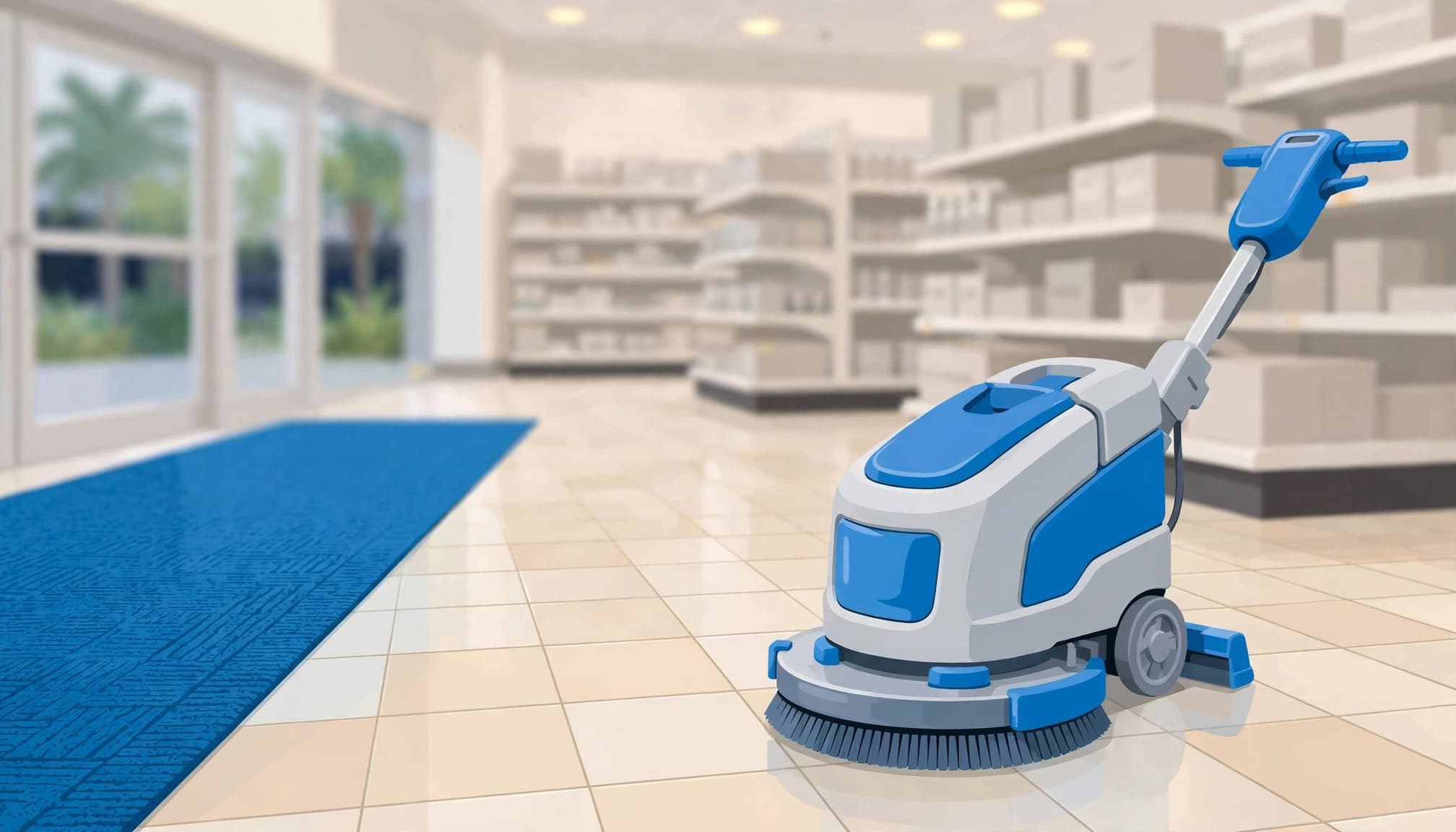
Vinyl composition tile (VCT), luxury vinyl, ceramic tile, carpet, and stone don’t all need the same products or equipment. Keep the flooring manufacturer’s care directions with the cleaning plan. Test unfamiliar products in an inconspicuous area and use trained operators for machine work.
Check entrance mats for trapped grit and wet backing. Vacuum carpet borders and areas beneath movable fixtures where soil collects. If a floor remains slippery after cleaning, address the cause before reopening that area.
Let wear guide restoration work
VCT stripping and re-waxing, or floor polishing on suitable surfaces, are restoration work rather than routine care. Choose the method based on flooring type and observed condition, not a fixed timetable. Traffic, finish condition, maintenance methods, and product instructions all matter. Inspect for worn paths, embedded soil, and a finish that routine cleaning no longer restores.
Plan restoration outside shopping hours, with enough time for each product’s required steps and drying. Monthly inspection may be appropriate even when stripping is not. That keeps a major floor project tied to actual condition, not an arbitrary calendar date.
Adjust the Schedule for Rain and Shopping Rushes
A Southwest Florida retail environment can change quickly. Stores in Fort Myers, Cape Coral, Bonita Springs, Naples, and Lehigh Acres may see entrance conditions shift during a single rainy afternoon.
Respond to wet weather at the entrance
During rain, inspect mats and nearby flooring more often. Remove tracked-in sand, dry wet spots promptly, and keep cleaning supplies out of customer paths. Flag a loose mat or recurring water intrusion for the manager instead of treating it as a routine mop job.
Humidity also makes moisture concerns worth reporting. If boxes, walls, or flooring stay damp, cleaning alone won’t fix the source. Document the location so the store can investigate it.
Add coverage during peak shopping periods
Peak shopping seasons and promotions put more pressure on fitting rooms, checkout areas, trash bins, and restrooms. Set extra inspection rounds based on observed use, then return to the normal schedule when traffic settles.
Arrange larger cleaning jobs before or after a rush. Well-timed carpet extraction or floor detailing can help keep the store welcoming without closing an aisle when customers need it most.
Use Cleaning Products Safely and Handle Spills Promptly
Keep cleanliness, health and safety on the same checklist. Products must suit the surface, and employees need clear instructions when a spill interrupts normal service.
Follow the label when disinfection is needed
When using disinfecting solutions, clean visible soil first if the product instructions call for it. If a surface needs disinfection, use an appropriate EPA-registered product and follow its label for dilution, permitted surfaces, and contact time. The EPA’s registered disinfectant guidance explains why a treated surface must remain visibly wet for the stated time. A quick wipe may not meet that direction.
Disinfect checkout touch points, handles, and other high-touch surfaces according to your store’s risk and usage, rather than claiming one schedule fits every location. When choosing a product for SARS-CoV-2, check the EPA’s List N disinfectant guidance and follow the selected product’s label. Don’t mix chemicals, and keep approved supplies labeled and secured.
Make spill response a clear handoff
For a spill, keep customers away from the area, alert the assigned employee, and identify what spilled before choosing a cleanup method. Use the required protective equipment. Dry the floor and inspect it before removing any warning signs.
If the spill involves an unknown substance, broken glass, or a leak that continues, escalate it rather than asking an untrained employee to improvise. Our commercial cleaning safety plans explain how written responsibilities and area-specific procedures support safer work.
Record Results and Decide When Professional Help Fits
A checklist works best when it records results, not just checkmarks. Paper works for a small store with one manager. A shared digital form can help managers review multiple shifts or locations, especially when it allows photos and correction notes.
Inspect the result, then close the issue
For each service round, record the date, shift, zone, person completing the task, and inspection result. If something fails, note who will correct it and when. Confirm the correction before marking the issue closed.
Keep the form simple enough for staff to use during a busy day. One clear entry for “wet floor at front door” is more useful than several vague boxes marked complete. Review repeated problems weekly; recurring restroom shortages may call for a supply change, while repeated entrance moisture may call for a mat or maintenance review.
Divide in-house and contracted work clearly
Store employees can handle quick inspections, merchandise-safe spot cleaning, and immediate reporting. A professional cleaning crew can provide scheduled restroom care, detailed floor maintenance, and deeper cleaning with trained supervision.
If you contract the work, document areas, frequencies, approved products, supply responsibilities, access times, and inspection standards in a cleaning schedule. Our commercial cleaning services can be tailored to a retail space rather than copied from an office schedule. For a plan that reflects your store and any adjoining office areas, Get a FREE Quote Today.
Key Takeaways
- Give every store zone a clear cleaning standard, owner, and inspection step.
- Check high-use areas throughout the day; schedule deeper work separately.
- Adjust entrance care for rain and floor care for the actual surface and finish.
- Record missed tasks and verify corrections so the same problems don’t return.
Frequently Asked Questions
How often should checkout terminals and door handles be disinfected?
Inspect and clean these high-touch surfaces regularly, with more attention during heavy traffic or periods of increased illness risk. Choose disinfection based on the situation and the equipment’s care instructions. When using a disinfectant, follow its label, including the required wet contact time.
Does a small retail store need monthly deep cleaning?
A small store still needs periodic attention beyond daily cleaning. The exact schedule depends on traffic, flooring, displays, and how quickly soil builds up. Inspect monthly, then schedule carpet extraction, machine scrubbing, or detailed fixture cleaning when the surface condition calls for it.
What should a manager check after the cleaning crew leaves?
Walk the customer route and inspect entrances, floors, checkout, fitting rooms, and restrooms. Confirm that floors are dry, waste is removed, fixtures are clean, and supplies are stocked. Review any reported damage or missed task and assign a correction before the next busy period.
Keep the Store Ready Throughout the Day
A spotless opening matters, but customers experience your store throughout the day. The strongest checklist combines daily attention, planned deep cleaning, and a clear response when conditions change.
We believe consistent inspections can support customer satisfaction. When every task has an owner and a standard, your team can maintain retail store cleanliness and a safe, welcoming space with fewer surprises.