
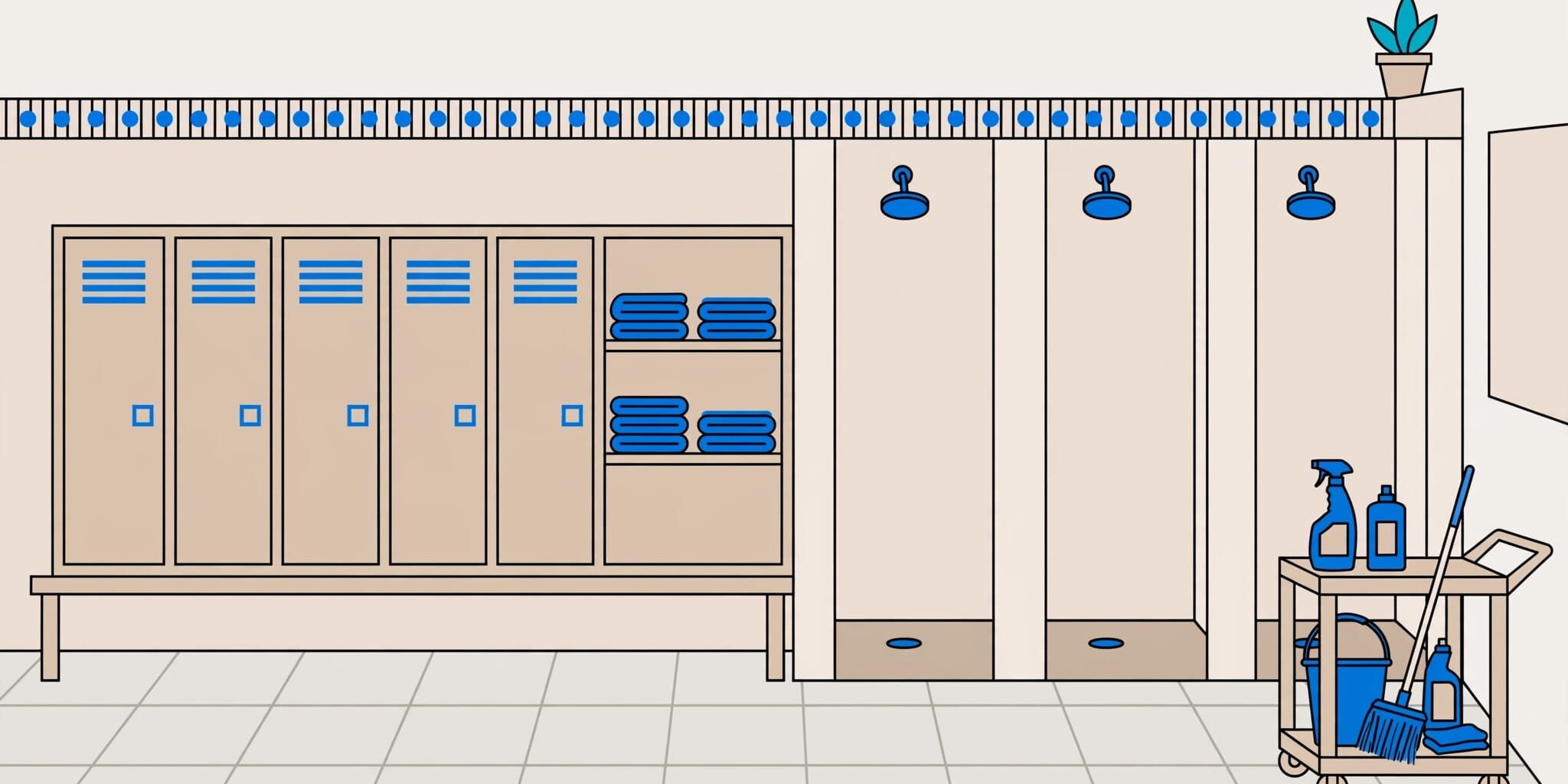
A clean workout area loses its appeal when gym members walk into a dirty locker room. A reliable cleaning routine protects your facility’s appearance, supports hygiene, and keeps everyday maintenance under control.
We recommend a written gym cleaning checklist with clear responsibilities, approved products, and cleaning rounds matched to member traffic. For fitness centers in Fort Myers, Cape Coral, Naples, and nearby communities, a practical plan guides consistent cleaning and sanitization. It covers locker rooms and helps maintain hygiene standards.
Key Takeaways
- Build a written checklist that names specific surfaces, assigns responsibility, and reflects member traffic and facility conditions.
- Clean locker rooms daily, with additional rounds for high-use touch points, wet floors, showers, waste, and supplies as needed.
- Choose products and tools that suit each surface, keep restroom tools separate, and follow disinfectant label directions—including contact time.
- Schedule weekly detail work and monthly maintenance checks, train staff, and record completed tasks and issues needing follow-up.
Build a Gym Locker Room Cleaning Plan Around Actual Use
Your checklist should name individual surfaces instead of broad tasks such as “clean the locker room.” In a fitness facility, list locker handles, bench edges, faucet controls, and toilet stall latches so high-touch surfaces aren’t overlooked.
Document each zone, its surface materials, approved cleaning methods, and the employee responsible in a written cleaning protocol. Include access restrictions for occupied lockers and member belongings, and assign gym-floor equipment tasks, such as cleaning free weights, separately.
Cleaning and sanitization serve different purposes: cleaning removes dirt, sweat, and residue, while sanitization reduces microorganisms as directed by the product label. Disinfection is distinct from both, and kills only the microorganisms covered by its label.
The CDC’s facility cleaning guidance recommends regular cleaning of high-touch surfaces. Additional disinfection is appropriate when someone is sick or the facility has increased illness risk.
A busy shower area requires different attention than an unused storage shelf. A commercial gym cleaning plan for locker rooms should reflect usage, visible soil, spills, and facility policies rather than apply one schedule to every surface.
Follow a Room-by-Room Daily Cleaning Checklist
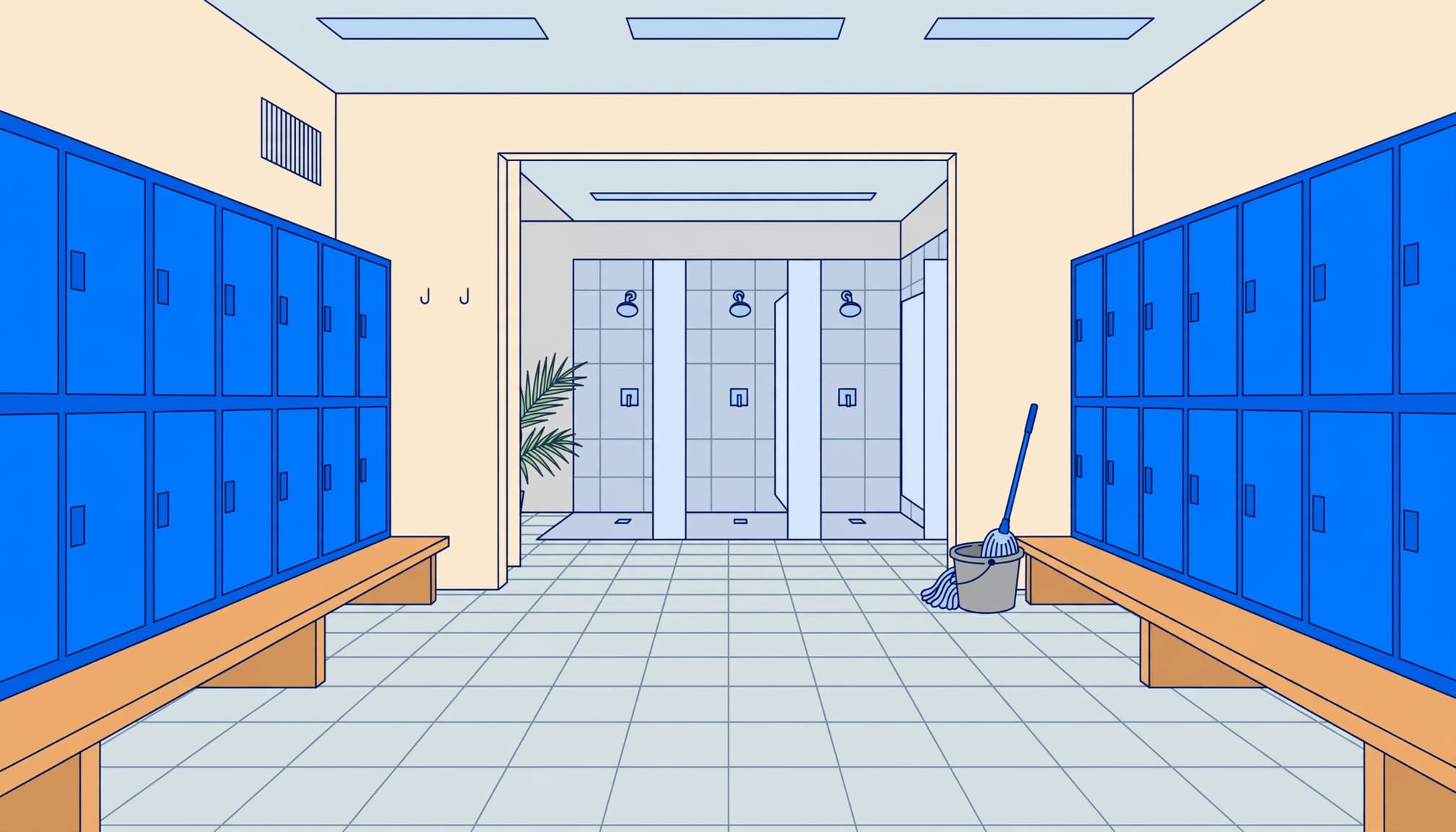
Daily cleaning should cover the full locker room, including member touch points and areas where residue collects. In locker rooms, keep dry changing spaces separate from toilets and showers to reduce cross-contamination and limit the spread of sweat and bacteria.
Clean Lockers, Benches, and Shared Touch Points
Between uses and throughout the day: Wipe accessible locker doors, handles, bench seats, hooks, door pulls, and push plates with microfibre cloths. Remove visible sweat and dirt using products compatible with metal, plastic, laminate, or upholstery.
During daily service: Inspect locker interiors only when facility rules permit access. Never move personal belongings without authorization. Report damaged hinges, sharp edges, and loose hooks before they become member complaints or safety concerns.
Clean mirrors and counters without leaving streaks. Follow manufacturer instructions for shared scales, hair dryers, and electronic controls. Don’t spray directly into electrical openings.
Service Restrooms and Shower Stalls
Use dedicated restroom cloths and tools, keeping them separate from those used in locker rooms. Clean sinks, faucet handles, toilet seats, flush controls, stall latches, and dispenser exteriors.
Remove visible sweat, soap residue, hair, and other soil from shower walls, floors, fixtures, and accessible drain covers before applying any required disinfectant. Follow your written procedure and the product label.
Check partitions, grout, and caulk during weekly detail work. Persistent staining or odor should trigger an inspection, not repeated applications of stronger chemicals.
Finish by confirming that fixtures work, supplies are available, and treated areas are ready for member use.
Keep Floors, Waste, and Supplies Under Control
Gym floors need attention throughout operating hours. In Southwest Florida’s humidity, respond promptly to tracked water and damp floor coverings in locker rooms to limit persistent moisture and mildew risk.
Remove dry debris before wet cleaning. For cleaning and sanitization, use a compatible floor cleaner and the correct mop or machine for tile, sealed concrete, rubber mats, or other installed materials.
Close off wet sections while work is underway. Keep an accessible route open where practical, and leave barriers in place until the floor is dry and safe to use. A warning sign doesn’t replace prompt spill removal.
As part of the daily checklist, empty waste containers before they overflow, replace liners, and clean bin surfaces when soiled. Keep used towels in designated collection containers rather than on benches or floors.
Restock soap, toilet tissue, and hand-drying supplies during every service round. Record damaged dispensers immediately. A clean sink provides little value when members can’t wash and dry their hands.
Schedule Cleaning Around Peak Gym Hours
Build a cleaning schedule around opening checks, daytime rounds, and an after-hours reset. Use inspections to adjust frequency rather than treating those periods as a universal requirement.
Opening and Daytime Service
Before opening, check supplies, odors, visible soil, fixture operation, and whether gym floors are dry. Confirm that overnight work is complete and unresolved maintenance issues have been reported.
During operating hours, inspect locker rooms after busy classes or heavy shower use. Touch points, waste containers, shower stalls, and wet floors may need repeated attention while other areas remain clean.
For facilities that need reliable daytime coverage, our commercial day porter services can support scheduled touch-ups and supply checks within a commercial cleaning plan. Keep these daytime cleaning services separate from overnight detail work so neither responsibility is missed.
Closing and Incident Response
After closing, complete the full cleaning route without rushing around members. Allow time for soil removal, required disinfectant contact time, floor drying, and inspection.
Full shower cleaning and disinfection frequency should follow usage, condition, facility policy, and product instructions. Don’t assume every shower needs the same treatment after every use.
Blood, vomit, or other potentially infectious spills require a separate response procedure. Restrict access and involve personnel trained for the incident. General cleaning supplies and an ordinary mop routine aren’t an adequate response plan.
Choose Cleaning Tools and Products by Surface
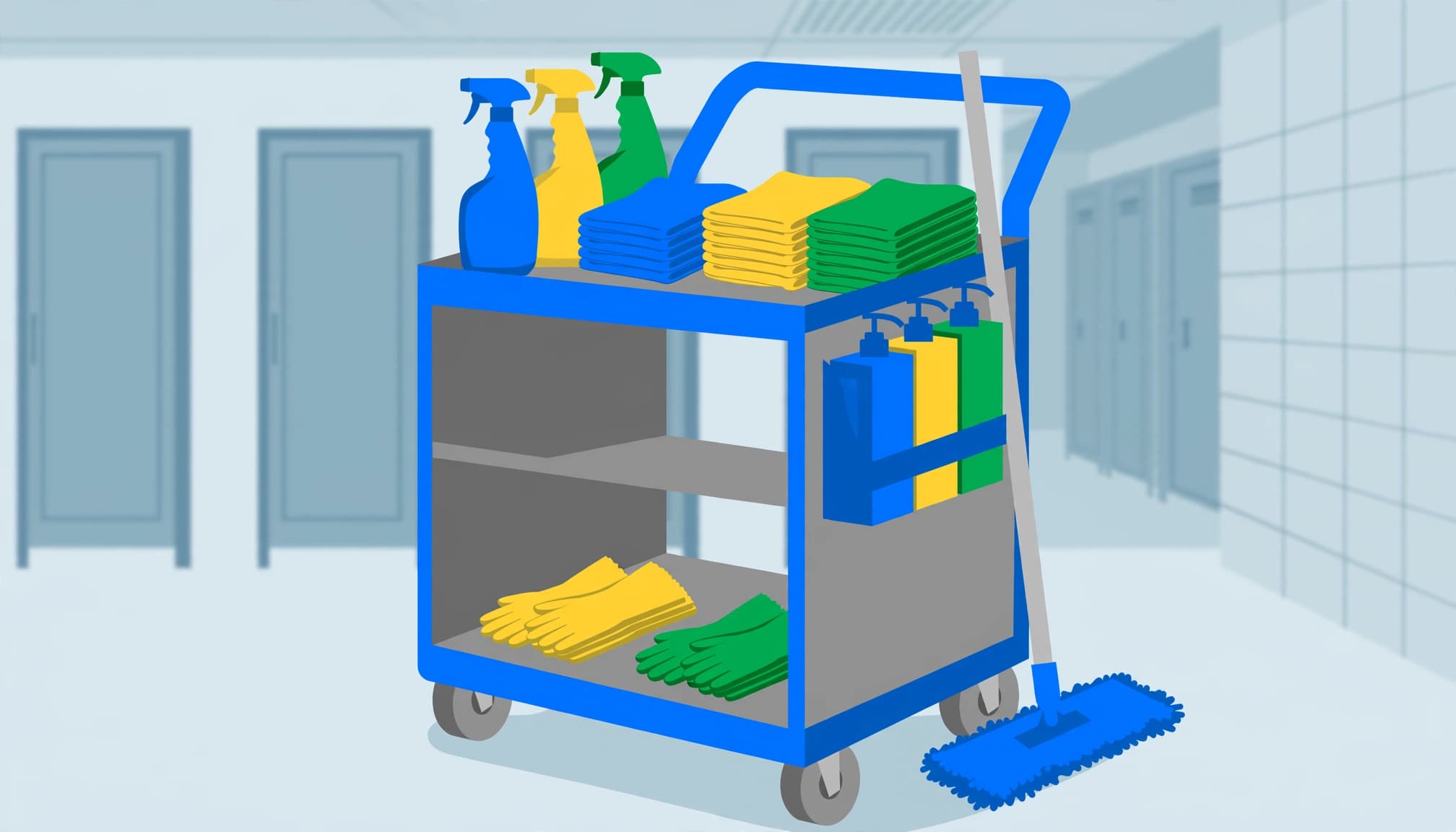
The right supplies help crews work consistently without damaging finishes in locker rooms. We recommend a stocked cart, clearly labeled bottles, clean microfibre cloths, and separate tools for restroom and changing areas.
Use this selection guide when preparing your approved supply list.
| Area or task | Suitable starting point | Required check |
|---|---|---|
| Lockers and benches | Compatible cleaner and cloth | Surface and manufacturer instructions |
| Shower residue | Approved bathroom cleaning solutions and nonabrasive brush | Finish compatibility and rinsing directions |
| Routine floor cleaning | Compatible floor cleaning solutions for flooring and rubber mats | Flooring care requirements |
| Targeted disinfection | EPA-registered disinfectant | Organism claim, permitted surface, contact time |
| Chemical handling | Label-required gloves or other PPE | Label and Safety Data Sheet |
Product choice should follow the task, not the strongest scent or broadest marketing claim.
People often search for EPA-approved disinfectants, but the EPA registers disinfectant products. Use EPA’s registered disinfectant resources to check options, then verify the exact product label before purchasing or changing supplies.
If staff also handle free weights, assign that work separately. Locker-room products aren’t automatically suitable for disinfecting gym equipment.
Compare lower-odor options without assuming that “green” means disinfecting. Measure concentrates according to instructions; extra chemical can leave residue and increase exposure. Launder reusable cloths and mop heads according to their care instructions.
Follow Disinfectant Labels Without Shortcuts
Effective cleaning and sanitization in gym locker rooms takes more than a quick spray and wipe. Cleaning removes visible soil; when disinfection is needed, follow the label’s precleaning directions.
Check dilution, application method, permitted surfaces, ventilation instructions, and required protective equipment. A hospital-grade description doesn’t replace these checks or mean a product suits every surface material.
For bacteria and viruses, check that the label claims cover the intended use. No product should be assumed effective against every organism relevant to a fitness center.
Contact time matters. The treated surface must remain visibly wet for the full period stated on the label. If the product dries too soon, follow its directions for maintaining wetness.
A surface that dries before the required contact time may not receive the disinfection described on the product label.
When selecting a product for SARS-CoV-2, consult EPA’s List N guidance. List N relates to that virus; it doesn’t establish effectiveness against every organism relevant to a fitness center.
Never mix cleaning chemicals. Keep Safety Data Sheets accessible during each shift, and store products in their approved, labeled containers.
Members should remain outside restricted treatment areas until label requirements are met and the space is ready for use.
Plan Weekly Detail Work and Monthly Maintenance Checks
Daily cleaning keeps locker rooms presentable. Scheduled deep cleaning addresses areas routine rounds don’t fully cover, with weekly and monthly tasks adjusted to observed conditions.
Weekly Detail Cleaning
Review grout lines, baseboards, partition edges, bench undersides, and accessible areas behind fixtures. Remove buildup with compatible products and tools, not aggressive scrubbing that can damage finishes.
Check removable mats and carpeted changing areas. Follow manufacturer directions and allow them to dry completely before returning them to service, especially in Southwest Florida’s humid conditions.
Inspect accessible drain covers and document recurring odors or slow drainage. Staff should report plumbing problems instead of treating them as routine surface-cleaning issues.
Monthly Facility and Ventilation Review
Inspect caulk, damaged grout, corrosion, leaks, and recurring condensation. Assign repair work to the appropriate maintenance provider.
Check accessible vent covers for soil and report exhaust or mechanical ventilation concerns to building maintenance. HVAC filters and equipment servicing should follow system requirements, not a universal monthly replacement rule.
Record water intrusion and persistent dampness. Ventilation checks, plumbing repairs, and thorough drying address causes that repeated wiping can’t correct. Escalate persistent moisture or mildew instead of relying on more chemicals or fragrance.
Train Staff and Verify Completed Work
A dependable checklist needs trained staff and supervisor follow-up at every fitness facility. We recommend hands-on demonstrations for chemical dilution, cloth separation, floor equipment, contact time, and spill reporting.
Our commercial cleaning safety plan provides practical guidance for organizing responsibilities and safe work procedures. Training for cleaning services staff should match assigned locker-room duties, not stop at a general orientation.
If the same team cleans locker rooms and workout equipment, list free weights and cardio machines under separate equipment duties. This makes responsibilities clear before work begins.
Every cleaning record should identify the area, time, employee, completed tasks, and unresolved issue. Record who’s responsible for follow-up so a broken dispenser or drainage complaint doesn’t remain on the log indefinitely.
Supervisors should inspect results under normal lighting. Look for missed handles, residue, wet floors, empty supplies, and repeat complaints from gym members.
Member communication also supports hygiene. Clear reminders about handwashing, personal towels, and avoiding common gym hygiene problems complement facility cleaning without replacing it.
When comparing proposals for fitness centers, a gym owner should review daytime coverage, shower care, supply responsibility, training, inspections, and backup staffing. A lower price isn’t useful if essential tasks fall outside the agreed scope.
Frequently Asked Questions
How often should a gym locker room be cleaned?
Clean the full locker room daily and schedule additional checks based on member traffic, visible soil, spills, and shower use. Adjust the frequency to facility policies and the condition of each area rather than applying one schedule to every surface.
What is the difference between cleaning, sanitizing, and disinfecting?
Cleaning removes dirt, sweat, and residue; sanitizing reduces microorganisms as directed by the product label. Disinfection is distinct and kills only the microorganisms covered by the product’s label.
How long should disinfectant stay on locker-room surfaces?
Keep the treated surface visibly wet for the full contact time stated on the product label. If it dries too soon, follow the label’s directions for maintaining wetness.
How should staff handle blood or vomit in a locker room?
Restrict access to the affected area and follow the facility’s separate spill-response procedure. Involve personnel trained for the incident; ordinary cleaning supplies and a routine mop process are not an adequate response plan.
What cleaning products should a gym use in its locker room?
Choose products that are compatible with the surface and appropriate for the task, and follow label instructions. For targeted disinfection, check the product’s permitted surfaces, organism claims, contact time, and required protective equipment.
Keep Locker Room Cleaning Consistent
A welcoming locker room depends on consistent follow-through: defined tasks, suitable products, timely inspections, and maintenance issues that reach the right person.
We help Southwest Florida businesses develop customized cleaning plans that fit their spaces and operating schedules. Your locker room checklist should support that same dependable standard every day.
Call Pro Shine Cleaning Services at (239) 478-8884 or email proshinecleans@gmail.com to discuss your facility’s cleaning needs and Get a FREE Quote Today.