
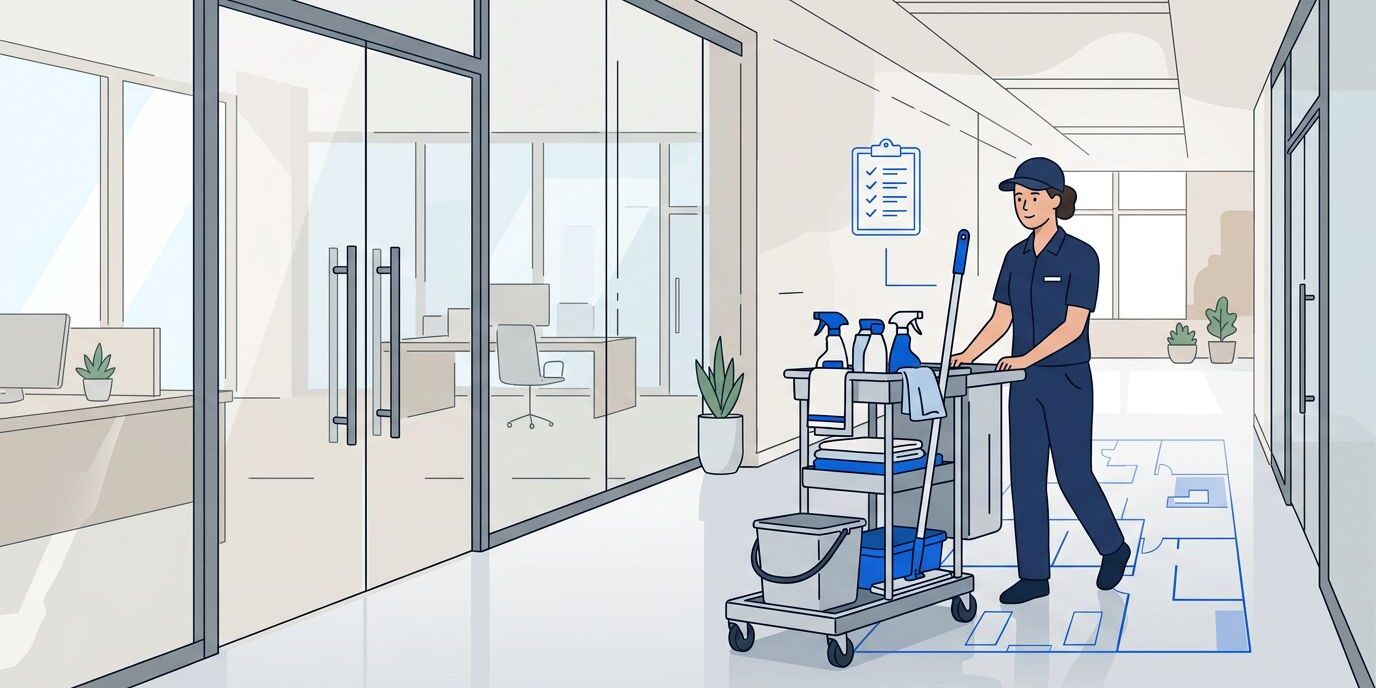
A vague cleaning scope costs money twice, once in the bid and again in the complaints.
If your document says “clean restrooms” and little else, every vendor will picture a different job. A solid commercial cleaning scope of work gives you cleaner pricing, fewer surprises, and a much better shot at getting the professional commercial cleaning services you thought you bought. By clearly outlining the requirements, this document becomes the primary tool for budget management.
The goal isn’t paperwork for its own sake. It is a clear scope of work that turns “keep the place clean” into something people can price, perform, inspect, and fix.
Key Takeaways
- Clarity eliminates ambiguity: A detailed scope of work prevents pricing discrepancies by ensuring all vendors bid on the exact same set of tasks, frequencies, and service expectations.
- Use measurable language: Replace subjective terms like “keep clean” with specific, task-oriented descriptions that allow for objective performance inspections.
- Break down by area: Organize your requirements into a zone-based matrix to make the contract easier to read, manage, and audit during regular site walkthroughs.
- Document all logistics: Clearly define supplies, security protocols, and periodic maintenance tasks to avoid common “hidden” costs and disputes regarding what is included in the base contract.
What this document needs to do from day one
A scope of work is not a sales sheet. It is the core set of cleaning specifications behind the quote.
That means it should define the building, the work, the schedule, and the rules around both. If any of those are fuzzy, the whole thing gets slippery fast. One vendor may include interior glass every week. Another may assume it is monthly. A third may leave it out unless asked. Same building, three prices, three different jobs.
Start with the site itself. List the address, square footage, number of floors, occupancy patterns, service hours, and access limits. Note the practical stuff too, such as the restroom count, break rooms, conference spaces, flooring types, elevators, exterior entry areas, and any sensitive zones. These physical spaces, whether a dental suite, bank branch, fitness center, or standard office, all have different risk points.
Then draw the boundaries for your janitorial services. What is included? What is not? Who supplies paper towels, soap, liners, or sanitizing products? Is window cleaning part of the base contract? What about carpet extraction, floor refinishing, pressure washing, or emergency spill response?
If a task isn’t written down, don’t expect two people to define it the same way.
Good scopes of work also use measurable language. “Spot clean glass” is workable. “Maintain a pleasant appearance” is not. If you want a useful public example, this janitorial statement of work from New Hampshire shows how detailed task language and service frequencies can look when a buyer wants clarity.
The must-have parts of a commercial cleaning scope of work
Every strong scope of work covers the same core pieces, even when the building type changes.
Facility details and service windows
First, spell out where the work happens and when the cleaning staff can do it. After-hours office cleaning has different access needs than daytime service in a medical office or school. If alarm codes, badges, freight elevators, loading dock rules, or weekend restrictions apply, put them in writing.
This is also where you define whether the site needs nightly janitorial service, a daytime porter, or both. Those are not small differences. A porter handles visible issues during business hours, spills, restrooms, trash, and touch-up cleaning. Nightly cleaning staff handle the heavier routine work when the building is quieter.
Task lists with clear service frequency
Next comes the actual work. Tie each task to a specific service frequency.
Daily, weekly, monthly, quarterly, and annual work should not blur together. Emptying trash every service visit is one thing. Machine scrubbing a hard floor once a month is another. High dusting above shoulder height may only happen quarterly. Put each task where it belongs.
Use plain verbs. Vacuum carpets. Damp mop hard floors. Disinfecting surfaces on restroom fixtures is essential. Clean fingerprints from door glass. Restock dispensers. Police exterior entryways. When the wording is direct, inspection gets easier.
Supplies, equipment, and approved products
A surprising number of disputes come from supplies. One side thought consumables were included. The other side priced labor only.
State who provides trash liners, hand soap, paper products, air freshener, and specialty restroom items. Name any cleaning equipment standards too. If the building expects HEPA-filter vacuums, auto scrubbers, or microfiber systems for professional floor care, write that down. If safety data sheets must be available on site, include that requirement.
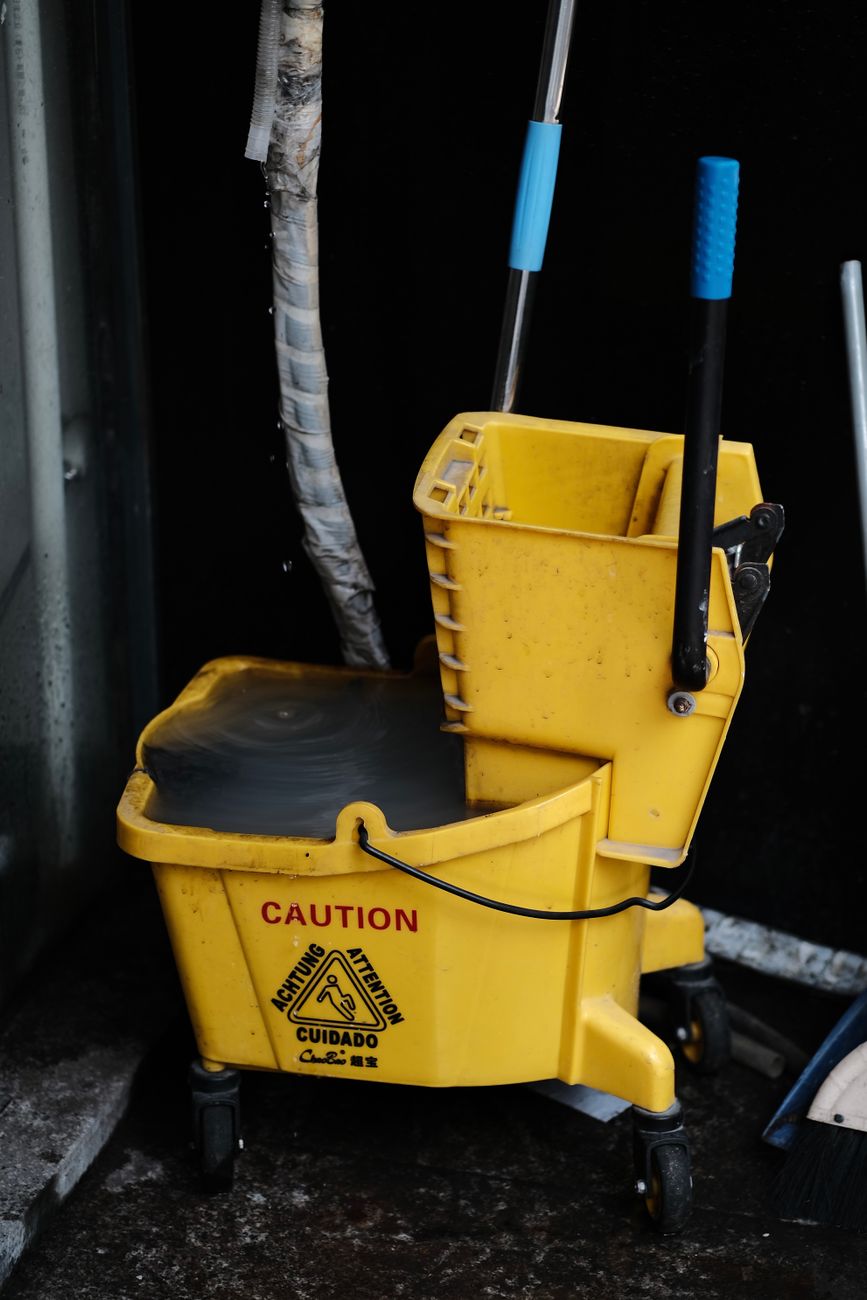
Photo by Jenkin Shen
Waste handling belongs here as well. Recycling streams, confidential shredding bins, medical waste exclusions, and dumpster access rules all affect labor and pricing.
Quality control, reporting, and response times
Last, define how performance gets checked.
Some managers use walkthroughs and punch lists. Others use scorecards, photos, or supervisor inspections. Any quality control method can work if the expectations are clear. Add response times for missed service, spills, lockouts, or complaints. If problems need a reply within four business hours or correction by the next service visit, say so.
A scope of work without clearly defined performance standards is like a recipe without measurements. You might still get dinner, but it will not taste the same twice.
Break the work down by area, not by generic promises
“Clean the office” is too broad to price well. To create a precise commercial cleaning scope of work, break the building into zones instead. Defining your office cleaning duties by area keeps the document readable and makes it much easier to compare bidders line by line. It also helps during site walks, because managers and vendors can point to the same area and talk about the specific requirements for that space.
A simple area matrix works well:
| Area | Typical tasks | Frequency notes |
|---|---|---|
| Lobby and entry | Remove debris, vacuum mats, spot clean glass, wipe high-touch surfaces | Usually every service visit |
| Open office and private offices | Empty trash, dust reachable surfaces, vacuum, spot clean marks | Daily or several times per week |
| Restroom facilities | Clean and disinfect fixtures, mirrors, partitions, floors, restock supplies | Often daily, sometimes multiple times per day |
| Break room or kitchen | Wipe counters, sinks, appliance fronts, tables, floors, trash | Daily in most occupied spaces |
| Hard floors and carpet | Vacuum, damp mop, spot treat carpet, periodic machine work | Routine plus monthly or quarterly extras |
| Interior glass and high-touch surfaces | Door glass, switches, handles, railings | High-touch surfaces often daily, full glass less often |
If you want to see a basic format, this cleaning contract scope template shows the structure. The real value of a professional scope of work comes from tailoring it to your building, not copying a generic sheet.
Detailing the area-by-area requirements also helps with setting standards. A restroom is not clean just because the trash is gone. You may want no visible soil, stocked dispensers, dry floors, and odor control. For lobby glass, you may want it streak-free at normal viewing distance. Using this cleaning schedule to outline specific cleaning tasks matters because it turns subjective opinions into checkable, objective results.
The gaps that cause the most trouble later
The biggest problems usually come from assumptions rather than bad intent.
Periodic floor work is a classic example. A cleaning company may quote nightly services but leave out deep cleaning tasks like burnishing, scrub and recoat, or full strip and wax work. Carpet extraction often falls into the same trap. So do high dusting, interior partition glass, ceiling vents, upholstered furniture, and event cleanup. Beyond standard maintenance, you must also define expectations for infection control to ensure the health and safety of your facility.
Exterior areas create confusion too. Who handles sidewalks at the front entrance? Who empties cigarette urns? Are parking garage stairwells part of the scope of work? What about storm season touch ups in Southwest Florida, when tracked in moisture and debris can spike overnight?
Put change order rules in the scope of work as well. State what counts as extra work, who can approve it, and how pricing will be handled. That stops a lot of finger pointing later.
Security terms matter just as much. Add expectations for background checks if needed, key control, alarm procedures, uniform standards, insurance requirements, and on site supervisor visits. If crews work in occupied areas, spell out noise limits and privacy rules.
When it is time to collect bids, give every cleaning company the same document and the same walk through. Ask each commercial cleaning business to list their assumptions in writing. Compare monthly price, periodic work, labor coverage, supplies, and inspection methods within your janitorial contracts, rather than looking at the headline number alone. A cheap bid built on missing tasks is rarely a bargain.
If you need pricing tied to a written scope and a real site review, Get a FREE Quote Today.
Frequently Asked Questions
Why is a detailed scope of work better than a general one?
A vague scope forces vendors to make their own assumptions, which leads to inconsistent pricing and lower quality results. By detailing every task and frequency, you turn the document into an actionable blueprint that ensures all bidders are quoting the same level of service.
Should I include supply management in the scope?
Yes, it is essential to specify who provides items like soap, paper towels, and trash liners to avoid future billing disputes. If the vendor is providing these items, ensure the contract lists the required quantities or quality standards to prevent the use of inferior supplies.
How do I handle periodic tasks like floor stripping or high dusting?
These should be listed separately from your daily tasks with specific, recurring frequencies such as monthly, quarterly, or annually. Failing to define these in the initial scope often leads to “add-on” charges later when these necessary, non-daily maintenance tasks are eventually required.
What is the purpose of defining quality standards in the contract?
Quality standards move expectations from subjective opinions to objective, checkable results. By defining what “clean” looks like—such as streak-free glass or specific odor control metrics—you provide the vendor with clear benchmarks for performance and make inspection processes much more effective.
Conclusion
A well-defined document is where cleaning expectations stop being fuzzy and start being truly usable.
When your commercial cleaning scope of work clearly lists specific areas, individual tasks, frequencies, quality standards, exclusions, and communication protocols, you can compare bids fairly and manage the contract without second-guessing. A precise scope of work acts as the blueprint for your facility’s maintenance, ensuring that your provider delivers consistent results from the moment they arrive. Ultimately, a cleaner facility is the direct result of proactive planning, which sets the stage for a successful long-term partnership for your janitorial services.