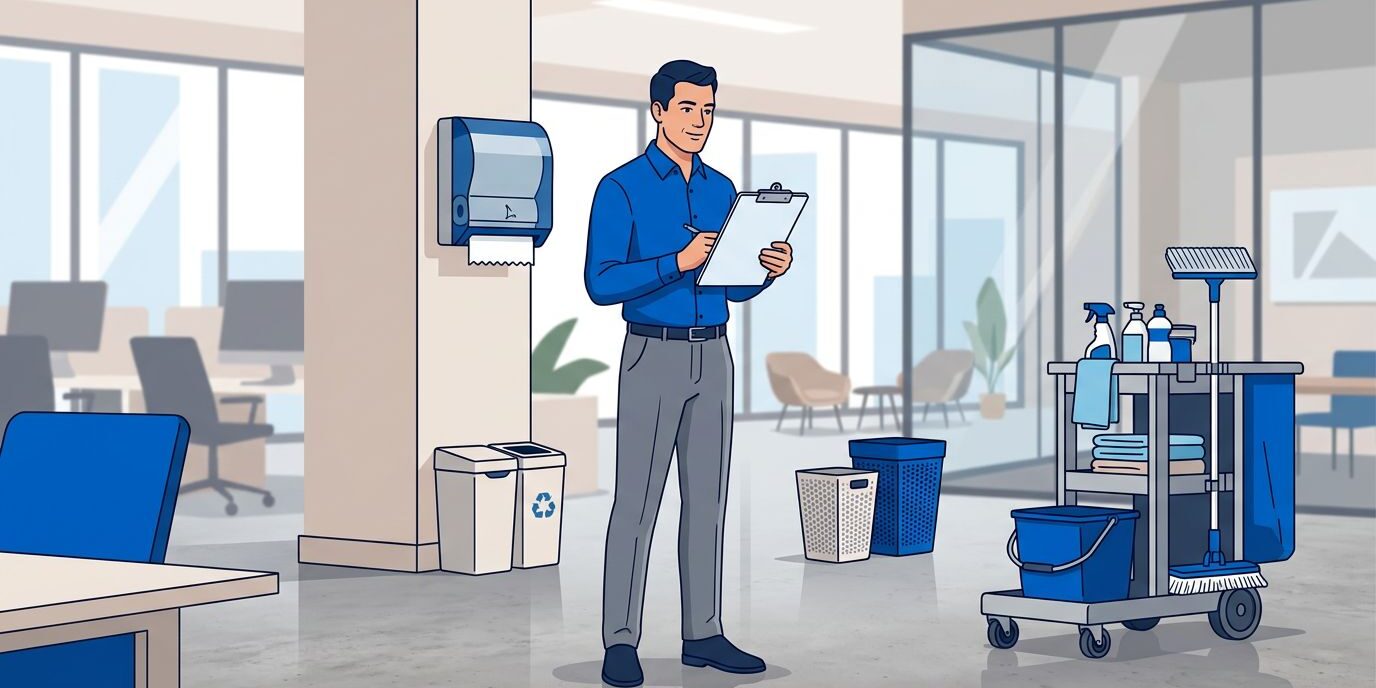
Office cleaning complaints rarely start with one missed wastebasket. They grow when a no-show, empty paper towel dispenser, or unreturned message becomes normal. For business owners, recurring issues can affect employee confidence, customer satisfaction, and the professional image customers see.
A P&G Professional and Ipsos finding reported that 92 percent of customers judge a business by its cleanliness. Consistent commercial office cleaning requires more than defending one visit. We need a clear process to correct the problem, find its cause, and prevent the same complaint from returning.
Key Takeaways
- Record each office cleaning complaint with the location, missed task, service date, business impact, and available evidence.
- Use a four-step response: acknowledge the concern, verify it against the agreement, send the right correction, and document prevention steps.
- Define cleaning tasks, frequencies, supply responsibilities, service standards, and extra charges in a written scope of work.
- Track task completion, first-time fix rate, response time, and inspection scores to identify recurring failures.
- Choose a commercial cleaning provider that offers trained backup staff, consistent supervision, clear communication, and documented quality control.
What Office Cleaning Complaints Reveal About Commercial Office Cleaning Quality
A record of cleaning customer complaints becomes useful when it creates a clear record, not an argument. Facility managers can use a room-level cleaning checklist to capture the exact location, task, service date, and impact on the business. “The office wasn’t cleaned” is difficult to act on. “The second-floor restroom had no paper towels after Tuesday’s service” gives the team something clear to investigate.
The issues reported most often include:
- Missed shifts, late arrivals, or complete no-shows
- Dust, fingerprints, trash, or stains left behind
- Dirty restrooms, foul odors, and empty dispensers
- Strong chemical smells or products that damage surfaces
- Inconsistent results when teams or cleaning staff change
- Poor communication after a concern is reported
- Unexpected charges for carpet, floor, glass, or special cleaning
Some problems are isolated. Others point to weak scheduling, poor training, an unclear contract, or too little labor assigned to the building. Reliable commercial cleaning companies look for recurring causes and fix them at the source. A dependable cleaning provider treats reports as connected evidence, not separate events.

Resolve a Commercial Office Cleaning Complaint With a Documented Four-Step Response
A professional response to cleaning customer complaints should be calm, prompt, and easy to follow. We recommend four steps for every reported issue.
- Acknowledge the concern and record the details. Note the date, time, area, missed task, photos if available, and whether the issue is urgent or standard. A restroom leak or wet floor needs a different response than dust on a filing cabinet.
- Verify what happened against the written agreement. Check the service schedule, cleaning checklist, inspection record, and supply responsibilities. This step can show whether the task was missed, performed poorly, or excluded from the agreement.
- Send the right correction. The cleaning provider should send the correction and equip cleaning staff with the required supplies, equipment, access, and training. A first-time fix rate measures how often reported issues are resolved during the first response. A low rate may point to poor communication or missing materials.
- Record the correction and prevent a repeat. Document the correction in digital checklists, including what was completed, who handled it, and whether another inspection is needed. If the same area keeps failing, change the cleaning procedures rather than promising that nothing will ever be missed.
Urgent and standard requests should have separate response targets. A business owner should know who receives the complaint, who can approve follow-up work, and when the issue will be checked again. That simple structure builds confidence because the process doesn’t depend on one person’s memory.
Repair Daily Failures in Commercial Office Cleaning
Reliable commercial office cleaning services depend on fixing small daily failures before they become recurring problems. Attendance, restroom care, staffing consistency, and product choices all shape the experience of people using the building.
Prevent late arrivals and missed shifts
No-shows create more than an inconvenience. Repeated missed shifts leave restrooms, entrances, and shared areas without service, while the next visit becomes rushed. Common causes include weak scheduling, poor absence coverage, unclear access instructions, and staffing levels that leave no room for emergencies.
Commercial cleaning companies should maintain a confirmed schedule, assigned site responsibilities, and backup coverage for absences. A supervisor should know when a member of the cleaning staff arrives, which areas are assigned, and whether all scheduled tasks are complete. Time-stamped records and digital checklists can confirm arrivals and completed tasks, but time inside the building isn’t enough. A cleaner can spend the expected number of hours and still leave required work unfinished.
The facility contact should ask how the provider handles call-outs, late arrivals, access problems, and alarm issues. A dependable answer includes a backup plan and a communication process, not a vague promise to do better.
Keep restrooms clean, dry, and stocked
Dirty restrooms often result from supply checks that aren’t tied to traffic levels. Paper towels, toilet paper, hand soap, and other consumables may run out before the next scheduled visit. A cleaner may also empty trash without checking dispensers, floors, odors, partitions, and fixtures.
A proper restroom inspection should confirm:
- No visible soil at normal viewing distance
- Dry floors and prompt attention to spills
- Fully stocked paper products and soap
- Clean fixtures, mirrors, partitions, and touchpoints
- Acceptable odor control
- Removed trash and clean waste receptacles
Responsibility for supplies should be written into the contract. State who buys, stores, monitors, and replaces each item. High-traffic offices may also need mid-day checks or a higher supply allowance during events and busy seasons.
Control inconsistent cleaning quality
Service can vary when different teams use different cleaning techniques. Without shared cleaning procedures, one worker may wipe desk surfaces while another focuses only on floors and trash. Staff turnover makes the problem worse when new employees aren’t trained on the building’s surfaces, security rules, or priorities.
Color-coded microfiber systems, area-specific procedures, supervisor inspections, and consistent product instructions help reduce variation. Cleaning products should match the surface and the people using the space. If employees complain about strong chemical odors, ask the provider to review dilution, ventilation, product selection, and drying time. Low-odor or lower-moisture options, including green cleaning approaches, may be appropriate in offices, schools, medical facilities, and other sensitive environments.
Turn the Contract Into Measurable Expectations for Commercial Office Cleaning
Problems with commercial office cleaning often begin before the first service visit. A proposal may describe “regular janitorial service” without defining the scope of work, rooms, tasks, products, frequencies, or special services.
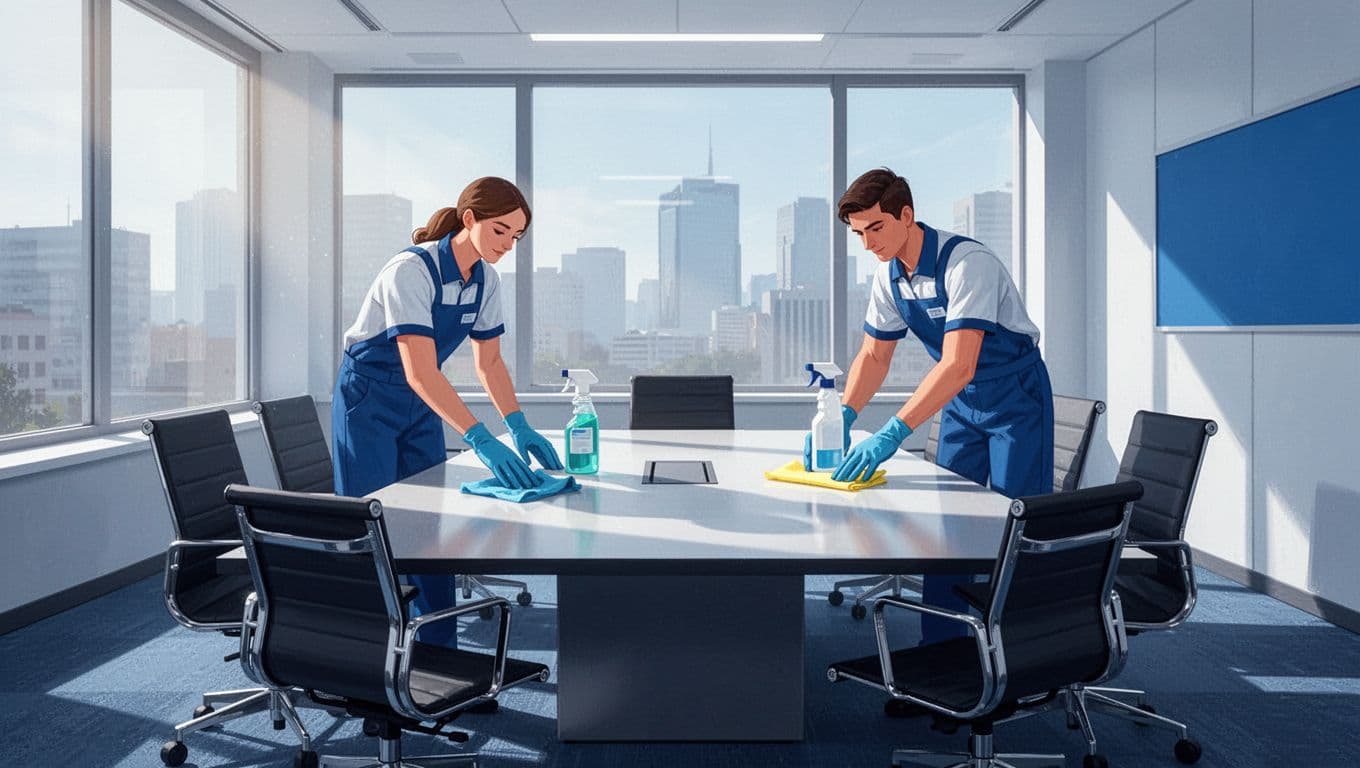
A strong scope of work should separate daily, weekly, monthly, quarterly, and occasional tasks. Routine cleaning isn’t the same as carpet extraction. Mopping isn’t the same as machine scrubbing, stripping, and refinishing. High dusting, interior glass, upholstery cleaning, post-event cleanup, and post-construction cleaning may also be separate services.
Use clear standards that both sides can inspect, and keep a cleaning checklist as the practical record for review.
| Area | Practical service standard | Evidence for review |
|---|---|---|
| Office areas | Scheduled surfaces, floors, and trash are completed | Room record |
| Restrooms | Fixtures are clean, floors are dry, and dispensers are stocked | Supervisor inspection |
| Entrances | Walkways are free of visible soil and tracked debris | Time-stamped photos |
| Glass | Lobby and interior glass are streak-free at normal viewing distance | Visual inspection |
| Specialty work | Carpet, floors, and high dusting follow the agreed frequency | Service report |
The contract should identify approved cleaning products, pre-spray and dilution requirements, equipment, and cleaning procedures. For carpet extraction, ask whether the service includes rinsing, furniture movement, moisture control, and enough drying time. For floor care, confirm the surface type, machine work, finish application, and reopening instructions.
Billing terms also need clear language. Confirm the initial term, cancellation notice, renewal rules, pricing structures, price changes, payment schedule, and extra-work charges. State who approves additional services and how the price is documented. Itemized terms prevent disputes when a business later needs carpet extraction, floor restoration, interior glass, or event cleanup.
ISSA’s overview of CIMS shows how quality standards and operational management work together. The same principle applies to a small professional office. Written requirements and inspections make quality control easier. They also support broader facility maintenance, not just visible cleaning.
Audit a commercial office cleaning program before complaints become routine
Facility managers can identify a reactive cleaning provider by studying patterns in cleaning customer complaints. Are complaints answered only after several reminders? Do the same rooms fail inspection? Does the company send a different worker without transferring site instructions? Are service reports missing, vague, or unavailable?
Track a few simple measures:
- Task completion rate: completed scheduled tasks divided by scheduled tasks, multiplied by 100
- First-time fix rate: issues resolved during the first response divided by total reported issues, multiplied by 100
- Response time: measured separately for urgent and routine requests
- Inspection score: completed standards divided by inspected standards
These numbers reveal cleaning quality beyond hours worked. If task completion falls while labor hours remain unchanged, the problem may involve poor training, unrealistic assignments, missing equipment, or an oversized scope. A commercial cleaning quality control guide also emphasizes defined standards, regular inspections, and documented corrections.
When evaluating cleaning contractors, ask each commercial cleaner for references from similar facilities. Confirm that the company is licensed, insured, and bonded. Ask how workers are screened, trained, supervised, and replaced during absences, and how staff turnover is managed. Find out whether you will have a dedicated account contact for schedule changes, damage reports, missed areas, and billing questions.
A dependable provider should explain how it protects keys, alarms, confidential records, and restricted rooms. The cleaning plan should also account for facility maintenance needs, traffic, flooring, weather, operating hours, and special areas. In Southwest Florida, rain, humidity, sand, and storm-related debris can change the workload at entrances and high-traffic floors.
Our team provides supervised cleaning services and janitorial services for businesses in Fort Myers, Cape Coral, Bonita Springs, Naples, Lehigh Acres, and nearby communities. If your current service creates recurring service issues, request a written scope of work that matches your building and schedule through Get a FREE Quote Today.
Frequently Asked Questions
How should a business respond to an office cleaning complaint?
Acknowledge the concern promptly and record the area, date, missed task, photos, and urgency. Then verify the issue against the cleaning agreement, arrange the correction, and document whether additional follow-up is needed.
What are the most common office cleaning complaints?
Common complaints include missed shifts, dirty restrooms, empty dispensers, dust, stains, strong chemical odors, inconsistent results, and poor communication. Unexpected charges for specialty services can also create disputes when the contract does not define the scope clearly.
How can recurring cleaning complaints be prevented?
Identify whether the root cause involves scheduling, staffing, training, supplies, equipment, or unclear expectations. Use written procedures, supervisor inspections, digital checklists, backup coverage, and measurable service standards to prevent the same issue from returning.
What should a commercial office cleaning contract include?
The contract should define rooms, tasks, service frequencies, products, equipment, supply responsibilities, inspection standards, and special services. It should also explain billing, extra-work approval, price changes, cancellation terms, and the evidence used to review completed work.
Which cleaning quality measures should facility managers track?
Useful measures include task completion rate, first-time fix rate, response time, and inspection score. Reviewing these numbers alongside complaint patterns can reveal whether problems come from poor training, unrealistic assignments, missing supplies, or inadequate supervision.
Build a Commercial Office Cleaning Program That Holds Up
Complaints become manageable when every concern has an owner, a response time, an objective standard, and a documented correction. Attendance, restroom supplies, chemical choices, training, inspections, and billing all need clear procedures.
The strongest cleaning relationship isn’t based on a promise that problems will never occur. It is based on reliable follow-up when something needs attention. With a detailed scope, trained backup staff, measurable service records, and consistent supervision, your office can stay clean, healthy, organized, and ready for employees and customers each day.