
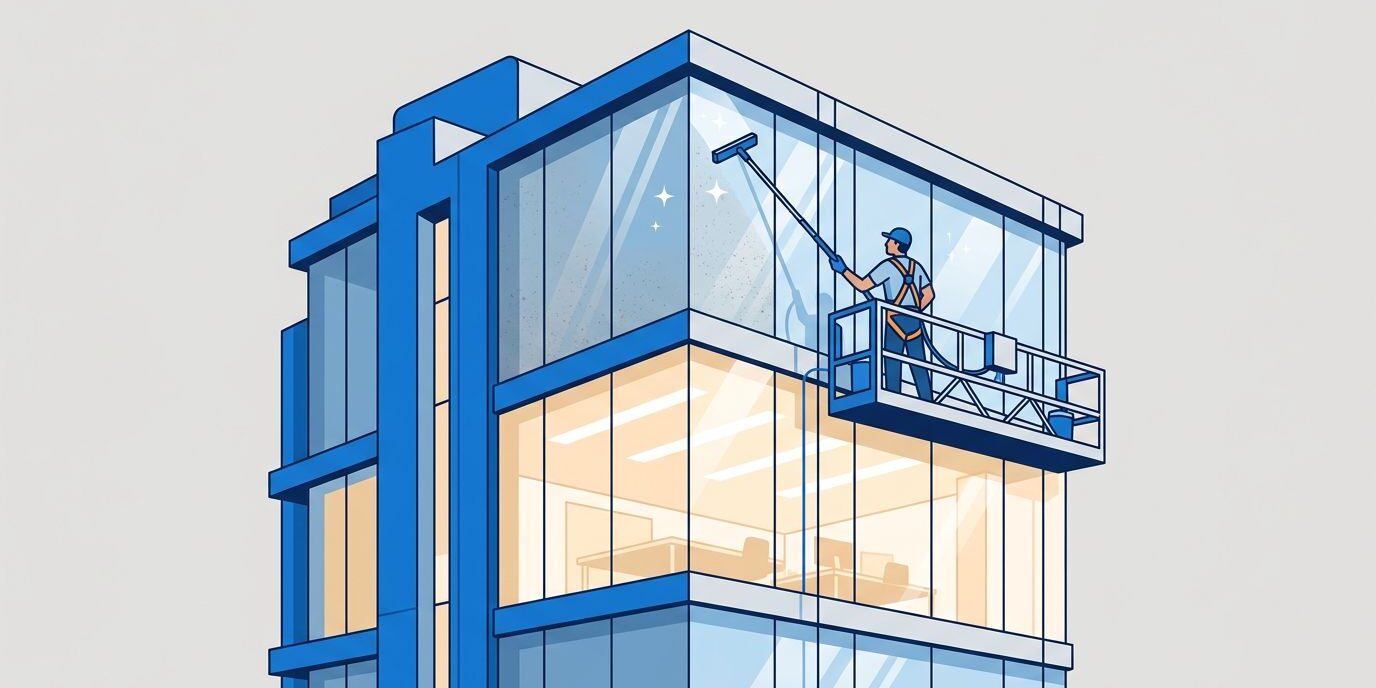
Dirty office windows can make a well-maintained building look neglected before visitors reach the front desk. Professional commercial window cleaning keeps glass clear, improves the appearance of your property, and supports a brighter, more welcoming workplace.
Commercial window washing requires more than a bucket and squeegee. Height, access, glass type, landscaping, and weather all affect the work. This guide evaluates window cleaning services through written scopes, access methods, and quality checks after each visit.
Key Takeaways
- Commercial window cleaning improves a building’s appearance, brings more natural light into workspaces, and helps manage buildup before it damages glass.
- A written scope should identify interior and exterior glass, frames, sills, tracks, screens, specialty restoration, access methods, service timing, and extra charges.
- Multi-story window cleaning requires the right equipment and trained crews, including water-fed poles, lifts, suspended platforms, or rope access when appropriate.
- Safety procedures, applicable OSHA regulations, weather planning, insurance, and emergency plans are essential for work performed at height.
- The best maintenance plan combines a suitable service schedule, clear pricing, documented inspections, and a correction process for missed or streaked areas.
Why Clean Windows Matter in Office Buildings
Windows are one of the first features people notice on an office building. Fingerprints on entry doors, streaks across lobby glass, and buildup around frames can affect how customers, tenants, employees, and visitors view the property.
Clean glass allows more natural light into offices, conference rooms, reception areas, and common spaces. A brighter workplace often feels cleaner and more organized. Although window washing doesn’t replace routine janitorial service, it supports the professional appearance created by clean floors, restrooms, desks, and entryways.
Exterior glass also collects more than ordinary dust. Office buildings may have:
- Salt residue in coastal areas
- Pollen and airborne particles
- Bird droppings
- Hard water from irrigation systems
- Tree sap and landscaping debris
- Smoke, vehicle exhaust, and construction dust
- Mineral deposits after repeated rain and sprinkler exposure
If these materials remain on glass for long periods, they may become harder to remove. Mineral stains can etch the surface, while abrasive debris can cause scratches when cleaned with the wrong tools.
Window frames, sills, mullions, and tracks need attention as well. These areas hold dirt and moisture that can run back onto freshly cleaned glass. A complete service should address the surrounding components when they are part of the agreed scope.
Our team views commercial window cleaning as part of building maintenance, not as a one-time appearance service. Consistent care helps manage seasonal buildup before it becomes difficult to remove. It also prepares the property for special events, renovations, tenant moves, and unexpected problems.
What a Commercial Window Cleaning Scope Should Include
A clear scope for commercial window washing identifies included work, service timing, and extra charges. It confirms whether interior glass, screen cleaning, frames, or hard water restoration are included, making window cleaning pricing easier to compare.
Before pricing the commercial window cleaning job, the provider should review the building in person. Important details include the number of window panes, total window count, glass size, building height, access points, parking conditions, tenant schedules, security procedures, and nearby landscaping.
Interior and exterior glass
Interior service usually includes office windows, lobby glass, conference room panels, glass doors, sidelights, and accessible partitions. The scope should state whether the cleaner will move small items, protect desks, include screen cleaning, clean window tracks, wipe sills, and remove fingerprints from doors.
Exterior service may include ground-level glass, upper floors, curtain wall systems, storefront windows, skylights, and glass canopy areas. The provider should identify which surfaces require ladders, water-fed poles, lifts, suspended platforms, or specialized access methods.
Frames and metal mullions may need separate attention. Aluminum and other finished surfaces can show oxidation, water spots, and environmental buildup. The chosen products must match the frame material to prevent damage or discoloration.
Restoration and specialty work
Routine washing removes surface dirt. It doesn’t always remove baked-on mineral deposits, paint, concrete splashes, silicone, adhesive, or construction debris.
Glass restoration may require specialized scrapers, non-abrasive pads, mineral removers, polishing compounds, or controlled chemical treatment for hard water stains. The technician should select cleaning solutions carefully and test an inconspicuous area first. Some stains are permanent because the glass has already been etched.
Post-construction window cleaning is also different from routine maintenance. New offices may have dust on every horizontal surface, paint on frames, labels on glass, and fine particles throughout window tracks and corners. Construction cleanup should be priced as a project, not assumed to fit within a regular monthly visit.
Pressure washing can support exterior property maintenance, but high-pressure water shouldn’t be directed at window seals, damaged frames, or vulnerable building joints without a proper assessment.
A low quote may exclude the exact work your building needs. Compare written scopes, not only the final price.
Equipment for Multi-Story and High-Rise Windows
The correct equipment depends on height, reach, surface condition, building design, and ground conditions. Trained window washers evaluate these factors and explain why a particular method fits the property.

Photo by DinaArt
Water-fed pole systems
A water-fed pole system uses a brush and rinse head connected to purified water. The operator washes the glass and rinses it with deionized water that contains few or no dissolved minerals. The remaining water dries with less spotting than ordinary tap water.
These systems work well for many low-rise and medium-height buildings. With the right setup, some systems can clean windows up to 90 feet while the operator stays on the ground. Water-fed pole equipment guidance explains how purified-water poles are used for elevated glass. Managers should select a water-fed pole system when reach and site conditions support ground-based work.
The main benefits include reduced ladder use, faster access across large elevations, and less disruption around the building. Keeping both feet on the ground can also reduce certain fall risks. However, water-fed poles aren’t suitable for every window. Strong wind, obstructions, excessive height, architectural overhangs, and heavy mineral stains may require another method.
Lifts, suspended platforms, and rope access
Boom lifts and scissor lifts provide a stable work platform when the ground and site layout allow safe placement. A lift may work well for a section of a mid-rise office building, but operators need training, proper clearance, and adequate space around the equipment.
Suspended platforms, also called building maintenance units in some properties, are designed for façades with permanent roof equipment. They require trained personnel, pre-use inspections, communication procedures, and a building-specific plan.
Rope access can reach difficult sections of high-rise buildings without placing large equipment on the ground. It requires specialized training, approved anchor points, rescue planning, and strict control of the work area. This method isn’t a shortcut around safety rules.
Ladders are useful for limited low-level work, but they shouldn’t be treated as the main access plan for a multi-story office building. A qualified crew selects equipment before the work begins, rather than improvising after arriving onsite.
Drones and emerging methods
Drone cleaning systems may reduce the need for workers to access some exterior surfaces. They can be useful for certain façades, inspections, and broad rinsing applications. Their value depends on the building design, local airspace, wind conditions, runoff control, and the level of detail required.
Drone operations also involve regulatory and insurance questions. The property owner may need to approve flight zones, pedestrian controls, privacy procedures, and temporary access restrictions. A drone cannot replace interior glass cleaning, detailed frame work, stubborn stain removal, or every high-rise rigging method.
For most properties, the practical decision isn’t choosing one technology for the entire site. It is selecting the safest and most efficient method for each elevation.
Safety Standards for Commercial Window Washing
Window cleaning at height is specialized work. A provider should have written procedures for access, fall protection, equipment inspections, chemical handling, traffic control, emergency response, and weather interruptions.
Commercial operations must follow applicable OSHA regulations and recognized ANSI safety practices. Depending on the work, this can involve rules for ladders, scaffolds, aerial lifts, suspended platforms, personal fall arrest systems, personal protective equipment, and hazard communication.
Before service begins, the crew should review:
- Building access and roof conditions
- Anchor points and tie-off locations
- Lift placement and overhead hazards
- Electrical lines and nearby equipment
- Pedestrian and vehicle traffic
- Wind, rain, lightning, and heat conditions
- Window defects, cracked glass, loose frames, or damaged seals
- Emergency contacts and rescue procedures
Workers may need gloves, eye protection, nonslip footwear, helmets, high-visibility clothing, or fall protection based on the task. Chemical labels and safety data should be available for cleaning solutions used onsite, along with proper handling instructions.
Weather matters more at height. Wind can make poles, ladders, lifts, and suspended platforms difficult to control. Lightning and heavy rain create unacceptable conditions for many exterior operations. Extreme heat can also cause cleaning solutions to dry too quickly, leaving streaks or residue.
A responsible company will reschedule unsafe work instead of rushing to meet a calendar date. The building manager should know how weather delays are communicated and how missed service will be completed.
Commercial Window Cleaning Pricing: What Office Managers Should Know
Window cleaning pricing depends on more than the number of panes. Building height, access, glass condition, service frequency, travel time, labor, equipment, insurance, and site restrictions all affect the quote.
Common planning models include the following ranges. These are budgeting guides, not guaranteed quotes.
| Pricing model | Common planning range | Best fit |
|---|---|---|
| Per window pane | $4 to $8 | Buildings with consistent, accessible panes |
| Per window | $10 to $18 | Standard windows or grouped assemblies |
| hourly rates | $45 to $100 per hour | Irregular layouts, detailed work, or small projects |
| flat rate pricing | Custom quote | Multi-visit office maintenance contracts |
Providers may count window panes individually, while one window assembly can contain several sections of glass. These pricing models aren’t interchangeable. Ask the provider how bay windows, divided lights, glass doors, skylights, and curtain wall sections are counted.
Commercial window washing quotes can change quickly with access and elevation. Ground-level glass may be handled with standard tools, while upper floors may require water-fed poles, lifts, suspended platforms, additional technicians, or traffic control.
Hard water stains and construction residue are usually priced separately because they require more labor and specialized products. Interior glass may also cost more when technicians must work around desks, computers, tenant belongings, security systems, or occupied offices.
A useful annual planning formula is:
Annual glass budget = per-visit price x number of visits + planned glass restoration + specialty projects
Ask whether the quote for window cleaning services includes travel, water, equipment setup, frame cleaning, screen cleaning, interior glass, stain removal, and cleanup. Compare hourly rates carefully, and require written pricing or approval for extra work.
Service frequency can lower the cost per visit because recurring cleaning reduces heavy buildup and makes route planning easier. A cheaper one-time service may cost more over the year if the glass needs repeated restoration.
For a reliable estimate, schedule an onsite walkthrough. Businesses in Fort Myers, Cape Coral, Bonita Springs, Naples, Lehigh Acres, and nearby communities can Get a FREE Quote Today to request a free estimate and a scope based on the actual building.
Choosing the Right Maintenance Schedule
There is no single schedule for every office building. Service frequency should reflect the building’s location, foot traffic, glass area, visibility, and appearance standards.
A recurring service plan helps maintain a consistent appearance between visits instead of relying only on one-time cleaning.
- Low-traffic offices often schedule interior and exterior cleaning two to four times each year.
- Standard office buildings commonly benefit from quarterly service.
- Busy lobbies, medical offices, banks, and multi-tenant properties may need monthly cleaning.
- Retail storefronts often need weekly or biweekly touch-ups because fingerprints and street dust show quickly.
- Coastal properties may require more frequent exterior cleaning because salt and humidity leave residue.
- Buildings near busy roads, parking areas, trees, or active construction may need additional visits.
In Southwest Florida, rain doesn’t remove every contaminant, and coastal air can add salt and humidity. Rain may leave mineral spots when water dries on the glass. Irrigation from lawns and landscaping may create hard water buildup, while trees can contribute sap, pollen, and bird activity.
Hurricane season and severe storms can also change the schedule. Exterior work may need to wait for safe wind conditions, and storm cleanup may increase demand for glass, doors, frames, and entry areas.
The right plan may use different frequencies for different elevations or entrances. Service frequency may be monthly for a lobby and ground-level entrance, while upper-floor office glass is cleaned quarterly. This approach focuses effort where people see buildup first.
Measuring Service Quality After the Visit
Clean glass should be evaluated through a visual inspection and objective standards. “Looks good” means different things to different people, especially in a large building.
A written checklist identifies the surfaces included in each visit. It may cover lobby glass, interior doors, accessible windows, exterior elevations, frames, sills, tracks, water spots, and post-service cleanup. Checklist completion should be recorded separately from the visual inspection.
Practical standards may include:
- No visible streaks at normal viewing distance
- No fingerprints on entry doors or sidelights
- No loose debris left on sills or walkways
- Frames and mullions cleaned when included in the scope
- Floors and nearby surfaces left dry
- Furniture and equipment returned to their original locations
- Damaged glass or seals reported to the building contact
Hours alone don’t measure cleaning efficiency. A crew can spend the expected time inside a property and still miss required areas. The task completion rate compares scheduled work with completed work. Digital checklists, supervisor inspections, and time-stamped records show whether missed areas are isolated or recurring.
A strong provider also needs a clear correction process. If a lobby door is streaked or an upper-floor section was missed, the property manager should know who receives the report, when it will be acknowledged, and how the correction is documented.
The first-time fix rate measures how often a reported issue is resolved during the first response. A low rate may point to missing supplies, unclear instructions, poor communication, or inadequate training.
Urgent and routine requests should have different response targets. A broken seal, unsafe glass, or water issue requires faster attention than a request for additional interior glass. Tracking when a request is opened, acknowledged, assigned, resolved, and closed makes delays easier to identify.
Contract Details That Protect the Building
The agreement should match the actual property. It should identify the service areas, service frequency, access methods, products, equipment, safety responsibilities, and quality standards.
Confirm whether the contract includes interior glass, exterior glass, screens, screen cleaning, frames, sills, window tracks, skylights, glass canopies, hard water restoration, post-construction cleanup, and high-access work. Also ask how damaged glass, blocked windows, tenant refusal, weather delays, and after-hours access are handled.
Billing terms need clear language. Monthly billing, advance billing, and post-service billing affect cash flow. The agreement should document window cleaning pricing, recurring rates, extra-work charges, the initial term, cancellation notice, renewal rules, and price changes.
Continuity matters in an occupied office building. Frequent crew changes can lead to missed access instructions, inconsistent methods, and repeated training. Ask how the provider trains and supervises window washers, and handles sick days, staffing changes, keys, alarms, background checks, and backup coverage.
Insurance is also important. Request current proof of general liability and workers’ compensation coverage. A reputable provider should be licensed, insured, and bonded, with trained professional cleaners and a supervisor responsible for service quality.
At Pro Shine Cleaning Services, we build customized cleaning plans around the property, schedule, and service expectations. Our Southwest Florida crews provide commercial window cleaning services for professional offices, medical facilities, schools, hotels, restaurants, banks, clubs, retail spaces, and other commercial properties.
Clean windows are one part of a complete building maintenance plan. When glass care is coordinated with office cleaning, janitorial service, floor care, pressure washing, and post-construction work, the building receives consistent attention without unclear responsibilities.
Frequently Asked Questions
How often should an office building schedule commercial window cleaning?
Low-traffic offices may need cleaning two to four times each year, while standard office buildings commonly benefit from quarterly service. Busy lobbies, retail storefronts, coastal properties, and buildings near roads or construction may require monthly, weekly, or additional cleaning.
What is included in commercial window cleaning?
The scope may include interior and exterior glass, doors, frames, sills, tracks, screens, skylights, and glass canopies. These items are not always included automatically, so the provider should list all included surfaces and any specialty work in writing.
How is commercial window cleaning pricing determined?
Pricing depends on window count, glass size, building height, access requirements, labor, equipment, service frequency, and glass condition. Hard water stains, construction residue, interior work around office furniture, and high-access areas may require separate charges.
What equipment is used to clean windows on multi-story buildings?
Professionals may use water-fed poles, boom lifts, scissor lifts, suspended platforms, or rope access systems depending on the building and site conditions. The safest and most efficient method should be selected during the property assessment rather than improvised onsite.
How can a business measure window cleaning quality?
A written checklist and visual inspection can confirm that the agreed glass, frames, doors, and surrounding areas were completed. Managers should also track missed areas, correction response times, task completion rates, and whether reported problems are fixed on the first response.
Conclusion
Commercial window cleaning protects the professional appearance of a workplace while making glass, doors, frames, and entryways easier to maintain. The strongest cleaning plan matches visit timing and access equipment to the building’s height, traffic, location, weather, and glass condition.
A written scope, trained crews, proper insurance, safe work procedures, clear window cleaning pricing, and documented inspections give business owners better control over results. Clean glass doesn’t happen by choosing the lowest hourly rate. It comes from dependable service that completes the agreed work and responds properly when something needs attention.