The lobby is often the first part of a commercial office building that visitors notice. Dust on furniture, fingerprints on glass, overflowing trash, or dull floors can affect their opinion before the first conversation begins.
A consistent commercial lobby cleaning checklist helps property managers and janitorial teams maintain a clean, safe, and welcoming entrance. By utilizing a structured commercial office cleaning checklist, teams can easily turn general expectations into daily tasks that staff can complete and supervisors can inspect.
Key Takeaways
- Clean entry glass, floors, furniture, and high-touch surfaces during every scheduled visit.
- Use floor mats and regular spot-cleaning to control tracked-in soil.
- Separate your daily cleaning checklist from a comprehensive weekly cleaning checklist and periodic maintenance.
- Inspect the space at different times because traffic and weather change throughout the day.
- Put cleaning duties, supplies, safety procedures, and quality standards in writing.
Why Lobby Cleaning Matters in Professional Office Buildings
A clean lobby creates a positive first impression for tenants, employees, customers, vendors, and guests. Professional offices often receive visitors who judge the building before reaching the reception area. Clear glass, polished floors, organized furniture, and fresh air help the entire property feel cared for.
Lobby cleanliness also affects daily comfort. Dust settles on the reception area, chairs, window ledges, and decorative surfaces. High-touch points collect fingerprints, skin oils, and other soil. Regular cleaning and proper surface disinfection remove this buildup before it becomes difficult to manage. Using a reliable disinfectant on door handles and counters helps maintain high health standards for everyone who enters.
The lobby can also become a safety concern when cleaning is inconsistent. Rainwater, landscaping debris, and sand may collect near entrances. Spills can create slip hazards. Loose mats can curl at the edges. A strong checklist addresses these details instead of focusing only on visible dust.
Reliable janitorial services should cover the complete arrival experience during a professional lobby cleaning routine:
- Exterior entry areas and walkways
- Doors, handles, frames, and glass
- Reception counters and telephones
- Seating, tables, and decorative surfaces
- Floors, rugs, mats, and corners
- Elevators and nearby hallways
- Trash containers and recycling stations
- Signs, displays, and high-touch points
When these areas receive regular attention, the building looks more organized and remains easier to maintain.
Daily Lobby Cleaning Checklist
Most professional office buildings need lobby service every business day. High-traffic properties, medical offices, and multi-tenant buildings may need attention more than once daily. When setting up a daily cleaning checklist, we should base the schedule on actual use instead of choosing a frequency that only fits the budget.
Begin at the exterior entrance. Remove leaves, dirt, litter, and other debris from the approach to the building. Check the condition of entrance mats and reposition them when they move out of place. During rainy weather, inspect the floor more often because tracked-in moisture can spread quickly.
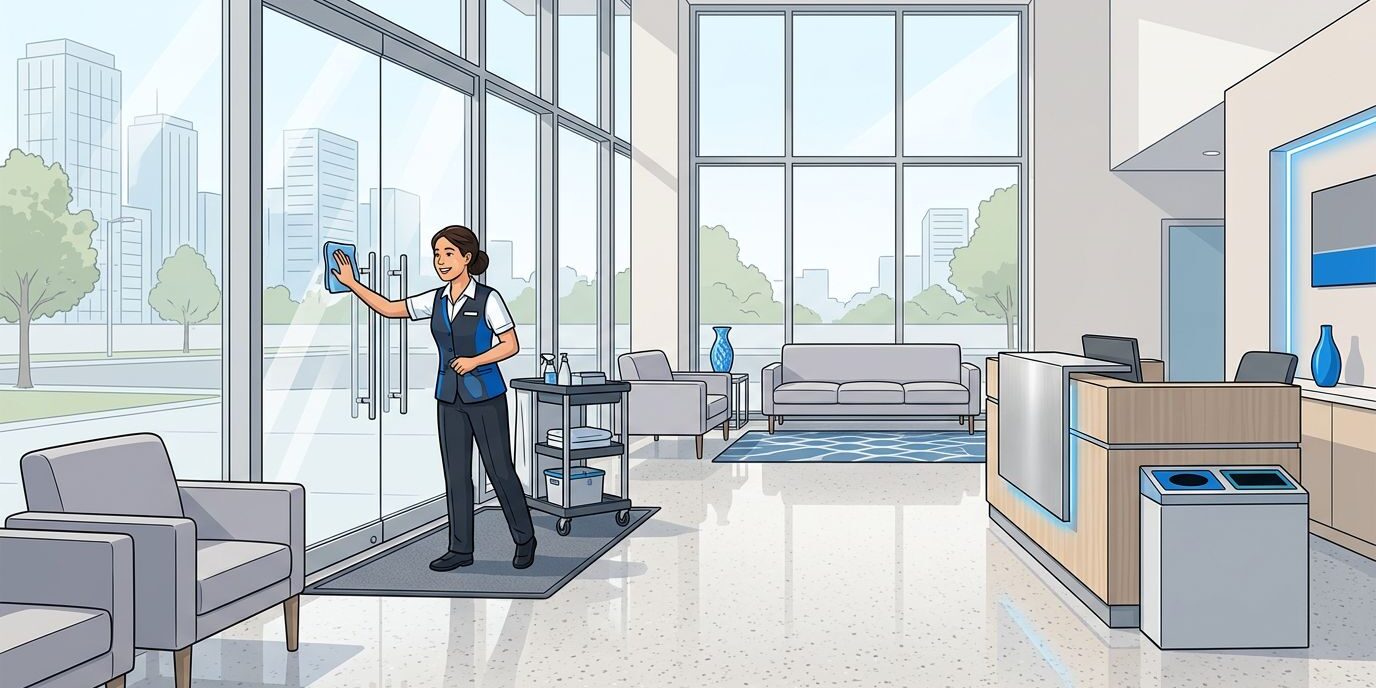
Clean both sides of entrance glass and remove fingerprints from doors, push plates, handles, and frames. Glass should look streak-free at a normal viewing distance. Spot-clean marks as soon as they appear, especially around hand level.
Vacuum carpets slowly, including edges and corners, and carefully mop floors with a product approved for the specific surface. We should use the correct method for stone, ceramic tile, luxury vinyl, wood, or polished concrete. Too much water can damage flooring and create a slip risk.
Dust and wipe the reception workstation, side tables, chairs, planters, ledges, and other reachable surfaces. Reception phones, counter edges, elevator buttons, disinfect door handles, light switches, and surfaces requiring regular sanitizing need attention because many people touch them throughout the day.
Empty trash receptacles before they become full. Replace liners and wipe the outside of each container. If the lobby has a coffee station or water dispenser, clean visible spills and keep the surrounding floor dry.
The daily inspection should also check the condition of the entire space. Look for odors, damaged furniture, burned-out lights, loose rugs, water near the entrance, and supplies that need replacement. Cleaning staff should report building maintenance problems instead of leaving them unnoticed.
Weekly and Periodic Lobby Cleaning Tasks
Daily service controls routine soil, but it doesn’t replace deeper cleaning. To keep your facility in top shape, a thorough weekly cleaning checklist should address areas that collect dust and grime slowly, while a detailed monthly cleaning checklist helps manage heavier periodic projects. These tasks may include high dusting of HVAC vents, baseboards, picture frames, wall corners, furniture undersides, and high ledges.
Move lightweight furniture when permitted so we can vacuum underneath and behind it. Clean upholstery according to the material and manufacturer instructions. Fabric chairs may need vacuuming, while visible spots may require a suitable upholstery treatment.
Interior glass deserves a closer inspection each week. Clean window edges, partitions, display cases, and sidelights where fingerprints and dust remain after routine spot-cleaning. Wipe decorative fixtures carefully so cleaning products don’t damage finishes.
Proper floor care should follow the surface type and traffic level. A lobby with heavy foot traffic may need machine scrubbing, burnishing, or another maintenance treatment. Carpeted sections may need scheduled carpet extraction when vacuuming no longer removes embedded soil.
Seasonal weather affects this work. Southwest Florida properties may experience heavy rain, humidity, sand, and landscaping debris. These conditions can increase the need for entryway cleaning and floor maintenance. We should adjust the plan when the lobby shows soil before the next scheduled visit.
A written building maintenance plan can help managers separate routine cleaning from periodic facility tasks. The office building maintenance checklist from Cove is one useful reference for organizing recurring inspections and property care.
Periodic work may include:
- Carpet extraction and upholstery cleaning
- High dusting above normal reach
- Floor machine scrubbing or refinishing
- Detailed cleaning of walls and doors
- Interior window and partition cleaning
- Cleaning after meetings, events, or construction
- Deep cleaning around reception displays and fixtures
These services should appear in the scope of work with separate frequencies and pricing when they aren’t included in routine visits.
Recommended Lobby Cleaning Frequencies
The right schedule depends on traffic, building size, weather, flooring, and the number of tenants. When building a comprehensive office cleaning checklist, a small office with limited visitors may need one daily service. A busy building implementing a commercial cleaning checklist may need morning cleaning plus an afternoon inspection.
This table gives us a practical starting point for planning service.
| Lobby area or task | Suggested frequency | Main reason |
|---|---|---|
| Entrance glass and door handles | Daily, plus spot-cleaning | Fingerprints and frequent contact |
| Floors and entry mats | Daily, more often during rain | Tracked-in soil and moisture |
| Reception counter and seating | Daily | Dust, fingerprints, and visitor use |
| Trash and recycling containers | Daily or as needed | Odor and overflow control |
| Elevator buttons and touchpoints | Daily | Frequent public contact |
| Baseboards, ledges, and vents | Weekly | Slow dust accumulation |
| Upholstery and detailed furniture care | Monthly or as needed | Soil and appearance |
| Carpet extraction or machine floor care | Monthly, quarterly, or as needed | Embedded soil and surface wear |
| High dusting and detailed wall cleaning | Quarterly or semiannually | Areas missed during routine service |
The schedule should be reviewed when tenant counts, visitor traffic, staffing, or operating hours change. If employees are cleaning the reception area themselves between visits, the current service level may be too light.
Set Clear Lobby Cleaning Standards
A checklist works best when every task has a clear result. “Clean the lobby” is too broad for staff training or quality inspections. Instead, the scope should state what gets cleaned, how often, and what acceptable service looks like. When partnering with a commercial cleaning company, these standards should also align with adjacent facility services such as restroom cleaning and break room cleaning to ensure a consistent level of hygiene throughout the building.
For example, the standard for lobby glass may be no visible fingerprints or streaks at normal viewing distance. The standard for floors may include no loose debris, visible spills, or wet areas after service. Reception surfaces should be dust-free, organized, and free of visible marks.
We should also define who provides cleaning products and consumables. The agreement should identify responsibility for:
- Trash liners and recycling bags
- Paper towels and hand soap
- Disinfectants and floor products
- Microfiber cloths and mop heads
- Vacuums and floor machines
- Wet-floor signs and other safety equipment
Product selection matters. A cleaner designed for glass may damage natural stone. Strong chemicals can harm wood finishes, metal surfaces, or polished flooring. We should approve every disinfectant and cleaning agent based on the building’s specific surfaces and safety requirements, ensuring proper surface disinfection without causing material degradation.
A supervisor should inspect the lobby after cleaning and record problems that need correction. Inspections may include photos, a written log, or a digital work order. If a task is missed, the company should have a clear process for reporting the issue and completing follow-up service.
A good quality standard describes the finished result, not only the task performed.
Access and security procedures also belong in the plan. List alarm instructions, restricted rooms, key control, loading areas, parking rules, and the names of authorized contacts. Staff should know how to report a lost key, damaged item, spill, or suspicious condition.
Lobby preparation helps the cleaning team work more effectively. Reception staff should remove confidential papers, food, personal items, and small equipment from surfaces. Clear floors and organized counters allow cleaners to reach more areas without moving sensitive property.
For professional offices in Fort Myers, Cape Coral, Bonita Springs, Naples, Lehigh Acres, and nearby communities, Get a FREE Quote Today for a cleaning plan based on the building, lobby size, traffic, and service frequency.
Safety Checks for Lobby Cleaning
Safety should be part of every lobby inspection. Place wet-floor signs before mopping and remove them only after the surface is dry. Never leave cords across walkways or equipment where visitors can trip.
Inspect entrance mats for curled edges, torn backing, or movement. Replace damaged mats instead of continuing to use them. Check that cleaning carts from your professional janitorial services do not block doors, elevators, fire equipment, or accessible routes.
Use proper tools for high windows, ceilings, and light fixtures. Staff shouldn’t climb on chairs or reception furniture. Ladders and extension tools should be used according to training and building rules.
Cleaning products should remain labeled and stored away from public areas. Staff must follow product directions and never mix chemicals. Gloves and other protective equipment should be available when the task requires them.
A modern office building lobby can look spotless and still have an unresolved safety issue. Water near a doorway, a loose tile, or a blocked exit needs immediate attention. We should report maintenance concerns to the property manager as soon as they are found.
Frequently Asked Questions
How often should a commercial office lobby be cleaned?
Most professional office lobbies require daily cleaning to manage foot traffic, glass smudges, and waste. High-traffic facilities or properties during rainy seasons may even benefit from an additional midday inspection and touch-up.
What are the most important high-touch points to clean daily?
Essential high-touch surfaces include entrance door handles, push plates, elevator buttons, reception counters, and light switches. Regular disinfection of these areas helps reduce the spread of germs among employees and visitors.
How do weather conditions affect the lobby cleaning routine?
Regional weather changes, such as heavy rain, mud, or sand, can quickly increase soil and moisture buildup near building entrances. Janitorial teams should increase floor inspections, maintain entrance mats more frequently, and address wet spots immediately to prevent slip hazards.
Conclusion
A professional lobby needs more than occasional sweeping. Daily attention to glass, floors, mats, furniture, touchpoints, trash, and safety details keeps the entrance welcoming and easier to manage.
The strongest commercial cleaning checklist connects each task with a realistic frequency, clear quality standard, and documented inspection. By pairing a reliable office cleaning checklist with scheduled deep cleaning sessions, you ensure routine upkeep meets comprehensive periodic care. When we match the cleaning plan to actual building traffic, visitors notice a clean and professional environment every day.