Commercial floor cleaning during Southwest Florida’s rainy season starts with controlling tracked-in water and grit, then drying floors before regular foot traffic resumes. We recommend prioritizing moisture control over adding more wet mopping.
For businesses in Fort Myers and nearby communities, rain and humidity can increase cleaning needs within a single afternoon. Start at the entrance, then match your methods and equipment to the flooring inside.
Key Takeaways
- Use stable entrance mats and remove tracked-in water before it spreads into occupied areas.
- Match cleaners and moisture levels to each floor, especially vinyl seams, linoleum finishes, and carpet backing.
- Choose equipment around usable cleaning space and debris type, then include drying and staff responsibilities in your plan.
Stop Rain and Grit at the Entrance

Give moisture somewhere to collect
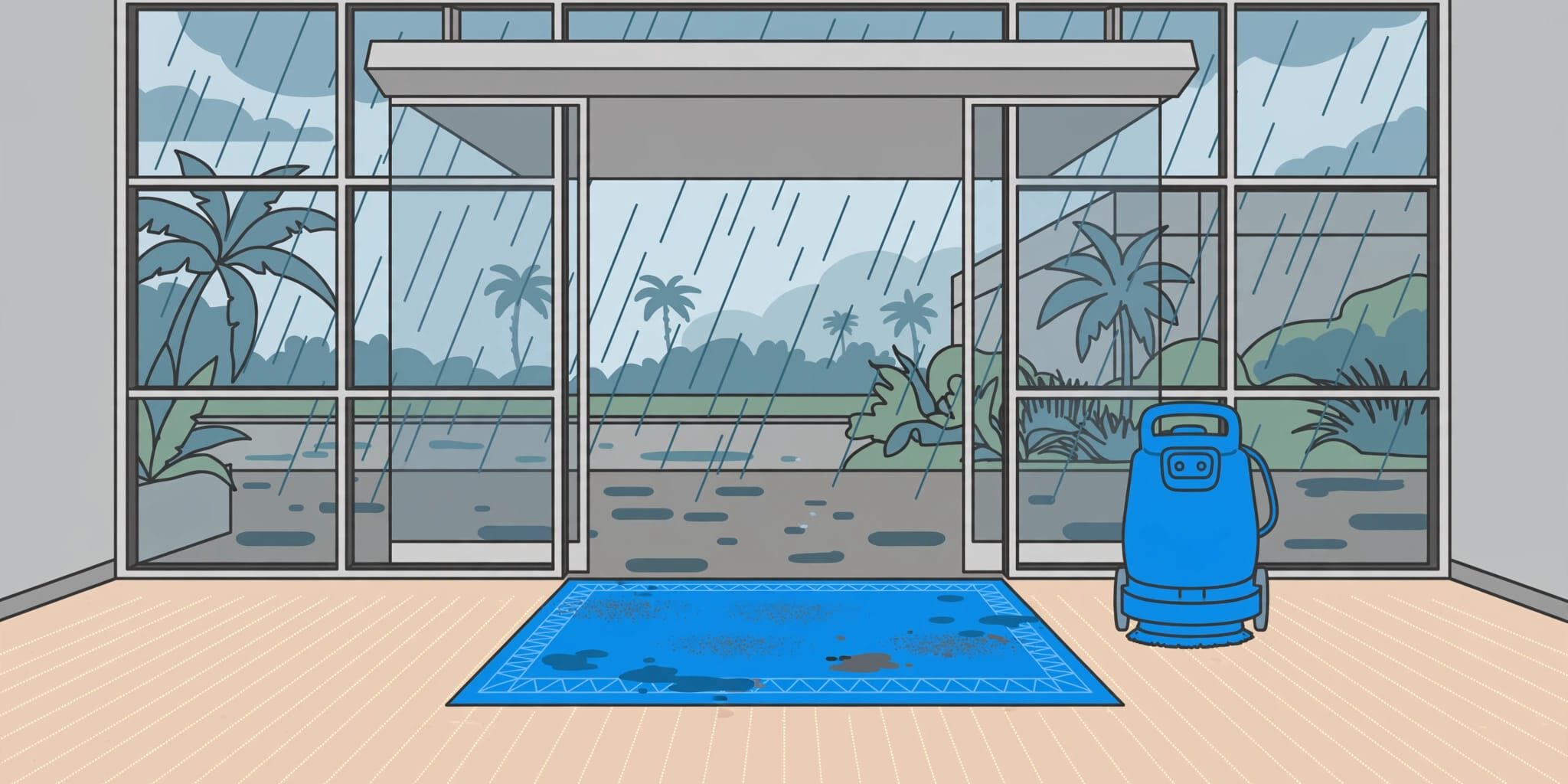
Commercial floor cleaning starts at the entrance. Place scraper matting outside where suitable, followed by absorbent matting inside. At high-traffic entrances, keep mats secure and check them often. Mats should lie flat and leave doors and accessible routes clear.
Saturated mats can’t keep absorbing tracked-in water effectively. Replace or dry them when they become wet through, and remove sand before it spreads across nearby flooring. Address damaged door seals or recurring water intrusion instead of treating every puddle as routine cleaning.
Remove hazards before reopening
Assign responsibility for entrance inspections during rain. Staff should remove water promptly, protect the affected area, and maintain a dry walking route where practical.
OSHA’s walking-surface requirements call for clean walking surfaces and, where feasible, dry floors. Warning signs support that work, but they don’t remove the hazard. Keep the affected area restricted until the floor is dry and safe.
Match Commercial Floor Cleaning to Each Surface
Protect vinyl, linoleum, and finished floors
Damp-mop vinyl with a mild, non-abrasive cleaner. Excess water can enter seams and weaken the adhesive underneath, so avoid flooding the surface.
Linoleum needs pH-neutral cleaners because unsuitable products can strip its factory-applied seal and finish. Although vinyl and linoleum may look similar, their care requirements aren’t interchangeable.
For finished VCT, choose a commercial floor cleaner that’s compatible with the coating. Measure dilution carefully because extra cleaner can leave a tacky film. If residue remains, remove it with fresh solution or a controlled rinse appropriate for the floor, rather than adding more product.
Separate routine cleaning from restoration
For tile, use a cleaner suited to the surface and grout. Choose a surface-appropriate cleaner for sealed concrete, too. Hardwood requires controlled moisture and compatible products, not a soaking mop.
Marble and natural stone can benefit from specialist restoration with diamond-pad grinding and honing. Those treatments address surface wear; they aren’t routine responses to rainy-day footprints.
Anago reports over 30 years of experience among its franchisees cleaning VCT, marble, wood, and terrazzo. Choose care based on the material and its condition, rather than using one cleaner throughout the building.
Choose Carpet Cleaning Around Drying Conditions
Use encapsulation for lower-moisture maintenance
Encapsulation can suit routine maintenance of commercial carpets when product directions and indoor conditions support it. The chemistry dries into a brittle, crystalline residue that routine vacuuming removes with captured soil.
The process can dry in about 30 minutes, but that benchmark isn’t a universal reopening promise. Product choice, application, and indoor conditions affect turnaround.
Treat encapsulation as maintenance, not as a solution for saturated backing or padding. It also doesn’t replace deeper restorative cleaning when embedded soil requires extraction.
Reserve enough time for extraction and drying
Hot water extraction applies cleaning solution and recovers it through suction. Allow 12 to 24 hours before normal foot traffic resumes, with longer drying possible in humid conditions.
For routine maintenance, reserve extraction for a few times a year rather than repeated rainy-day touch-ups. Carpet condition and water damage require separate decisions.
In Southwest Florida, warm air alone doesn’t guarantee drying. Keep appropriate air-conditioning or dehumidification operating, and use directed airflow where suitable. Opening windows can introduce more humid air.
A dry carpet surface doesn’t prove the backing, padding, or floor underneath is dry.
Our commercial carpet cleaning guidance covers signs that routine vacuuming and spot cleaning aren’t enough. If carpet remains wet after 24 hours, arrange a prompt moisture assessment rather than assuming another fan will solve the problem.
Compare Machines by Job, Capacity, and Price
SweepScrub’s published equipment guide lists these prices and specifications.
| Machine | Listed price | Published specifications |
|---|---|---|
| SweepScrub SSRLA510S | $3,499 | 20-inch path, 66 lbs down pressure, 24,000 sq ft/hour |
| SweepScrub SS710R | $11,495 | 28-inch path, up to 47,000 sq ft/hour |
| Tennant S6 sweeper | $3,628 | 18,750 sq ft/hour, 99.5% filtration at 2 microns |
| Tornado BR 18/11 | $6,599 lead-acid; $7,600 TPPL | Handles dry debris and wet messes in one pass |
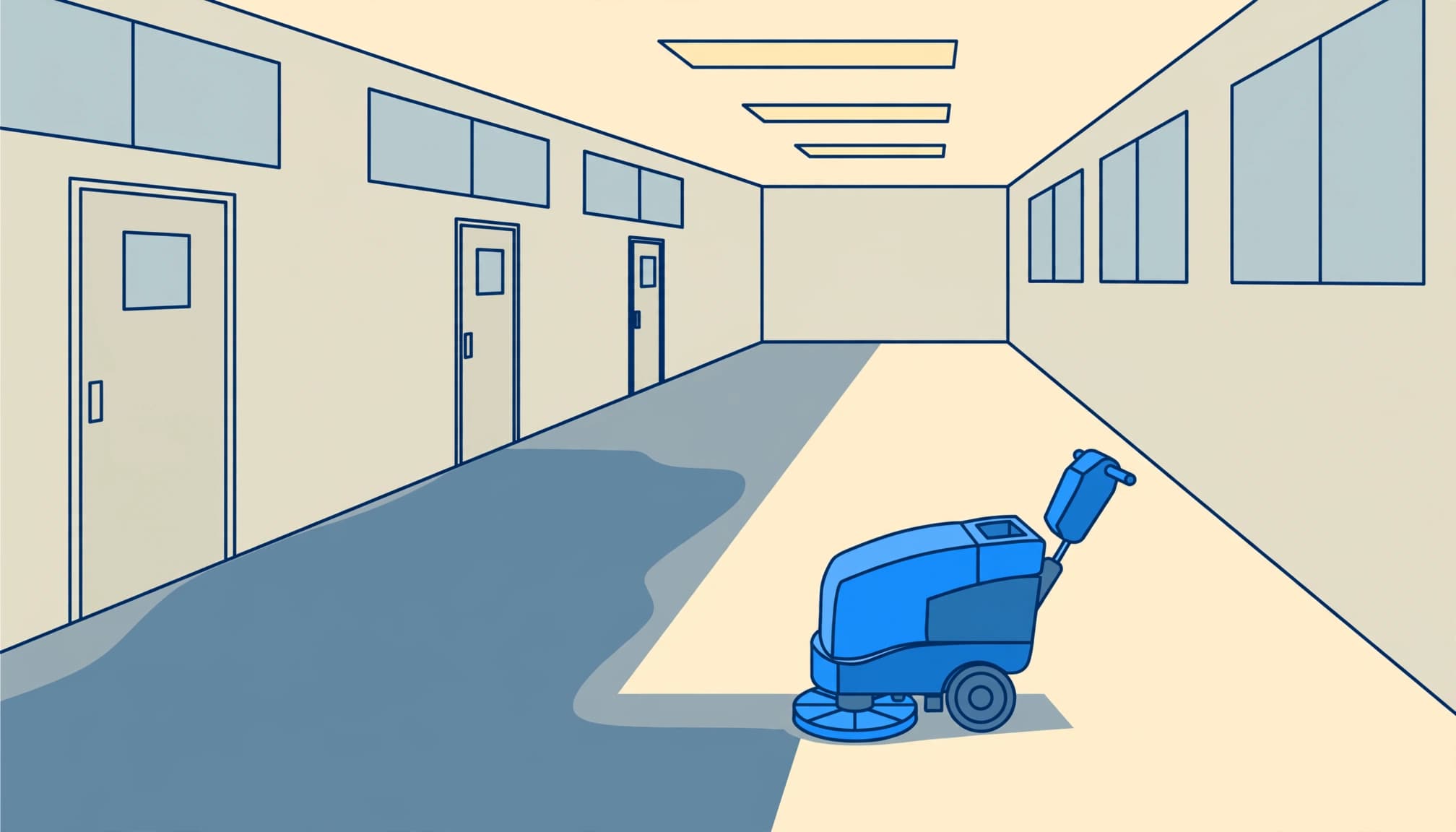
A floor sweeper handles dry debris, while a commercial floor scrubber cleans floors and recovers solution. A floor sweeper scrubber suits facilities that regularly face both conditions.
Translate rated coverage into a workable route
Published coverage figures don’t equal guaranteed finished space per hour. Doorways, furniture, turns, tank servicing, and setup reduce usable production.
Choose a floor cleaning machine for the actual route and task. The SSRLA510S costs less than the SS710R, but the ride-on’s wider path is more useful on broad, open floors than in small offices.
Consider carpet robots separately
SoftBank Robotics rates its Whiz robot vacuum for up to 15,000 square feet of carpet per charge. Autonomous cleaning robots can schedule work around the clock and navigate obstacles on suitable routes without disrupting routine operations.
Charging, access, noise, and changing hazards still need management. A robot vacuum doesn’t replace wet-spill response, and Cornell’s slip-prevention guidance identifies wet floors, loose debris, and upturned mats as hazards.
Build Rainy-Weather Checks Into Daily Operations
Assign janitorial staff to check entrances and respond to spills at opening, during rainfall or after heavy downpours, and at closing. Increase inspection rounds as rain and foot traffic rise, rather than relying only on the closing clean.
Remove loose sand before damp-cleaning hard floors such as tile, since grit can scratch finishes. For spills, isolate the wet area, dry the floor, and verify it’s safe before reopening. Change dirty solution and heavily soiled microfiber pads instead of spreading contamination into another room.
Nationwide’s weather-related fall-prevention guidance recommends slip-resistant materials around entrances and other wet-prone areas. Keep mat condition in the inspection routine, alongside the surrounding floor.
For shops, our retail floor-care checklist connects entrance care with customer traffic and broader cleaning responsibilities.
Record recurring damp locations and report them to building management. Persistent moisture in flooring, boxes, or walls needs attention to the source, not another mop pass.
Decide Between Equipment and Professional Service
Buy equipment when staffing supports it
Equipment ownership makes sense when your team has enough recurring work and can operate the machine safely. Include storage, operator training, consumables, and charging space in the decision.
A lower purchase price won’t help if the machine can’t pass through interior doors or recover water effectively on your flooring. Similarly, a large scrubber can create extra work when staff must clean narrow areas separately.
For mixed buildings, a compact machine plus manual detailing tools may be more practical than one oversized unit. Match the purchase to actual cleaning routes, rather than total building size alone.
Use professional care for broader responsibilities
Professional service can cover routine floor cleaning alongside carpet care and finish restoration. We recommend a written scope that identifies the surfaces, included tasks, and responsibility for storm-related cleanup.
Separate recurring maintenance from extraction, stripping, recoating, or restoration. That distinction keeps expectations clear and helps prevent missed work.
Our commercial janitorial services include routine carpet cleaning and several hard-floor care options. A combined approach also works: your staff handles immediate rainwater response while professional crews manage scheduled cleaning and specialist treatments.
Frequently Asked Questions About Equipment Sizing
What cleaning path fits the facility’s square footage?
A practical starting point is a 17- to 18-inch compact scrubber for spaces under 5,000 square feet. A 20-inch walk-behind scrubber suits approximately 5,000 to 30,000 square feet, while larger open layouts may justify a ride-on.
However, use the area the machine can actually clean. Restrooms, crowded offices, stairs, and narrow passages shouldn’t count as open scrubber space.
Is a ride-on floor scrubber worth the investment?
A ride-on can be worthwhile when large, unobstructed floors create enough recurring work to justify the purchase and operating costs. Warehouses and broad commercial corridors offer different working conditions than furnished offices.
Compare labor needs and route accessibility alongside purchase price. The SS710R’s listed $11,495 price and 28-inch cleaning path make it a different investment than the $3,499, 20-inch SSRLA510S. For smaller or divided spaces, the walk-behind may be the more practical choice.
Keep Floors Clean, Dry, and Ready for Business
Reliable rainy-season floor care starts with water control and ends with a dry, safe surface. The right cleaning chemistry and equipment support that result, but clear staff responsibilities make the plan dependable.
We provide commercial cleaning and floor-care services throughout Southwest Florida. Contact us by phone or email to discuss your office cleaning needs and Get a FREE Quote Today.