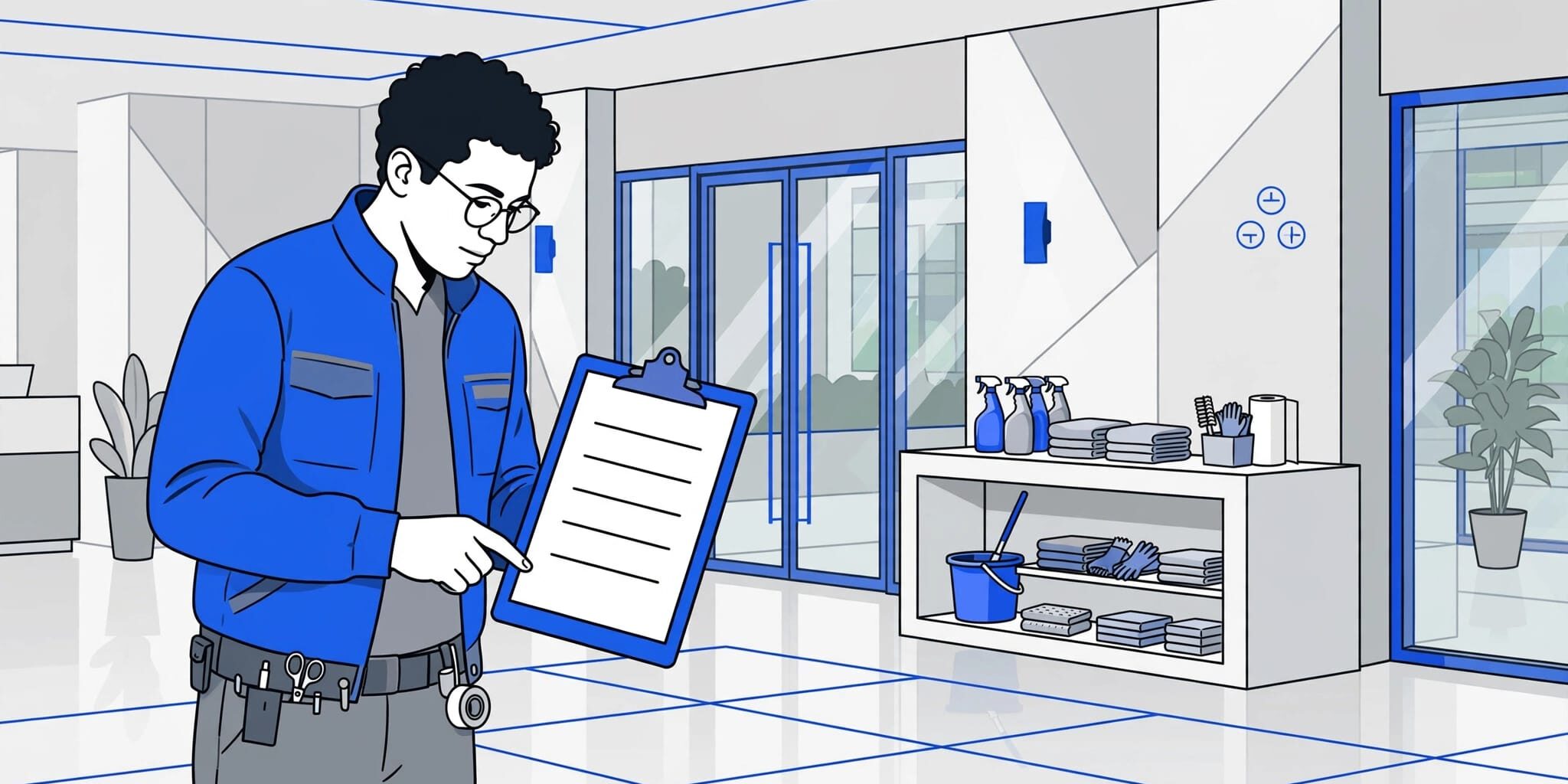
A clean workplace should look professional at every hour of the day, not only after a cleaning crew leaves. A detailed commercial cleaning inspection checklist gives you a clear way to confirm that routine work meets the standard your employees, customers, and visitors expect.
The strongest cleaning system does more than track completed tasks. It connects every area with a frequency, an acceptable result, and a correction process when something falls short.
Key Takeaways
A dependable cleaning program is built around the way your facility is used. A quiet office may need service several times per week, while a busy lobby, medical practice, restaurant, or multi-tenant property may need daily cleaning and mid-day inspections.
Use your checklist to track more than task completion. Each inspection should show the area checked, result, responsible party, supply concerns, correction deadline, and final sign-off.
A completed checklist confirms that work was done. A quality inspection confirms that the space is clean, safe, stocked, and ready for use.
What a Commercial Cleaning Inspection Checklist Should Include
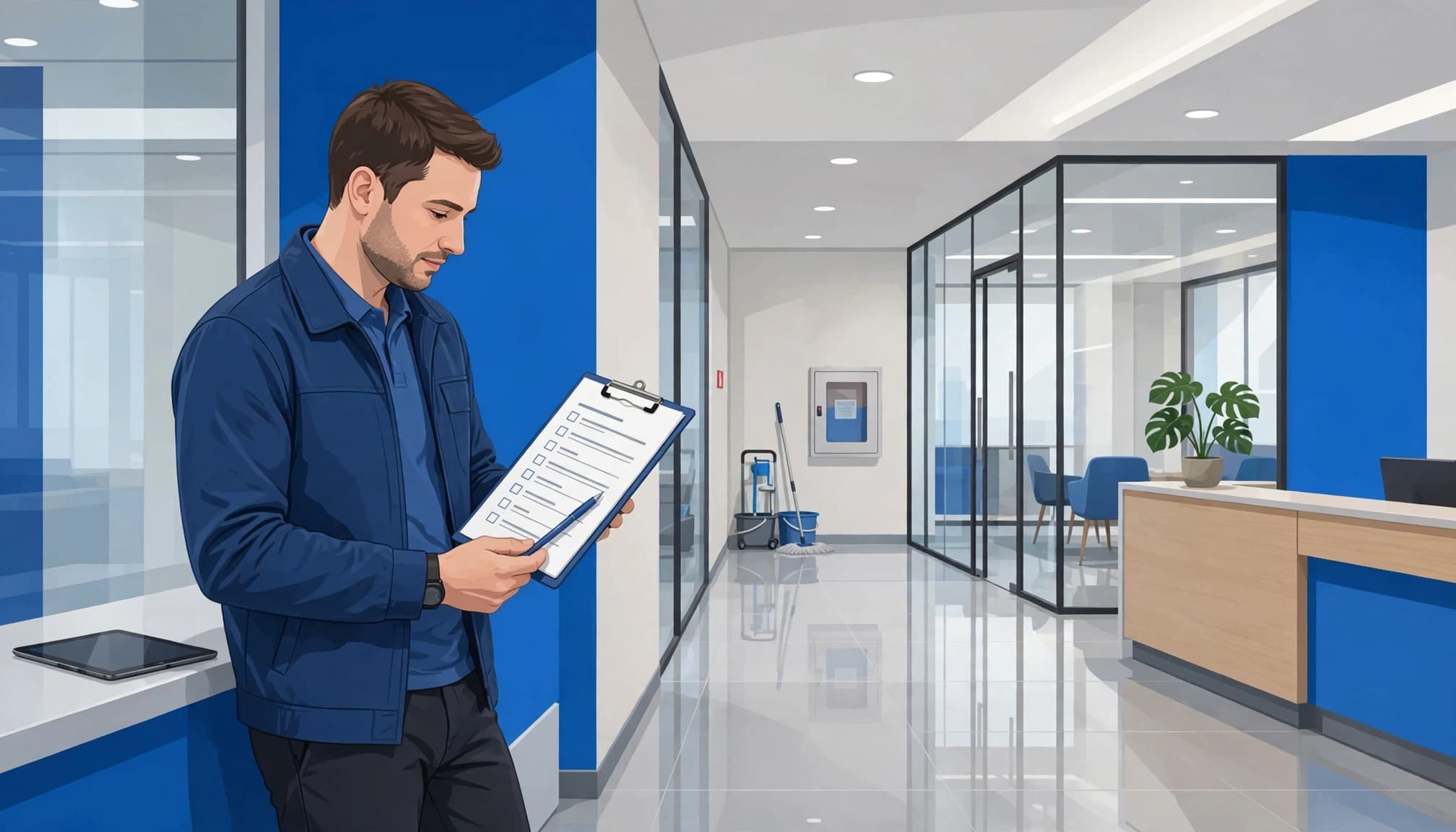
The checklist should be organized by building zone rather than a long general list. This keeps expectations clear for managers, supervisors, and cleaning staff.
Divide the facility into practical zones
Start with the spaces people see and use most often. Typical zones include entrances, reception areas, offices, conference rooms, hallways, restrooms, break rooms, elevators, storage rooms, and exterior entryways.
For offices, conference rooms, and shared work areas, use an office cleaning checklist to define the required tasks and service frequency. For example, a lobby inspection may cover entrance glass, door handles, floor mats, trash containers, reception counters, seating, and visible debris.
A room-by-room scope also prevents confusion when a task isn’t included in the regular service agreement. Cleaning teams should know where janitorial work ends and where maintenance or approved extra work begins.
Define cleaning standards before the inspection
Vague standards create vague results. Instead of writing “clean restroom,” describe what clean means. Floors should be dry. Fixtures should be free of visible residue. Mirrors should be streak-free. Dispensers should be stocked. Waste containers should be emptied, relined, and clean on the outside.
Use the commercial cleaning checklist to record these details:
- Service date, shift, area inspected, and person completing the inspection.
- Required task, frequency, acceptable result, and inspection result.
- Supply shortages, approved equipment such as a HEPA vacuum, access issues, safety concerns, and recurring defects.
- Responsible person, correction deadline, and final verification.
Daily Cleaning Tasks for High-Traffic Areas
Daily cleaning protects your facility’s appearance and helps control the buildup of dust, spills, food waste, and fingerprints. The right schedule depends on occupancy, visitor traffic, weather, and how each space is used.
Inspect high-touch surfaces and shared equipment
Door handles, push plates, light switches, elevator buttons, shared phones, keyboards, conference tables, and reception counters deserve regular attention. High-touch surfaces should be cleaned regularly and disinfected when illness or increased risk calls for it. Document individual touch points during each inspection.
The CDC’s facility cleaning guidance recommends cleaning with soap and water before using an EPA-registered disinfecting product when disinfection is needed. Higher-risk areas may require a hospital-grade disinfectant selected through the facility’s risk assessment.
Inspectors should also confirm that the product stayed wet for the full contact time listed on its label. For hybrid offices, include shared desks, chair arms, monitors, and docking stations in the office cleaning checklist when the approved scope permits access. Personal desks may have access restrictions, so those limits should be written into the cleaning scope.
Keep restrooms, lobbies, and floors ready for use
Restroom sanitation is one of the fastest ways to measure overall cleaning quality. Inspect toilets, urinals, sinks, dispensers, waste containers, and floors, along with faucet handles, partitions, and mirrors. Report leaks, damaged fixtures, loose tiles, or persistent odors as maintenance concerns.
In higher-risk restroom areas, verify that any hospital-grade disinfectant is compatible with the surface and used according to its label, including the required contact time.
In lobbies and entryways, look for fingerprints on glass, wet spots near doors, tracked-in dirt, loose rugs, overflowing trash, and clutter near emergency exits. Check touch points such as door handles, push plates, elevator buttons, and reception surfaces. During Southwest Florida’s rainy months, entry mats and hard floors may require more frequent attention.
Daily office and common-area care should also include trash removal, liner replacement, vacuuming or spot vacuuming, damp mopping, and quick touch-ups. Where dust control is a concern, a HEPA vacuum may support carpet care, but it isn’t necessary for every facility. Consistent janitorial cleaning services should keep these visible areas clean without disrupting normal operations.
Set clear break room cleaning standards
Shared break rooms need clear inspection standards because food, moisture, and heavy daily use can create problems quickly. Inspect countertops, tables, sink basins, faucet handles, appliance fronts, cabinet handles, coffee stations, trash cans, and the floor around food and drink areas. Include touch points such as appliance handles, cabinet pulls, and refrigerator handles.
Daily cleaning should remove crumbs, spills, food waste, and visible residue. Check the microwave interior when food splatters are present, and inspect refrigerator handles and shelves for spills or expired food based on your workplace policy.
A break room that looks tidy but has sticky counters, full trash, or a dirty sink isn’t ready for employees. The checklist should separate visual appearance from hygiene requirements.
Weekly and Monthly Deep Cleaning Requirements
Daily maintenance keeps a property presentable. Weekly and monthly work prevents gradual buildup that visitors may not notice at first, but eventually affects the entire workplace.
Schedule detailed floor care and dust removal
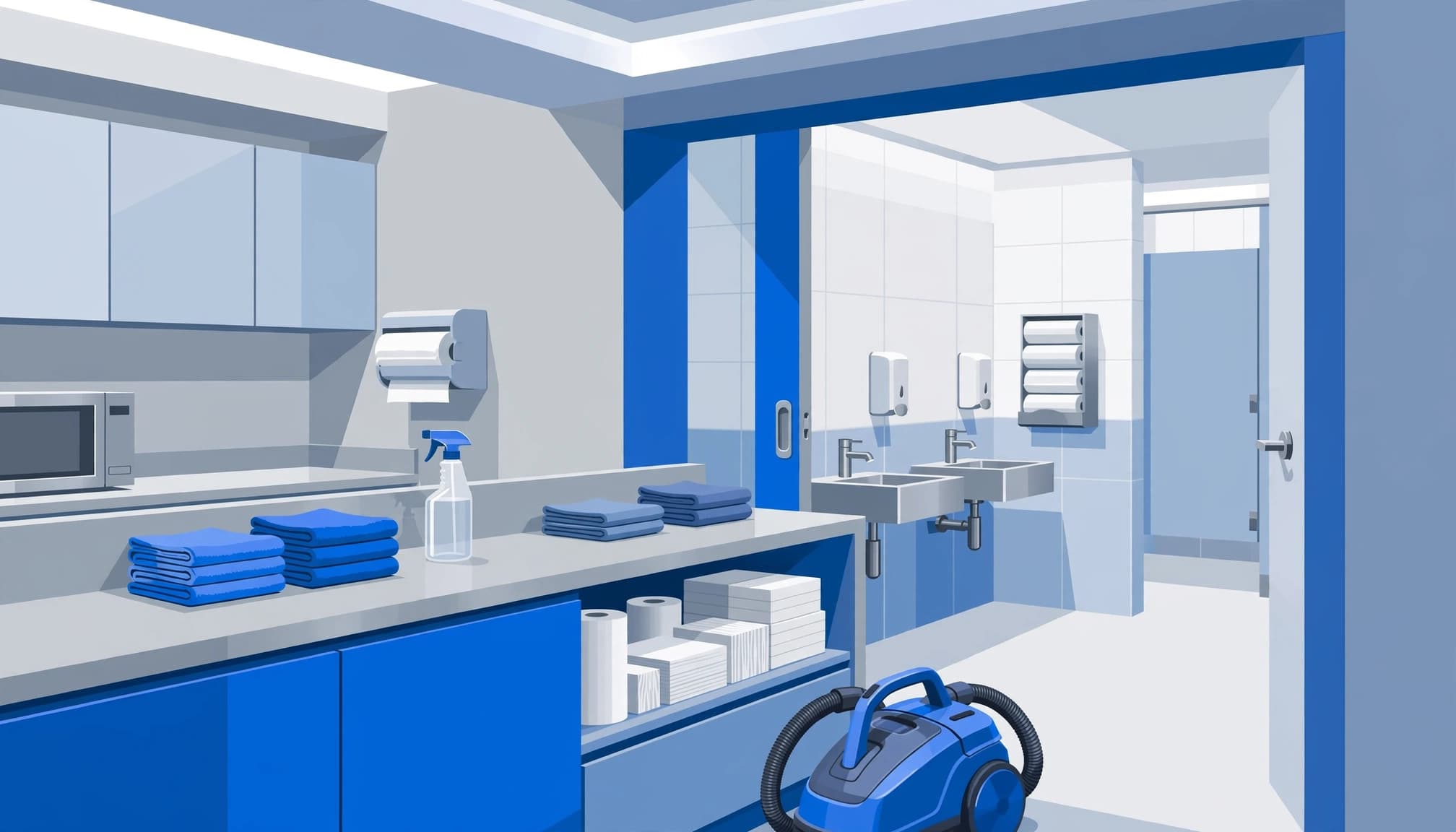
Weekly cleaning tasks often include baseboards, ledges, door frames, interior glass, vents, light fixtures, furniture edges, and carpet borders. These areas collect dust slowly and are easy to overlook during a busy shift.
Monthly deep cleaning may include carpet extraction, machine scrubbing, floor polishing, upholstery care, blind cleaning, high dusting, and deeper wall or partition cleaning. A deep cleaning checklist should identify the surface, method, equipment, expected result, and responsible person.
Your floor care plan should name the surface type, approved equipment, expected result, and frequency. It should also document the timing and expected results for carpet extraction.
A HEPA vacuum may be part of your equipment standard. Inspect its condition, filter status, and actual floor result rather than assuming a vacuum alone solves dust concerns.
Inspection records should note whether the HEPA vacuum delivered the required result. Include equipment condition and filter status in each review.
Match the schedule to traffic and weather
Cleaning frequency should follow actual use, not an old schedule. A small office with limited visitors may need one daily visit. A busy property may need a morning cleaning shift, mid-day porter service, and after-hours detail work.
Use the inspection schedule to review the plan after staffing changes, new tenants, construction, seasonal rain, events, or extended business hours. If a restroom fails inspection every afternoon, the answer may be another service visit rather than asking the crew to work faster.
Periodic services should remain separate from routine janitorial cleaning. Carpet care, interior glass detailing, post-event cleanup, and floor restoration often require separate approval, timing, and pricing.
Turn the Checklist Into a Quality Control Plan
A commercial cleaning checklist is useful, but a quality control plan makes it dependable. It connects the checklist to ownership, verification, and trend review. Together, they create a cleaning system for scheduled work, inspection results, corrective actions, and recurring-problem analysis.
Use standard operating procedures for every shift
Standard operating procedures should explain how tasks are completed, not only what gets cleaned. They should cover approved products, equipment, PPE, access procedures, security rules, supply locations, and service expectations for each zone.
Use direct language. Vacuum carpets. Damp mop hard floors. Restock soap and paper products. Remove fingerprints from entrance glass. Clean and disinfect restroom fixtures. Clear visible debris from exterior entryways.
A practical scorecard can rate touch points and other tasks using Pass, Correction Needed, or Not Applicable. Managers may also calculate task completion rate by dividing completed scheduled tasks by total scheduled tasks, then multiplying by 100.
Document corrections, not only complaints
Every failed inspection should have an owner and deadline. Record the issue, photo evidence when appropriate, corrective action, closeout date, and whether it was fixed the first time.
Digital reporting makes this easier for businesses with several floors, locations, or supervisors. A shared inspection form can include time-stamped records, photos, signatures, supply requests, and notes about access or security incidents.
Look for repeated concerns. One missed trash can may be a simple oversight. The same restroom shortage every week may point to poor stocking procedures, weak supervision, unrealistic staffing, or a scope that no longer fits the facility.
Safety and Compliance Checks That Belong on Every Audit
A clean property should also be a safe property. Inspections should verify that cleaning practices support your facility’s health and safety requirements.
Review chemicals, labels, and staff protection
Cleaning chemicals must remain labeled, stored safely, and used by trained staff. Chemical storage, PPE, labels, training, and documentation should meet your facility’s safety standards.
OSHA requires employers with hazardous chemicals to provide labels, safety data sheets, and worker training under its Hazard Communication Standard. OSHA’s cleaning industry safety guidance states that training should happen before a worker uses a hazardous cleaner.
Staff should understand safe handling, dilution, PPE, spills, storage, labels, and SDS access. In healthcare or other higher-risk areas, a hospital-grade disinfectant may be appropriate when its EPA registration, label, and risk assessment support that choice.
Never mix cleaning chemicals. Inspectors should confirm that SDSs are accessible during each shift and that gloves, goggles, or other PPE are available when product directions require them.
Confirm proper disinfection and air circulation
Disinfection is not the same as wiping a surface quickly. Inspectors should check that cleaning happens first when needed, then confirm that a hospital-grade disinfectant is applied to the right surface and kept wet for the full contact time. Touch points may require more frequent attention during illness or elevated transmission risk.
During disinfection, indoor air quality matters. The CDC recommends opening doors or windows when appropriate and using fans or HVAC settings to increase airflow. Record these ventilation checks during the inspection.
For products selected with reduced chemical concerns in mind, review the EPA Safer Choice program. The term hospital-grade disinfectant doesn’t replace checks for surface compatibility, approved use, or manufacturer directions. Product selection should still match the facility’s surfaces, required use, and manufacturer directions.
When Professional Commercial Cleaning Services Make Sense
In-house cleaning can work for small spaces with simple needs. Professional cleaning may be appropriate when coverage, training, supervision, equipment, supply management, or inspection follow-up exceed in-house capacity.
Commercial cleaning services can support facilities with restrooms, floors, break rooms, visitor areas, and high-traffic spaces. This may be especially useful for medical offices, restaurants, schools, hotels, banks, dealerships, and large offices with different coverage and compliance needs.
Frequently Asked Questions
How often should high-touch surfaces be disinfected?
Clean high-touch surfaces regularly and clean other surfaces when visibly dirty. Disinfect more often when someone is sick or your facility has a higher risk of illness transmission. Always follow the product label for approved use and contact time.
What is the difference between daily and monthly cleaning?
Daily cleaning handles visible soil, trash, restroom sanitation, touchpoints, break room surfaces, and floor touch-ups. Monthly cleaning focuses on deeper work, such as carpet care, high dusting, detailed floor maintenance, vents, baseboards, and upholstery.
What should happen when an inspection fails?
Document the concern, assign it to a responsible person, set a correction deadline, and verify the completed correction. Repeated failures should trigger a review of staffing, training, supplies, equipment, or the written cleaning scope.
A Cleaner Facility Starts With Clear Standards
A strong commercial cleaning checklist is clear enough for the cleaning crew to follow and detailed enough for management to inspect confidently. It connects daily work with visible standards, documented corrections, realistic frequencies, and facility usage.
When your cleaning system matches how your building is used, small issues are corrected before they become recurring complaints. Facility managers can use these standards to review service needs, including options available through Get a FREE Quote Today.