
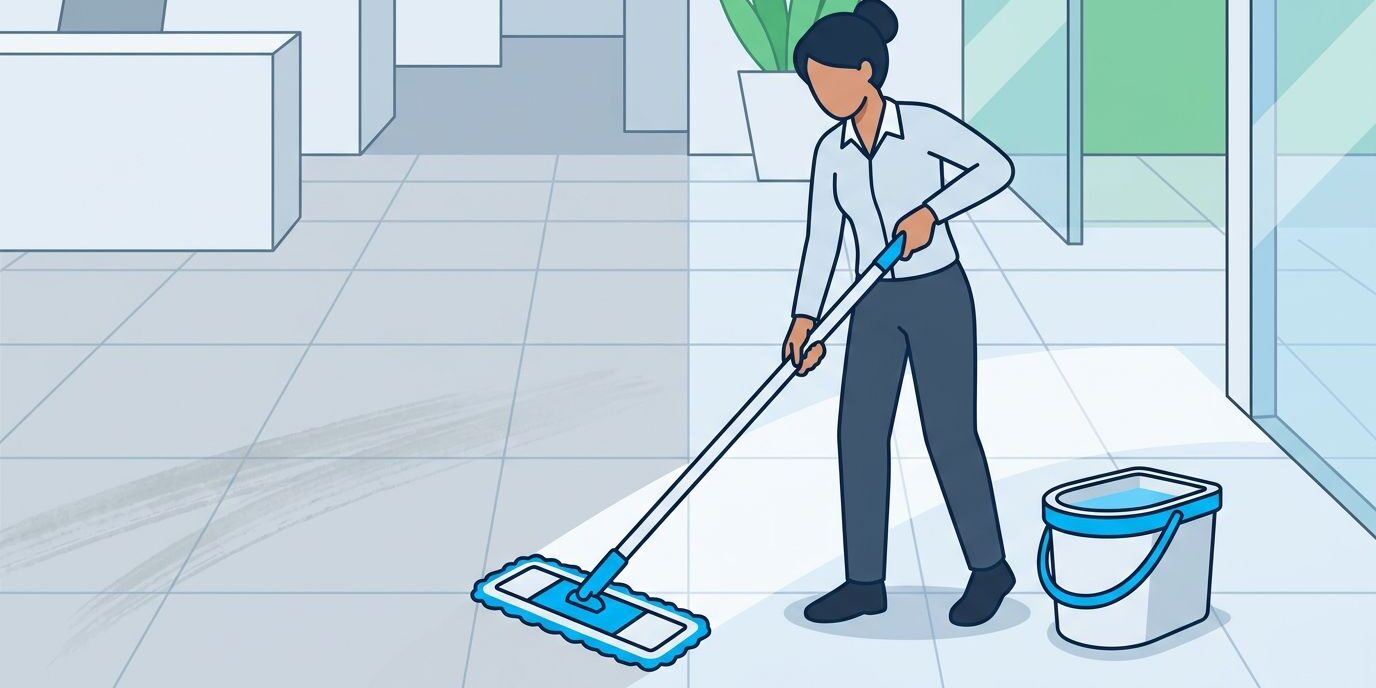
Sticky floors after mopping usually mean cleaning product, dirty water, or unrinsed soap has dried on the surface. For most commercial floors, the first correction is a clean-water rinse, using a clean mop and controlled moisture.
Adding too much cleaner can make the film thicker and attract more dirt. We recommend identifying the source of the film first, then choosing a method that protects your flooring and keeps employees and customers safe.
Key Takeaways
- Excess detergent, dirty mop water, and incomplete rinsing are the most common causes of tacky floors.
- Start with clean, warm water and a fresh microfiber pad, using minimal moisture on wood or laminate.
- Measured dilution, clean equipment, and complete drying help prevent recurring buildup.
Common causes of sticky floors after mopping
Too much detergent and dirty mop water
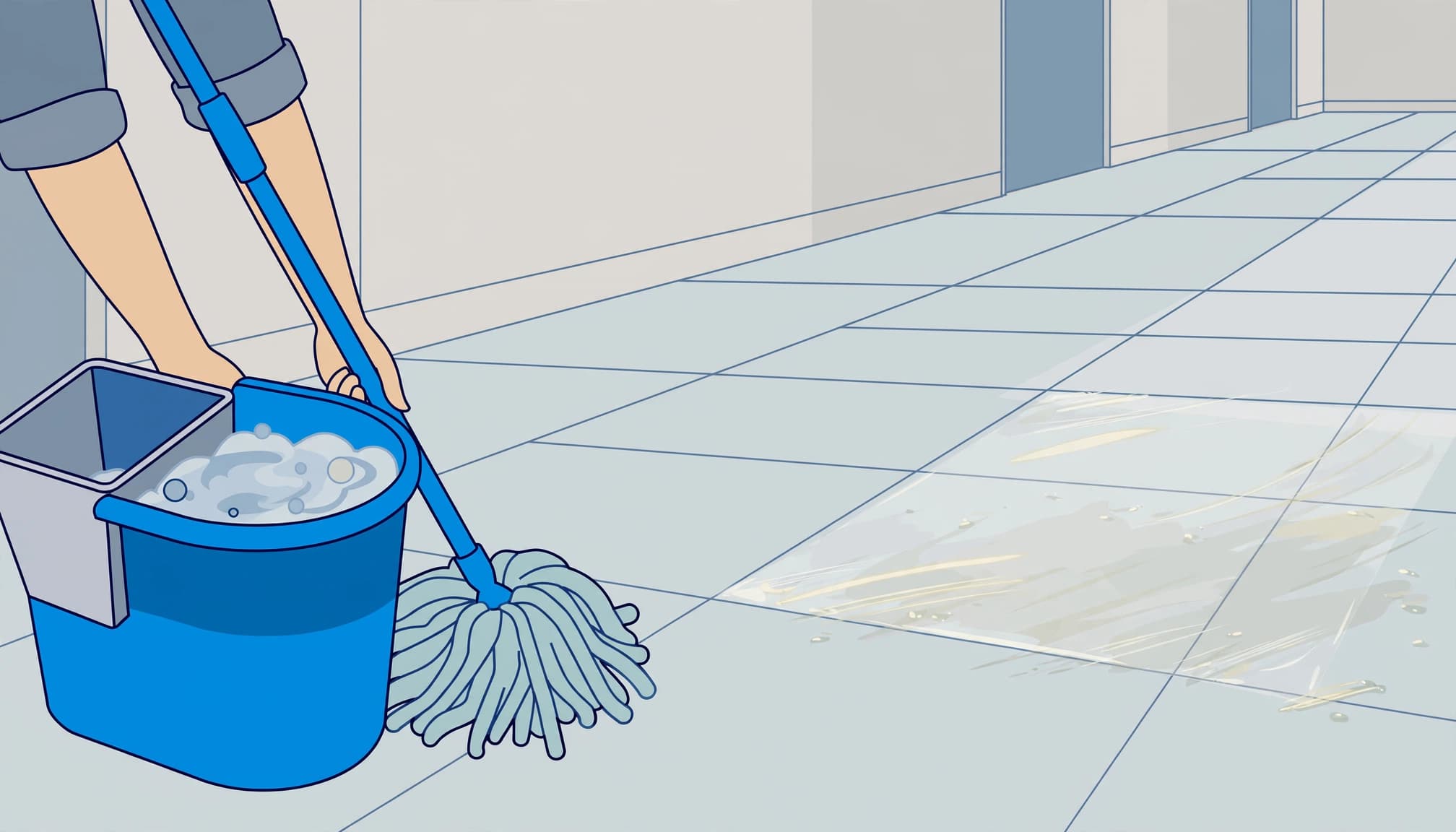
Too much detergent can cause sticky floors after mopping. Extra cleaner doesn’t improve cleaning once the right concentration is reached, and excess leaves a tacky surfactant film of soap residue.
Dirty mop water adds another layer. Once a bucket contains dissolved soil, grease, and cleaning product, each pass can spread that mixture across the floor.
A dirty mop head creates the same problem, even with fresh water. Floors may look clean while damp, then develop streaks and stickiness as the water evaporates.
Wrong products and hard water
A tile cleaner used on wood or an incompatible degreaser is the wrong cleaning solution for that finish, and can damage protective coatings. Multi-surface shine sprays, acrylic polishes, and oil soaps can also build up unless the flooring manufacturer allows them.
Hard water adds calcium and magnesium to the process. These minerals react with soap to form an insoluble film that can cling to flooring. The U.S. Geological Survey explains this hard-water soap-scum reaction.
Mineral haze and detergent film can occur together, but they don’t always need the same treatment.
Identify the residue before cleaning again
Test a small, hidden section
Use this spot-cleaning test before treating the full floor. First, remove loose dust. Wipe a small area with a clean microfiber cloth dampened with warm water. Dry it with a second cloth, then compare it with the surrounding floor.
If the tackiness improves, the remaining material is likely contributing to the problem. Foaming during the wipe also suggests leftover cleaning product, although the test doesn’t identify every contaminant.
Sticky patches near beverage stations may contain sugary spills. Greasy areas near kitchens usually need a floor-compatible cleaner rather than repeated water-only passes.
Recognize signs of finish trouble
Stop routine rinsing if the finish feels gummy, transfers to the cloth, or shows uneven glossy patches. Strong alkaline cleaners can soften or strip some wax or acrylic finishes on vinyl composition tile (VCT).
Recently refinished floors may also remain tacky if the coating hasn’t cured properly.
Water can remove detergent residue, but it won’t repair a softened or improperly cured floor finish.
Persistent coating problems may require commercial floor stripping and waxing rather than stronger daily cleaner.
How to remove sticky residue safely
We recommend a rinse-first approach when the surface permits damp cleaning and the finish appears sound. Keep wet-floor signs and barriers in place throughout the work.
- Remove dry debris first. Vacuum or sweep crumbs, hair, dust, and tracked-in sand. Mixing loose soil with water creates sludge and makes the film harder to lift.
- Prepare clean equipment. Use a clean microfiber mop or a fresh mop head. Set out two buckets: one for clean solution or rinse water, and another for rinsing and wringing the dirty mop.
- Rinse a manageable section. For each section, rinse with water using warm, clean water only to loosen and lift soap film. Use a well-wrung mop rather than flooding the surface. Wood and laminate require minimal moisture.
- Remove dirty water promptly. Rinse the mop before returning it to the clean bucket. Empty and refill either bucket as soon as the water looks cloudy or dirty. Replace heavily soiled pads.
- Dry and inspect the surface. Use a clean towel, microfiber cloth, or dry mop to dry the floor. Where suitable, use a fan and open windows for airflow. In humid conditions, conditioned indoor air may provide better drying.
Keep buckets, cords, and equipment outside walking routes. Leave a dry route open where practical without blocking exits.
Don’t reopen the area until it’s dry, free of cleaner film, and safe to walk on. If one rinse improves the surface but leaves tackiness, use fresh water for another rinse before mopping again, rather than adding cleaner.
Match the cleaning method to the floor
Vinyl, VCT, and sealed concrete
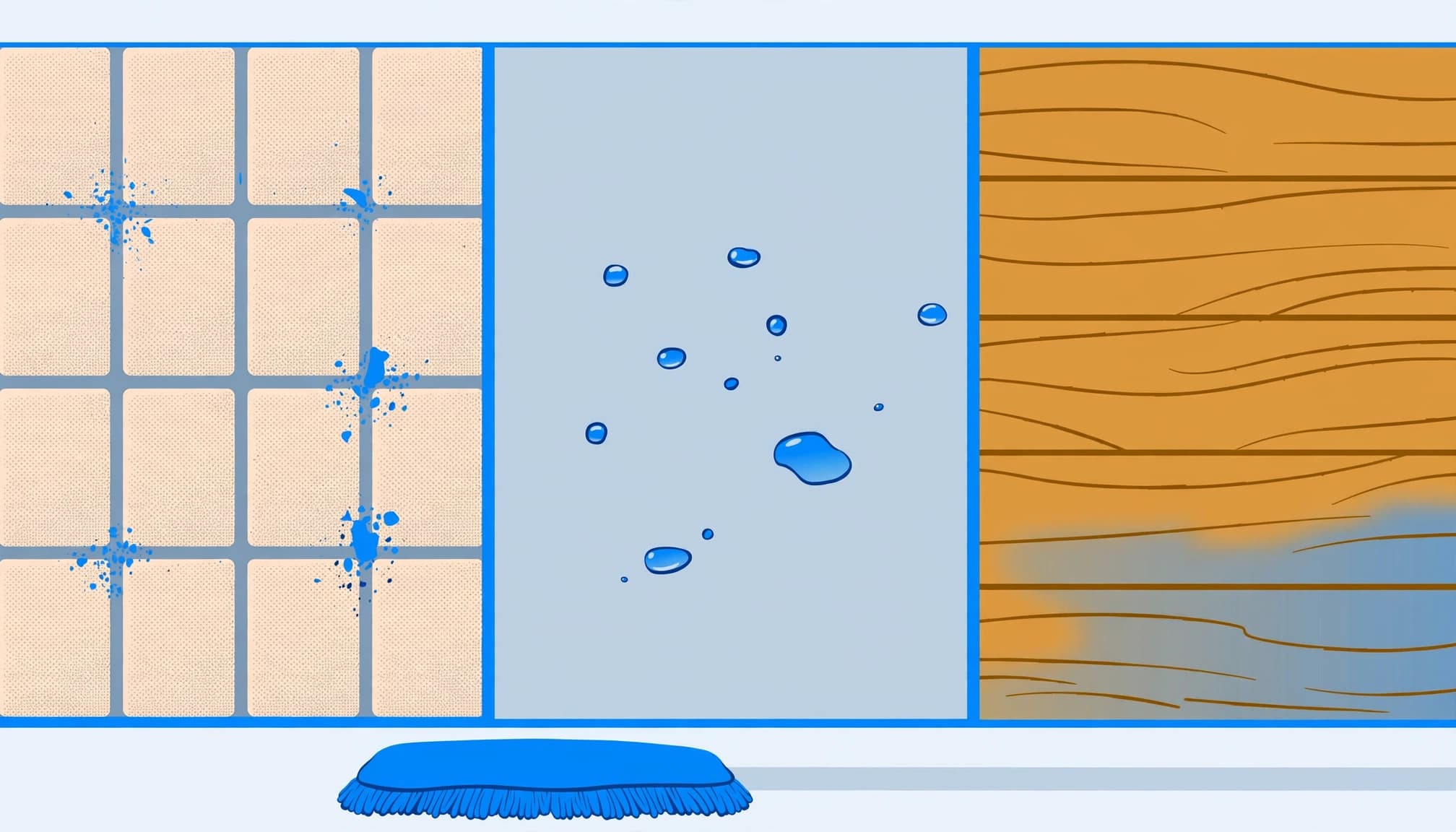
Smooth, intact surfaces generally release leftover film more easily than rough or porous flooring. Luxury vinyl usually needs a compatible neutral cleaner, while finished VCT needs products that protect its coating.
Avoid aggressive scrubbing pads and strong alkaline products during routine cleaning. Sealed concrete also needs a cleaner compatible with its sealer. A surface that looks durable can still have a chemical-sensitive protective layer.
Textured tile, grout, and unsealed concrete
Textured ceramic tile, grout lines, and unsealed concrete can hold residue in recesses and pores. A flat mop may pass over these areas without removing the trapped soil.
Use a compatible cleaner and suitable soft brush where needed, then recover the dirty solution. Basic tile and grout care guidance supports dry-soil removal, neutral cleaning, and rinsing.
For larger areas, a correctly equipped automatic floor scrubber can improve agitation and water recovery. It won’t compensate for excessive detergent or dirty equipment.
Hardwood and laminate
Too much water can damage hardwood floors and enter laminate seams. Use only a slightly damp microfiber pad, and dry the area promptly.
The National Wood Flooring Association’s wood-floor care guidance supports damp cleaning rather than soaking.
Don’t apply a tile cleaner to wood. Use a wood floor cleaner only if the flooring manufacturer approves it. If tackiness remains after a controlled wipe, use the floor manufacturer’s approved residue-removal method rather than increasing moisture or scrubbing pressure.
Measure cleaner instead of guessing
A splash of concentrate can exceed the correct amount, especially in a partially filled bucket. Marked measuring tools or a maintained dispensing system keep the dilution ratio, or cleaner to water ratio, consistent.
These measurements help distinguish a rinse from a cleaning solution.
| Solution | Amount per gallon of water | Suitable use |
|---|---|---|
| Plain warm water | No added cleaner | First rinse for removable detergent film |
| Compatible floor cleaner | About 1 teaspoon to 1 tablespoon, only when its label specifies this range | Routine cleaning on approved flooring |
| White vinegar | 1 to 2 tablespoons, only where manufacturer-approved | Optional treatment for compatible tile, vinyl, or linoleum |
The product label controls dilution. Commercial concentrates vary widely, and ready-to-use products shouldn’t be diluted unless directed. If film recurs despite correct dilution, consider your water quality.
For manufacturer-approved tile, vinyl, or linoleum, the dilute vinegar mixture is an optional treatment. Follow it with a plain-water rinse. It isn’t our first choice for an unidentified commercial floor or finish.
Consumer Reports explains why vinegar can damage certain surfaces, including hardwood. Avoid it on natural stone and acid-sensitive coatings.
Never mix vinegar with chlorine bleach or combine cleaning products unless their labels expressly allow it. Follow labeled water temperature, dwell time, ventilation, and protective-equipment requirements.
Prevent repeat buildup in busy buildings
Keep tools and entrance areas clean
Launder reusable mop heads and microfiber pads according to their care instructions. Keep enough clean replacements available so staff don’t stretch one dirty pad across the entire building.
Entrance mats also need attention. Saturated or heavily soiled mats can spread moisture and grime instead of containing them. Remove tracked-in sand before wet cleaning to reduce abrasive wear.
For retail spaces, our retail store cleaning checklist connects entrance care, floor inspections, and cleaning schedules.
Make the correction easy to repeat
Record the product name, dilution, floor type, and location when stickiness occurs. Note whether a clean-water rinse corrected it or whether the coating remained tacky.
Include approved floor products, equipment responsibilities, and inspection standards in the cleaning plan. Staff should know when to change water, replace pads, and report finish damage.
If hard water contributes to recurring film, choose a compatible product formulated for those conditions. Don’t compensate by pouring in more detergent.
For automatic scrubbers, clean recovery tanks and maintain squeegees. Dirty solution left behind can dry back onto the surface.
Frequently asked questions
Is dish soap safe for commercial tile floors?
We don’t recommend dish soap as the routine choice for commercial floors. Its foaming can make complete removal difficult, and excess product can leave a sticky film.
Use a floor-compatible cleaner at its labeled dilution. For greasy areas, choose an approved degreaser and remove the dirty solution as directed.
When should mop water be changed?
Change mop water as soon as it becomes cloudy, visibly dirty, or contaminated with grease. Don’t wait until the whole room is finished.
A two-bucket setup limits cross-contamination, but both buckets still need fresh water. Separate tools may also be necessary for restrooms, kitchens, and general office areas.
Why is the floor still tacky after rinsing?
Remaining tackiness can indicate heavy buildup, oily contamination, or damaged finish. Recently applied floor coating may also need additional curing time.
Stop repeating the same treatment when it produces no improvement. We recommend professional floor-care assessment when the surface remains gummy, discolored, or uneven after a controlled rinse.
Clean floors start with residue control
Sticky floors after mopping usually improve when excess product and dirty water are removed correctly. Measured dilution and complete drying help keep the problem from returning.
We provide commercial cleaning and hard-floor care throughout Southwest Florida, with methods suited to your building’s surfaces and maintenance needs.
Contact us by phone or email to discuss office cleaning services and Get a FREE Quote Today.