Dinner guests shouldn’t encounter sticky tables, lunch crumbs, or overflowing restroom bins. Dependable restaurant dining room cleaning gets your space service-ready before the next seating begins.
Plan a reset that covers tables, floors, shared surfaces, and restrooms without rushing chemical contact times. Clear responsibilities help your staff work efficiently and protect guests and property.
Start with a practical sequence, then reserve heavier cleaning for a separate service window.
Plan a Dependable Lunch-to-Dinner Reset
A between-service reset needs a clear starting point and a manager responsible for the final inspection. Before the reset begins, coordinate with the kitchen and front of house, then assign zones to cleaning staff before lunch ends.
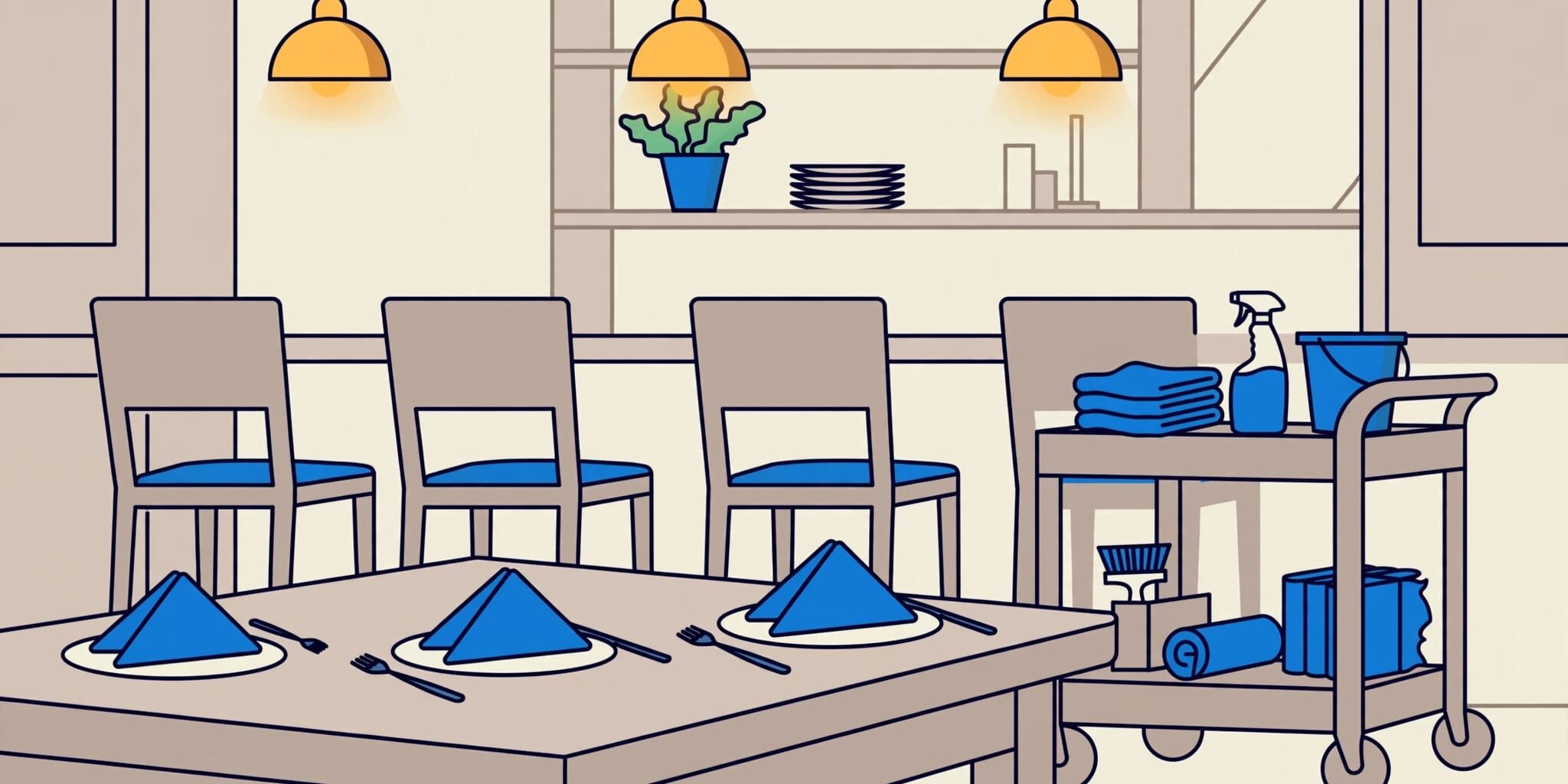
Keep approved supplies ready in a designated storage area. Separate dining-room materials from restroom tools, and keep cleaning carts away from food, clean utensils, and emergency exits. Clear ownership and prepared supplies support cleaning efficiency.
Use this cleaning process as an adaptable checklist, not a guaranteed 30-minute schedule. Scale the timing to the restaurant’s size, staffing, and condition.
| Suggested window | Priority | Completion standard |
|---|---|---|
| First 5 minutes | Clear tables, dishes, linens, and food waste | Tables and cleaning routes are accessible |
| Next 10 minutes | Clean and sanitize tables, seating, and touchpoints as required | Soil is removed and product contact times are complete |
| Next 10 minutes | Reset place settings, check seating, clean floors, and refresh restrooms | Floors are dry and restroom supplies are stocked |
| Final 5 minutes | Inspect and reset the room | Missed work is corrected before seating |
Adjust the schedule or staffing as needed. Allow for all required product contact and drying times.
The FDA Food Code 2022 is a model for food-safety requirements, not automatically binding law everywhere. Your procedures should reflect applicable local requirements.
A Table-Cleaning Routine for Dining Rooms
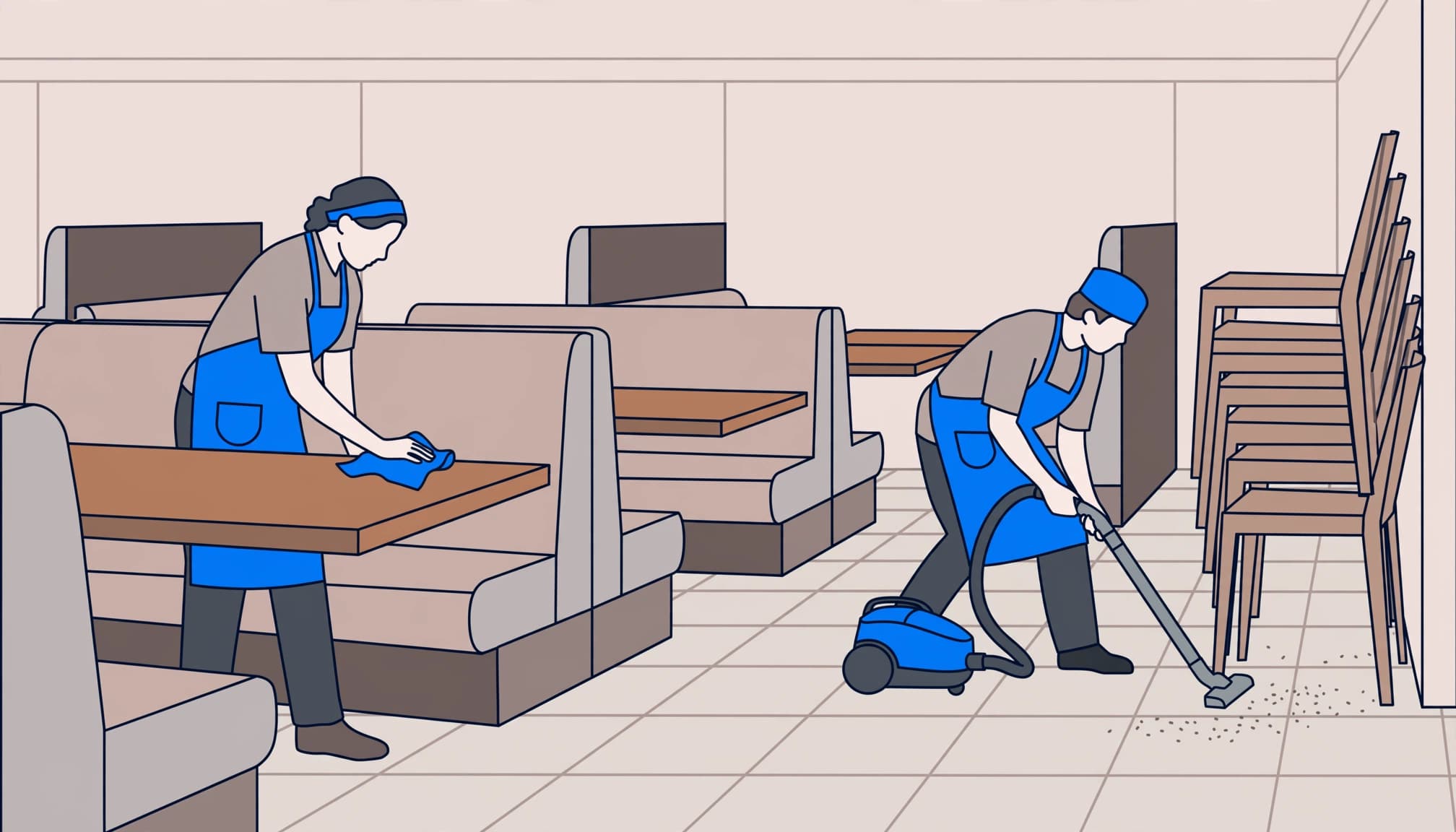
Tables need more than a quick wipe before dinner. Use a repeatable process to remove visible soil and follow the approved treatment for each surface.
Remove Food Residue Before Treatment
Clear dishes, condiment containers, and used linens before cleaning. Remove crumbs without brushing them onto seats or spreading them across nearby tables.
Use a cleaner suitable for the tabletop material. Pay attention to edges, seams, and areas beneath condiment holders, where sticky residue can remain.
Cleaning, sanitizing, and disinfecting are different tasks. Food-contact surfaces require appropriate cleaning and sanitizing procedures. Treat dining tabletops according to their use, product instructions, and applicable requirements.
Don’t assume a restroom disinfectant is suitable for a table where food may make direct contact. Check permitted surfaces and any required rinse before use.
Handle Cloths and Seating Carefully
A dirty cloth can transfer residue between tables, putting guests at risk and undermining a hygienic environment. Provide enough clean cloths so staff can replace them when soiled.
Follow the FDA wiping-cloth handling requirements and local procedures for storing in-use wet wiping cloths in sanitizer solution. Check sanitizer concentration with the appropriate test device rather than judging it by smell.
Inspect chair backs, arms, booster seats, and high chairs. Follow manufacturer instructions for upholstery and straps instead of saturating them.
Allow the required contact time before resetting place settings. Staff should also wash their hands appropriately before handling clean utensils, napkins, or glassware.
Clear Spills and Clean Floors Safely
Food spills and crumbs need prompt attention. We recommend addressing immediate hazards first, then cleaning the remaining floor in sections.
Contain Spills Before Cleanup
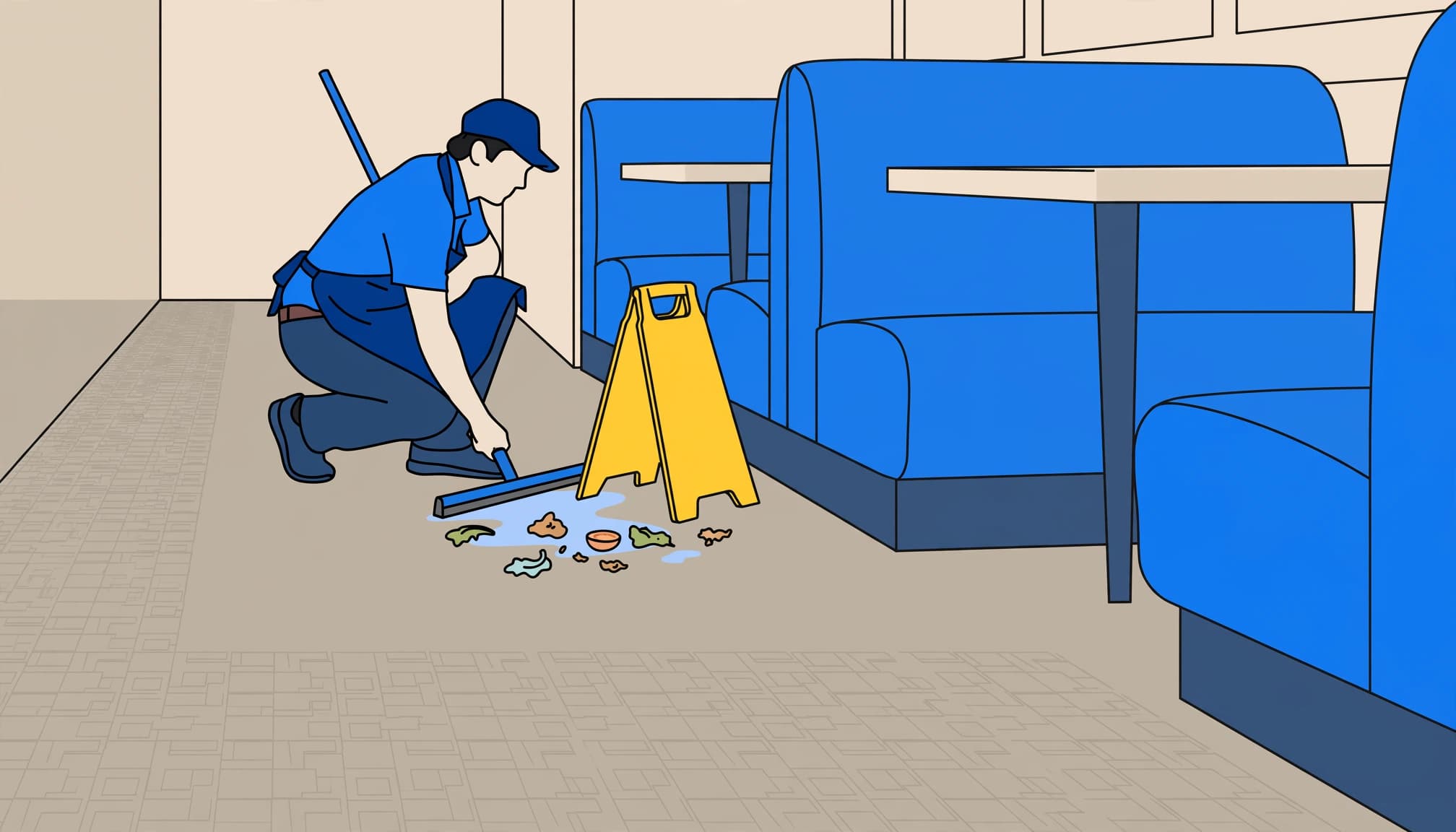
Identify what spilled before choosing equipment or chemicals. Treat the area as a safety hazard: keep guests away and post visible warning signs.
Pick up food solids with suitable tools before treating liquid or grease. High suction power alone doesn’t make equipment suitable for spills. Use a wet and dry vacuum cleaner only when the machine, spill type, and manufacturer instructions permit it. For greasy patches, use a floor-compatible cleaner at its labeled dilution. Remove residue as directed so the floor doesn’t remain slick.
Don’t mix cleaning chemicals or apply a stronger concentration to speed up the job. Provide the protective equipment required by the label and safety data sheet.
A spill that continues beneath a refrigerator or beverage station also needs a maintenance handoff. Cleaning alone won’t correct the leak.
Finish Floors Without Blocking Access
Remove dry debris before wet cleaning. Use upright vacuum cleaners for dry debris on compatible flooring. Check beneath tables, around chair legs, and along booth bases, not just the central aisle.
Work in sections that preserve access to exits and occupied areas. Keep cords, hoses, and mop buckets out of walking routes.
Use clean solution and maintained mop heads instead of spreading dirty water across the room. Rinse when the product or floor-care instructions require it.
Inspect the surface before removing warning signs. Dry floors are the completion standard, not simply a finished mop pass.
Choose Commercial Cleaning Equipment for the Job
Commercial vacuum cleaners should match your flooring, debris, operating hours, and maintenance needs. Heavy-duty cleaning tasks may call for a different machine than routine upkeep. High suction power alone doesn’t tell you whether a machine suits your restaurant.
For carpet and entrance mats, compare brush design, filtration, maneuverability, cord management, and access beneath furniture. Upright vacuum cleaners may suit some carpeted areas, but noise matters when guests remain nearby.
A wet and dry vacuum cleaner can collect approved liquid spills and dry debris. Staff must follow the manufacturer’s instructions for filters, attachments, tank handling, and permitted materials. Machines set up for dry pickup may need changes before collecting liquid.
Household vacuums aren’t designed for every commercial workload. Repeated use, larger debris volumes, and liquid spills may exceed their intended use or warranty terms.
When comparing energy-efficient vacuums, weigh cleaning performance and running costs against total operational costs. Don’t rely on an energy-efficiency claim alone.
Empty and clean restaurant equipment after use, including vacuums. Dirty tanks, clogged filters, and worn attachments can reduce cleaning efficiency and create odors.
Refresh Touchpoints, Restrooms, and Service Stations
Cleaning the dining room should follow how guests and staff use the space. Visible messes matter, but frequently handled surfaces deserve their own inspection to maintain a hygienic environment.
Clean Shared Surfaces and Beverage Areas
Check high-traffic areas, including entrance pulls, host counters, payment equipment, light switches, and shared menu holders. Use products compatible with each material, especially electronics.
When disinfection is needed, use an appropriate EPA-registered product and follow its label. Keep the surface wet for the stated contact time. Don’t spray directly into switches or payment terminals.
At coffee and beverage stations, clean drip trays, counter edges, and areas around sugar or condiment containers. Remove residue before it attracts pests or becomes difficult to clean.
The Food Code surface-cleaning guidance calls for cleaning nonfood-contact equipment surfaces often enough to prevent soil accumulation.
Service Restrooms and Remove Waste
Inspect restroom sinks, faucet handles, stall latches, flush controls, and door pulls. Clean and disinfect according to your written procedure, using separate supplies.
Restock soap, toilet tissue, and paper towels before dinner begins. Empty waste bins and replace liners as needed.
Check floors for moisture around sinks and fixtures. Report leaks, damaged dispensers, and broken locks rather than recording the area as complete.
Remove dining-room food waste through the designated route. Clean soiled bin surfaces and close containers where appropriate.
After waste handling or restroom work, employees should wash their hands before returning to dining-room duties.
Schedule Deep Cleaning Outside the Service Window
The lunch-to-dinner break isn’t suitable for every cleaning task. Schedule heavy-duty cleaning tasks separately when they need drying time, restricted access, or specialized training. A project to deep clean the entire restaurant needs its own service window.
Reserve Detailed Floor and Overhead Work
Carpet extraction, upholstery cleaning, floor stripping, and detailed scrubbing need enough time for safe reopening. Confirm surface-care instructions before scheduling equipment or chemicals.
High dusting above tables requires protection for surfaces below. Schedule work on lights and vents when food and guests aren’t beneath the work area.
Use approved access equipment rather than standing on chairs or tables. The OSHA Small Business Safety and Health Handbook directs workers to face ladders and maintain three points of contact while climbing.
Coordinate electrical precautions, access restrictions, and worker protection before the job begins.
Keep Exhaust Maintenance on a Separate Plan
Kitchen exhaust work belongs on a separate plan for commercial kitchen cleaning and kitchen maintenance. A dining-room reset doesn’t cover the kitchen exhaust system or other restaurant ventilation systems.
Grease buildup in the exhaust hood system, filters, fans, and ducts requires equipment-specific care.
Before work starts, confirm shutdown requirements and protect nearby food and equipment. Remove filters only when safe and according to the manufacturer’s procedure.
Use approved methods for cleaning grease filters, then rinse, dry, and reinstall components as directed. Dishwasher cleaning isn’t suitable for every filter. Don’t use ammonia or another chemical without verifying compatibility and safe handling.
Accessible filter cleaning doesn’t replace inspection and servicing of the full exhaust system. Assign specialized work to qualified providers, and coordinate it with your kitchen’s operating schedule.
Verify Results and Arrange Professional Support
A checklist should track results, not just completed tasks. Record the shift, zone, responsible employee, and any corrections needed before dinner service to support consistent dining area maintenance.
The manager’s walkthrough should confirm clean table edges, residue-free seating, dry floors, stocked restrooms, and accessible exits. Check the beverage station and entrance as well as the main dining area.
Keep written restaurant cleaning safety procedures available to employees and outside crews. The plan should define approved products, spill response, access rules, and reporting responsibilities.
Professional support is useful when routine staffing can’t consistently cover detailed floor care, restroom service, or scheduled cleaning. A scheduled plan with a clear scope can help restaurants plan operational costs. Our professional restaurant cleaning services can complement your team’s between-service duties.
At Pro Shine Cleaning Services, we provide customized cleaning plans for Southwest Florida businesses. Our licensed, insured, and bonded team focuses on dependable service and professional care.
For your restaurant and adjoining office areas, Get a FREE Quote Today by contacting us by phone or email.
Key Takeaways
- Assign each cleaning zone and leave time for inspection.
- Follow approved surface-care procedures, chemical labels, and required contact times.
- Reopen floor sections only after they are dry and inspected.
- Keep deep cleaning and exhaust maintenance separate from the between-service reset.
A Clean Dining Room Starts With Consistent Care
A dependable routine gives dinner service a clean, organized starting point and supports customer satisfaction. We recommend clear ownership, appropriate products, and a final inspection.
Your team shouldn’t have to rush unfinished cleaning as guests arrive. A planned reset protects consistent service and keeps lunch messes out of the dinner experience.
Frequently Asked Questions
Can Cleaning Continue While Guests Are Seated?
Yes, routine cleaning can continue in vacant sections when access and product use are controlled. Keep equipment noise low and avoid spraying chemicals near diners, uncovered food, or clean tableware.
We recommend coordinating section closures with the host and service team. Reserve disruptive equipment work for quieter hours, and never block an occupied table’s exit route.
How Should Staff Handle Broken Glass or Unknown Spills?
Keep guests and untrained employees away from the area. Notify the designated manager and follow the restaurant’s written response procedure.
Don’t collect glass with bare hands or send an unknown substance through ordinary cleaning equipment. Trained employees should use suitable protective equipment, collection tools, and disposal methods. Reopen the area only after cleanup and inspection confirm that the hazard has been removed.