
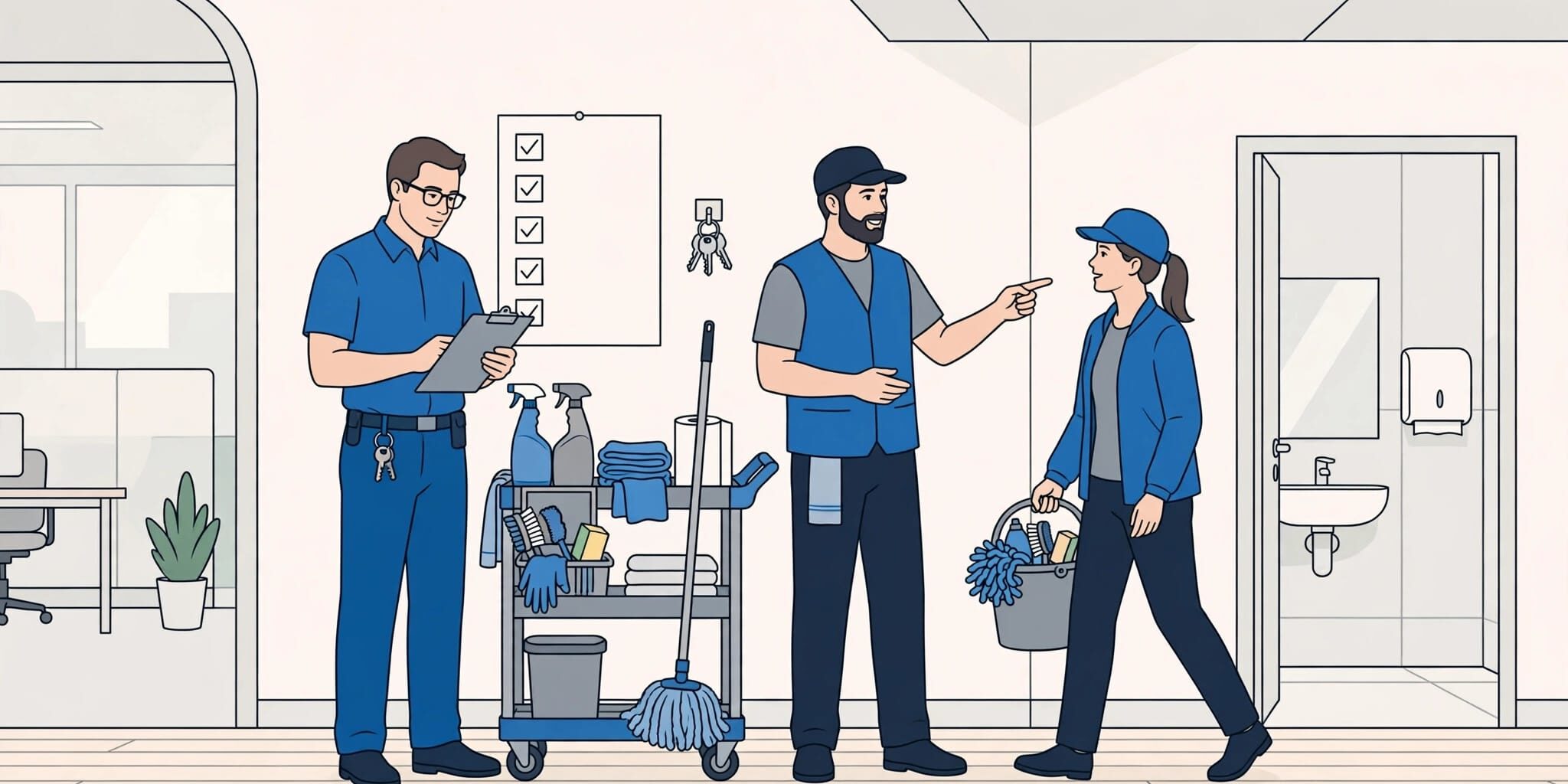
A change in cleaning staff should not change the condition of your building. Employee turnover, planned leave, and vendor changes can disrupt office cleaning and scheduled maintenance cleaning when handoffs are unclear, creating janitorial service gaps.
Facility managers, property managers, and supervisors need dependable janitorial services supported by strong facility management and property management processes. Written standards, cross-training, site handoff documents, access and security instructions, supervisor verification, and continuity metrics keep cleaning services consistent. Together, these safeguards support a reliable cleaning program and help correct problems before complaints build up.
Key Takeaways for Consistent Cleaning Service
- List room-by-room routine tasks and periodic maintenance cleaning in a written scope of work.
- Apply the same documented standard to office cleaning, restrooms, common areas, and other zones.
- Give replacement cleaners a first-shift orientation covering access control, supply locations, safety procedures, and site priorities.
- Pair task completion with inspection scores, response time, and first-time-fix results to reveal recurring problems.
- Use one reporting path for tenant concerns so small issues don’t become formal complaints.
- Maintain trained backup coverage for absences, turnover, seasonal demand, and emergencies.
Why Janitorial Service Gaps Happen After Staff Changes
Staff changes are common in commercial cleaning. A replacement worker may understand routine cleaning but miss periodic maintenance cleaning tasks. That turnover can affect janitorial services, from restroom care to floor and surface cleaning.
A missed detail can feel minor at first. Then the same glass door stays streaked, a restroom runs low on paper products, or trash remains in a shared breakroom. Over time, these repeated problems weaken confidence in the cleaning service.
Incomplete handoffs create missed work
A verbal handoff is rarely enough. Cleaning staff need practical information they can use during the shift, including keys or badges, alarm instructions, approved products, sensitive surfaces, restricted rooms, and high-priority areas.
Cross-training is also necessary. A replacement may know the daily route but miss periodic maintenance cleaning, such as floor care or high dusting. The cleaning company should document who handles these tasks instead of relying on one worker’s memory.
Each site has different expectations. Medical offices, schools, restaurants, banks, and auto dealerships are commercial properties with different cleaning, safety, and access requirements. Facility management must preserve that site knowledge, including office cleaning priorities and restricted-area procedures.
An agency-provided replacement or vendor-provided worker can maintain service, but only when the same site standards and security procedures are followed. A temporary janitorial cleaner from a staffing agency needs access instructions before the first shift, not after a problem occurs.
A missed handoff can become a series of operational failures. If a badge procedure is omitted, a restricted office may be skipped repeatedly. That pattern can lead to tenant complaints, even when routine tasks elsewhere are completed.
Weak supervision allows small issues to repeat
A cleaner can check off every task and still leave behind poor results. Floors may be wet, restroom odors may remain, or shared surfaces may not be properly cleaned.
If no supervisor checks beyond daily work, periodic maintenance cleaning may be missed again. High turnover and limited supervision often lead to inconsistent results, a concern also discussed in this overview of facility management cleaning challenges. The answer isn’t constant micromanagement. It’s a reliable inspection process that catches missed work early.
A completed checklist confirms activity. A visual inspection confirms whether the work meets the building standard.
Prevent Janitorial Service Gaps With a Clear Scope of Work
The strongest commercial cleaning relationship begins with clear written expectations. General language such as “keep the building clean” leaves too much room for confusion. A room-by-room scope explains what gets cleaned, how often it gets cleaned, and what acceptable results look like.
Our commercial cleaning scope of work guidance helps property management teams define services by area, task, frequency, quality standard, and response expectations.
Separate routine cleaning from maintenance cleaning
Routine cleaning covers janitorial services completed every visit or on a regular schedule. This may include trash removal, restroom sanitation, vacuuming, mopping, dusting, touchpoint cleaning, and breakroom care.
Maintenance cleaning covers periodic work that falls outside the regular visit. Examples of maintenance cleaning include carpet extraction, floor machine work, high dusting, interior glass, deep cleaning, and detailed floor care.
List each room or zone with its required task, frequency, acceptable result, responsible party, approval requirement, and correction deadline. State whether maintenance cleaning is included, excluded, or billed separately. Also define where janitorial tasks end and repairs or building maintenance responsibilities begin.
Use a compact matrix to distinguish routine, periodic, and approved extra work. The cleaning schedule should show daily, weekly, monthly, and quarterly frequencies.
| Service category | Document these details |
|---|---|
| Routine work | Tasks, rooms, frequency, acceptable result, and assigned staff |
| Periodic work | Tasks, timing, quality standard, equipment, and required supplies |
| Approved extra work | Request details, reason, price, approver, and completion deadline |
A complete commercial cleaning scope of work should also cover:
- Building zones, including office cleaning areas, lobbies, restrooms, breakrooms, hallways, and restricted rooms.
- Office cleaning frequency, task details, access limits, and acceptable results.
- Approved supplies, equipment, PPE, and product-handling requirements.
- Who provides consumables such as paper towels, soap, trash liners, and sanitizer.
- Access procedures for keys, badges, alarms, loading areas, and after-hours entry.
- The inspection process, communication contacts, and correction deadlines.
- Property management approval rules for extra work, special services, and price changes.
- Maintenance cleaning exclusions, pricing, frequencies, and approval requirements.
For office cleaning, specify desk access, shared-space responsibilities, trash procedures, and security restrictions. These details help replacement staff follow the same standard after a personnel change.
A useful vendor evaluation checklist also emphasizes scope alignment, staffing expectations, and clear service standards. Those details protect both the property and the cleaning provider.
Prepare Replacement Cleaning Staff Before the First Shift
Reliable janitorial services depend on replacement coverage that starts with clear instructions. A temporary janitorial cleaner can provide excellent support, but shouldn’t arrive at your property and learn by trial and error.
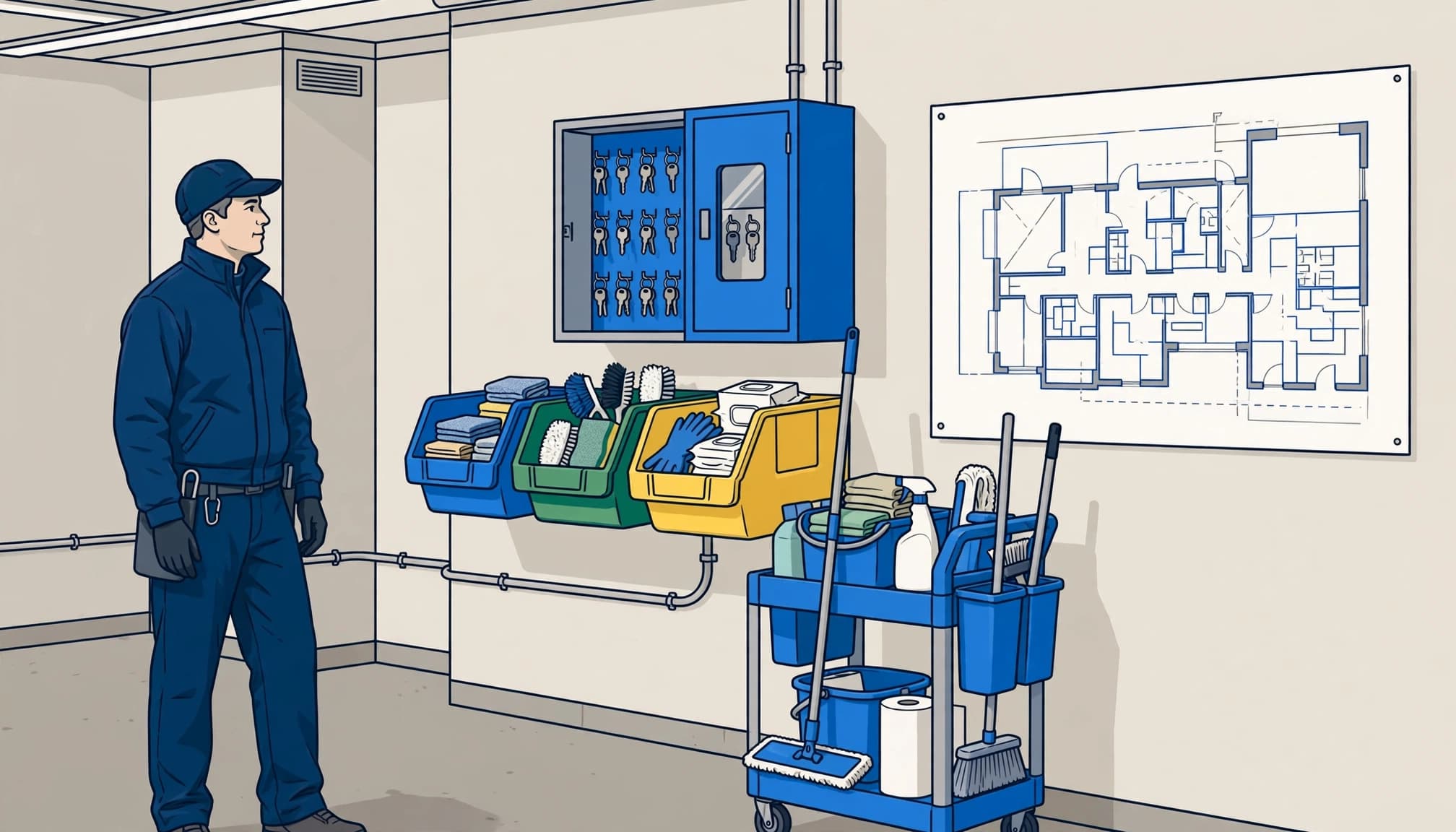
Create a practical site handoff packet
A site packet keeps building knowledge from disappearing when staff changes. It can be paper-based or digital, but supervisors and cleaning staff should use it for cross-training and during each shift.
Include a simple floor plan, room-by-room task list, supply locations, restroom standards, access rules, emergency contacts, and areas needing special care. Note sensitive surfaces, such as natural stone, polished floors, wood finishes, or medical-grade equipment. The site packet should include maintenance cleaning standards and a periodic-task calendar. The equipment section should explain approved methods for maintenance cleaning. That calendar should identify maintenance cleaning and deep cleaning requiring extra training or approval.
Approved supplies should remain labeled and secured when they’re not in use. All workers need training before using chemicals, floor machines, or equipment requiring PPE. If a staffing agency supplies workers, the provider should verify that training first.
Make first-shift orientation a required step
A supervisor should lead orientation for a temporary janitorial cleaner before the first shift. If a staffing agency supplied the worker, the provider and property contact should document orientation responsibilities.
Confirm the temporary janitorial cleaner understands parking, entry points, keys, badges, alarm codes, and waste procedures. Review office cleaning examples by room and restricted rooms where office cleaning requires authorization. Explain supply control, emergency contacts, communication procedures, and escalation steps.
A short orientation checklist creates accountability. The supervisor should sign off after confirming the worker understands routine cleaning and maintenance cleaning requirements. It should also confirm they can locate supplies, operate approved equipment, follow PPE requirements, protect confidential areas, secure keys or badges, and report incidents.
For planned leave or unexpected absences, document a backup assignment and who will confirm coverage with the provider. If a staffing agency is used, keep its contact and worker assignment in the coverage record, but don’t assume an agency is required.
Temporary staff can maintain coverage when the same orientation and inspection standards apply. After the first shift, the supervisor should complete an inspection follow-up for the temporary janitorial cleaner and address gaps before the next visit.
Use Supervisor Inspections to Maintain Cleaning Quality
Regular supervisor inspections matter because completed work and acceptable work are not always the same. They verify actual conditions after janitorial services, not only tasks marked complete. Increase inspection frequency during staff turnover, planned leave, or the first weeks after a vendor transition. These periods require closer quality control.
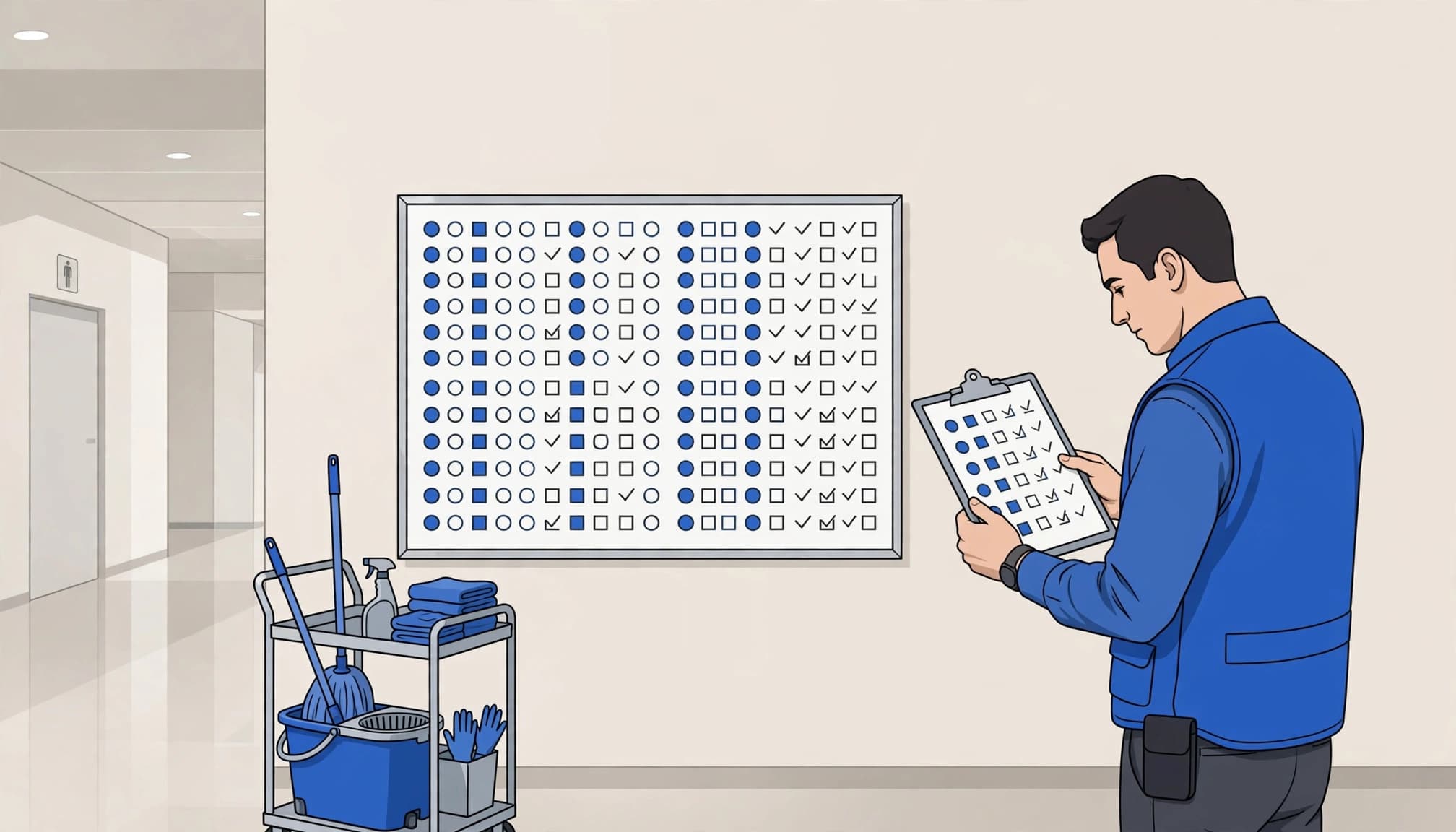
Build a daily inspection scorecard
A written scorecard gives supervisors a consistent way to review service. It should cover entrances, lobbies, restrooms, floors, breakrooms, elevators, common areas, and spaces named in the contract, including office cleaning areas and maintenance cleaning tasks.
| Scorecard field | What to record |
|---|---|
| Service date and shift | When the cleaning was completed |
| Area inspected | The exact room, floor, or zone |
| Task standard | The expected result for that area or task |
| Inspection result | Pass, correction needed, or not applicable |
| Access or security incidents | Any door, badge, key, or security concern |
| Supply shortages | Missing consumables or other required supplies |
| Recurring defects | Issues that have appeared more than once |
| Responsible party | The person or team assigned to follow-up |
| Correction deadline | When the issue must be corrected |
| First-time-fix status | Whether the issue was resolved without repeat work |
| Closeout date | When the issue was corrected |
Coverage from a staffing agency should be inspected under the same standard as regular staff. On a first replacement visit, inspect the full assigned route when using a temporary janitorial cleaner.
Standards should separate routine service from periodic work. A separate check can verify deep cleaning, carpet extraction, high dusting, and scheduled maintenance cleaning.
Inspect equipment used for maintenance cleaning and check floors after machine work. Floor care should leave surfaces clean, dry, even, and free of avoidable marks.
Restroom maintenance standards may include clean fixtures, dry floors, stocked dispensers, controlled odors, and empty waste containers. Lobby glass should be free of fingerprints and streaks at normal viewing distance. Entryways should remain clear, dry, and safe for employees and visitors. Waste should be removed and handled according to site rules.
Track patterns, not isolated mistakes
One missed trash can may be a simple oversight. A restroom that repeatedly fails inspection is a pattern that needs attention. Use weekly records from supervisor inspections to compare room-by-room office cleaning results. Review them by area, shift, task, replacement assignment, and maintenance cleaning activity.
Managers should review these trends rather than judge performance from one isolated failure. Recurring defects may indicate unclear standards, insufficient training, missed supplies, or an assignment that needs adjustment.
Useful measures include task completion rate, inspection score, response time, and first-time-fix rate. Task completion rate is completed scheduled tasks divided by total scheduled tasks. Inspection score is passed applicable items divided by total applicable items. Response time measures the time from issue reporting to correction. First-time-fix rate is issues corrected without repeat work divided by total corrected issues.
Digital tools can help organize inspection records, but paper logs can also work. The value comes from documenting results, corrections, and trends. Platforms such as GoAudits cleaning inspection software show how standardized inspections can support consistent service.
Set Communication Rules Before Complaints Build Up
Problems with janitorial services often begin as communication gaps, not poor intent. A tenant may assume interior glass is part of the scheduled service. The crew may not know a new employee has increased restroom traffic. Clear communication procedures keep small issues from becoming larger complaints.
Give every concern one clear owner
Property management should name one property contact, while the cleaning company assigns one provider-side contact. The on-site supervisor checks the work, confirms corrections, and updates the provider contact. An emergency or security contact should handle unsafe conditions, access failures, lost keys, and security concerns.
If a staffing agency supplies coverage, contact it when that coverage creates an access or performance issue. If a temporary janitorial cleaner needs replacement, the supervisor should notify the provider contact promptly and document the request.
Use one report format for every concern: date, exact location, task, impact, photo if appropriate, urgency, owner, response deadline, and closeout confirmation.
“The office was not cleaned” is difficult to investigate. “The second-floor restroom had no paper towels after Tuesday’s office cleaning” gives the team a clear issue to correct and document. A single reporting path also supports trend analysis, so repeated issues can be addressed before they become tenant complaints.
For a local business, commercial cleaning quality control KPIs can help connect service reports with inspection records and corrective actions.
Use different response paths for different issues
Urgent safety issues, access or lost-key incidents, and security concerns should be reported immediately. Supply failures, such as missing paper products, should go to the provider contact and on-site supervisor for prompt review.
A missed routine cleaning task may be corrected during the next visit, depending on the agreement. A request for periodic maintenance cleaning may require approval, so it shouldn’t be treated as missed routine work. Approved extra work should have its own owner and deadline.
Write response categories and deadlines into the scope of work, then measure them consistently. For example, an urgent issue might require a response within four business hours, while routine corrections may wait until the next scheduled visit. These are examples, not universal rules, and shouldn’t be promised informally.
Manage Vendor Changes Without Disrupting Service
Changing providers requires a staged continuity plan. The goal is to transfer information, access, supplies, and standards so janitorial services continue without gaps. Assign facility management oversight before the transition begins.
Undocumented vendor changes can create repeat operational failures. Adapt these controls to the size, traffic, and access risk of different commercial properties.
Start with a documented transition review
Start with a scope comparison before the final outgoing shift. Compare the current scope of work with the incoming plan. Include a room-by-room office cleaning scope, routine cleaning frequencies, cleaning schedule, exclusions, approvals, and restricted areas.
Record supply inventory, equipment, and maintenance cleaning requirements in the transition inventory. Place deep cleaning, maintenance cleaning, and other specialty work on the periodic-service calendar.
Transfer cleaning services information, including inspection reports, supply lists, incident notes, approved contacts, and data or document ownership. List recurring complaints, open issues, emergency contacts, and required approvals.
Review the coverage source, whether it is a staffing agency, the vendor, or internal staff. Use the same standards whether coverage comes from an agency, the vendor, or internal staff.
Use a responsibility matrix to name the facility lead, outgoing provider, incoming provider, and staffing agency when applicable. Build a contingency plan for a temporary janitorial cleaner if the scheduled crew can’t start.
The backup-coverage plan should identify temporary staff, escalation contacts, and response times. Name the selected cleaning vendor in the transition checklist, along with each handoff owner.
During the final outgoing-provider review, confirm completed and pending maintenance cleaning tasks. Reconcile keys, badges, alarm codes, equipment information, and supply levels before the last shift.
Revoke departing credentials before the final shift. Document key custody and avoid sharing alarm codes unnecessarily. Confirm restricted-area procedures and unresolved complaints with the incoming provider.
Before the first shift, issue and log incoming credentials for approved workers. Confirm incoming cleaning staff receive the current site packet, including emergency contacts and access procedures.
If a temporary janitorial cleaner is used, issue only the credentials needed for that shift. Verify after-hours entry before service begins.
Our commercial cleaning RFP checklist can help you compare providers and choose a cleaning vendor before making a change.
Inspect more often during the first weeks
The first several visits after a staff or vendor change need closer review. A supervisor should inspect high-traffic areas, restrooms, entrances, breakrooms, and spaces with a history of issues.
Verify scheduled maintenance cleaning tasks during the first-weeks review. If a temporary janitorial cleaner completes a visit, include it in the post-service inspection before closing the work order.
Track missed visits, inspection scores, response times, open corrections, and first-time-fix rates for 30 days. At the 30-day review, compare these results with the agreed standards and correct recurring gaps.
Ask potential providers how they train replacement staff, document inspections, manage absences, and provide backup coverage. Audit the backup plan for coverage from a staffing agency, the vendor, or internal staff.
These commercial cleaning company inspection questions help identify whether a provider has the structure needed to maintain consistent service.
For offices and facilities in Fort Myers, Cape Coral, Bonita Springs, Naples, Lehigh Acres, and nearby communities, you can Get a FREE Quote Today for a cleaning plan built around your building, schedule, and quality expectations.
Common Questions About Staff Changes and Cleaning Service
How can a business owner tell if a cleaning problem is recurring?
Look for the same missed task, room, or condition across multiple service visits. A recurring maintenance cleaning issue may appear in one office cleaning area, such as a conference room with dusty surfaces. Restroom maintenance concerns may include empty dispensers, odors, dirty fixtures, or missed supply checks.
Record the date, area, missed task, likely cause, assigned owner, correction deadline, and closeout result. This record shows whether the cause is staffing, training, supply shortages, weak supervision, or an unclear scope of work.
What should happen when a regular cleaner calls out?
The cleaning company should assign trained backup staff or use a staffing agency when that option is approved. If a temporary janitorial cleaner is assigned, the provider should share the site packet and confirm access before the shift begins.
A supervisor should inspect the first replacement visit and complete an inspection sign-off. Reliable janitorial services use backup coverage, documented instructions, and clear reporting ownership to maintain continuity.
What should be included in a replacement-worker handoff?
The site packet should include the scope of work, schedule, access instructions, supply locations, safety rules, priority areas, and contact information. It should also identify tasks requiring cross-training or supervisor approval.
The outgoing worker or supervisor should review the packet with the replacement worker before the first shift. The handoff should note open issues, recent corrections, and any location-specific requirements.
How can planned leave preserve periodic work?
Review the maintenance cleaning schedule before the employee leaves. Assign each periodic task to a trained worker, record its due date, and confirm completion during the next inspection.
Cross-training should cover floor care, high dusting, supply checks, and other work that may be missed during routine coverage. Track completed tasks as part of the site’s service-continuity metrics.
Which tasks may require separate scheduling or approval?
Some work, including deep cleaning, floor refinishing, or high-level dusting, may require separate scheduling, equipment, or client approval. List these tasks in the site packet instead of assuming a replacement worker can complete them.
The supervisor should confirm who owns the request, when the work is due, and how completion will be documented. This prevents periodic work from disappearing during a staffing change.
How do you verify that a replacement worker is ready?
Before a temporary janitorial cleaner works independently, the supervisor should review the site packet, confirm cross-training, and observe key tasks. The supervisor should record the inspection sign-off and assign corrections with a deadline.
Use the same checklist for regular and replacement workers. Compare inspection results, missed-task reports, response times, and closeout rates to identify whether coverage is maintaining expected standards.
How should access be handled when a vendor changes?
Deactivate departing workers’ keys, badges, codes, and app access according to the site’s security procedure. Confirm the replacement worker’s identity, authorization, arrival time, and approved access areas before service begins.
Keep access records with the site packet and assign one person to approve changes. Report missing credentials or unexpected access immediately, then document the resolution and closeout result.
Keep Your Cleaning Program Reliable
Dependable janitorial services rely on documented standards, cross-training, secure access, and routine inspections. Clear communication, assigned ownership, and trend-based corrections help service stay consistent.
Cleaning continuity supports building maintenance, but it doesn’t replace broader repair responsibilities. Review your continuity checklist after staff turnover, planned leave, and vendor changes to keep your cleaning program accountable and prevent recurring janitorial service gaps.