A clean classroom supports healthier students, more organized instruction, and a better impression for families and staff. In Southwest Florida, humidity, rainy-day moisture, sand, and heavy daily traffic can make routine cleaning harder to manage.
A dependable classroom cleaning checklist creates consistent standards for every room. A school cleaning checklist helps teachers, custodians, and school leaders follow the same clear standard.
The strongest school cleaning plans separate daily upkeep from periodic deep cleaning and assign each task to the right person.
Key Takeaways
- Use a written classroom cleaning checklist that assigns each task, frequency, and responsible person.
- Teachers and students can maintain daily order and report spills, while trained custodial staff handle chemicals, sanitation, floor care, and specialized equipment.
- Clean surfaces routinely and disinfect only when illness, body-fluid contamination, or school infection-control guidance makes it appropriate.
- Give special attention to shared technology, high-touch surfaces, floors, entry mats, humidity, vents, and moisture in Southwest Florida classrooms.
- Use weekly and monthly deep-cleaning schedules, documented inspections, and prompt correction steps to maintain consistent standards.
Start With Clear Classroom Cleaning Responsibilities
A checklist works best when it identifies what happens, how often it happens, and who completes it. General instructions such as “clean classroom” leave too much open to interpretation.
Teachers shouldn’t perform commercial cleaning that involves floor equipment or chemical-heavy disinfection. These tasks require training and should remain a custodial responsibility. At the same time, a cleaning crew can’t always see a spilled snack, cluttered reading corner, or shared supply bin during the school day.
Teachers and students can handle daily order
Teachers can keep the classroom organized by having students return supplies, clear desk surfaces, place food waste in lined bins, and report spills right away. Age-appropriate classroom jobs can build good habits without asking students to use cleaning chemicals.
Students may report spills and visible debris only. They shouldn’t use chemicals or operate cleaning equipment.
Students can help with simple tasks such as:
- Returning books, learning materials, and shared devices to their proper places.
- Picking up dry paper scraps and other visible debris.
- Checking that food and drink items are not left inside desks or cubbies.
- Reporting wet floors, damaged furniture, and spills to an adult immediately.
Teachers can also keep personal items, lesson materials, confidential records, and movable classroom furniture organized. This allows cleaning staff to access desks, floors, sinks, and other surfaces without moving important classroom property.
Custodial teams handle sanitation and floor care
The school custodian should oversee sanitation standards and confirm that each room meets its assigned scope.
Professional cleaners should complete tasks that require approved products, equipment, personal protective equipment (PPE), or specialized training. Approved cleaning supplies should remain labeled and secured when not in use, and trained staff must follow safe handling directions.
Custodial staff handle chemicals, trash removal, restroom cleaning, mopping, operation of floor equipment, detailed disinfection of high-touch surfaces, and scheduled carpet care.
We recommend giving every crew a room-by-room scope and a practical inspection standard. Clear checks are easier to assess than a vague promise of quality.
A clean room is not only about appearance. It should also have dry floors, controlled odors, accessible exits, empty food waste, and properly handled shared surfaces.
Daily Classroom Cleaning Checklist for Healthy Spaces
Daily cleaning tasks keep small messes from becoming bigger facility problems. In busy classrooms, trash, shared supplies, fingerprints, tracked-in moisture, and spills build up quickly.
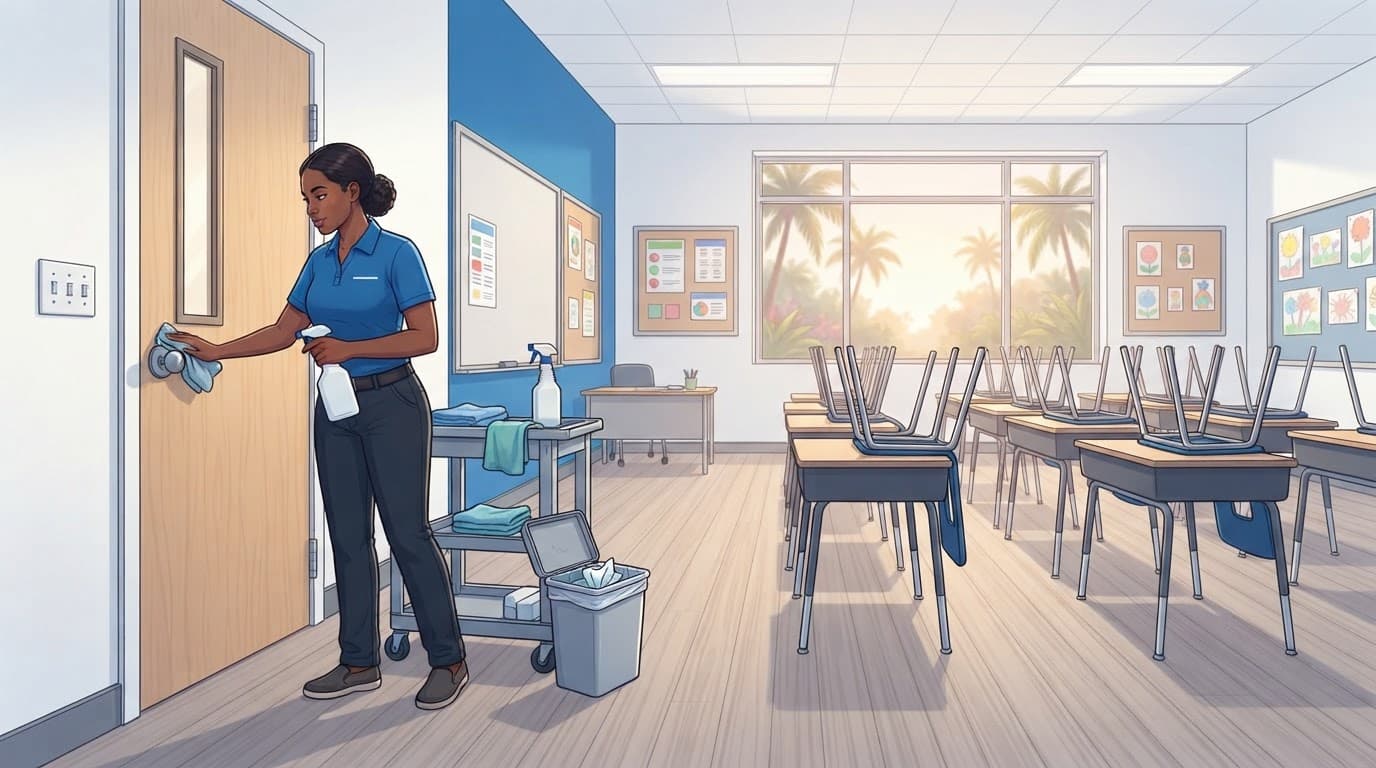
Complete these tasks after each school day
A daily classroom cleaning checklist should include the following after-school work:
- Empty trash bins, remove food waste, replace liners, and clean sticky residue around bins.
- Pick up loose debris, then sweep and mop hard floors, or vacuum carpeted areas.
- Clean desks, tables, chair backs, counters, sinks, and visible spots on cabinets.
- Wipe high-touch surfaces, including door handles, light switches, faucet handles, drawer pulls, and shared supply containers.
- Clean whiteboards with a surface-safe product, then remove dry-erase residue from trays.
- Check corners, under desks, and reading areas for snack wrappers, spilled materials, and moisture.
- Spot-clean interior glass and door windows where fingerprints are visible.
- Return furniture to its usual layout and leave clear paths to exits.
Disinfect desks and chairs only when illness, body-fluid contamination, or school infection-control guidance makes it appropriate. Routine wiping is the standard daily step, not constant disinfection by teachers.
Food waste needs attention every day. A forgotten juice box or snack wrapper can create odors and attract ants, roaches, and other pests. This is especially important during warm, humid Southwest Florida months.
For classrooms with shared tables, devices, or activity stations, clean surfaces between groups when practical. The CDC’s facility cleaning guidance explains that routine cleaning removes dirt and many germs, while disinfection is used when there is a clear reason for it.
Clean and Disinfect High-Touch Surfaces the Right Way
Cleaning and disinfecting are related, but they aren’t the same task. Using disinfectant on a dirty desk may not produce the result a school expects.
Clean first, then disinfect when needed
Cleaning uses soap or detergent and water to remove soil and germs from a surface. Disinfecting uses a product designed to kill or inactivate germs after the surface has been cleaned.
Most classroom surfaces need regular routine cleaning, not constant disinfection. Targeted disinfection can help limit the spread of germs after a body-fluid incident or illness in the space. A school custodian or trained custodial employee should disinfect desks and chairs according to district procedures. Teachers should report incidents and keep students away from treated areas.
Use an EPA-registered product approved for the surface being treated. The label should match the material, whether it’s plastic, laminate, metal, glass, or another surface type.
Respect the product’s contact time
Disinfectant needs time to work. If a label requires a five-minute wet contact time, the surface must stay visibly wet for the full five minutes. A quick wipe followed by immediate drying may not disinfect the surface as intended.
Read the label before work begins. It provides the required dilution, application method, ventilation needs, PPE, and surface contact time. OSHA-aligned safety practices call for custodial personnel to receive chemical training and have access to current Safety Data Sheets (SDS). They should use the gloves or other PPE required by the product label. Never mix bleach with other cleaners or disinfectants.
In Southwest Florida classrooms, open doors or windows only when weather, security, and HVAC procedures allow. Use appropriate HVAC settings to increase airflow during disinfection. CDC guidance and the green cleaning toolkit for schools reinforce choosing products and methods that protect occupant health.
Clean Shared Classroom Technology Without Causing Damage
Tablets, keyboards, printers, touch screens, headphones, mice, and remote controls collect fingerprints and germs through shared use. These devices have openings and coatings that excessive moisture or incompatible chemicals can damage.
Use manufacturer-approved methods for electronics
Turn devices off and unplug them when possible. To sanitize electronic devices, follow the manufacturer’s approved method. Use a lightly moistened microfiber cloth or manufacturer-approved wipe, never a dripping cloth or disinfectant sprayed directly onto electronics.
Shared keyboards, mice, and touch screens should be cleaned regularly, especially when students use the same stations. Wipeable covers can simplify frequent cleaning for tablets, keyboards, and other school technology.
Keep cleaning products away from charging ports, vents, paper trays, and power cords. Staff should report damaged equipment instead of cleaning around exposed wires or cracked screens.
Keep supplies organized and secured
Classroom cleaning supplies should remain in their original labeled containers or properly labeled secondary containers. Safety Data Sheets should be accessible to custodial personnel, and products should be secured away from students.
We also recommend color-coded microfiber cloths for different areas. A cloth used for sink and countertop cleaning should never later be used on desks or classroom devices. This simple practice helps control cross-contamination.
Weekly Floor Care and Indoor Air Quality Tasks
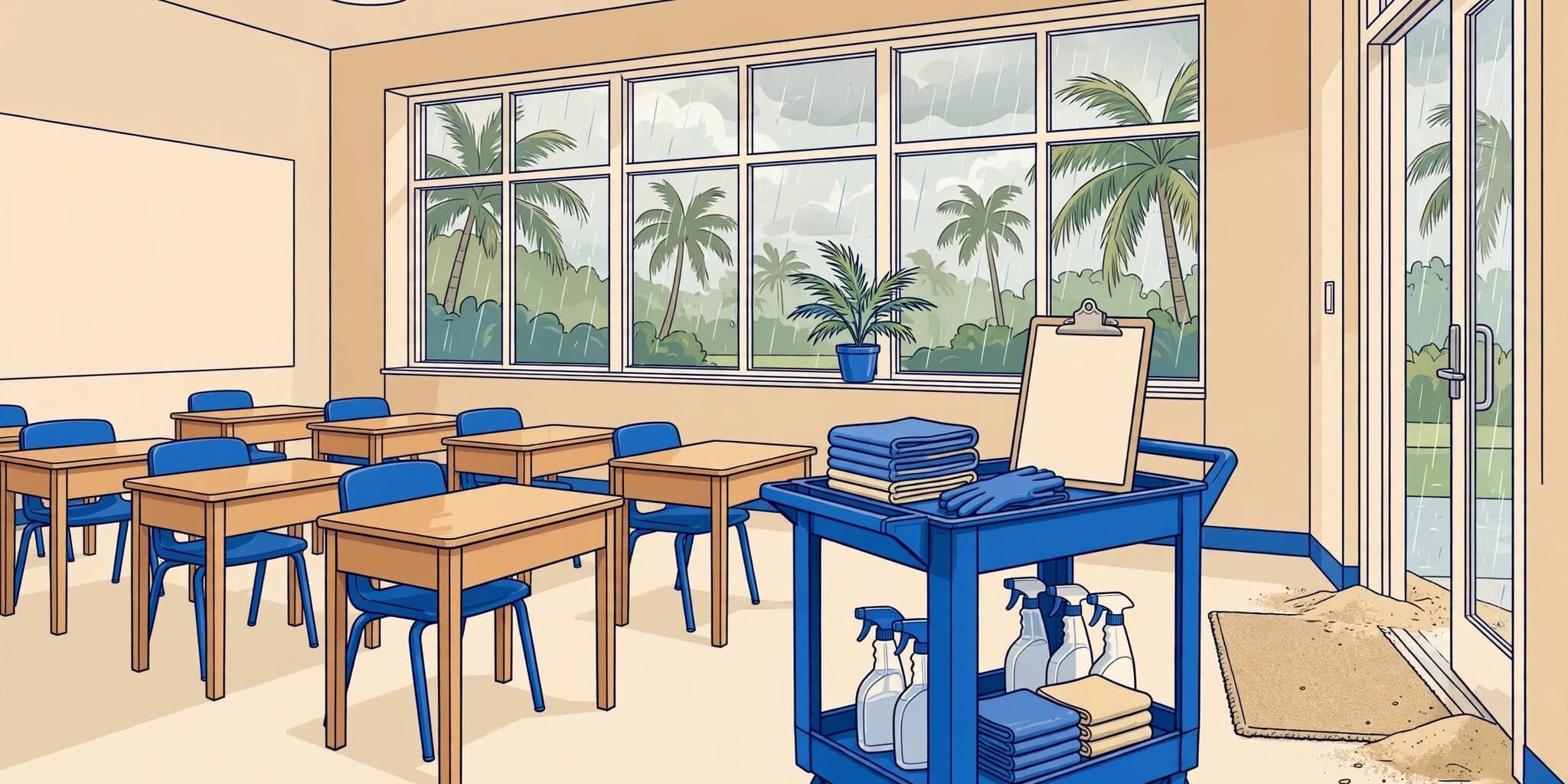
Daily cleaning handles visible soil, but weekly cleaning tasks address the dust, grit, and moisture that settle into classrooms over time. This matters in Southwest Florida, where rain and outdoor sand can quickly damage floor finishes and carpet fibers.
Match each floor surface to the right method
Hard floors should be dust-mopped or swept daily, then damp-mopped with a product that fits the floor material. Avoid leaving excess water behind, especially near doorways, sinks, and air-conditioning vents.
For carpeted rooms, vacuum carpets regularly, focusing on edges, entry points, and areas under furniture. Spot clean spills promptly, but schedule extraction when carpets have embedded soil, odors, or widespread staining.
Entrance mats also need routine attention. They catch sand and rainwater before it reaches classroom floors, but they lose value when saturated or packed with debris.
Watch humidity, vents, and moisture
The weekly inspection should include dust shelves and accessible vents when safe and within the assigned worker’s scope. Report blocked airflow, condensation, leaks, damp ceiling tiles, and musty odors promptly, before they become mold or maintenance concerns.
The EPA’s indoor air quality guide for schools offers useful guidance for maintaining healthy air in learning spaces. Florida guidance suggests 35% to 55% indoor humidity as a practical target for a healthy environment. Confirm that range against current EPA, Florida health, district, and HVAC guidance, and keep school facilities’ HVAC drip pans clean with maintenance records current.
Monthly Deep Cleaning and End-of-Term Resets
Monthly cleaning tasks go beyond what a nightly visit can cover. They help schools protect finishes, maintain a professional learning environment, and catch problems hidden by daily traffic.
Focus on overlooked classroom areas
The monthly cleaning tasks should include high dusting, baseboards, wall marks, cabinet fronts, and dust shelves. Wipe blinds and window sills, and clean accessible storage areas. Only clean inside storage bins after staff clear the contents or approve the work.
Inspect chairs, desk legs, and floor protectors before moving desks, chairs, carts, or other items. Document existing damage, and lift items or use appropriate equipment instead of dragging them across vinyl or tile. Routine mopping won’t remove scratches left by broken furniture.
Review whiteboard surfaces, projector areas, door frames, blinds, and window sills. These areas often hold dust even when desks and floors look clean.
Plan summer cleaning before the final bell
End-of-term deep cleaning is the right time for detailed floor scrubbing, carpet extraction, interior glass, high dusting, vent inspections, and furniture reconfiguration. Classrooms should be cleared according to school policy before crews begin work.
A written summer scope should identify which rooms receive floor restoration, carpet work, furniture movement, and wall cleaning. It should also explain who approves extra work, how damage is reported, and when rooms can reopen.
During storm season, inspect for water intrusion before work begins. Postpone work in unsafe conditions, and report ceiling, roof, or HVAC damage rather than masking odors or cleaning suspected mold without the appropriate response plan.
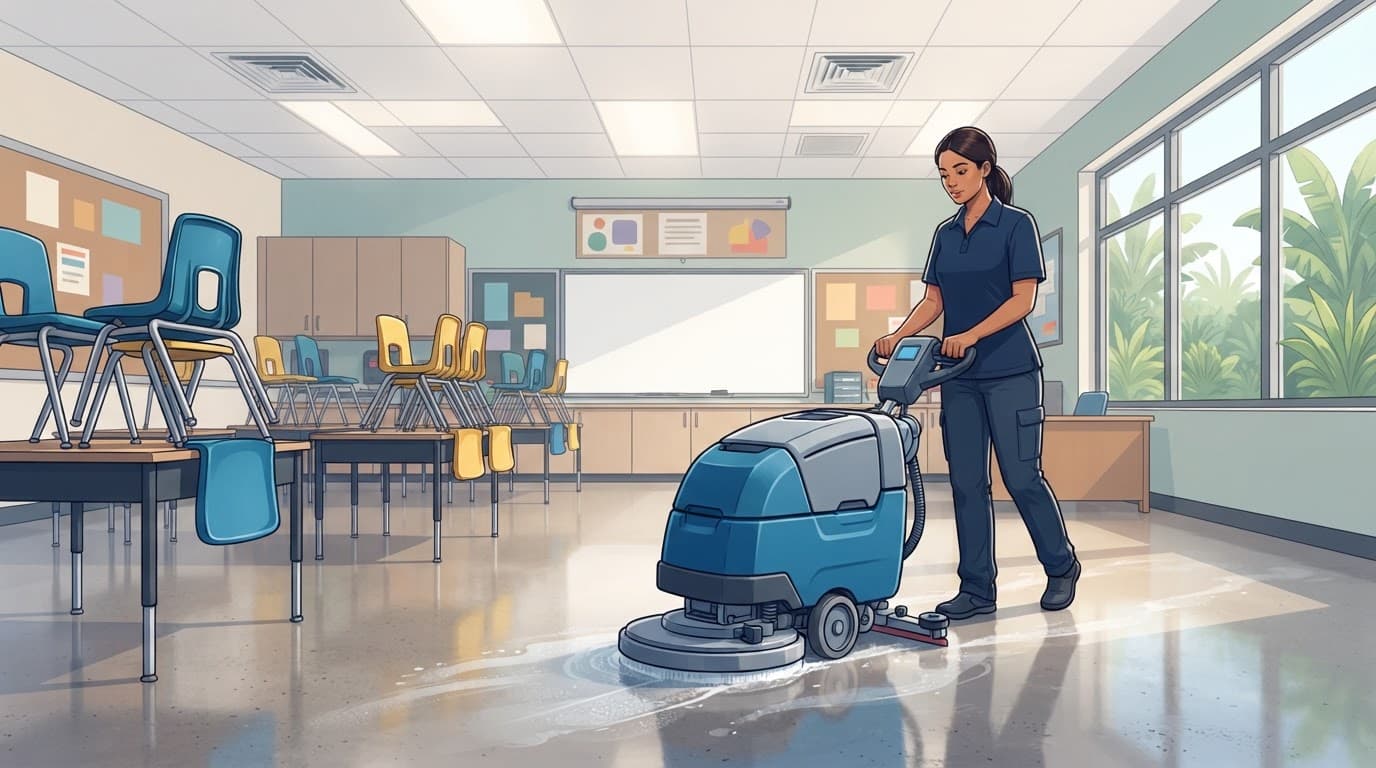
Professional cleaners may use walk-behind scrubbers for larger hard-floor areas. Stripping, waxing, or machine scrubbing requires compatible flooring, trained personnel, ventilation, barricading or warning signage, and adequate drying time before classroom furniture and foot traffic return.
Track Results With a Written School Cleaning Checklist
A checklist is only useful when someone confirms that the work was completed. A crew can spend the expected time in a building and still miss a trash bin, restroom dispenser, or classroom corner.
Use inspections and clear correction steps
Supervisors can use digital checklists, time-stamped records, and routine inspections to review completed work. A school custodian or custodial supervisor can verify completion against the same criteria. Documented inspections help identify whether a missed task was isolated or recurring.
Inspection criteria should cover trash, floors, frequently touched surfaces, odors, moisture, and clear access to exits. They should also verify soap or sanitizer availability where applicable and whether staff need to restock supplies.
A written scope for janitorial services should explain who receives concerns, how quickly corrections are completed, and how results are documented afterward. A reliable program doesn’t depend on claiming that nothing will ever be missed. It depends on fixing issues promptly and preventing repeat problems.
Responsibility assignments should follow local school district job descriptions and applicable Florida requirements. District administrators, principals, and facility managers can adapt the written scope to room layouts, traffic levels, floor types, weather, and school schedules. Reviewing records across school facilities can reveal recurring issues and guide practical updates.
Frequently Asked Questions
What should be included in a daily classroom cleaning checklist?
A daily checklist should cover trash removal, floor cleaning, desks, tables, sinks, high-touch surfaces, whiteboards, visible debris, and clear paths to exits. Staff should also check for food waste, spills, fingerprints, and moisture after each school day.
Should teachers disinfect classroom desks and chairs every day?
No. Routine cleaning is usually the daily standard, while targeted disinfection is appropriate after illness, body-fluid contamination, or according to school infection-control guidance. Trained custodial staff should handle disinfectants and follow the product label, including its required contact time.
What classroom cleaning tasks should students handle?
Students can return supplies, pick up dry debris, keep food and drinks out of desks and cubbies, and report spills or damaged furniture to an adult. They should not use cleaning chemicals or operate cleaning equipment.
How often should classrooms receive deep cleaning?
Weekly tasks should address floors, carpets, entrance mats, dust, vents, and moisture concerns. Monthly and end-of-term cleaning can cover high dusting, baseboards, blinds, storage areas, carpet extraction, floor restoration, and furniture reconfiguration.
A Cleaner Classroom Supports Better School Days
The best classroom cleaning checklist is clear, realistic, and tied to each school’s actual needs. Daily cleaning tasks cover trash removal and routine high-touch surface care. Weekly and monthly schedules support safe technology cleaning, floor maintenance, and scheduled deep cleaning.
When teachers, staff, and cleaning teams understand their responsibilities, classrooms stay more organized and healthier throughout the year. Consistent cleaning standards protect the learning environment and support healthier school days long after the first day of school.