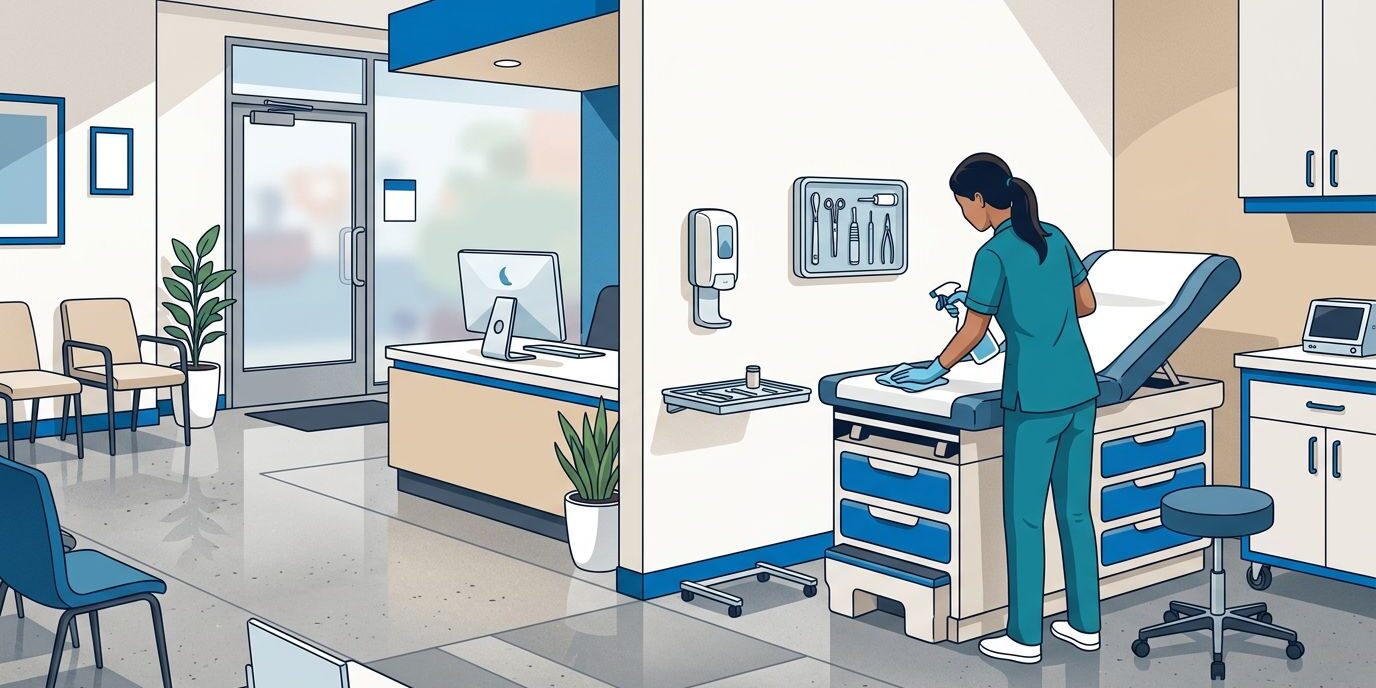
A medical office cleaning checklist protects more than the appearance of your facility. When paired with reliable commercial cleaning services, it supports rigorous health and safety standards while reinforcing patient trust and safety across healthcare facilities.
Waiting areas and examination rooms also have different cleaning needs. A busy reception area collects fingerprints, dust, tracked-in moisture, and frequent contact. An exam room requires closer attention to patient surfaces, medical equipment, waste, and any visible contamination. A written plan helps your team complete the right work at the right time.
Key Takeaways
- Waiting areas need frequent attention to seats, counters, doors, floors, and shared items.
- Examination rooms need cleaning and disinfection after each patient when required by facility policy and healthcare cleaning standards.
- Product labels, contact times, personal protective equipment, and manufacturer instructions matter.
- Daily cleaning tasks should be separated from weekly, monthly, and periodic deep-cleaning tasks.
- A written scope creates sanitary standards and prevents missed work or unexpected charges.
Why Medical Office Cleaning Needs Room-Specific Standards
A general office cleaning routine isn’t enough for a medical facility cleaning program. Patient traffic changes throughout the day, and many high-touch surfaces receive repeated contact within a short period. Reception counters, chair arms, door handles, light switches, pens, clipboards, and payment devices can all need attention before the evening service to maintain proper healthcare cleaning standards and protect health and safety.
The cleaning plan should also reflect the type of care provided. A primary care office may have different needs than a dental office, dermatology clinic, imaging center, or physical therapy practice. Some rooms may handle body fluids, used supplies, or equipment that requires special care.
The CDC’s environmental cleaning procedures provide guidance for cleaning patient-care areas and handling specific situations. Your facility should combine that guidance with infection control policies, exposure-control plan product instructions, regulatory standards, and facility cleaning procedures to ensure consistent execution.
Proper cleaning and disinfection require distinct steps. Cleaning removes soil and organic matter, while disinfection uses an appropriate product to reduce microorganisms on a surface. When the product label requires a specific disinfectant dwell time, the surface must stay visibly wet for that period to prevent surface cross-contamination.
A room can look tidy and still have missed high-touch surfaces. The written checklist should name those surfaces instead of relying on general terms such as “clean the room.”
Medical Office Cleaning Checklist for Waiting Rooms and Waiting Areas
The waiting room is often the first area patients see. It should look organized, smell fresh, and remain free of visible soil throughout the day because a clean reception area directly supports patient trust and safety.
Begin with the entrance and reception zone. Clean door handles, push plates, glass, frames, reception counters, service windows, and nearby light switches. Remove fingerprints from glass at normal viewing distance. During rainy weather in Southwest Florida, inspect entry mats and floors more often because tracked-in moisture and debris build up quickly.
Patient seating needs attention beyond a quick vacuum. Wipe waiting room furniture like chair arms, seat edges, side tables, and other hard surfaces according to the surface material and product instructions. Upholstered chairs should be inspected for spots, spills, and visible soil. Don’t soak fabric or apply disinfectant to materials unless the manufacturer approves it.
Shared items need a clear policy. Remove unnecessary magazines, toys, pens, clipboards, and reusable forms when they can’t be cleaned properly. If a practice keeps children’s toys in the waiting room, staff should know which items can be disinfected and how often they require service.
Use this medical office cleaning checklist during routine cleaning and inspection:
- Clean and disinfect high-touch surfaces, including door handles, push plates, light switches, chair arms, and tables.
- Wipe the reception counter, check-in equipment, phones, keyboards, and payment surfaces using approved cleaning and disinfection methods.
- Empty trash and recycling containers before they become full, then replace liners as needed.
- Perform floor cleaning and maintenance by vacuuming carpets and mats, sweeping hard floors, and mopping spills or tracked-in moisture without delay.
- Clean interior glass, remove visible fingerprints, and check corners, baseboards, ledges, and vents.
- Inspect hand sanitizer stations and refill supplies according to the practice’s stocking procedure.
- Execute daily cleaning tasks by checking the waiting room after busy periods and spot-cleaning surfaces before visible soil becomes a complaint.
The waiting room may need morning service, evening service, or an additional daytime inspection. The right schedule depends on patient volume, room size, staffing, and the number of people using the entrance. A small low-traffic practice may need one full daily service, while a busy clinic often benefits from a professional cleaning service that also handles restroom sanitation to maintain a spotless facility.
Exam Room Cleaning Cleaning Checklist After Patient Use
Examination rooms require a more controlled process because patients may touch or contact more surfaces. Cleaning staff should understand room access, biohazard waste disposal, personal protective equipment, and the bloodborne pathogens standard when preparing examination rooms.
Start by following the facility’s room turnover procedure. Remove used table paper and dispose of waste in the correct container. If sharps, regulated medical waste, or contaminated materials are involved, only trained staff should handle them under the practice’s written procedures.
Clean high-touch areas in a consistent order. Many facilities work from cleaner areas toward dirtier areas and use separate cloths or tools for different zones to prevent surface cross-contamination. This approach supports strict infection control and aligns with established facility cleaning procedures.
An exam room checklist commonly includes:
- Change exam table paper and inspect the table for visible soil, tears, or damage.
- Clean and disinfect high-touch surfaces, including table edges, adjustment controls, and side supports.
- Wipe chair arms, stools, counters, cabinet pulls, drawer handles, and light switches.
- Clean door handles, privacy curtain touchpoints, sink handles, faucets, and nearby splash areas.
- Wipe approved exterior surfaces on scales, blood pressure equipment, monitors, and other devices using proper medical equipment sanitization techniques.
- Follow manufacturer instructions for medical equipment, electronics, upholstery, and sensitive surfaces.
- Remove waste according to the facility’s policy and replace liners before the next patient.
- Sweep or vacuum the floor, then mop when needed based on visible soil, spills, or room policy.
- Restock exam table paper, gloves, hand hygiene supplies, disposable covers, and other approved items.
- Check the room under normal lighting before releasing it for patient use.
Medical equipment needs extra care. Never spray disinfectant directly onto monitors, keyboards, electrical connections, or devices unless the manufacturer permits it. Always respect the required disinfectant dwell time, and apply the product to a compatible cloth when the equipment instructions call for that method.
A spill involving blood or other potentially infectious material needs more than routine wiping. Staff should use the facility’s exposure-control procedure, wear the required protective equipment, restrict the area when necessary, and use an approved product for the situation.
The final inspection should confirm that the room is clean, dry, stocked, and ready. Floors shouldn’t create a slip hazard. Disinfectant shouldn’t leave excessive residue on patient surfaces. Missing supplies should be corrected before the next appointment.
Daily, Weekly, and Periodic Cleaning Tasks
A strong medical office cleaning checklist separates room turnover work from daily cleaning tasks that happen less often. This keeps the daily routine realistic while preventing slow buildup in overlooked areas.
| Area or task | Suggested frequency | Inspection standard |
|---|---|---|
| High-touch surfaces | Daily and as needed | No visible soil, fingerprints, or sticky residue |
| Exam room turnover surfaces | After patient use, when required | Clean, disinfected, dry, and ready for use |
| Floor cleaning and maintenance | Daily and after spills | Free of loose debris, tracked-in moisture, and visible spots |
| Baseboards, ledges, and vents | Weekly | No obvious dust buildup |
| Waiting room furniture | Weekly or as needed | Clear glass and presentable surfaces |
| Upholstery, carpet extraction, and weekly deep clean | Monthly, quarterly, or as scheduled | Soil and wear addressed with approved methods |
Weekly work may include dusting baseboards, ledges, vents, door frames, air duct cleaning, and less accessible furniture surfaces. It can also include a more detailed cleaning of waiting room furniture, interior glass, supply areas, and staff touchpoints.
Periodic work should be listed separately in the service agreement. Carpet extraction, floor machine work, upholstery cleaning, high dusting, detailed glass cleaning, and post-event cleanup may not belong in the regular nightly price.
The practice should review the schedule when patient volume changes. A clinic that adds providers, extends hours, or opens more exam rooms may need an additional inspection or service visit. Cleaning frequency should match the facility people use now, not the smaller office that existed months ago.
Turn the Checklist Into a Written Cleaning Scope
A checklist is useful, but a written scope makes responsibilities clear. General phrases such as “clean the medical office” leave too much room for different interpretations. List each area, task, frequency, product requirement, and quality standard.
The scope should identify waiting rooms, exam rooms, reception areas, restroom sanitation, staff areas, hallways, entrances, and any specialized services like biohazard waste disposal. Locked rooms and unused storage spaces shouldn’t be counted in the cleanable square footage if they don’t receive regular service, especially during comprehensive medical facility cleaning.
Quality standards should be practical and easy to inspect to maintain sanitary standards, meet strict regulatory standards, and uphold essential healthcare cleaning standards. For example, a waiting room may require clean chair arms, empty trash containers, clear glass, and dry floors. An exam room may require a disinfected table, stocked supplies, clean touchpoints, and no visible soil.
The contract should also explain how missed work is reported and corrected. Reliable service doesn’t mean a task will never be missed. It means the provider has a clear process for reporting the issue, completing follow-up work, and documenting the correction.
Ask how the commercial cleaning company handles staff continuity, training, background checks, keys, alarms, and private patient information while delivering dependable commercial cleaning services. Confirm who supplies products and equipment. Define extra work before service begins, including carpet extraction, floor restoration, emergency cleanup, and special infection-control requests.
Pricing should match the actual building and schedule. A practical annual budget uses the cleanable square footage, regular service rate, number of service periods, and planned periodic work. Monthly billing, advance billing, and post-service billing affect cash flow, so payment terms should be clear.
For medical practices in Fort Myers, Cape Coral, Naples, Bonita Springs, Lehigh Acres, and nearby communities, Get a FREE Quote Today with a scope that matches your rooms, traffic, schedule, and service expectations.
Frequently Asked Questions
What is the difference between cleaning and disinfecting in a medical office?
Cleaning removes dirt, dust, and organic matter from surfaces using soap or detergent and water. Disinfecting uses specialized chemical products to kill germs and microorganisms on those surfaces to prevent the spread of infection.
How often should examination rooms be cleaned and disinfected?
Exam rooms require thorough cleaning and disinfection after each patient use as mandated by facility policy and healthcare standards. This routine turnover helps prevent cross-contamination between patients.
Why are waiting room high-touch surfaces so important?
Waiting rooms experience high patient and visitor traffic throughout the day, leading to rapid accumulation of germs on items like chair arms and door handles. Regular attention to these shared touchpoints protects public health and builds patient trust.
Conclusion
A medical office cleaning checklist gives waiting rooms and exam rooms the focused care they need by targeting high-touch surfaces and establishing reliable cleaning and disinfection routines. Waiting areas require frequent attention to public touchpoints and appearance. Exam rooms require a controlled process for patient surfaces, equipment, waste, supplies, and room turnover.
The strongest cleaning plan combines room-specific tasks, clear frequencies, approved products, trained staff, and measurable inspection standards. When the scope matches the facility, your daily medical office cleaning upholds health and safety while bolstering patient trust and safety every day.