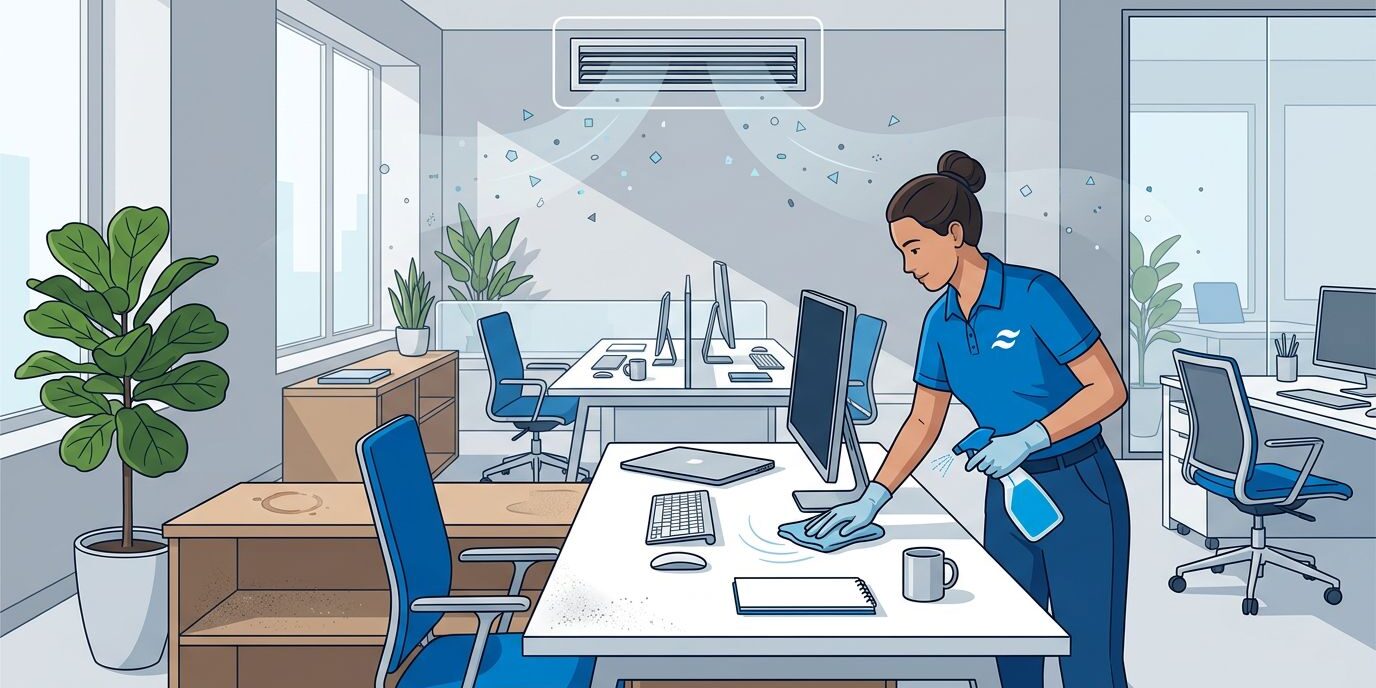
Poor cleaning can lower indoor air quality, but office air pollution also reflects ventilation, moisture, occupant activity, and building maintenance. Dust, mold-related particles, and chemical residues can become indoor air pollutants after collecting on surfaces. People and HVAC systems may then return them to the air.
Employees may notice musty odors, headaches, allergy symptoms, or throat irritation; business owners may see effects on comfort, attendance, productivity, or professional appearance. These concerns may involve health effects, including respiratory issues, but don’t confirm the cause of indoor air problems. A consistent cleaning plan helps control sources before larger building problems develop.
Key Takeaways
- Poor cleaning can leave dust, particulate matter, chemical residues, and moisture-related contaminants that affect office indoor air quality.
- Cleaning is only one part of source control; ventilation, HVAC maintenance, humidity, leaks, building materials, and occupant activities also matter.
- Musty odors, recurring symptoms, visible dust, and moisture complaints deserve investigation, but they don’t prove that poor cleaning caused the problem.
- Damp dusting, HEPA vacuuming, proper product use, carpet care, and regular attention to vents and grilles can help reduce indoor air pollutants.
- Air quality monitors and air cleaners may support an investigation or reduce some particles, but they don’t replace source correction, ventilation, or qualified building maintenance.
Why Poor Cleaning Affects Office Indoor Air Quality
A clean-looking office isn’t always a clean office. Settled indoor air pollutants can remain in overlooked areas. These include carpet edges, ceiling vents, return grilles, upholstery, and spaces behind furniture.
Dust and particulate matter don’t stay on surfaces
Dust contains soil, fibers, pollen, skin particles, dust mites, and other small materials. When routine cleaning misses these areas, normal movement can resuspend the particles and send them back into the air.
These settled indoor air pollutants can affect comfort, and their health effects vary with the type and amount present.
Foot traffic is one of the most common causes. Employees and visitors track outdoor soil through entrances, grind it into carpet, and disturb it again throughout the day. Chairs, carts, doors, and HVAC airflow can also move settled particles.
HVAC cycles and mechanical ventilation can redistribute dust through ventilation systems. Vents and return grilles are part of those ventilation systems and need regular attention.
The Environmental Protection Agency recommends damp dusting to keep settled dust from becoming airborne. Damp dusting reduces resuspension, while HEPA air filters or HEPA-filtered equipment can capture smaller particles. EPA guidance on indoor particulate matter provides additional cleaning recommendations.
Moisture creates biological contaminants
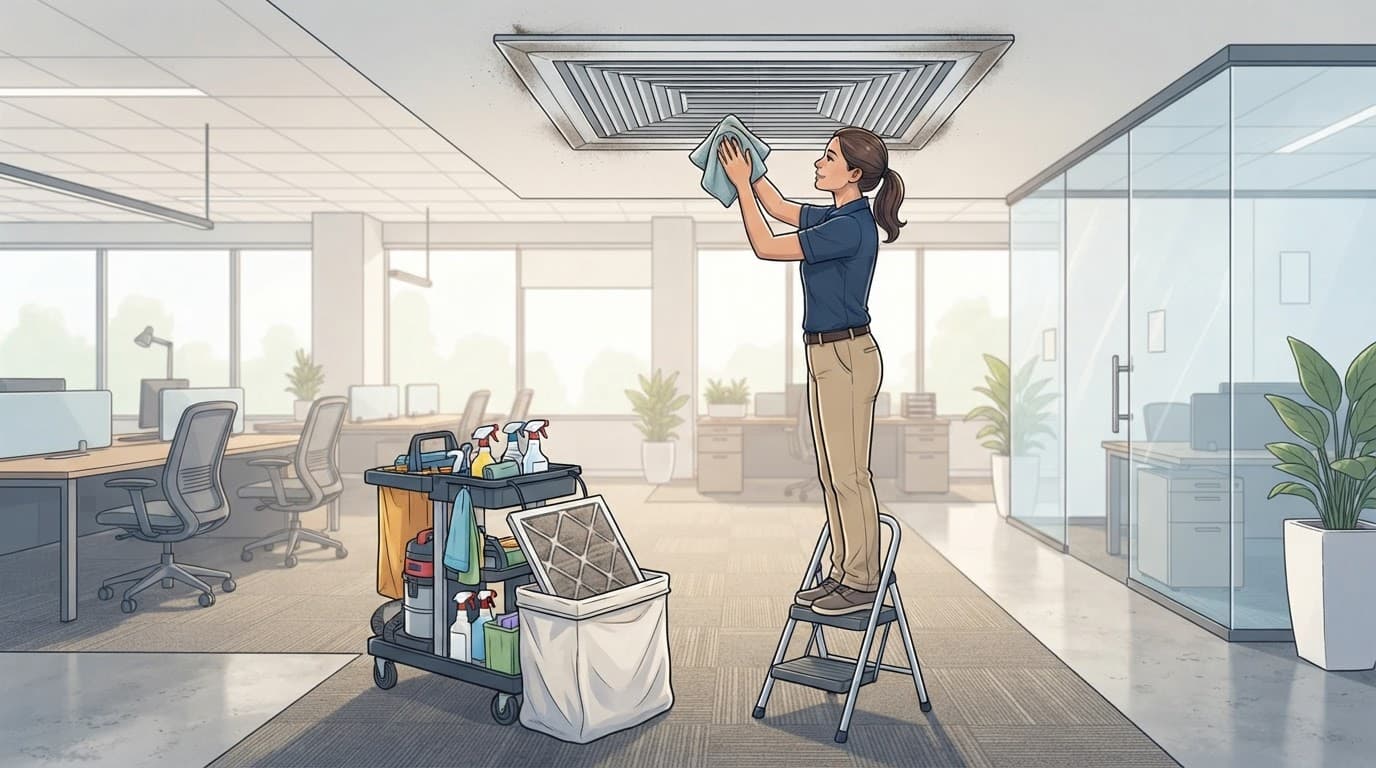
Water problems create a different type of risk. Air-conditioning condensation, plumbing leaks, wet carpet, roof issues, and storm-related moisture can support mold growth. That moisture can allow biological contaminants to spread when problems aren’t handled quickly.
A musty smell may be an early warning sign. Visible mold, damp flooring, stained ceiling tiles, or recurring humidity complaints deserve prompt attention.
An air quality monitor can track relative humidity during an investigation. It can’t identify a hidden leak or explain all indoor air problems.
Air cleaners may reduce some airborne particles, and optional air purification may improve filtration in certain spaces. Neither approach fixes a leak or removes the underlying moisture source. EPA guidance explains that mold control requires source control, including fixing the water problem and cleaning the affected area. Filtration alone can’t replace those steps.
Pollutants Linked to Cleaning Gaps
Poor office indoor air quality can reflect air pollution from several sources, rather than one dirty surface. Indoor air pollutants may come from dust, household products, combustion sources, tobacco smoke, moisture, and building materials. These sources can contribute to indoor air problems, and possible health effects vary by pollutant and individual.
An air quality monitor can help track trends, but it can’t prove a pollutant’s source.
Combustion sources can release carbon monoxide, a toxic gas. Ordinary dust doesn’t cause it, but this gas remains an important indoor safety concern.
Secondhand smoke, also called environmental tobacco smoke, is another indoor source. Tobacco smoke exposure has established serious health risks, including an increased risk of lung cancer. Poor cleaning doesn’t cause those tobacco-related risks.
Dust and particulate matter
Dust and related particulate matter are common indoor air pollutants and may be asthma triggers for some people. Carpet is useful, but it can hold soil, pollen, and fine particles when vacuuming is inconsistent. A quick pass over the center of a room may leave buildup along walls, under desks, near filing cabinets, and around reception areas.
Moisture creates a different concern, because it can support biological contaminants when leaks or damp materials aren’t addressed. High-traffic routes need special attention. Entrances, corridors, copy rooms, break rooms, and waiting areas often collect more debris than private offices. Entrance mats help, but they must be vacuumed and maintained. During Southwest Florida rain, tracked-in moisture and soil can increase the workload quickly.
Routine vacuuming should support, not replace, periodic carpet extraction. Deep extraction removes embedded soil that ordinary vacuuming cannot reach. It also helps protect carpet fibers from abrasive grit that can cause premature wear.
Air cleaners may reduce some airborne particles through filtration, but they don’t replace source control or regular cleaning.
VOCs from cleaning products
Cleaning products can release indoor air pollutants, including volatile organic compounds, or VOCs. These chemicals may come from cleaners, disinfectants, air fresheners, solvents, and other household products. Emissions can also come from floor finishes, furnishings, adhesives, and building materials.
Strong odors aren’t a sign that a space is cleaner. Poor dilution, excessive product use, and limited ventilation can increase chemical exposure and cause health effects such as eye, nose, and throat irritation. Some people may also experience headaches, nausea, or respiratory issues. If that smell lingers after a service, our guide to reducing chemical odors after office cleaning covers the ventilation, product, and surface steps to clear it.
The EPA’s VOC guidance recommends increasing ventilation when using products that release these chemicals. Ventilation systems should be maintained and checked, because poorly maintained ventilation systems may let emissions linger. Mechanical ventilation can help dilute emissions by increasing the air exchange rate. Never mix products unless the label gives clear instructions, and consider lower-VOC cleaning products for occupied offices.
Signs Employees May Notice
Indoor air problems often appear as comfort complaints before anyone identifies a clear source. Several pollutants, including dust and moisture-related contaminants, can cause similar health effects. Business owners should take repeated concerns seriously when several employees report similar symptoms in the same area.
Common short-term complaints
Employees may report symptoms and related health effects:
- Sneezing, coughing, or watery eyes
- Dry or irritated throat
- Headaches during the workday
- Musty, stale, or strong chemical odors
- Increased allergy or asthma symptoms
- Unusual dust on desks, shelves, or equipment
- Discomfort that improves after leaving the building
These symptoms don’t prove that poor cleaning is the cause. They do show that the office needs a closer review of indoor air quality and indoor air pollutants linked to dust, moisture, products, and ventilation.
The location and timing of complaints can provide useful information. If concerns are limited to one conference room, break room, or hallway, the source may be local, especially when ventilation systems or mechanical ventilation change air circulation. If complaints increase after cleaning, review product use and separate sources, including secondhand smoke, also known as environmental tobacco smoke.
When complaints keep returning
Recurring indoor air problems may point to conditions that surface cleaning can’t solve. A leaking air-conditioning line, wet carpet padding, dirty HVAC component, blocked return grille, or water-damaged ceiling tile may continue affecting the area after the floor is mopped. Damp areas can support biological contaminants, while carpet or upholstery may harbor dust mites.
Long-term exposure to indoor pollutants can produce health effects, including respiratory issues, and worsen reactions to asthma triggers. People with allergies, asthma, or other sensitivities may notice these effects sooner than others.
The OSHA indoor air quality overview recommends looking at ventilation, building conditions, and common workplace sources when indoor air complaints occur. An air quality monitor can show patterns in some measured conditions, but it can’t identify every indoor air pollutant or establish causation. Compare air quality monitor readings with room, time, cleaning, odor, and symptom records to make the investigation more useful.
HVAC Systems Can Spread What Cleaning Misses
An HVAC system doesn’t create all indoor air problems, but it can distribute one throughout a building. Ventilation systems may move particulate matter, odors, smoke, or biological contaminants through shared spaces. That may include particles from secondhand smoke and environmental tobacco smoke. That movement can spread indoor air pollutants, even when the original source is elsewhere. Mechanical ventilation controls building air movement, while natural ventilation depends on openings and weather conditions. Both can affect indoor air quality, but neither makes smoking acceptable indoors.
Occupants may experience different health effects from the same conditions, especially when particles act as asthma triggers.
Filters and vents need regular attention
A loaded filter can restrict airflow and reduce system performance. A dusty return grille can collect material that enters the air stream. Blocked vents may also prevent air from circulating as intended.
Replace air filters according to the equipment manufacturer’s instructions and the building’s maintenance plan. Filter efficiency must match the HVAC system. Installing a filter that is too restrictive can create airflow problems, even when it captures more particles. An air quality monitor can help track trends in humidity or particulate levels, but it doesn’t replace inspection or maintenance.
Cleaning crews should keep vents and grilles that serve ventilation systems free of dust without pushing debris into the system. HVAC technicians should handle internal equipment, coils, drain pans, and duct concerns when those areas require specialized work.
The EPA office building guide explains how ventilation, maintenance, and building operations affect comfort and conditions in the workplace.
Ventilation and humidity work together
Ventilation helps dilute indoor air pollutants and remove odors. It doesn’t replace source control. The pollutant source still needs to be removed or corrected. It supports a healthier balance when offices use cleaning products, printers, adhesives, or building materials that release emissions.
Relative humidity needs attention too. Excess moisture supports mold and mildew, while overly dry air can increase irritation and discomfort. Mechanical ventilation can help manage moisture in humid Southwest Florida buildings. Those ventilation systems, along with air-conditioning performance, condensation, and water intrusion, should be part of regular facility checks. Moisture-related conditions can produce different health effects among occupants, particularly those with sensitivities. A follow-up reading with an air quality monitor can help evaluate whether corrective work changed room conditions.
Air cleaners can help with particles, including some dust and spores. They don’t remove the cause of mold, and particle filters don’t capture every gas or VOC. The EPA guide to air cleaners explains why the right solution depends on the pollutant.
A Practical Office Cleaning Plan
A useful cleaning plan matches the building’s traffic, layout, floor types, operating hours, and occupant needs. A small private office and a busy medical facility shouldn’t receive the same schedule.
The schedule should reduce indoor air pollutants through consistent dust removal, moisture prevention, and product control. This supports better indoor air quality without treating cleaning as a substitute for building maintenance.
Daily and weekly basics
Daily service may include trash removal, restroom care, break room cleaning, entryway attention, high-touch surfaces, and visible spill response. Busy offices may need more frequent care in lobbies, kitchens, corridors, and shared work areas.
Weekly work should address the areas where dust builds slowly. This may include:
- Ledges, baseboards, door frames, and furniture edges
- Vents and accessible grilles
- Carpet edges and areas beneath movable furniture
- Conference room surfaces and shared equipment
- Interior glass, sills, and tracks when included in the scope
Damp dusting and HEPA vacuuming remove more particulate matter than quickly moving a dry cloth across a surface. The method matters as much as the schedule.
Periodic work prevents heavy buildup
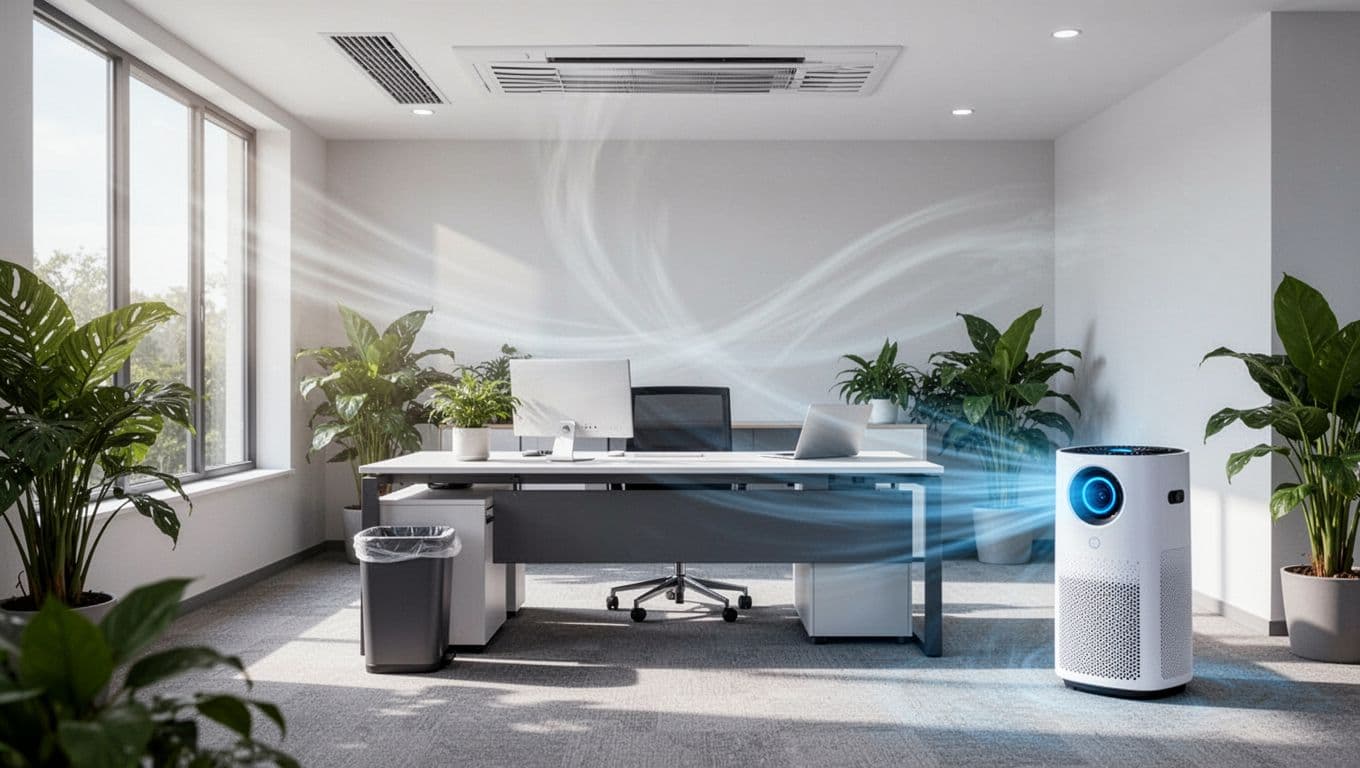
Some tasks shouldn’t be hidden inside a general cleaning promise. Carpet extraction, high dusting, upholstery care, floor machine work, interior glass, and post-construction cleaning often need separate frequencies and equipment.
Carpet extraction requires proper rinsing and drying. Regular carpet and upholstery care can also help limit dust mites. Returning furniture too soon or leaving moisture in the padding can allow biological contaminants to persist, create odors, and contribute to mold growth.
A clear plan should identify approved product categories, including neutral cleaners, disinfectants, and suitable household products. It should specify dilution instructions, labeling, storage, equipment, service areas, and inspection standards.
Following labels and storing household products securely helps prevent misuse. Low-emission methods and adequate drying can reduce chemical exposure and related health effects for occupants.
Cleaning crews should coordinate with building maintenance when work affects ventilation systems. They shouldn’t open or service internal HVAC components. Mechanical ventilation equipment requires qualified personnel, and the handoff should note air filters and unresolved maintenance concerns.
Air cleaners may offer added support in occupied areas, but they don’t replace routine cleaning or moisture correction.
Inspection standards should document service areas, visible dust, odors, moisture, and recurring indoor air problems. An air quality monitor can help check trends over time, but it isn’t a cleaning-performance guarantee or a diagnosis.
How Business Owners Should Investigate Air Problems
When employees report dust or discomfort, investigate the building before buying equipment. Improving indoor air quality starts with finding the cause, not just measuring symptoms. An air quality monitor can show indoor air quality trends, but it won’t identify pollutants or explain indoor air problems.
Start with sources and records
Inspect complaint locations for signs of indoor air pollutants, including visible dust, mold, moisture, damp carpet, clogged filters, blocked grilles, and strong odors. Review finishes, furnishings, and water-damaged building materials for biological contaminants. Check ventilation systems and mechanical ventilation for restricted airflow or poor operation. Review recent use of household products and cleaning chemicals for possible chemical exposure.
Check whether complaints occur after cleaning, during heavy rain, after HVAC cycling, or in rooms with limited airflow. If smoke is plausible, document secondhand smoke or environmental tobacco smoke near entrances, shared areas, or neighboring spaces.
Combustion sources require appropriate carbon monoxide alarms and qualified investigation, especially when toxic gas is suspected. Ordinary cleaning isn’t a substitute.
Keep records of possible indoor air pollutants and related conditions, and record measurements when appropriate:
- Complaint date, time, and location
- Odors, visible conditions, and relative humidity
- Cleaning completed in the area
- HVAC maintenance, air filters, and service visits
- Ventilation systems, room airflow, and operating conditions
- Leaks, condensation, or water damage
- Corrective work and follow-up inspections
- Air quality monitor readings, room conditions, and measurement times
Don’t treat purchased air cleaners as an automatic solution when a building condition remains unresolved.
If mold is visible, moisture is recurring, or employees report significant health effects, involve the building engineer or a qualified environmental professional. These conditions may involve biological contaminants, so record when and where concerns occur. Note possible respiratory issues without diagnosing employees or attributing health effects to a specific cause. Cleaning staff should not be expected to diagnose hidden building defects.
After corrective work, use an air quality monitor to verify whether readings and complaints improve.
Build a written cleaning scope
A written scope should list every room, task, frequency, product, and periodic service. It should also explain how missed tasks are reported, corrected, and documented.
Hours alone don’t show whether the required work was completed. Supervisor inspections, checklists, and time-stamped service records provide a clearer review of results.
For businesses in Fort Myers, Cape Coral, Bonita Springs, Naples, Lehigh Acres, and nearby communities, our team can assess the building and develop a cleaning plan that supports a cleaner, healthier workplace. Get a FREE Quote Today for a service estimate based on your space and actual needs.
Frequently Asked Questions
Can poor cleaning affect office indoor air quality?
Yes. Dust, tracked-in soil, chemical residues, and other settled pollutants can become airborne when people, furniture, or HVAC systems disturb them. However, indoor air quality also depends on moisture, ventilation, building maintenance, products, and occupant activity.
Can an air purifier fix office air quality problems?
Air cleaners may reduce some airborne particles, depending on the equipment and pollutant. They don’t fix leaks, mold sources, poor ventilation, dirty HVAC components, or chemical emissions at their source.
What signs may indicate an office air quality problem?
Common concerns include musty or strong chemical odors, sneezing, coughing, throat irritation, headaches, unusual dust, and symptoms that improve after leaving the building. These signs don’t identify a specific pollutant or prove that poor cleaning is the cause.
What should a business owner do when complaints keep returning?
Start by documenting the location, timing, odors, cleaning activities, HVAC conditions, humidity, leaks, and air quality monitor readings. Inspect likely sources and involve building maintenance or a qualified environmental professional when moisture, visible mold, significant health effects, or suspected combustion pollutants are involved.
Conclusion
Poor cleaning can leave indoor air pollutants, including dust, moisture-related contaminants, product emissions, and HVAC-distributed particles, affecting office indoor air quality. Routine cleaning helps, but the strongest results combine source control, filtration, moisture management, and ventilation systems, including mechanical ventilation.
When indoor air problems keep returning, take the pattern seriously because repeated complaints may have health effects. Check conditions with an air quality monitor and investigate indoor air quality; air cleaners help, but don’t replace source correction.