Southwest Florida offices deal with more than dust. Rain, sand, humidity, air-conditioning, and heavy daily traffic all affect floors, restrooms, break rooms, and shared surfaces. Choosing eco-friendly cleaning products, including nontoxic cleaning products with low-fragrance or low-VOC formulas, helps reduce packaging waste and unnecessary exposure to harmful chemicals. We still review product labels carefully, since green claims don’t mean every product is harmless.
The right products are only part of the solution. A sustainable cleaning approach also requires dilution controls, trained cleaning crews, reusable equipment, documented service standards, and a schedule that matches the building. These details help create a clean, healthy, and welcoming office in Fort Myers, Cape Coral, Bonita Springs, Naples, Lehigh Acres, and nearby communities.
Key Takeaways
- Choose eco-friendly cleaning products based on verified ingredients, performance, surface compatibility, certifications, and disposal requirements—not green marketing alone.
- EPA Safer Choice and Design for the Environment labels can help offices select safer general cleaners and targeted disinfectants, while fragrance-free and low-VOC formulas support indoor-air quality.
- Southwest Florida offices need cleaning plans that address rain, sand, humidity, moisture control, heavy traffic, and recurring mold or mildew risks.
- Refillable concentrates, cleaning tablets, bulk refills, reusable microfiber tools, and controlled dilution can reduce packaging waste when used correctly.
- A sustainable program also requires trained crews, approved product lists, written service standards, inspections, backup coverage, and clear billing for extra work.
Why Southwest Florida Offices Need a Thoughtful Cleaning Plan
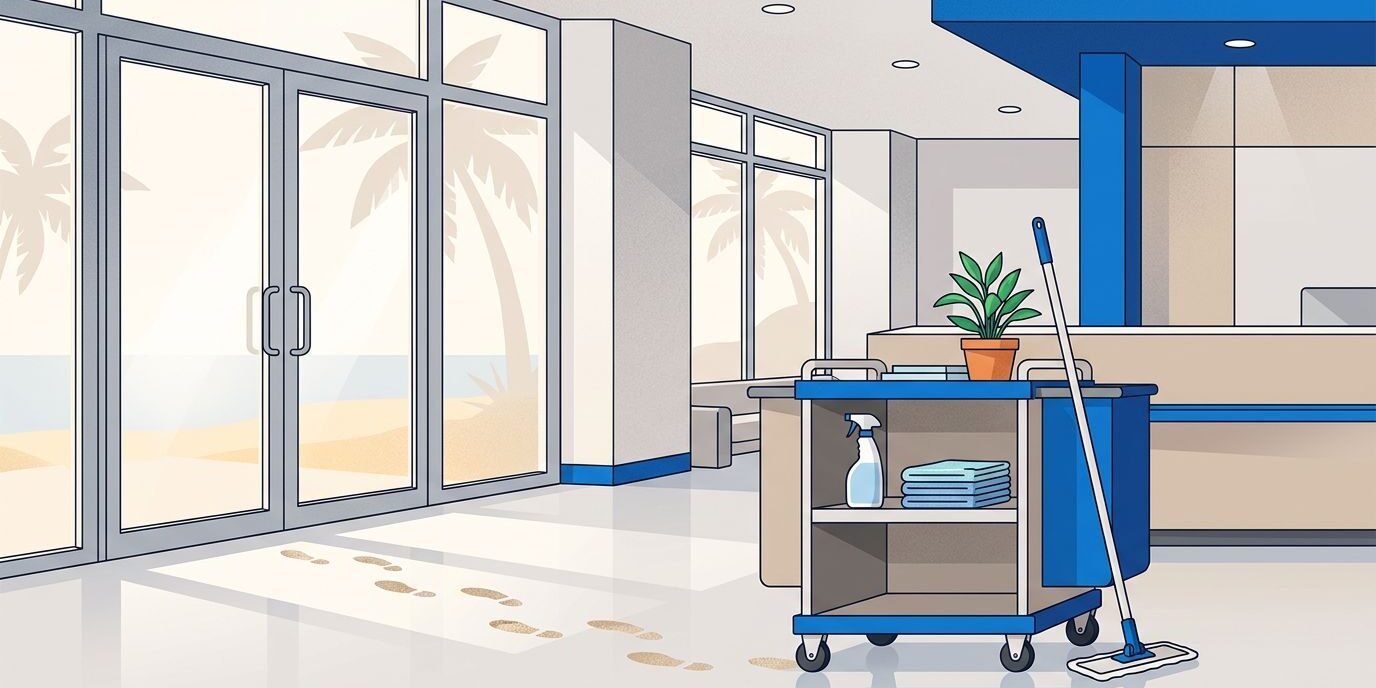
Local conditions can change the workload quickly. A rainy week may bring mud and moisture through the entrance, while sand and landscaping debris can wear down hard floors. High humidity can also create conditions where musty odors and mold return if moisture problems remain unresolved.
Indoor air quality matters
A strong scent doesn’t prove that an office is cleaner. Fragranced sprays, chemical air fresheners, disinfectants, solvents, and floor finishes can release volatile organic compounds, also called VOCs. These emissions may contribute to eye, nose, and throat irritation, headaches, nausea, or respiratory discomfort.
The Florida DEP’s indoor-air guidance recommends environmentally preferable cleaners and identifies chlorine bleach, phosphates, artificial dyes, imitation fragrances, and nitrilotriacetic acid as ingredients to avoid. Fragrance-free, low-VOC, and nontoxic cleaning products are often a better fit for occupied offices.
We also recommend avoiding plug-in air fresheners and a heavily scented surface spray. These products can mask odors without correcting their source and may make the workplace uncomfortable for employees and visitors. If a chemical smell lingers after a service, our guide to reducing chemical odors after office cleaning explains how to clear it.
Humidity changes maintenance needs
Cleaning products can’t replace moisture control. Leaking pipes, wet carpet, overflowing air-conditioning pans, and damp drywall need attention before any cleaner can solve the problem.
Entrance mats, frequent floor checks, and prompt spill removal help during heavy rain. Restrooms and break rooms also need proper ventilation and drying. A moisture-aware maintenance plan protects surfaces while reducing the need for aggressive chemical treatments later.
Choosing eco-friendly cleaning products for Southwest Florida offices
A product should meet three basic standards: it should clean effectively, support indoor-air goals, and create less unnecessary waste. A product that looks green but leaves residue, requires excessive use, or fails on common office soil isn’t a practical choice.
Start with recognized certifications
For general office cleaning, EPA Safer Choice is one of the clearest standards to check. The program reviews every ingredient, including ingredients used in small amounts, and considers human health, environmental safety, product performance, and packaging.
The EPA Safer Choice product directory allows purchasers to check approved products by category. Search results can include an all-purpose cleaner, glass cleaner, bathroom products, floor care solutions, laundry detergent, and stain remover. We recommend checking the exact brand and product name instead of relying on a manufacturer’s general claim.
Disinfectants and sanitizers require a different review. EPA’s Design for the Environment, or DfE, label applies to antimicrobial products that meet additional requirements. A disinfectant should be selected for a specific need, not used on every surface simply because the label sounds stronger.
A B Corp certified company can provide information about broader business practices. Leaping Bunny can address animal-testing policies. Both may be useful, but neither replaces verification of the product formula and its intended use.
Read the label and product information
Terms such as natural ingredients, plant-based, and biodegradable cleaning products can be helpful, but they aren’t enough by themselves. Biodegradability alone doesn’t establish performance, surface compatibility, or safe disposal.
Certifications, ingredient disclosures, and safety data help distinguish credible nontoxic cleaning products from unsupported claims. Also check dilution directions, storage instructions, and disposal guidance.
A practical office product specification should identify:
- The exact product name and SKU approved for use.
- The surfaces it can clean safely, and whether an approved surface spray is fragrance-free, low-VOC, and compatible with those surfaces.
- The required dilution and dispensing method.
- The required personal protective equipment and ventilation.
- The packaging and refill method.
A green label on a company isn’t enough. Approve the exact product and SKU that will be used inside the building.
The EPA’s guidance on identifying greener cleaners is useful when comparing marketing claims. We also recommend keeping an approved product list so staff members don’t bring unverified sprays into shared work areas.
Refillable cleaning products can reduce office waste
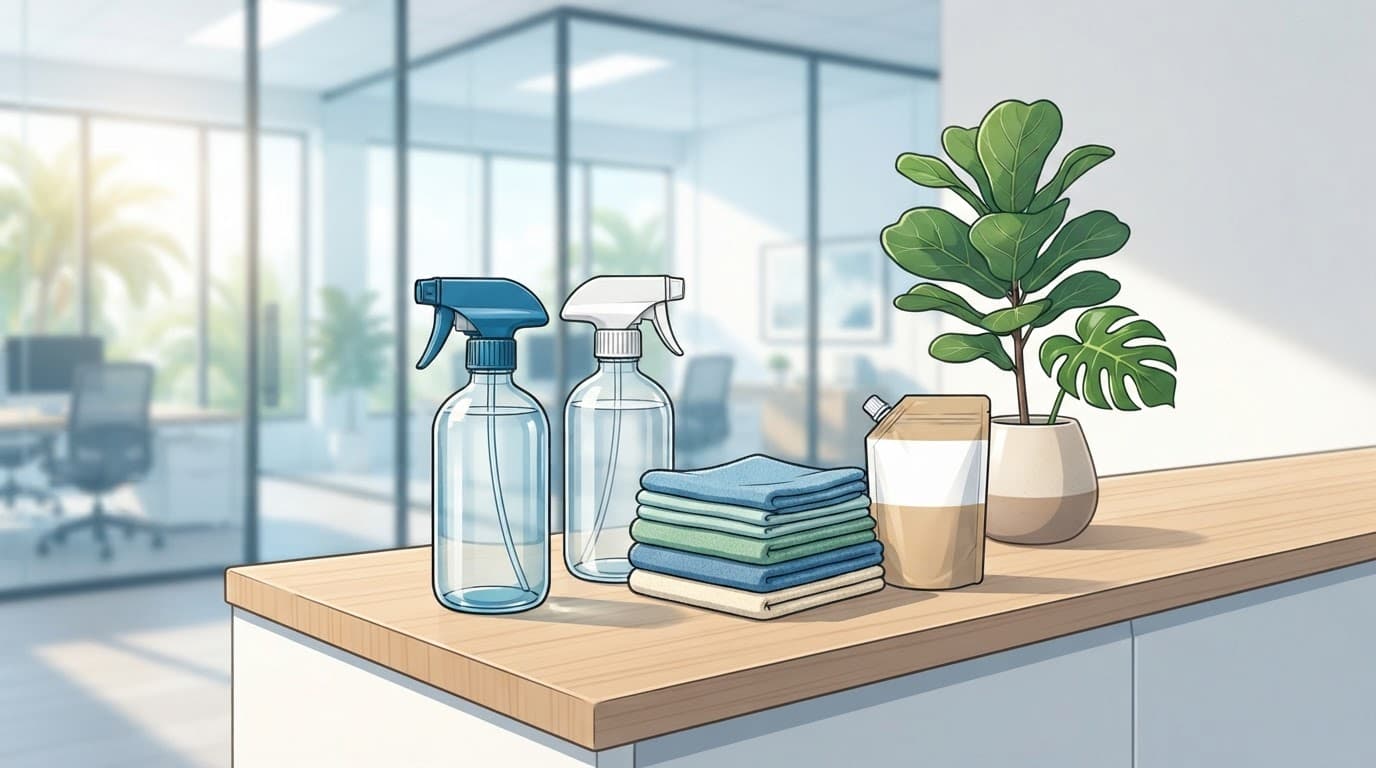
Ready-to-use cleaners are convenient, but they often transport large amounts of water in disposable plastic bottles. A cleaning concentrate may arrive in a small container and produce several ready-to-use bottles, reducing storage space, packaging, and shipping weight when used correctly.
Cleaning tablets can work with reusable bottles when the instructions support that use. Bulk refills may also reduce the number of containers purchased throughout the year.
The best format depends on the work:
| Product format | Best office use | Main consideration |
|---|---|---|
| Ready-to-use surface spray | Quick spot cleaning | Simple, but creates more packaging |
| cleaning concentrate | Routine janitorial service | Requires accurate dilution |
| cleaning tablets | Light daily surface cleaning | May not suit heavy grease or disinfection |
| Bulk refill | High-use offices | Needs safe storage and controlled dispensing |
We calculate cost per use rather than comparing package prices alone. Divide the product price by the number of ready-to-use bottles, gallons, or applications it produces. Include labor, dilution equipment, storage, and replacement bottles. Add reusable microfiber care, including laundry detergent. For stain remover, count applications, labor, and repeat work.
A lower-waste package isn’t automatically the better choice. If a tablet doesn’t remove the soil, staff may use extra product or repeat the task, which can undermine sustainable cleaning. Zero-waste cleaning is a practical reduction goal, not a claim that the office produces no waste.
Paper cartons, compostable packaging, and plastic-free packaging need careful handling, since they aren’t automatically recyclable or compostable in the local waste system. Biodegradable cleaning products still require appropriate use and disposal. Subscription services may simplify recurring refill orders, but assess excess packaging, delivery frequency, and actual office usage. Commercial composting rules differ between waste haulers and facilities, so check disposal instructions and local collection requirements before making that claim.
Natural ingredients for grease, grout, and glass
Natural ingredients must match the soil and surface for reliable results. Natural cleaning products aren’t universal solutions, and nontoxic cleaning products still require label compliance, surface testing, and proper use.
Plant-derived surfactants, including decyl glucoside and castile soap, help lift oils and food residue. Baking soda provides mild abrasion for some sinks, counters, and break room surfaces. Castile soap isn’t a universal cleaner for every office surface. Citric acid can help remove mineral film and water spots on acid-safe surfaces.
Break rooms need the right cleaner
Grease responds best to a product with effective surfactants and enough dwell time. Dish soap may handle light food residue or routine dishwashing, but it won’t replace a commercial degreaser. Spray the approved solution onto a cloth when possible, allow it to work according to the label, and wipe the surface before residue dries.
Baking soda can support light scrubbing, but it won’t replace a commercial degreaser on a heavily soiled range hood or kitchen surface. Microfiber cloths also help capture soil with less product and can be laundered for repeated use.
A vinegar cleaning solution may help with some mineral deposits and light odors. However, it isn’t a complete commercial disinfectant, and it shouldn’t be used on marble, limestone, or other acid-sensitive surfaces. Never mix vinegar with chlorine bleach.
Bathrooms require moisture control
For routine soil, some natural cleaning products and controlled agitation may work on tile and grout. An approved descaler can help with hard-water residue when the materials tolerate acidic products. Always follow the label and test an inconspicuous area first.
Mold and mildew require more than a stronger spray. The moisture source must be corrected, and affected areas need to be cleaned and dried properly. The CDC mold cleanup guidance recommends prompt drying and cautions against methods that spread spores into the air.
Small areas may be manageable with appropriate procedures. Recurring growth, soaked porous materials, HVAC contamination, or extensive water damage requires building maintenance or qualified remediation support. A green cleaner cannot correct a roof leak or wet wall cavity.
Building a sustainable cleaning plan
Product selection works best when it is part of a written cleaning scope. The scope should match the actual building, operating hours, traffic, floor types, restrooms, break rooms, and special areas.
Match products to tasks
Start with an inventory of all household cleaning supplies and commercial products currently used in the office. Group them by purpose, then remove duplicate products that perform the same task. The written scope should approve dependable routine options, list nontoxic cleaning products, and verify eligible choices through EPA Safer Choice. Unverified items should not enter the building.
The plan should identify products for:
- Desks, counters, conference tables, and shared equipment, with an all-purpose cleaner or surface spray for approved routine uses.
- Glass doors, sidelights, and interior windows.
- Restrooms, fixtures, floors, and dispensers.
- Break rooms, sinks, appliances, and food-contact areas, with dish soap where appropriate.
- Carpet, hard floors, tile, and specialty surfaces, with stain remover for approved textile spot treatment.
- Reusable microfiber cloths, mop heads, and equipment, with laundry detergent requirements for laundering and maintenance.
- Targeted disinfecting when a real need exists.
Dilution controls matter, especially for a cleaning concentrate. Approved dispensing and measurement procedures help prevent overuse, which creates residue, raises costs, and increases chemical exposure. Underuse can leave surfaces dirty and require repeat work. Our team follows product labels and uses the right tools for each surface rather than applying more chemical to compensate for an unsuitable method.
Measure results, not hours
A cleaner may spend the expected amount of time in an office and still miss required tasks. Quality should be checked against completed work, not time alone.
Digital checklists, supervisor inspections, and time-stamped records help identify recurring problems. Practical standards may include streak-free lobby glass at normal viewing distance, dry restroom floors, clean entry doors, stocked dispensers, clear walkways, and furniture returned to its original location.
Continuity also matters. Ask how the cleaning company handles sick days, staff changes, keys, alarms, training, and backup coverage. A reliable provider should have a correction process when an area is missed. The process should identify who receives the report, when follow-up occurs, and how the completed correction is recorded.
Billing and extra work should be clear before service begins. Confirm the service frequency, included tasks, specialty work, product responsibilities, cancellation terms, and charges for additional cleaning. For a customized cleaning plan tied to your building and schedule, Get a FREE Quote Today.
Frequently Asked Questions
What makes a cleaning product eco-friendly for an office?
An eco-friendly product should clean effectively, support indoor-air goals, and reduce unnecessary waste. Look for transparent ingredient information, recognized certifications, appropriate packaging, and clear instructions for dilution, surface use, and disposal.
Are natural cleaning products safe for every office surface?
No. Natural ingredients such as vinegar, citric acid, baking soda, and plant-derived surfactants each have specific uses and limitations. Always follow the product label, confirm surface compatibility, and test an inconspicuous area before routine use.
How can offices reduce cleaning-product packaging waste?
Concentrates, tablets, bulk refills, reusable bottles, and laundered microfiber tools can reduce packaging and shipping waste. The format should still match the task, since a product that performs poorly may require extra product or repeat cleaning.
Do eco-friendly products disinfect an office?
Not necessarily. Disinfectants should be selected for a specific need and should carry appropriate EPA registration or Design for the Environment approval when applicable. Routine cleaning products should not be treated as disinfectants unless the label supports that use.
How should Southwest Florida offices manage humidity and mold concerns?
Cleaning products cannot replace moisture control. Offices should address leaks, wet carpet, damp drywall, overflowing air-conditioning pans, and poor ventilation promptly, while recurring mold, HVAC contamination, or extensive water damage may require qualified remediation support.
A cleaner office with less waste
The most effective natural cleaning products are evaluated by their ingredients, performance, certifications, surface compatibility, and disposal requirements.
For Southwest Florida businesses, the strongest plan combines nontoxic cleaning products, low-VOC or fragrance-free formulas, reusable tools, controlled dilution, moisture prevention, and documented inspections. We can help offices in Fort Myers, Cape Coral, Bonita Springs, Naples, Lehigh Acres, and nearby areas create a dependable cleaning program that supports a healthier workplace and a professional appearance.