
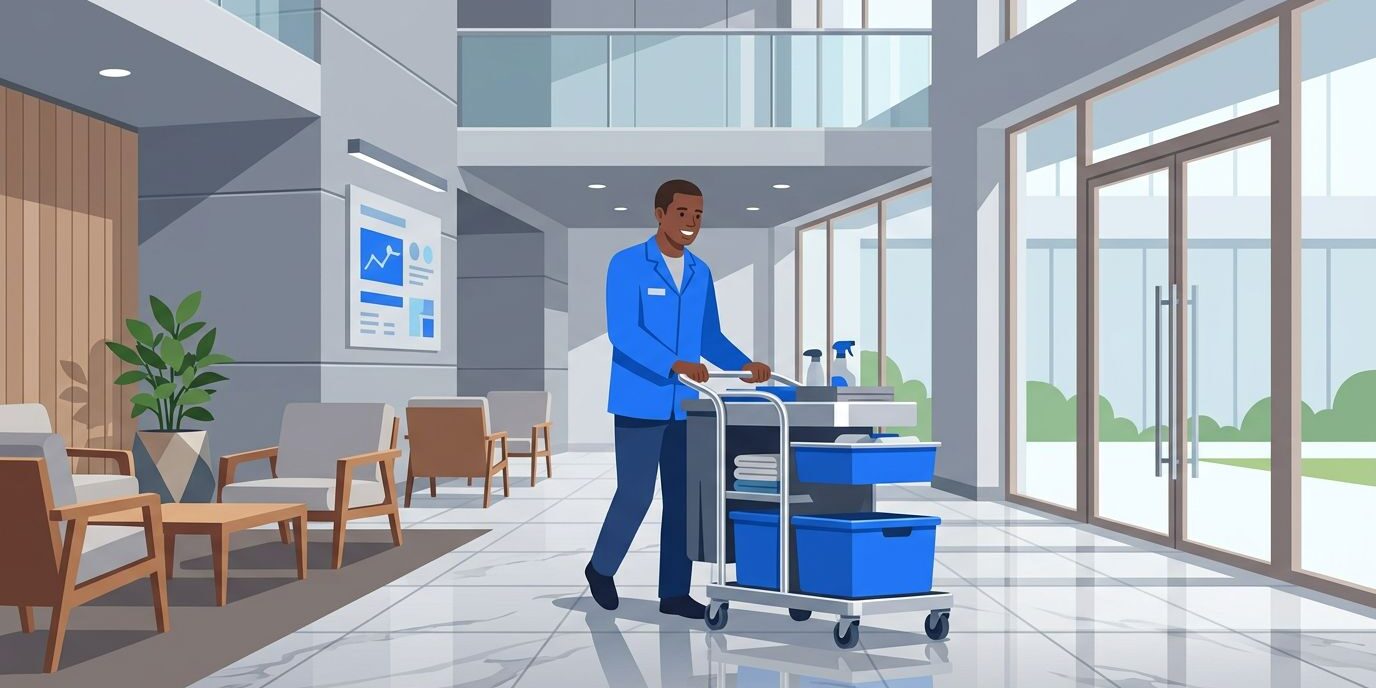
A building can look spotless at 8 a.m. and worn out by 11. One coffee spill, a full trash can, and a restroom out of paper towels can change how tenants, staff, and visitors feel about the whole place.
That is where day porter services come in. They do not replace the nightly janitorial services provided by your cleaning crew. Instead, they fill the gap between opening the doors and locking them again. If you are trying to keep building facilities clean, safe, and presentable all day, that difference matters.
Key Takeaways
- Daytime Coverage vs. Janitorial Reset: Day porter services are not a replacement for nightly janitorial crews; instead, they protect the nightly ‘reset’ by handling messes and maintenance tasks that occur during business hours.
- Proactive Facility Management: Having an on-site porter prevents minor issues like spills or empty restroom supplies from escalating into tenant complaints or safety hazards.
- Enhanced Building Impression: Consistent daytime upkeep signals to visitors, employees, and tenants that a building is well-managed, which boosts overall morale and professional perception.
- Scalable Service Plans: You do not always need full-time coverage; property managers should evaluate traffic patterns to determine if a full-day porter or a targeted, part-time shift best suits their specific facility needs.
Why day porter services matter before lunch
Most cleaning problems do not wait for after-hours service. They show up in real time, especially in high-traffic areas that show wear quickly while people walk through the lobby, use the restrooms, eat in break rooms, and track in dirt from outside.
A day porter is the person who catches those issues before they become complaints. They handle lobby maintenance by wiping down entry glass and picking up debris, while also performing restroom maintenance to restock supplies and keep shared areas from slipping downhill. By providing this essential facility maintenance, they ensure your building stays functional throughout the day. Think of it like having someone tend the fire instead of waiting until the whole room goes cold.

That kind of coverage is easy to underestimate until it is missing. Tenants notice smudged glass, patients notice untidy waiting areas, and employees notice when the restroom is not stocked by midday. Maintaining a professional appearance is vital in a multi-tenant building, where those small misses add up fast because no single occupant feels responsible for them, but everyone sees them.
There is also a practical side. Wet floors, overflowing trash, and restroom messes are not only ugly. They can create safety problems and pull your team away from other work. A porter handles the small stuff before it turns into a bigger interruption.
If your property gets steady foot traffic, daytime support is not a luxury. It is part of keeping the building under control.
Day porter services and janitorial services do different jobs
A lot of managers frame this as a choice: day porter or janitorial services. In most buildings, that is the wrong question. The better question is, “What needs attention during the day, and what can wait until night?”
After-hours cleaning is your reset. The evening team comes in after traffic drops, handles the heavier work, and gets the building ready for the next morning. Day porters protect that reset.
Night cleaning resets the building. A day porter protects that reset.
Here is the simplest way to look at it:
| Daytime cleaning and service type | Best time | Main focus | Common tasks |
|---|---|---|---|
| Day porter support | During business hours | Ongoing appearance and quick response | Lobby touch-ups, restroom checks, trash removal, spill clean-up, supply restocking |
| Janitorial services | After-hours cleaning | Full cleaning and next-day reset | Vacuuming, mopping, full restroom cleaning, break room cleaning, dusting |
| Combined coverage | Day and night | Consistent cleanliness all day | Visible upkeep plus deeper scheduled cleaning |
The takeaway is simple: one keeps things from falling apart, the other puts everything back in order.
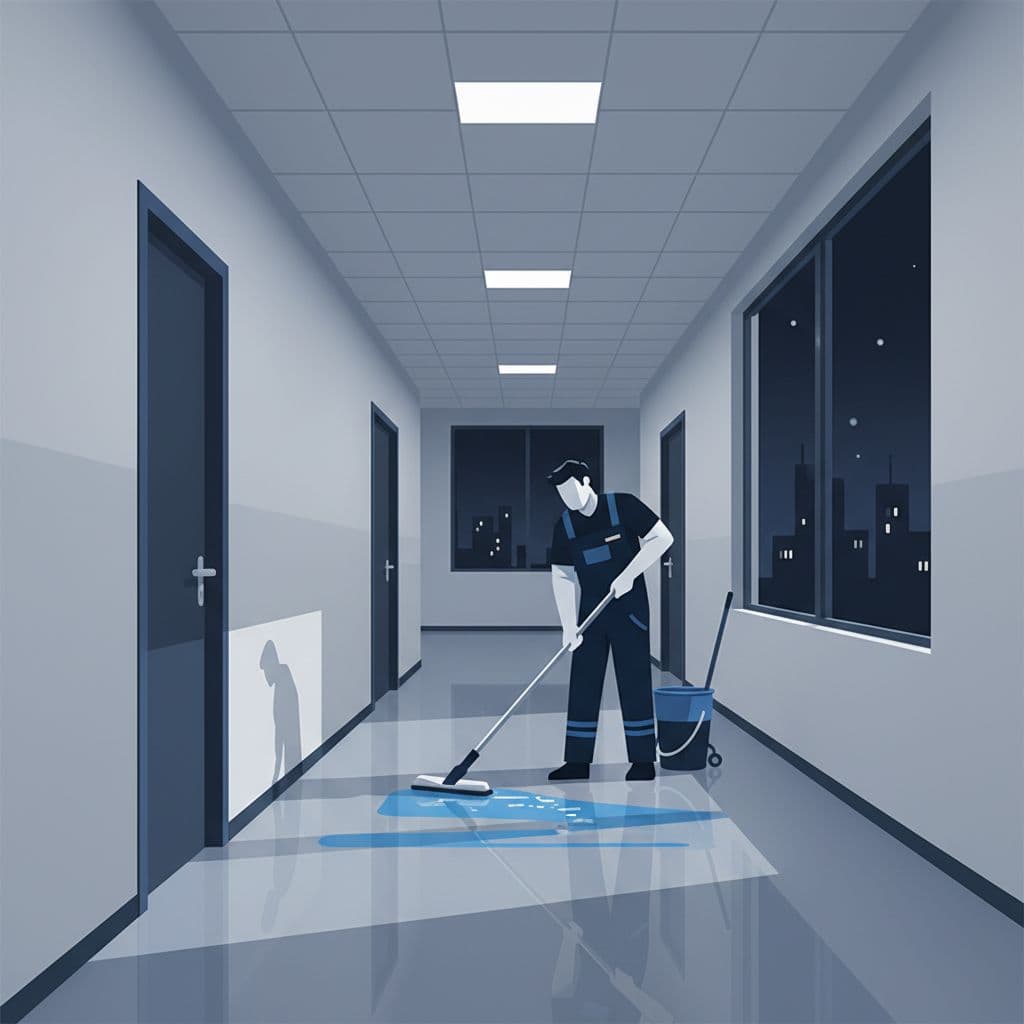
This matters even more in busy properties. A medical office cannot wait until 8 p.m. to address a restroom issue. A school hallway does not stay clean all day on morning prep alone. An office tower lobby can lose its polished look before the lunch rush is over.
So no, this is not an either-or setup for most facilities. It is a division of labor. One team keeps the day running clean. The other closes out the day the right way.
What a day porter handles during the day
The best day porter work is often half-visible. You notice the results more than the person doing it. The lobby looks sharp. Restrooms stay stocked. Trash does not pile up. Floors do not get grimy by mid-afternoon.
Typical duties for a cleaning technician include monitoring entrances, elevators, hallways, conference rooms, break areas, and restrooms. They clean high-touch surfaces, remove litter, wipe surfaces, and handle professional spill response. In some buildings, they also help with light exterior touch-ups around entryways, especially where rain, leaves, or tracked-in debris collect.
That said, a day porter is not usually there to do every deep-cleaning task on the schedule. Full floor care, detailed restroom sanitation, carpet extraction, and larger project work often stay with the janitorial crew. That is an important line to keep clear when you are building a service plan.
The real value is timing. Through consistent sanitization and frequent supply restocking, a mess handled in five minutes becomes a non-event. The same spill left for an hour becomes a complaint, a safety issue, or both. Daytime coverage turns reactive property management into something steadier.
It also improves the experience for the people inside the building. Cleaning that happens in plain sight sends a message. It says the property is looked after. It says details matter. That is good for employee morale, tenant confidence, and visitor impressions, even if nobody says it out loud.
If people are seeing a problem before your staff does, you probably need better daytime coverage.
Which buildings benefit most from on-site daytime support
Not every building needs a full-time porter five days a week. However, plenty of high-traffic facilities need some level of daytime attention, even if it is only during peak traffic hours.
Office buildings are a clear fit, especially multi-tenant properties with shared lobbies, restrooms, and break areas. Medical and dental facilities also benefit because cleanliness is about more than just appearance in those settings. Waiting rooms, touchpoints, and restrooms require consistent common area upkeep while the facility is open to the public.
Schools, churches, retail spaces, hotels, banks, and auto dealerships often face similar challenges. People come and go throughout the day, and messes build in waves. Standard commercial cleaning alone often cannot keep up with this constant flow of foot traffic.
Florida properties have another specific concern. Rain, humidity, and tracked-in sand can make entryways and common areas look worn very quickly. Proactive facility maintenance is a priority in this climate, as a porter can stay ahead of those traffic patterns instead of letting dirt settle in until the night crew arrives.
The question is not whether a building gets dirty during business hours, because it inevitably does. The question is how visible that mess becomes before someone steps in to address it.
How to choose the right plan for your property
Start with traffic, not square footage. A modest office with constant visitors may need more daytime support than a larger building with light foot traffic. Watch when complaints come in. Look at restroom usage, lobby traffic, weather exposure, and how often shared spaces get hit during the day.
Then get clear on coverage. Some properties need a porter on-site all day. Others do well with a shorter shift that covers morning rush, lunch traffic, and late afternoon touch-ups. When budgeting for these services, you can often negotiate an hourly rate or a fixed rate depending on the total contract value and the scope of work required. The point is to match service hours to the way your building actually behaves.
A good provider should ask smart questions rather than push a one-size-fits-all package. When you are hiring day porters, look for a licensed, insured, and bonded company with supervised crews and experience across the kinds of facilities you manage, whether that is medical, office, retail, school, or hospitality space.
If you are weighing options for a commercial property in Southwest Florida, it is worth talking through the schedule before you lock anything in. You can Get a FREE Quote Today and map out a plan that fits your traffic, your tenants, and your hours.
The right setup feels boring in the best way. Problems get handled fast and common areas stay presentable. By providing reliable operational support for the building’s staff, a porter ensures that your team stops chasing paper towel refills, mystery spills, and the ongoing maintenance of bathroom fixtures.
Frequently Asked Questions
Do I still need nightly janitorial services if I hire a day porter?
Yes, you still need nightly janitorial services to perform deep cleaning and facility resets. A day porter handles quick-response tasks and ongoing maintenance during business hours, while the nightly crew executes the heavy-duty cleaning required for the next day.
What are the most common tasks performed by a day porter?
A day porter typically focuses on high-traffic areas, including lobby maintenance, restocking restroom supplies, clearing trash, wiping down touchpoints, and performing immediate spill response. They act as the ‘eyes and ears’ of the building to keep shared spaces clean throughout the day.
How do I know if my building needs a day porter?
If your building’s cleanliness noticeably degrades between your morning opening and your evening closing, you likely need daytime support. If you find your staff frequently dealing with restroom issues, lobby debris, or safety hazards during business hours, a day porter can help prevent those interruptions.
Are day porter services a good investment for small buildings?
Yes, if your building experiences high foot traffic, it is a worthwhile investment regardless of square footage. A smaller space with constant visitors can look just as worn as a large facility, and daytime support ensures that the professional appearance of your building is maintained during peak hours.
Conclusion
A clean building does not stay that way on goodwill alone. It stays that way when someone is there to catch the messes that happen between opening and closing. This includes essential tasks like routine disinfection services that keep your high-traffic areas safe and hygienic throughout the day.
That is why day porter services make sense for so many properties. Night janitorial work provides the necessary reset, but daytime support keeps your facility from losing its professional appearance before the day is half over.
If your building looks good in the morning but struggles by lunch, the gap is not hard to spot. You do not need more theory. You need to fill a custodial position to ensure you have the consistent day porter services required to maintain a spotless environment at the hours that count.