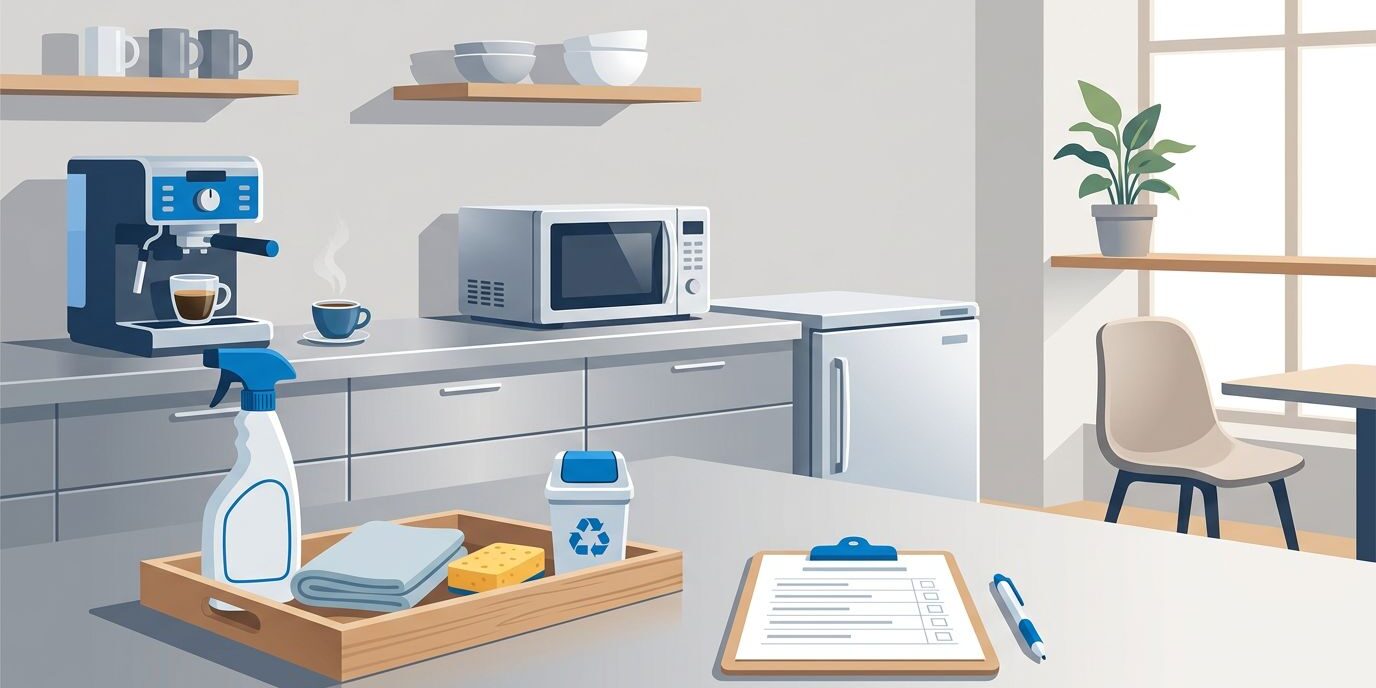
Shared breakrooms can turn messy faster than most offices expect. A coffee spill, a forgotten lunch, and one overfull trash can are enough to throw off the whole space.
To maintain professional standards, we suggest using an office kitchen cleaning checklist to ensure shared food areas remain hygienic and inviting. While a residential approach might suffice for small teams, many managers prefer adopting a commercial kitchen cleaning checklist as a baseline to ensure high standards of sanitation in busy corporate spaces. The right routine keeps the room presentable, cuts down on odors and clutter, and makes the breakroom easier to manage all week long. Simple plans work best, so we start with what gets cleaned, how often, and who owns each task.
Key Takeaways
- Shared breakrooms require daily attention on high-touch surfaces, rather than just a quick trash removal.
- An effective office kitchen cleaning checklist separates daily, weekly, and monthly tasks to ensure no maintenance item is overlooked.
- Establishing clear standards for cleaning sinks, microwaves, fridges, and counters makes it easier to inspect the workspace for hygiene and order.
- The most successful cleaning schedule is built to match specific office traffic, total staff size, and actual usage patterns rather than guesswork.
What belongs on a shared breakroom checklist
An effective breakroom checklist should cover every surface people touch and every spot that holds food or collects debris. This includes tasks such as the need to wipe down countertops, sanitize door handles, and manage areas that collect crumbs, spills, or odors. A comprehensive list should also address sink basins, faucet handles, tables, appliance fronts, trash cans, and the floor surrounding the coffee station.
Shared kitchen guidance from the CCOHS food and kitchen hygiene guide aligns with essential health and safety regulations, helping teams maintain organized work areas and control moisture. When implementing a routine, it is important to incorporate HACCP guidelines to prevent cross-contamination while using appropriate cleaning chemicals to sanitize food prep areas effectively. Following a broader kitchen hygiene best-practices checklist is also useful when establishing a routine that covers daily, weekly, and periodic tasks without guesswork.
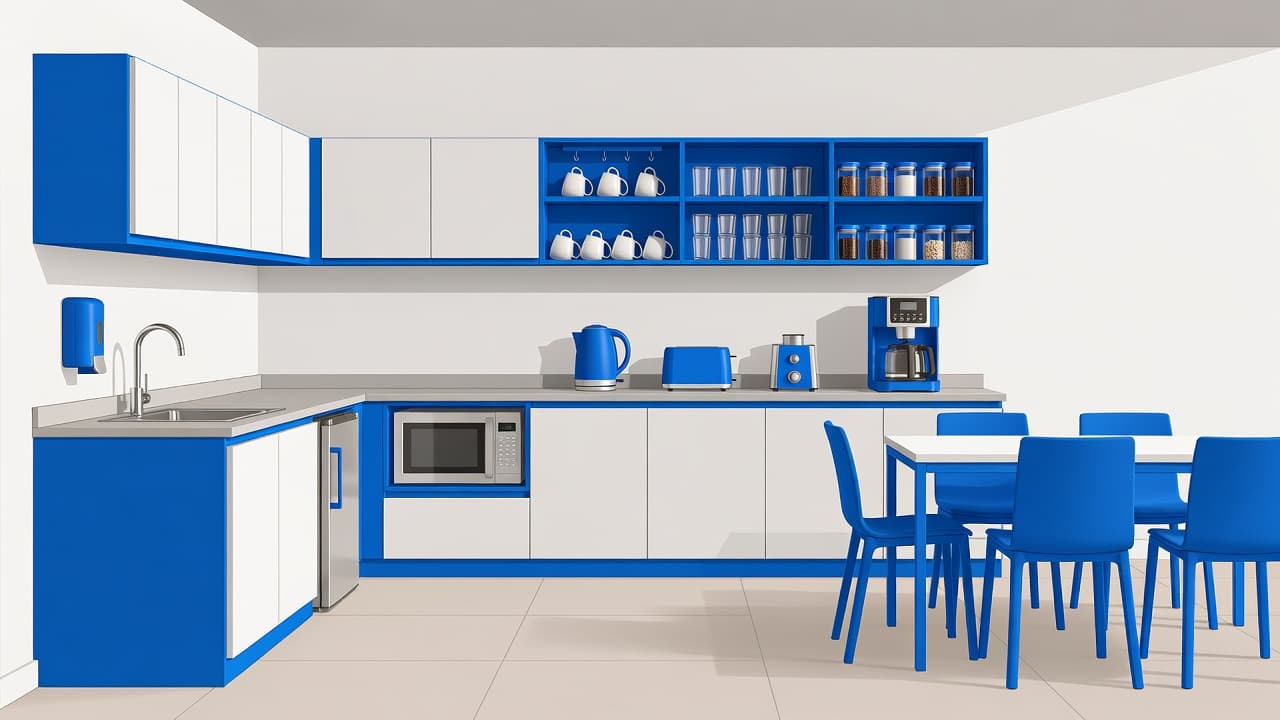
A useful checklist also defines what does not count. Storage closets, locked cabinets, and areas nobody uses should remain out of the scope. This keeps the maintenance work focused and makes the overall schedule easier for staff to follow.
Here is a simple way to sort the tasks by frequency.
| Frequency | What we cover | Notes |
|---|---|---|
| Daily | Counters, sink, faucet, microwave handle, coffee station, trash, floor spots | Best for busy offices |
| 2 to 3 times per week | Floors, fridge handles, table surfaces, appliance fronts, restocking basics | Works for steady staff |
| Weekly | Inside fridge touch points, cabinet fronts, baseboards, supply reset | Good for smaller teams |
| Monthly | Deep clean under appliances, microwave interior, descaling, detailed floor care | Helps prevent odor and buildup |
A breakroom is not truly clean just because the trash is removed. It is clean when people can walk in, use the space, and not have to work around sticky surfaces or stale smells.
Daily cleaning tasks that prevent buildup
Implementing daily cleaning tasks is the most effective way to keep a shared breakroom under control. When employees skip these small responsibilities, the room begins to look worn and unhygienic before the week is over. Consistent daily cleaning tasks ensure that the space remains professional and welcoming.
The daily list should focus on high-traffic zones. You must wipe down countertops and sanitize food prep areas to keep surfaces hygienic. It is essential to clean and disinfect the sink area, ensuring it is cleared of food scraps and left dry. Because microwaves are used constantly, their doors, buttons, and handles are considered high-touch surfaces that require regular attention. Similarly, staff should sanitize door handles and sanitize light switches to prevent the spread of germs and reduce the risk of food-borne illnesses. Coffee stations also need a thorough cleaning, especially around the drip tray, sugar area, and counter edges, where you should clean and disinfect these spots to maintain a tidy look.

Photo by Matilda Wormwood
Trash removal is equally critical. When you empty trash receptacles and replace trash liners, you prevent odors and the feeling of neglect. Maintenance should also sweep and mop floors to remove crumbs and spills, particularly in the high-traffic zones near the refrigerator and trash cans. Additionally, ensure that paper towel dispensers, soap, and hand sanitizer are stocked before they run out.
Shared towels should be handled with care to maintain proper hygiene. Using paper towels or relying on air-drying keeps the sink area cleaner than using communal cloth towels. Following these simple rules helps the entire office kitchen stay fresher between professional cleanings.
Weekly and monthly tasks that keep the room fresh
Weekly and monthly work is what stops a breakroom from sliding into that dull, tired look. These tasks take a little more time, but they save time later. They also protect surfaces from stains, sticky buildup, and lingering odors.
Your weekly cleaning checklist should include the inside of the microwave, the outside of the refrigerator, cabinet fronts, and table legs. To ensure a thorough result, this weekly cleaning checklist also requires teams to sweep and mop floors, wipe down countertops, empty trash receptacles, and replace trash liners. If the office uses a shared fridge, shelves may need a quick inspection for spills or old food, as a fridge that gets ignored too long turns into a problem fast.
Monthly maintenance tasks go deeper. That is when we clean under appliances, detail the baseboards, wipe high shelves, and handle floor care more thoroughly. This is also the ideal time to focus on kitchen equipment maintenance, such as descaling coffee machines and checking grease traps or drain catchers for hidden buildup. If the breakroom has glass, stainless steel, or polished fixtures, use this time to clean and disinfect those surfaces to maintain a professional appearance.
The right frequency depends on traffic. A small office with light use may do well with weekly detail work and a monthly deep clean. A standard office with steady staff often needs service two to three times per week. Busy open-plan offices may need attention three to five times per week, especially if lunch traffic is heavy.
If nobody owns the coffee station, it becomes everybody’s mess and nobody’s task.
How to build the schedule around your office
The best schedule reflects the office you have now, not the office you had two years ago. Hybrid work, shared desks, and changing headcounts all affect how often the breakroom gets used. That means the checklist should be built around real traffic rather than a guess. To stay in compliance with health inspection standards, you must ensure that your cleaning frequency aligns with the actual intensity of use in the kitchen.
- Measure the cleanable space, and count only the areas the crew actually services. Storage rooms and locked cabinets do not belong in the count.
- Match frequency to use. A busy office needs more visits than a low-traffic suite, and high-touch areas require the most frequent attention.
- Define extra work before service starts. Fridge clean-outs, cabinet interiors, and deep floor work should be agreed upon early rather than added later as a surprise.
- Decide how continuity will work. Some offices prefer the same crew every visit, while others are fine with a regular rotation. Either way, the system should be consistent.
When the same team returns, they spot repeat problem areas faster. If your internal staff struggles to maintain this rhythm, it may be time to hire professional cleaning services to ensure the space remains sanitized and organized. Whether you manage the team in-house or hire outside help, the checklist should make the job easy to follow.
We should also keep the scope tied to the schedule. If the breakroom needs a daily wipe-down but only gets a weekly visit, the plan is too light. If the room stays clean with two or three visits per week, there is no reason to pay for more.
When the checklist should become a service scope
A checklist is useful on its own, but it works even better when it becomes a clear scope of work. That transition provides a cleaner handoff, a more predictable schedule, and fewer surprises when the office gets busier.
This is also where pricing stays transparent. When the building size, foot traffic, and specific tasks like how often to sweep and mop floors are defined upfront, it is much easier to compare quotes and avoid fuzzy estimates. The scope should clearly spell out what gets cleaned, the frequency of those tasks, and what counts as extra work.
If the breakroom standards keep slipping or the list of needs keeps growing, it may be time to invest in deep cleaning services. If the workload becomes too much for your team to handle in-house, consider hiring professional cleaning services to maintain the space. We can Get a FREE Quote Today and build a maintenance plan around the room your office actually uses.
Frequently Asked Questions
How often should we update our office kitchen cleaning checklist?
You should review your checklist at least every six months or whenever your office headcount or hybrid work patterns change significantly. Adjusting the schedule ensures you aren’t over-servicing low-traffic zones or neglecting areas that have become high-use hotspots.
Can employees handle these cleaning tasks, or do we need a professional service?
Employees can manage daily surface wipes and basic trash removal if expectations are clearly posted and supplies are accessible. However, professional cleaning services are recommended for deep-cleaning tasks, descaling appliances, and maintaining floor hygiene to ensure consistent health and safety standards.
What is the most important part of an office kitchen cleaning routine?
The most critical element is consistency in high-touch areas like sink handles, microwave buttons, and coffee stations. Keeping these spots sanitized daily prevents the buildup of germs and ensures the space remains inviting for all staff throughout the work week.
How do we handle food left in the shared refrigerator?
It is best to establish a “Friday afternoon clear-out” policy where any unmarked or expired items are discarded by the end of the week. Including this as a recurring item on your weekly checklist prevents unpleasant odors and helps maintain an organized and hygienic appliance.
Conclusion
A shared breakroom is easier to manage when the cleaning process is simple, specific, and tied to actual usage. Counters, sinks, appliances, trash bins, and floors all deserve a dedicated place on your maintenance schedule.
When you establish clear standards and keep the routine steady, the facility looks better and functions more efficiently. The real value of a consistent office kitchen cleaning checklist is that it eliminates guesswork, prevents unpleasant surprises, and creates a hygienic space for every employee. To maintain a fully healthy workplace, remember that these high standards should extend to other shared facilities as well. Implementing a comprehensive restroom cleaning checklist alongside your kitchen plan is an effective way to ensure your entire office remains spotless, welcoming, and safe for everyone.