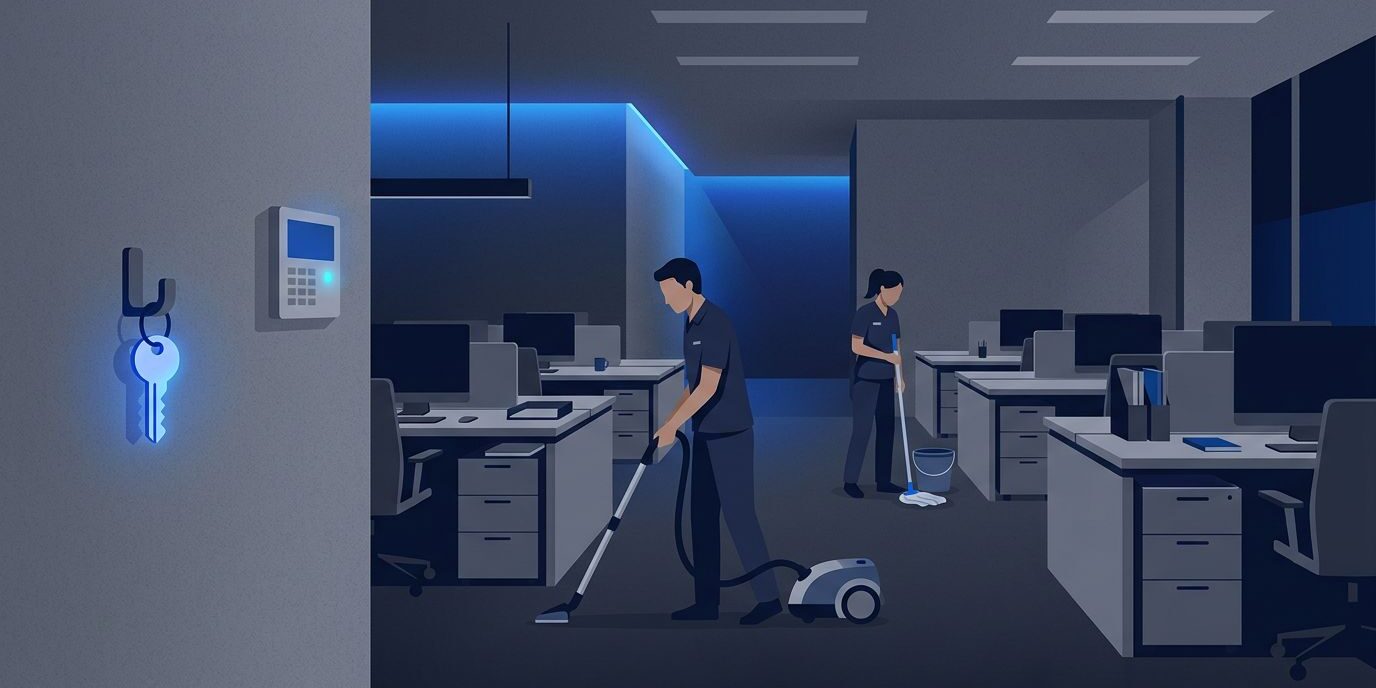
Scheduling after-hours office cleaning is an excellent way to maintain a pristine environment while avoiding daytime cleaning disruptions that can interfere with your team’s focus. By shifting maintenance tasks to the evening, you ensure that vacuums, mops, trash removal, and restroom servicing happen when the office is empty. However, a professional crew can only work efficiently when the workspace is properly prepared for safe and reliable access.
Small preparation steps protect confidential information, reduce delays, and help your chosen commercial cleaning services team complete the agreed scope of work. To ensure a seamless experience, focus on access protocols, building security, personal item management, and clear communication before the first evening visit occurs.
Key Takeaways
- Before service begins, confirm access, alarm procedures, keys, emergency contacts, and overall security protocols.
- Desks, documents, electronics, and personal items need protection before cleaners arrive.
- A written custom cleaning plan should identify rooms, tasks, frequencies, and extra services.
- Clear communication helps us handle missed items, special requests, schedule changes, and building issues related to overnight cleaning.
- A short review after the first few visits helps improve the cleaning schedule before problems grow.
Confirm Access and Building Security and Security Protocols Before Cleaning Begins
Access is one of the first details we need to settle. Overnight cleaning often takes place when office employees, supervisors, and building managers have already left. If the crew cannot enter the property, the service may be delayed or missed. Establishing clear security protocols early on ensures that the cleaning team can perform their duties without compromising the safety of your facility.
We should decide exactly how cleaners will enter and exit. Options may include a key, access card, keypad code, security desk check-in, or a lockbox. Each method needs clear instructions. If the building has several entrances, we should identify the correct door and explain which areas are restricted.
Alarm procedures also need to be written down. The cleaning company should know whether the alarm is armed automatically, who can disarm it, and which contact should receive an alert. We should not rely on verbal instructions given during a busy daytime conversation. A short written procedure is easier to follow during a late-night service.
The same applies to elevators, parking areas, loading doors, and shared building spaces. We should explain whether cleaners may use a freight elevator, where supplies can be stored, and which doors must remain locked. If the office is located in a multi-tenant building, building management may require insurance documents, staff names, or access forms before work begins.
Our security instructions should include:
- The authorized entry point and exit point
- Key, badge, or keypad procedures
- Alarm instructions and emergency contacts
- Areas the crew may not enter
- Instructions for doors, windows, lights, and thermostats
- Parking or loading requirements
- The process for reporting a lost key, damaged item, or security concern
Businesses that handle private records should also review access expectations. The Occupational Safety and Health Administration’s housekeeping guidance covers safe work areas, clear walkways, and proper control of common workplace hazards. By maintaining these health and safety standards, a clean office will also remain a secure office.
Prepare Desks, Documents, and Technology
A cleaning crew needs open surfaces and clear floors to clean properly. Personal belongings, stacks of papers, cables, and small office equipment can slow the work or prevent cleaners from effectively sanitizing high-touch surfaces. By maintaining a tidy workspace, you also boost overall office productivity, as a clutter-free environment allows employees to focus better when they return the next day.
We should place confidential paperwork inside locked drawers or cabinets before leaving. Documents with client information, employee records, financial details, or medical information should not remain exposed on desks overnight. The cleaning company may have strong privacy policies, but office managers still need to control sensitive materials before service starts.
Electronics deserve careful preparation. Computers, monitors, printers, phones, and other devices should stay in their normal locations unless the cleaning scope includes specific dusting instructions. We should not ask cleaners to unplug equipment, move heavy devices, or handle delicate technology without written approval.
Loose cables should be secured where possible. Floor lamps, chargers, bags, boxes, and personal items should be moved away from walking paths. This helps cleaners reach baseboards and floors while reducing trip hazards. The Environmental Protection Agency’s Safer Choice program also provides useful information about cleaning products and safer chemical choices for workplaces.
We should tell staff what they need to do before leaving. A short office policy can include these instructions:
- Remove food, drinks, and personal items from desks.
- Store confidential documents and lock file cabinets.
- Place dishes in the kitchen or dishwasher.
- Clear floors around desks and workstations.
- Report fragile items or areas that need special care.
- Turn off personal appliances unless the building requires them to remain on.
Shared desks need extra attention. In a hybrid office, employees may leave supplies, notebooks, headsets, or personal devices in common work areas. A clear-desk rule makes after-hours cleaning easier and gives the crew access to surfaces that receive frequent use, ultimately helping to maintain a polished, professional environment for everyone.
We should also label equipment or rooms that require special handling. For example, a small note in a supply closet can identify a floor machine that should not be moved. Clear instructions prevent confusion and protect office property.
Organize Kitchens, Restrooms, and Shared Spaces
Kitchens and restrooms often require more preparation than private offices. These spaces receive consistent traffic and can accumulate food waste, spills, paper products, and odors throughout the business day. To maintain a hygienic environment, prioritize these areas for professional disinfection services to ensure surfaces are properly sanitized.
Before the cleaning crew arrives, remove perishable food from desks, conference rooms, and shared refrigerators. Expired items can create unpleasant odors and attract pests. If refrigerator cleaning is included in your contract, staff should take home personal items or place them in an approved storage area.
Dishwashers, coffee stations, sinks, and counters should be left accessible. Confirm whether the cleaning plan includes appliance exteriors, microwaves, and cabinet fronts, or if it is limited to countertops and floors. Clearly defining this scope before service begins prevents misunderstandings, as the office staff may expect a detailed deep clean when the contract only covers routine surface care.
For professional restroom cleaning, establish a clear supply process. Decide whether your company provides toilet paper, hand soap, paper towels, liners, and other consumables. If the cleaning company supplies them, the agreement should specify the products used and the restocking procedure. If your office provides them, ensure there is enough inventory stored in a clearly labeled area.
Shared spaces also require a dedicated plan. Conference rooms, reception areas, break rooms, copy rooms, hallways, and waiting areas often demand different tasks. For example, a reception area may require dusting and vacuuming every visit, while interior glass or high dusting might only be scheduled monthly or quarterly.
Cleaning frequency should match actual traffic levels. A small office with limited visitors may only need weekly maintenance, while a standard office with a consistent staff presence might require service two or three times per week. Busy open-plan offices often need more frequent attention to trash, floors, shared desks, kitchens, and high-touch surfaces. If your facility has a high volume of foot traffic, you might consider day porter services to handle maintenance tasks throughout the workday. Similarly, medical and dental offices or buildings with frequent visitors may require daily service to meet strict health standards.
The most effective maintenance schedule reflects the current needs of your office, rather than an outdated layout or staffing pattern from years past.
Create a Written Scope of Work
A detailed written scope prevents confusion between the office manager, the cleaning company, and the cleaning crew. It should clearly outline the expectations for routine janitorial services, defining exactly what gets cleaned, how often each task occurs, and the results expected.
We should list every area included in the service. General labels such as “clean office” are too broad. A better scope identifies specific tasks for each space.
For example, an office cleaning scope might include:
- Vacuuming and dusting
- Trash removal and replacing liners
- Mopping designated hard-surface areas
- Cleaning restroom fixtures, mirrors, floors, and dispensers
- Wiping kitchen counters, sinks, and exterior appliance surfaces
- Cleaning high-touch points such as door handles and light switches
- Spot-cleaning interior glass and removing visible fingerprints
The scope should also identify tasks that happen less often. Carpet extraction, floor machine work, interior glass, high dusting, upholstery cleaning, and post-event cleanup may sit outside the routine monthly fee. We should ask for separate pricing before approving those services.
Quality standards should be practical and checkable. You should develop a quality control checklist to ensure your expectations are met, such as confirming that a restroom has dry floors, fully stocked dispensers, no visible soil, and acceptable odor control. Lobby glass should be streak-free at normal viewing distance. These details give both sides a clear, objective standard.
We should ask how the company handles missed tasks. A reliable answer includes a process for reporting the issue, sending follow-up service when appropriate, and documenting the correction. The answer should not be a promise that nothing will ever be missed. Consistent service comes from a clear response when something needs attention.
The contract also deserves a careful review. We should confirm the initial term, cancellation notice, renewal language, price changes, billing schedule, and extra-work charges. Monthly billing, advance billing, and post-service billing affect our cash flow, so the payment terms should be clear.
Protect Safety, Supplies, and Special Areas
Before after-hours service starts, we should identify areas with special safety requirements. These may include medical rooms, storage areas, workshops, server rooms, chemical closets, kitchens, and spaces with valuable equipment.
A cleaning crew should not enter restricted rooms without permission. We must clearly mark areas that require approval and explain where cleaners can safely dispose of waste. When managing medical facility cleaning, you should provide specific instructions for regulated materials, sharps containers, and treatment areas, as standard office cleaning protocols do not automatically cover those items.
Supplies should stay in a secure, organized location. Cleaning products, paper goods, replacement liners, and equipment need to be accessible without blocking exits or creating hazards. You should work with your provider to ensure that specialized cleaning solutions are stored safely, keeping them away from food, beverages, or patient supplies. Furthermore, the company and building manager should agree on ventilation, storage, and spill procedures.
For floor care maintenance, special planning is essential. Wet floors can create slip hazards for early-morning employees, delivery drivers, or security staff. We should tell the cleaning team when employees return and which entrances should remain closed until floors are dry. If the office opens at 7 a.m., the cleaning schedule should leave enough time for drying and final inspection.
Pets, plants, artwork, and delicate furnishings also deserve written instructions. Office plants may need to stay in place, and valuable artwork or fragile displays should not be moved unless the scope specifically allows it. Small details like these help prevent accidental damage and unnecessary complaints.
A pre-service walkthrough is the best time to review these conditions. We can walk through the building with the cleaning company’s supervisor, identify trouble spots, and confirm what the team will handle during each visit.
Review the First Visits and Improve the Schedule
The first few after-hours office cleaning visits should include a short review. We should not wait several months to discover that the cleaning schedule does not match the actual workload.
A manager or assigned contact can inspect the office in the morning to maintain a professional image. During this walk-through, you should look at restrooms, kitchen surfaces, floors, trash removal, entry doors, shared desks, and any areas employees frequently mention. A simple inspection helps us separate a missed task from a task that was never included in the initial scope.
Communication should follow a defined path. Staff members should know whether they should report concerns to the office manager, building manager, or cleaning company supervisor. Multiple people sending separate requests can create confusion, especially when an item is outside the current agreement.
We should also report changes in advance. Events, construction, new employees, office expansions, and increased visitor traffic can affect cleaning needs. When your requirements change, our flexible scheduling allows us to adapt to increased staffing or special events, ensuring your space remains pristine. A building that once needed weekly service may require two or three visits after staffing increases.
Budget reviews matter as well. We can estimate annual cleaning costs by measuring the cleanable space, confirming the service frequency, multiplying the regular rate by the number of service periods, and adding planned periodic work. Remember to account for specialized maintenance, such as annual carpet cleaning or quarterly deep cleaning sessions, to keep your facility in top condition. Locked rooms and unused storage areas should not be included in your budget if they do not require regular service.
A free, detailed estimate should match the building, schedule, and requested services. Businesses in Fort Myers, Cape Coral, Naples, Bonita Springs, and Lehigh Acres can Get a FREE Quote Today by phone or email through Pro Shine Cleaning Services.
Frequently Asked Questions
How should our staff prepare their desks for after-hours cleaning?
To ensure the cleaning crew can sanitize surfaces effectively, employees should clear all personal items, papers, and clutter from their desks before leaving. Storing sensitive documents in locked cabinets and removing food or beverage containers helps the team complete their work efficiently while protecting confidential information.
What is the best way to handle access and security for the cleaning crew?
Establish a clear protocol for building access, such as using dedicated key cards, keypad codes, or a secure lockbox system. It is also important to provide written instructions regarding alarm systems, designated entry points, and any specific areas of the office that must remain restricted to maintain building security.
How often should we review the cleaning service performance?
We recommend performing a brief walkthrough in the morning after the first few visits to ensure all tasks meet your expectations. Regular feedback and open communication regarding the scope of work help identify any missed areas or changing office needs, ensuring the service remains consistent and high-quality.
Conclusion
Preparing an office for after-hours cleaning is more than just clearing a few desks. We need to organize access, protect documents and equipment, define the cleaning scope, prepare shared spaces, and explain special safety requirements. Taking these steps is an essential part of effective building maintenance that helps ensure your facility remains a professional and welcoming environment.
When these details are handled before the first visit, the cleaning crew can work efficiently and our team can return to a clean, healthy, and organized workplace. Clear preparation gives professional cleaning a dependable starting point, allowing you to maximize the value of your services and maintain high standards across your entire facility.