
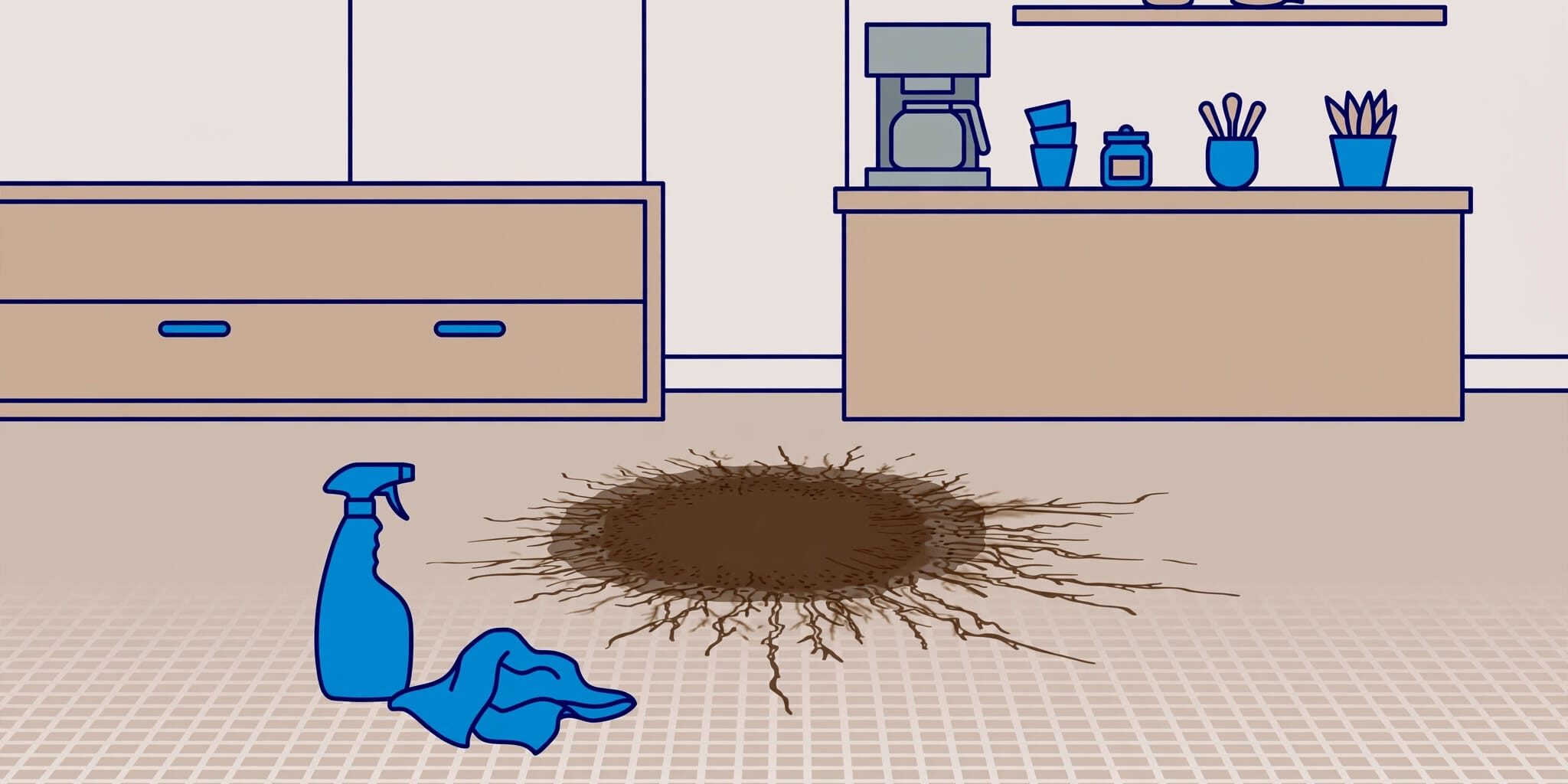
Office carpet stains usually reappear because moisture carries hidden material back to the surface, or leftover cleaning residue attracts fresh dirt. A returning mark doesn’t automatically mean a new spill or an unsuccessful cleaning visit.
However, repeating the same treatment can spread residue and damage fibers. We recommend identifying the cause of recurrence before applying more cleaner, especially around coffee stations, entrances, and water coolers.
The timing and appearance of the returning mark provide useful clues.
Key Takeaways
- A mark that returns during drying often involves wicking; a patch that darkens with foot traffic may contain soil-attracting residue.
- Gentle blotting, suitable products, thorough rinsing, and controlled drying help prevent repeat marks.
- Persistent dampness, odors, or discoloration need professional assessment rather than repeated applications of detergent.
Why Office Carpet Stains Reappear After Cleaning
Hidden spills wick back to the surface
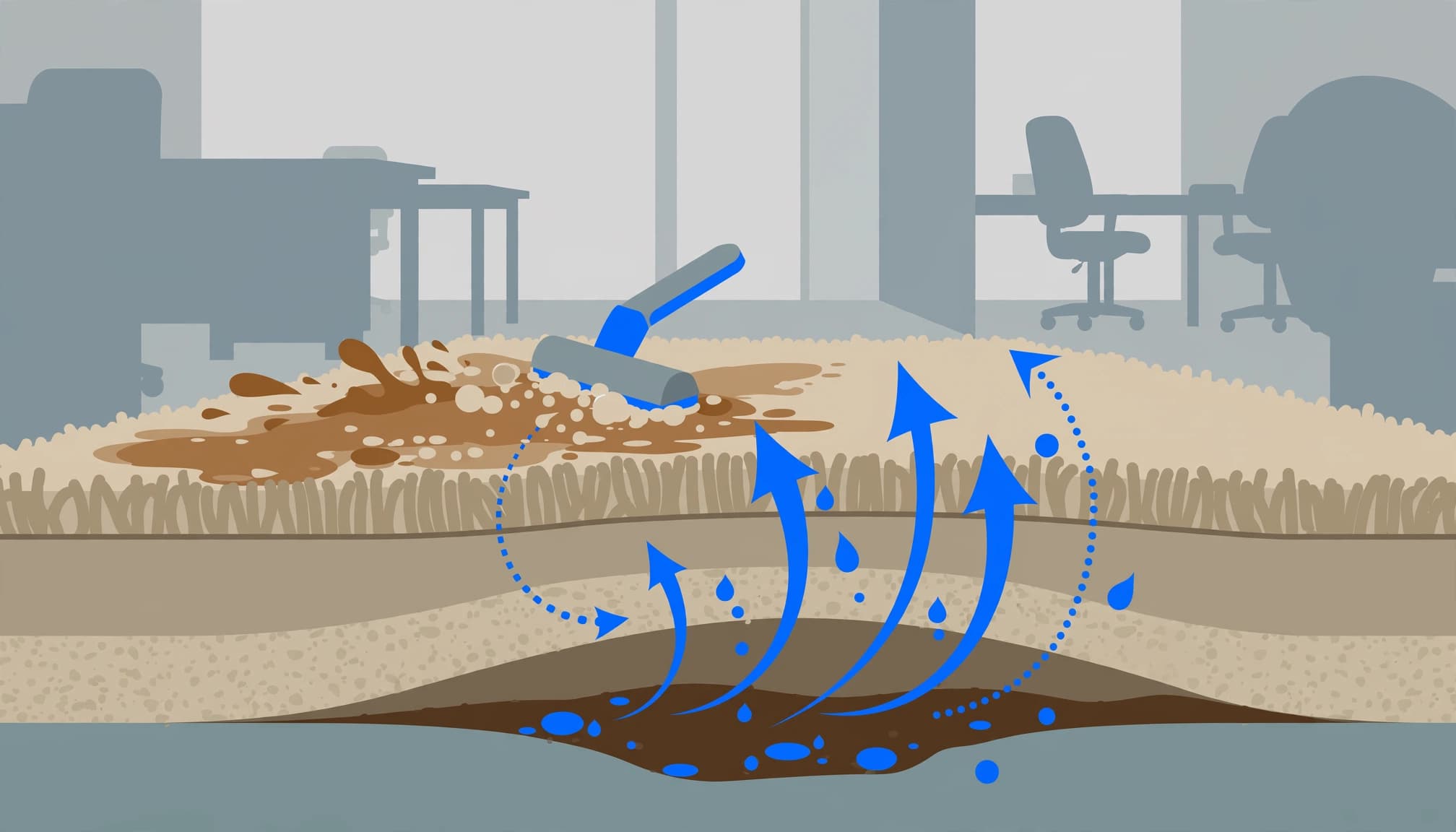
Coffee, soda, or juice can travel below the visible carpet pile into the backing and, where present, padding. Cleaning may remove the visible coffee stain while spilled material remains underneath.
As the carpet dries, moisture moves upward and carries dissolved material with it. This process, called wicking, can bring back the original mark or leave a larger ring.
A mark that returns before anyone walks across the cleaned area suggests wicking rather than newly tracked-in dirt. An active water-cooler leak or plumbing problem can cause similar recurring patches.
Residue collects new soil
Sugary drinks, grease, and excess spot cleaner can leave sticky material on carpet fibers. Soil left behind after cleaning can also contribute to a returning mark, as shoes deposit new dirt there faster than on the surrounding carpet.
If the patch darkens after several days of foot traffic, residue or remaining soil is a likely cause. Adding more detergent without removing existing residue can make it worse.
We also separate dirt from physical damage. Worn or distorted fibers reflect light differently, so a dark area may remain even after cleaning removes the soil.
Choose a Treatment That Matches the Stain
Identify the likely source first
We recommend recording the location, likely spill, previous treatments, and when the mark returns. A coffee stain beside a break-room counter needs a different approach than grease near equipment or a biological spill.
The wrong spot stainer may have no effect. Incompatible chemistry can also alter dyes or make some staining harder to remove.
For that reason, avoid experimenting with several products in succession. A professional cleaner can assess an unknown mark without adding unnecessary chemicals to the carpet.
Select tested products, not stronger mixtures
The Carpet and Rug Institute’s Seal of Approval program identifies cleaning products tested for effective cleaning without accelerated resoiling, reappearing stains, or carpet damage. A carpet maintenance reference also points users toward CRI-tested and certified products.
Professional cleaners select products for the stain and carpet rather than relying on one universal solution. Choose a cleaning solution labeled for the carpet fiber and contaminant, and don’t mix products. Suitable categories include general spot removers, grease treatments, and specialized products for biological contamination. If you use Spot Solver, check its label to confirm it’s intended for the relevant fiber and use.
Although the flooring is generally hard-wearing, stronger concentrations aren’t automatically better. Follow the product’s dilution and application directions.
Follow a Careful Stain-Removal Sequence
For a small, known spill, we recommend the gentle approach in CRI’s commercial carpet care guidance.
- Blot up liquid first. Use a dry white absorbent cloth or plain white paper towels. Printed towels and colored cloths can transfer ink or dye onto damp carpet. Lift remaining solids carefully without spreading them.
- Pretest the cleaner. If you use Spot Solver, follow its label and pretest it on a carpet scrap or an out-of-the-way area before treating the visible mark. Allow the test area to dry so you can assess color or texture changes.
- Apply a small amount to a white cloth. Work gently from the outside edge toward the center. Blot rather than scrub, and move to a clean section of cloth as material transfers.
- Repeat carefully, then rinse. After the mark disappears, blot with clear water one or more times to rinse away the cleaning solution thoroughly. Use a controlled amount so you don’t saturate the backing.
- Remove moisture and allow drying. Finish with dry white towels and keep foot traffic away until the area dries. Our commercial carpet drying guidance explains why moisture removal and controlled airflow matter.
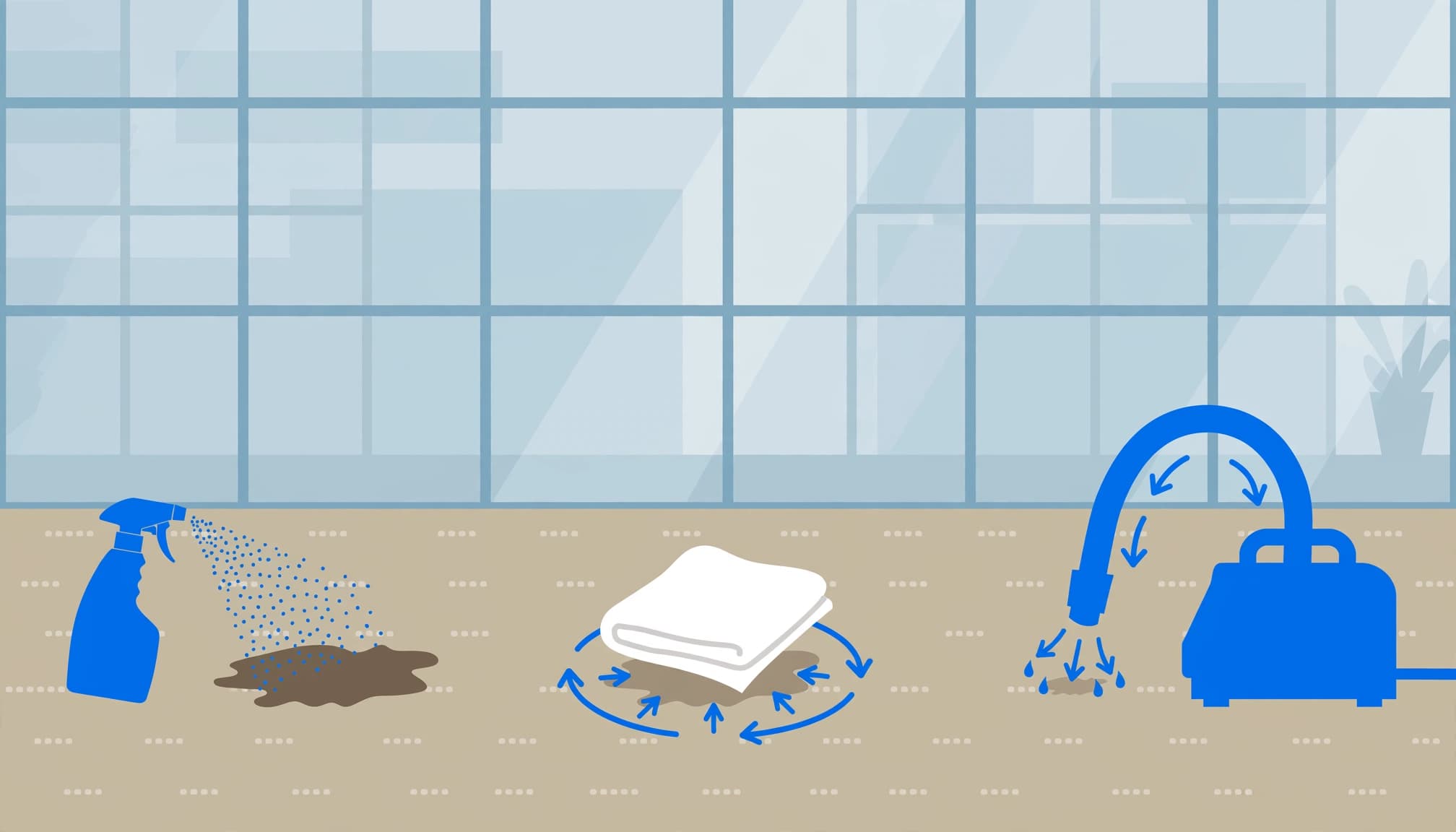
Rinsing is part of stain removal. A spot can look clean while leftover detergent prepares it to collect more dirt.
Avoid Scrubbing and Uncontrolled Heat
Brushing can leave permanent texture changes
Don’t scrub carpet spots or attack them with a stiff brush. Bristles and repeated rubbing can fray fibers and create a visibly different texture.
Wool and other natural-fiber carpets deserve particular care because rubbing can break fibers and leave a fluffy, uneven patch. This flooring may tolerate heavier use, but that doesn’t make aggressive spot scrubbing harmless.
The Anderson Tuftex carpet care guide provides additional manufacturer guidance on careful carpet maintenance. We favor controlled blotting over repeated force when a spot resists treatment.
Urine spots require a different approach
In pet-friendly offices, the contaminated area needs treatment suited to the source. Generic soapy water may leave odor-producing material below the surface.
Don’t use a steam cleaner on urine spots because heat can set the stain and smell. Instead, use wet-vacuum extraction with cool-water rinsing, followed by suitable specialist treatment where necessary.
Persistent odor may involve the backing or padding. Fragrance won’t remove that source, and repeatedly soaking the surface won’t resolve contamination underneath.
Understand Professional Extraction and Follow-Up
A professional treatment may include controlled application, dwell time, extraction, and a separate after-treatment. The right steps depend on the product and stain.
In the demonstration titled “Mastering the Art of Office Carpet Cleaning,” the cleaner waits roughly 10 to 15 minutes before removing loosened material. The demonstration then includes another application left in place, with the presenter describing color changes over approximately a week.
That sequence isn’t a universal instruction for office staff. Some specialist treatments need time to work, while ordinary detergent residue needs removal. Leave-on treatment requires a product intended for that use.
Report a returning mark with its location, photographs, timing, and any odor or dampness. Avoid adding another product before the follow-up assessment.
The provider’s response should distinguish residual soil, ongoing moisture, and permanent discoloration. Contamination in the backing or padding may need further treatment. Permanent fiber damage may require localized repair instead of repeated surface cleaning. Our workplace carpet-care guidance covers other warning signs that deserve attention.
If the area remains wet, address the water source promptly, then keep the area dry while it is assessed. An air mover can’t repair a leaking pipe or stop water entering beside a restroom.
Set a Maintenance Schedule That Protects Results
Vacuum according to traffic
Vacuum high traffic areas daily, medium-traffic areas twice weekly, and light-traffic areas weekly. Reception areas, main corridors, and break-room approaches usually need more attention than lightly used private offices.
Replace or empty vacuum bags when they’re half to two-thirds full so reduced airflow doesn’t weaken cleaning. Also maintain filters and remove obstructions that limit suction.
In Southwest Florida, rain and sand increase the workload at entrances. Maintain entry mats and remove tracked-in moisture promptly rather than letting it spread through the building.
Plan deep cleaning and drying together
CRI’s general guidance recommends professional deep cleaning every 12 to 18 months to remove embedded dirt and grime. Homes with pets may need more frequent care.
For commercial offices, we recommend planning professional extraction around six to twelve months, then adjusting for traffic and conditions. Busy lobbies and break rooms may need quarterly or even monthly attention.
A traffic-based approach also follows Mannington’s commercial carpet maintenance guidance. The written scope should identify carpeted areas, targeted treatments, deep cleaning, drying arrangements, and follow-up responsibilities.
We also recommend including entrance mats and furniture access in that scope. Cleaning only the open walkway can leave soil around desk edges and reception furniture. Meanwhile, returning furniture too soon can interfere with drying and leave damp areas unnoticed.
Frequently Asked Questions About Returning Carpet Stains
Can professional carpet cleaning remove every stain?
Professional cleaning and suitable targeted treatments remove many stubborn spots, but they can’t reverse every change. Results depend on the substance, time in the carpet, earlier treatments, and fiber condition.
Bleaching, dye loss, and worn fibers require a different response because cleaning cannot restore missing color or material. We explain those limits rather than promise complete removal.
What should staff do when an old stain returns?
Record where it appeared and whether it returned during drying or after foot traffic resumed. Note any dampness, smell, or previous product use.
Then stop repeated spot treatments and arrange an assessment. This information helps the cleaning team target the cause without layering additional residue onto the carpet.
Can small office rugs go in the washing machine?
Only machine-washable rugs belong in a washer. For suitable rugs, warm water at 90 to 105 degrees Fahrenheit, mild detergent, and the lowest tumble-dryer heat are general care options.
The rug’s care instructions take priority. Don’t apply those settings to every entrance mat or office rug.
Address the Cause Before Repeating the Treatment
Recurring office carpet stains need a cause-based response. Wicking, sticky residue, active moisture, and permanent damage require different solutions.
We recommend gentle spot care, thorough residue removal, and a maintenance plan that includes drying and follow-up. Those steps help protect your carpet and reduce unnecessary repeat treatments.
For customized office cleaning in Southwest Florida, contact our team by phone or email to Get a FREE Quote Today.